Can You Plant Directly Into Mulch-Covered Grass?
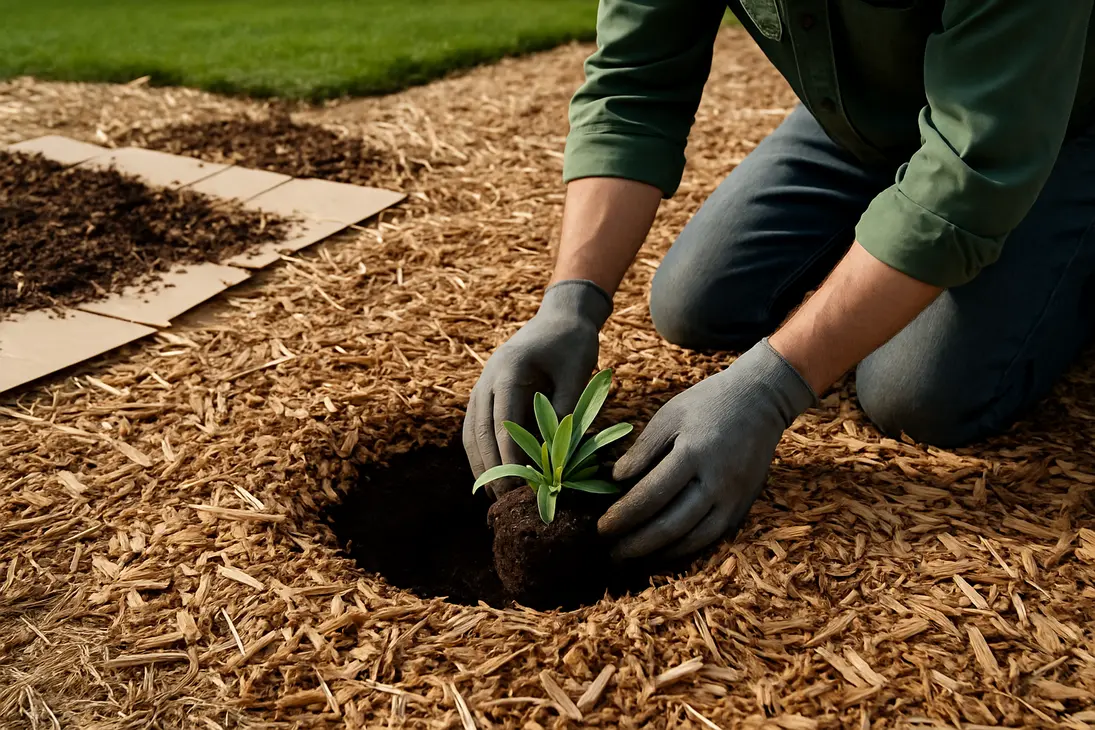
Yes, you can plant into mulch-covered grass in some situations—but you are not planting into the mulch. You are planting through the mulch and into the soil beneath it.
Mulch can weaken grass by blocking light, conserving moisture, and encouraging soil life. But if the grass is still vigorous, the mulch is too thin, or the site contains persistent perennial weeds, new plants may struggle. Grass can regrow through planting holes, compete for water and nutrients, and creep back from the edges.
Treat mulch-covered grass as a bed in transition: suppress the grass first, open planting holes carefully, place roots in real soil, and maintain the edges so turf does not reclaim the space.
When Planting Into Mulch-Covered Grass Works—and When It Doesn’t
Planting through mulch works best when the grass is already dying back or when you are using sturdy transplants that can establish while the mulch finishes smothering the turf. It works poorly when you scatter seeds over mulch, tuck plants into loose wood chips, or expect a thin decorative layer to kill an active lawn.
Grass already has roots in the soil. If it is still green and growing, it has a head start over your new plants.
Best situations for direct planting
Direct planting through mulch is most likely to work when:
- The grass has been covered for several weeks or longer and is yellowing or thinning.
- The mulch layer blocks light, rather than lightly covering grass blades.
- You are planting transplants, plugs, shrubs, or perennials, not tiny seeds.
- The soil underneath is moist and workable, not dry or compacted.
- The area is small enough to maintain, especially around new plants.
- You can keep mulch away from stems and crowns, reducing rot and pest issues.
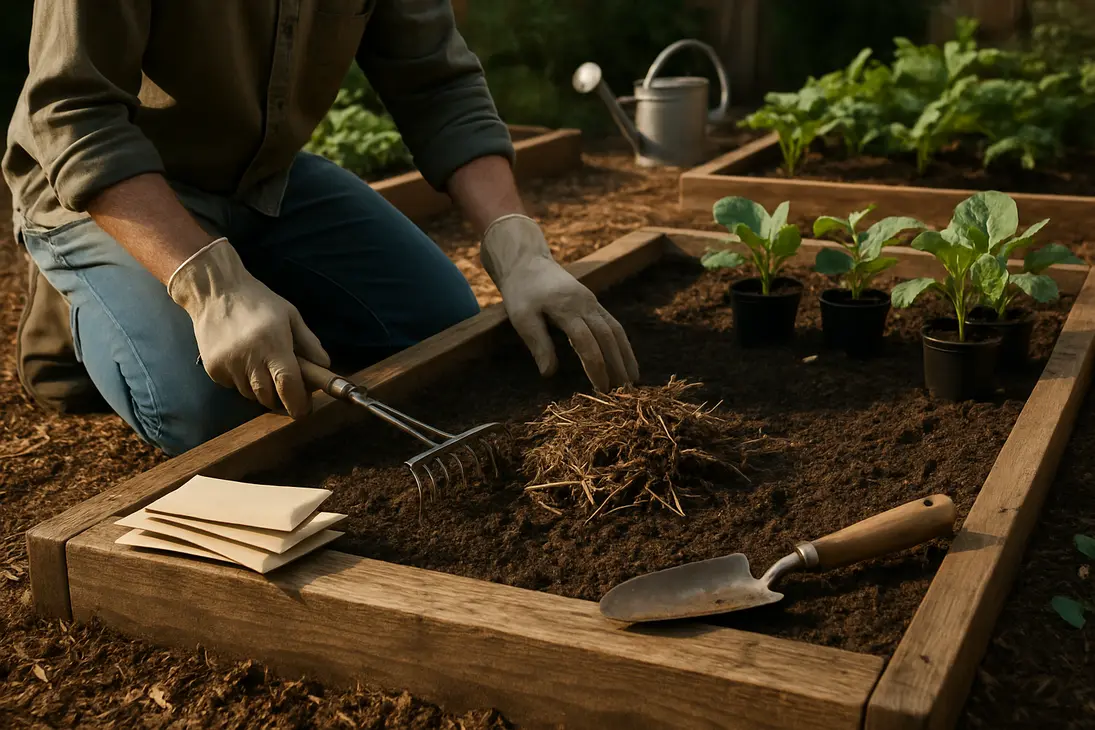
If you mowed a lawn low, covered it with cardboard, added compost and mulch, and waited a few weeks, you can usually cut planting holes and install vegetable starts, native plugs, or perennials. Larger transplants tolerate this transition better than delicate seedlings.
Situations where you should remove, sheet-mulch, or wait first
Do more preparation before planting if the grass is still strong or the mulch is not suppressing it.
Be cautious when:
- Grass is growing through the mulch everywhere.
- You have rhizomatous grasses such as Bermuda grass, quackgrass, couch grass, or other spreading perennial turf.
- The site has perennial weeds like bindweed, thistle, dock, or nutsedge.
- The soil is compacted.
- You want to direct-sow small seeds.
- Fresh wood chips are piled thickly over the planting zone.
- You are planting shallow-rooted annuals or water-sensitive crops where grass roots are still competing.
In these cases, remove the worst grass clumps, add cardboard or newspaper, wait longer, or create planting pockets with compost and soil. For very persistent grass, one season of smothering may be easier than fighting regrowth all year.
Prepare the Area Without Removing All the Grass
You do not always have to strip sod to make a garden bed. A no-dig or low-dig approach can work if you deliberately weaken the grass, improve the planting zone, and keep soil covered.
Mow or cut the grass as low as possible
Start by mowing or cutting the grass very low. Bag clippings only if the grass has gone to seed or the clippings are extremely thick. Short grass is easier to smother because there is less leafy growth pushing against the mulch.
After mowing:
- Water the area well if the soil is dry.
- Let the moisture soak in before covering.
- Rake down tall clumps so the surface is reasonably even.
- Remove obvious perennial weed crowns or woody stems.
Moist soil matters. If you cover bone-dry ground with cardboard and mulch, rain may not penetrate evenly at first, and new plants may struggle to root into the soil below.
If planting immediately, dig each hole wider than the root ball and remove living grass from that pocket. Do not simply slice through sod and squeeze the plant in.
Add cardboard or newspaper for stronger grass suppression
If the grass is vigorous, add a smothering layer before mulch. Plain brown cardboard blocks light while slowly breaking down. Newspaper can also work if layered thickly enough.
Use these guidelines:
- Remove tape, staples, glossy coatings, and plastic labels.
- Overlap cardboard edges by several inches.
- Wet the cardboard thoroughly as you lay it down.
- Cut holes only where you are planting.
- Cover it immediately with compost and mulch.
Cardboard is not magic, but it often makes the difference between manageable regrowth and grass coming up everywhere. If planting the same day, cut an X or circle at each planting spot, dig into the soil, plant, then tuck cardboard and mulch back around the plant without covering the stem.
Top with compost before refreshing mulch
A thin layer of compost over grass or cardboard helps create a better planting surface and feeds the soil as the bed develops. It is especially useful in vegetable beds, annual flower beds, and areas you may direct-sow later.
Compost and topsoil are different:
- Compost improves organic matter, soil life, moisture retention, and nutrient availability.
- Topsoil provides mineral soil structure and bulk, though quality varies.
- A compost/topsoil blend is useful for deeper planting pockets or leveling poor soil.
For most no-dig bed preparation, add about 1–2 inches of finished compost, then cover with mulch. Do not expect a thin sprinkle of compost to kill grass. Grass can grow through compost unless light is blocked by cardboard, deep mulch, or time.
Avoid bare soil on slopes
On slopes, avoid stripping turf and leaving bare soil exposed. Grass roots help hold soil in place, and removal can increase runoff during heavy rain.
Better options include:
- Smothering in sections.
- Using cardboard plus mulch, pinned or weighted.
- Planting plugs or transplants through mulch to establish roots quickly.
- Using shredded leaves, straw, or finer wood chips that knit together.
- Keeping grass paths temporarily until planted areas fill in.
On steeper slopes, loose mulch may slide or wash. Use smaller planting pockets, erosion-control netting designed for planting areas, or established groundcover plugs instead of loose mulch alone.
How to Plant Through Mulch
The basic rule is simple: move mulch aside, plant into soil, then replace mulch around—but not on top of—the plant.
Mulch is a protective blanket, not a rooting medium. Most plants need roots in mineral soil or a soil-compost blend where moisture and nutrients are more stable.
For transplants and plugs
Use this method for vegetable starts, flowers, herbs, native plugs, perennials, shrubs, and small trees.
- Pull mulch back from the planting spot. Clear a circle wider than the root ball.
- Cut through cardboard if used. Make an X or a round hole. For aggressive grass, remove the cut-out piece.
- Dig into the soil beneath. Make the hole as deep as the root ball and a little wider.
- Remove living grass from the hole. Do not leave active grass crowns pressed against the plant.
- Set the plant at the correct depth. The top of the root ball should usually sit level with the surrounding soil.
- Backfill with soil. Firm gently to remove large air pockets.
- Water deeply. This settles soil around the roots.
- Pull mulch back around the plant. Leave a gap around stems, trunks, or crowns.
For vegetables and annuals, a 1–2 inch gap around the stem is usually enough. For shrubs and young trees, keep mulch several inches away from the trunk and avoid “mulch volcanoes,” which keep bark damp and can invite decay.
If grass grows through the planting hole, remove it while it is small.
For seeds and direct sowing
Direct sowing into mulch-covered grass is harder because seeds need proper light, temperature, moisture, and soil contact. A thick mulch layer blocks many of those requirements.
For direct sowing:
- Pull mulch completely away from the row or patch.
- If cardboard is present, cut and remove a strip.
- Add a shallow layer of fine compost or prepared soil if needed.
- Sow seeds at the correct depth in soil, not mulch.
- Water gently and consistently.
- Keep coarse mulch away until seedlings are established.
- Once seedlings are several inches tall, lightly mulch between rows or plants.
Small seeds such as lettuce, carrots, poppies, alyssum, and many wildflowers are easily lost in mulch. Larger seeds such as beans, peas, squash, nasturtiums, and sunflowers are more forgiving, but they still need soil contact.
If converting grass to a wildflower meadow, do not simply throw seed onto mulch-covered turf. Prepare exposed soil patches or suppress the grass thoroughly first.
For succession planting in an already mulched bed
For succession planting, you do not need to remove all the mulch.
Instead:
- Pull mulch aside from the planting row or pocket.
- Cut old plant stems at soil level if practicing no-dig gardening.
- Add a thin layer of compost to exposed soil.
- Plant seeds or transplants into the soil.
- Water well.
- Replace mulch around transplants, or wait to re-mulch seeded rows until seedlings emerge.
This keeps soil covered while giving the new crop a clean start. It also avoids mixing coarse mulch into the topsoil, where it can interfere with planting.
Choose and Manage the Right Mulch
Mulch moderates soil temperature, slows evaporation, reduces erosion, protects soil structure, suppresses weed germination, and adds organic matter as it decomposes. The best mulch depends on what you are growing and how soon you need to plant.
Best mulch types for planting areas
| Mulch type | Best uses | Strengths | Use carefully when |
|---|---|---|---|
| Straw | Vegetable beds, strawberries, annual beds | Light, easy to move, good moisture retention | Poor-quality straw may contain weed seeds; can blow around |
| Shredded leaves | Perennial beds, vegetable beds, woodland-style plantings | Free or low-cost, improves soil, knits together well | Whole leaves can mat and shed water |
| Wood chips | Paths, shrub borders, perennial beds, around trees | Long-lasting, strong weed suppression | Coarse chips are awkward around tiny seedlings |
| Grass clippings | Thin layers in vegetable beds or compost systems | Nutrient-rich, readily available | Thick layers can mat, smell, or heat up |
| Finished compost | Topdressing, seed beds, no-dig layers | Plant-friendly, improves soil surface | Not a strong weed barrier by itself |
For former lawn, a common combination is cardboard over mowed grass, compost on top, then straw, shredded leaves, or wood chips as the surface mulch. In vegetable gardens, straw and shredded leaves are easy to move for planting. In ornamental beds and paths, wood chips or shredded bark usually last longer.
How deep mulch should be
Mulch depth matters. Too little will not suppress grass; too much can block water, bury crowns, or create pest habitat near stems.
General practical depths:
- Around vegetable transplants: 1–3 inches.
- Around small seedlings: very light mulch after establishment, often less than 1 inch nearby.
- Perennial and shrub beds: 2–4 inches.
- Wood chip paths: 3–6 inches, refreshed as they settle.
- Over cardboard for lawn conversion: usually 3–4 inches of organic mulch.
Fine mulches can be shallower because they block light well. Coarse wood chips often need more depth but should still be kept away from crowns and trunks.
If grass blades push through, the mulch is too thin, too loose, or the grass is too vigorous for mulch alone. Add cardboard, deepen the mulch, or remove regrowth promptly.
Mulches to use carefully around seeds and small seedlings
Seeds and young seedlings are where mulch-covered grass becomes trickiest.
Use caution with:
- Large wood chips, which can smother tiny seedlings.
- Thick straw, which can block light and hide pests in damp conditions.
- Fresh grass clippings, which may mat if applied thickly.
- Whole leaves, which can form a water-shedding sheet.
- Decorative bark nuggets, which leave gaps for weeds and are hard to plant through.
For seed rows, keep mulch out of the row until germination is strong. Once seedlings are established, mulch between rows to conserve moisture and suppress weeds.
Keep Grass From Taking Over Again
Many lawn-to-garden beds fail not at planting, but at the edges. Grass creeps back in from paths and borders, especially during wet, warm weather. Long-term success depends on boundaries as much as initial smothering.
Create a defined bed edge
A clean edge gives you a place to stop grass before it enters the bed.
Effective edging options include:
- A shallow trench cut with a spade.
- Metal landscape edging.
- Brick or stone set firmly at soil level.
- Wood boards around annual vegetable beds.
- A narrow maintenance strip between lawn and bed.
- Repeated spade edging once or twice per growing season.
A trench edge is inexpensive but needs maintenance. Metal or solid edging costs more upfront but can reduce repeated labor. Whatever you choose, inspect it regularly. Grass is easiest to stop when it has crossed an inch, not a foot.
Keep paths from creeping into beds
Grass paths are pleasant, but they can invade beds by seed, stolons, or rhizomes. If paths are the source of the problem, mulching the bed alone will not solve it.
Options include:
- Converting grass paths to wood chips over cardboard.
- Keeping paths wide enough to mow cleanly.
- Installing edging along both sides.
- Maintaining a bare or mulched buffer strip.
- Re-cutting borders before planting season.
On sloped gardens, do not remove every grass path at once if erosion is a concern. Convert one path at a time and watch how water moves during rain.
Refresh mulch before weeds break through
Mulch settles and decomposes. That improves soil, but weed suppression declines over time.
Refresh mulch when:
- Soil is visible in many places.
- Grass or weeds are germinating across the bed.
- Cardboard seams are exposed.
- Mulch has decomposed into a thin layer.
- Summer heat is drying the soil quickly.
It is easier to top up mulch before weeds establish than to weed first and mulch later. In no-dig beds, many gardeners add compost annually and refresh mulch as needed.
Avoid piling new mulch against plant stems. Pull old mulch back, add compost if needed, then replace or refresh mulch around the plants.
Watch for rhizomes and persistent perennial grasses
Some grasses are not easily defeated by surface mulch. Rhizomatous grasses spread underground and can emerge through holes, edges, and weak spots.
For persistent grasses:
- Pull or dig rhizomes when soil is moist.
- Trace runners back to the edge if possible.
- Avoid chopping rhizomes into many pieces with a tiller.
- Use deeper edging where grass spreads from lawns.
- Smother longer before planting high-value crops.
- Check planting holes weekly during establishment.
If the bed is badly infested, it may be better to pause planting, cover the area more thoroughly, and wait. Fighting perennial grass around delicate seedlings is frustrating and often unsuccessful.
Conclusion
Planting in mulch-covered grass is possible, but only if you plant through the mulch and into the soil beneath it. Loose mulch is not a growing medium, and active grass underneath can compete strongly with new plants.
For best results, mow the grass low, water the area, use cardboard or newspaper if the turf is vigorous, add compost where helpful, and maintain a proper mulch layer. Use transplants for quick establishment, and prepare exposed soil rows when sowing seeds.
The most successful beds are not planted once and forgotten. Keep mulch refreshed, keep stems clear, and maintain defined edges so grass does not creep back in. With that approach, a mulch-covered patch of lawn can become a productive garden bed without stripping every bit of sod.
FAQ
Can I plant straight into mulch without reaching the soil?
No. Most garden plants should not be planted straight into loose mulch. Their roots need contact with soil, not just straw, bark, leaves, or wood chips.
Pull the mulch aside, dig into the soil beneath, set the plant at the right depth, water it in, and then move mulch back around it. Keep mulch away from stems, crowns, and trunks.
Will mulch kill the grass underneath by itself?
Sometimes, but not always. A deep enough mulch layer can weaken and eventually kill grass by blocking light, especially if the grass was mowed low first. Thin mulch often allows grass to grow through.
For stronger suppression, use cardboard or several layers of newspaper under the mulch. Persistent perennial grasses may still need repeated removal or a longer smothering period.
Should I use compost or topsoil over grass before planting?
Use compost to improve the soil surface and feed the bed. Use topsoil or a topsoil-compost blend when you need more mineral soil volume, leveling, or deeper planting pockets.
Compost alone will not reliably kill grass unless light is also blocked. For lawn conversion, a practical method is mowed grass, cardboard, compost, and mulch. When planting, make sure roots reach the actual soil beneath.
What is the easiest way to stop grass paths from invading garden beds?
Create a defined edge and maintain it before grass gets established in the bed. Metal edging, a spade-cut trench, boards, brick, or a mulched buffer strip can all work.
If grass paths are a constant problem, consider converting them to cardboard-and-wood-chip paths or edging both sides. Keep paths mowable, refresh mulch along bed edges, and remove runners while they are still small.
You Might Also Like