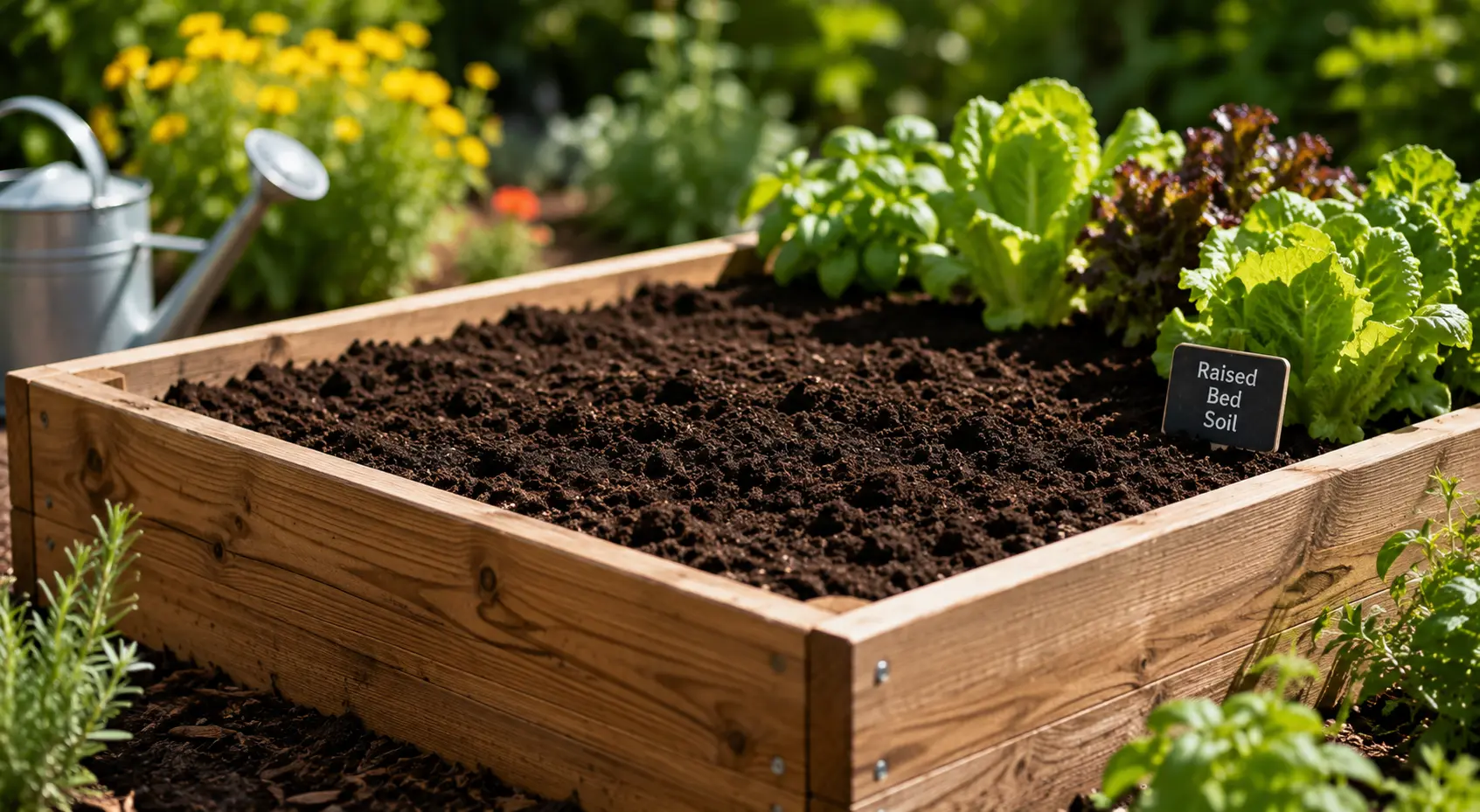
Quick Raised Bed Soil Chart
Use this chart for a quick estimate before entering your exact measurements in the raised bed soil calculator. The bag estimates are rounded up and use 1.5 cubic foot bags, a common size for bagged garden soil and raised bed mix.
| Raised Bed Size | 6 in Deep | 12 in Deep | 12 in + 10% Extra | 1.5 cu ft Bags |
|---|---|---|---|---|
| 2 × 4 ft | 4 cu ft | 8 cu ft | 8.8 cu ft | 6 bags |
| 3 × 6 ft | 9 cu ft | 18 cu ft | 19.8 cu ft | 14 bags |
| 4 × 4 ft | 8 cu ft | 16 cu ft | 17.6 cu ft | 12 bags |
| 4 × 8 ft | 16 cu ft | 32 cu ft | 35.2 cu ft | 24 bags |
| 4 × 10 ft | 20 cu ft | 40 cu ft | 44 cu ft | 30 bags |
| 4 × 12 ft | 24 cu ft | 48 cu ft | 52.8 cu ft | 36 bags |
These are volume estimates, not soil weight estimates. Soil weight changes with moisture, ingredients, and density, so raised bed soil calculators usually work in cubic feet, cubic yards, or bag volume.
How to Use This Raised Bed Soil Calculator
This raised bed soil calculator estimates how much soil you need for a raised garden bed in cubic feet, cubic yards, bags, and soil mix components. For the most accurate result, measure the inside dimensions of the bed, not the outside frame.
- Enter the inside length and width of your raised bed.
- Enter the soil depth you actually want to fill. This may be different from the total height of the bed.
- Add the number of raised beds if you have several beds with the same dimensions.
- Choose the bag size if you are buying bagged raised bed soil, garden soil, or compost.
- Add 5% to 15% extra if you want to allow for soil settling after watering.
- Choose a soil mix preset to estimate how much topsoil, compost, and aeration material you may need.
The most common mistake is entering the full bed height instead of the planned soil depth. A tall raised bed does not always need to be filled completely with premium soil, especially if it sits on open ground.
How to Calculate Soil for a Raised Bed
To calculate soil for a raised bed, multiply the inside length by the inside width by the fill depth. If your depth is measured in inches, divide it by 12 first so all measurements are in feet.
Example: a 4 × 8 raised bed filled 12 inches deep needs 32 cubic feet of soil. With a 10% settling buffer, the estimate becomes 35.2 cubic feet. If each bag is 1.5 cubic feet, you would need 24 bags.
If you are buying bulk soil, use cubic yards. If you are buying bagged soil, use cubic feet and divide by the bag size printed on the package.
How Deep Should Your Raised Bed Soil Be?
Soil depth depends on what you are growing and what is underneath the bed. If the raised bed sits directly on open ground, roots may grow below the frame. If it sits on concrete, a patio, a driveway, or another hard surface, the soil inside the bed is the full root zone.
| What You’re Growing | Suggested Soil Depth | Why It Matters |
|---|---|---|
| Top-dressing an existing raised bed | 1–4 inches | Useful for refreshing settled beds without refilling the whole frame. |
| Herbs, lettuce, and shallow greens | 6–8 inches | Works for shallow roots, especially when the bed sits on open soil. |
| Beans, cucumbers, and leafy vegetables | 8–10 inches | Gives more root room and moisture reserve during warm weather. |
| Tomatoes, peppers, squash, and most vegetables | 10–12 inches | A practical depth for many common vegetable crops. |
| Carrots, parsnips, potatoes, and deep-rooted crops | 18–24 inches | Needed when roots must develop fully inside the raised bed. |
| Beds on concrete or hard surfaces | 8–24 inches | Roots cannot access native soil below, so depth matters more. |
Tip: do not choose soil depth only by the height of the raised bed frame. Choose it by crop type, root depth, drainage, and whether the bed is open-bottom or sitting on a hard surface.
The Best Soil Mix for a Raised Bed
There is no single official raised bed soil mix. A good mix should hold moisture, drain well, provide nutrients, and stay loose enough for roots to grow. Most raised bed mixes combine mineral soil, finished compost, and a lighter material that improves drainage or aeration.
Balanced Mix
50% soil, 30% compost, and 20% aeration or potting mix.
Topsoil + Compost Mix
About 1/2 to 2/3 topsoil and 1/3 to 1/2 plant-based compost.
Hard Surface Mix
Compost plus soilless growing mix can work where roots cannot reach native soil.
Why Soil Matters in Raised Beds and Containers
Raised beds drain faster than in-ground beds, so soil structure matters. A good raised bed mix should hold enough moisture for roots while still allowing excess water to drain away.
Roots also need oxygen. If the mix is too dense, roots struggle to expand and water may sit around the root zone. If the mix is too light, the bed can dry out quickly, especially during hot weather.
Containers behave differently from open-bottom raised beds. A container usually needs a lighter potting mix because water and air movement are limited by the walls and drainage holes. A raised bed that sits on open soil can usually use a heavier soil-based mix.
Bagged Soil vs. Bulk Soil: Which Should You Buy?
After you calculate soil for a raised bed, the next question is usually whether to buy individual bags or order bulk soil by the cubic yard. The best choice depends on total volume, delivery access, cost, and soil quality.
Bagged soil is easier when:
- You are filling one small raised bed.
- You are topping off an existing raised bed.
- You cannot accept a bulk soil delivery.
- You want cleaner handling and predictable bag volume.
- You need to carry soil through a narrow path, balcony, or small yard.
Bulk soil may be better when:
- You are filling multiple raised beds.
- Your result is close to or above 1 cubic yard.
- You can receive delivery in a driveway or garden area.
- You have checked the supplier’s soil mix ingredients.
- You want to reduce the number of plastic bags and repeated store trips.
Rule of thumb: use bagged soil for small projects and top-ups. Compare bulk delivery when the calculator result approaches 1 cubic yard or you are filling several beds.
Before You Buy: Raised Bed Soil Calculator Mistakes
The calculator gives the right volume only when your inputs match the real bed. Before buying soil, check these common mistakes that can change your cubic feet, cubic yards, bag count, and soil mix.
1. Measuring outside dimensions instead of inside dimensions
Use the inside length and width of the raised bed. The soil only fills the open space inside the frame, so outside measurements can slightly overestimate how much soil you need.
2. Using bed height instead of fill depth
Soil depth means the depth of growing medium you plan to add. A tall raised bed does not always need to be filled completely with premium soil, especially if it sits on open ground.
3. Forgetting that fresh soil settles
Fresh soil and compost can settle after watering. Adding a 5% to 15% buffer can help prevent underbuying and reduce the chance of making another trip for one more bag.
4. Mixing cubic feet and cubic yards
Bagged soil is usually sold in cubic feet, while bulk soil is usually sold in cubic yards. Since 1 cubic yard equals 27 cubic feet, confusing the two can lead to a large buying error.
5. Assuming every bag labeled “topsoil” is raised bed soil
Some topsoil products are too dense, sandy, woody, or inconsistent for vegetable beds. Check the label and ingredients, especially if you are filling a new raised garden bed.
6. Filling the whole bed with compost
Compost improves soil, but it should not be the only fill material. Use it as part of a balanced raised bed soil mix with mineral soil or a suitable growing medium.
Raised Bed Soil Calculator FAQs
How much soil do I need for a 4×8 raised bed?
A 4×8 raised bed filled 12 inches deep needs 32 cubic feet of soil, or about 1.19 cubic yards. With a 10% settling buffer, it needs 35.2 cubic feet, which is about 24 bags if each bag holds 1.5 cubic feet.
How do I calculate soil for a raised bed?
Multiply the inside length by the inside width by the fill depth. If the depth is in inches, divide it by 12 first. Then divide cubic feet by 27 if you need cubic yards.
Should I use the inside or outside dimensions?
Use inside dimensions. The calculator should measure the space that soil actually fills, not the outside edge of the frame.
Is soil depth the same as raised bed height?
Not always. Soil depth means the depth of growing medium you plan to add. A tall bed may not need to be filled completely if it sits on open ground, but beds on concrete or patios need enough soil depth for the full root zone.
How many bags of soil do I need for a raised bed?
Divide the total cubic feet by the bag size and round up. For example, 35.2 cubic feet divided by a 1.5 cubic foot bag equals 23.46, so you need 24 bags.
When should I buy bulk soil instead of bagged soil?
Bulk soil is worth comparing when your raised bed soil calculator result is close to or above 1 cubic yard, or when you are filling several beds. For small beds and top-ups, bagged soil is often easier to handle.
Should I add extra soil for settling?
Yes. Adding 5% to 15% extra is practical because fresh soil and compost can settle after watering, especially in new raised beds.
What is the best soil mix for raised beds?
A practical raised bed mix combines topsoil or mineral soil, finished compost, and a material that improves drainage or aeration. There is no single official formula, so adjust the mix based on your soil source, crop needs, and drainage conditions.
Can I fill a raised bed with compost only?
No. Compost should be mixed with soil or another growing medium. Compost alone does not provide the same mineral soil structure and can create nutrient or salt issues when overused.
Do containers use the same soil calculation as raised beds?
The volume math is similar, but the soil choice is different. Containers usually need a lighter potting mix because drainage and air movement are limited by container walls and drainage holes. Open-bottom raised beds can usually use a more soil-based mix.