Will a Marcotted Chico Bear Fruit if the Parent Tree Rarely Fruits?
The Short Answer: It May Fruit, but It Can Inherit the Parent’s Poor Fruiting Tendency
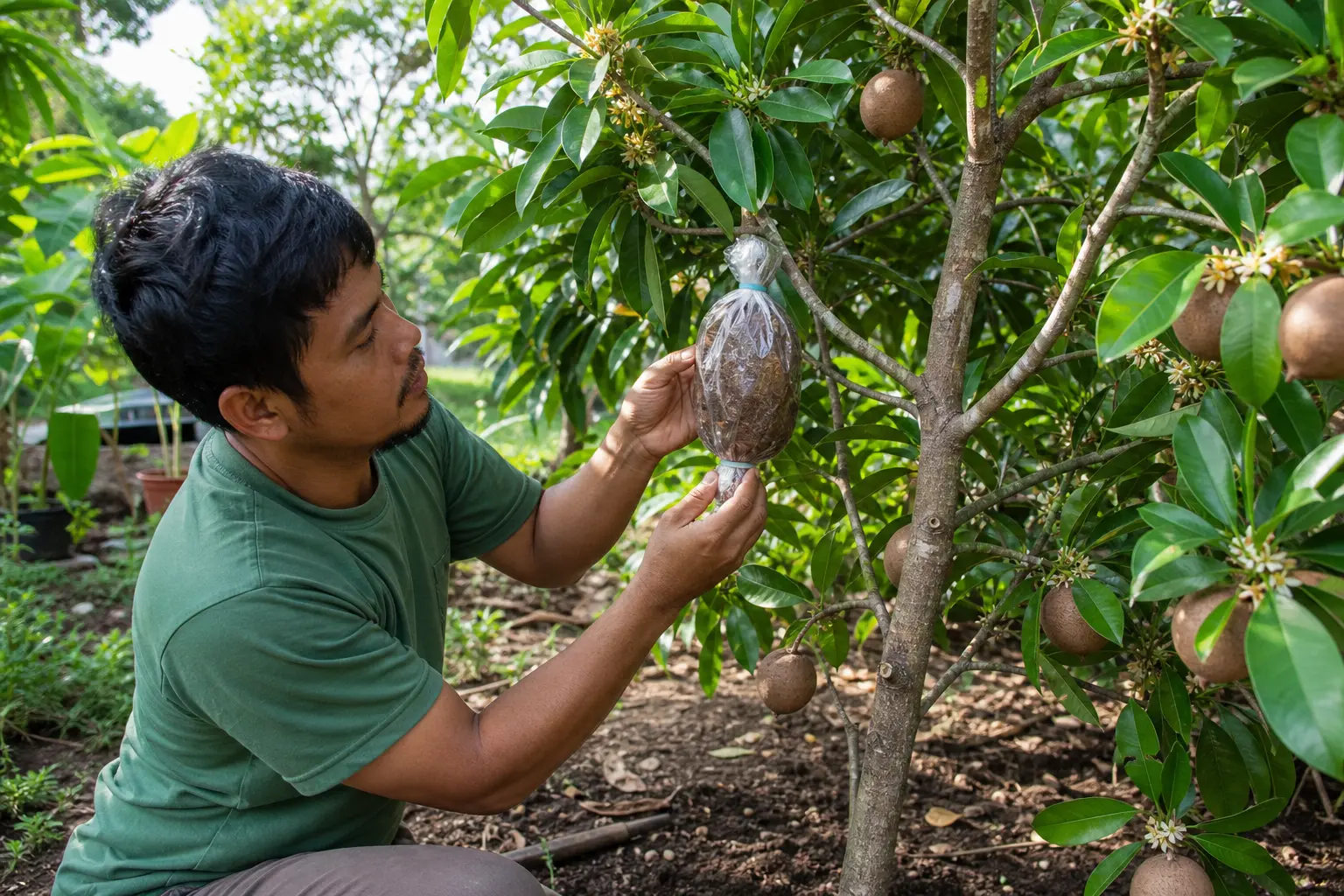
A marcotted chico tree can bear fruit, but marcotting is not an automatic fix for a parent tree that rarely fruits. Marcotting, or air-layering, creates a new tree genetically identical to the branch it came from. The marcot keeps the parent’s variety, fruit characteristics, growth habit, and possible weaknesses—including poor flowering or fruit set.
The key question is why the parent produces poorly.
If it is mature, healthy, sunny, and well cared for but has always produced little fruit, a marcot may show the same tendency. If poor production is caused by shade, poor drainage, drought, excess fertilizer, pests, weak pollination, or unsuitable climate, the marcotted tree may perform much better in improved conditions.
A marcotted chico is not a new variety. It is a clone with a new root system and potentially a better site.
Why the Parent Chico Tree Produces Little or No Fruit
Before marcotting, consider the parent tree’s history and environment. A tree that fruits poorly for genetic reasons is a poor propagation source. A tree that is stressed or badly sited may still be worth propagating.
Chico, also called sapodilla, is a warm-climate evergreen fruit tree. It can take time to settle into regular production, so a younger tree deserves more patience than a mature tree that has had suitable conditions for years.
When Poor Fruiting Is Likely Genetic
Poor fruiting is more likely to be inherited when the parent tree:
- Is fully mature rather than a young seedling.
- Receives direct sun most of the day.
- Grows in warm, frost-free conditions.
- Has healthy foliage and reasonable annual growth.
- Is not severely crowded, waterlogged, or drought-stressed.
- Has had sensible care without excessive nitrogen fertilizer.
- Has produced very few flowers or fruits consistently over many seasons.
Seed-grown fruit trees can vary greatly. One seedling may bear heavily, while another may be slow, irregular, or sparse. If a healthy mature chico has never been reliably productive, marcotting will likely reproduce that basic behavior.
A marcot may flower sooner than a seedling because it comes from mature tissue, but earlier flowering does not guarantee a heavy crop.
It helps to distinguish between a tree that has never been productive and one that used to fruit well but declined. The first may have weak genetics; the second often points to changes in health, pruning, weather, or growing conditions.
When a Marcotted Tree Could Perform Better Than the Parent
A marcotted chico can outperform its parent if the problem is environmental. The clone has the same fruiting potential, but it does not need to grow under the same conditions.
The parent may be unproductive because it is:
- Shaded by buildings or taller trees.
- Growing in compacted or poorly drained soil.
- Repeatedly drought-stressed or irregularly watered.
- Overfed with nitrogen, producing leaves instead of flowers.
- Affected by root problems, trunk injury, pests, or disease.
- Growing in an area with frost or prolonged cold.
- Heavily pruned each year.
- In a location with little insect activity during bloom.
A marcot planted in full sun, loose well-drained soil, and adequate space may flower and retain fruit more successfully.
Fruit drop also needs interpretation. A tree that flowers heavily but drops tiny fruits is not necessarily genetically unproductive. Poor pollination, sudden dry weather, waterlogged roots, nutrient stress, pest damage, and weak vigor can all cause fruit loss.
What to Expect From a Marcotted Chico Tree
A marcotted chico is made from mature branch tissue rather than a seedling, which can shorten the wait for flowering. However, it still needs time after separation to build a functioning root system and recover from transplant stress.
A newly separated marcot may shed leaves, stop growing temporarily, or drop flowers. Keep moisture steady, provide good drainage, and protect it from harsh drying wind. Avoid heavy fertilizer or repeated repotting while it establishes.
Choose a Healthy, Productive Branch for Marcotting
Because an air layer is a clone of its branch, choose the best material available. Select a branch that is:
- Vigorous and healthy.
- Free from scale insects, borers, cankers, and disease.
- Receiving good light in the canopy.
- Mature but not old, brittle, or heavily shaded.
- From a section that has flowered or carried fruit, if possible.
A branch that has already produced good fruit offers better evidence that the parent can fruit. It does not guarantee that every marcot will be highly productive, but it is preferable to material from a weak, barren interior branch.
Avoid shaded, diseased, excessively upright, or repeatedly nonbearing shoots. Do not take too many air layers from a small or stressed parent tree. If it produces only a few fruits, mark productive branches during the fruiting season for later propagation.
Avoid Delayed Fruiting After Separation
The period after separation affects how quickly a marcot resumes growth. To reduce setbacks:
- Wait for a well-developed root mass before separation. A few visible roots are not enough.
- Cut cleanly with sharp tools and keep the rooted medium intact.
- Pot it first if the root ball is limited. This makes watering and recovery easier to monitor.
- Keep moisture even, not saturated. Newly formed roots can rot in standing water.
- Give bright light, then gradually increase full-sun exposure.
- Avoid severe pruning. Leaves help the plant produce energy for root growth.
- Fertilize lightly only after stable new growth appears.
If flowers appear soon after separation, remove them on a small plant. Strong roots and branches are more valuable than a few early fruits.
How to Improve the Chances of Fruit Production
Even a potentially productive marcotted chico needs suitable conditions for flowering, fruit set, and fruit development.
Provide Full Sun and Enough Growing Space
Chico performs best in full sun. Aim for at least six to eight hours of direct sunlight daily. A tree in partial shade may look healthy but produce few flowers because it directs energy into leaf growth while competing for light.
Give in-ground trees room for canopy expansion and keep them away from large trees with aggressive roots. Crowding reduces light, airflow, and access to water and nutrients.
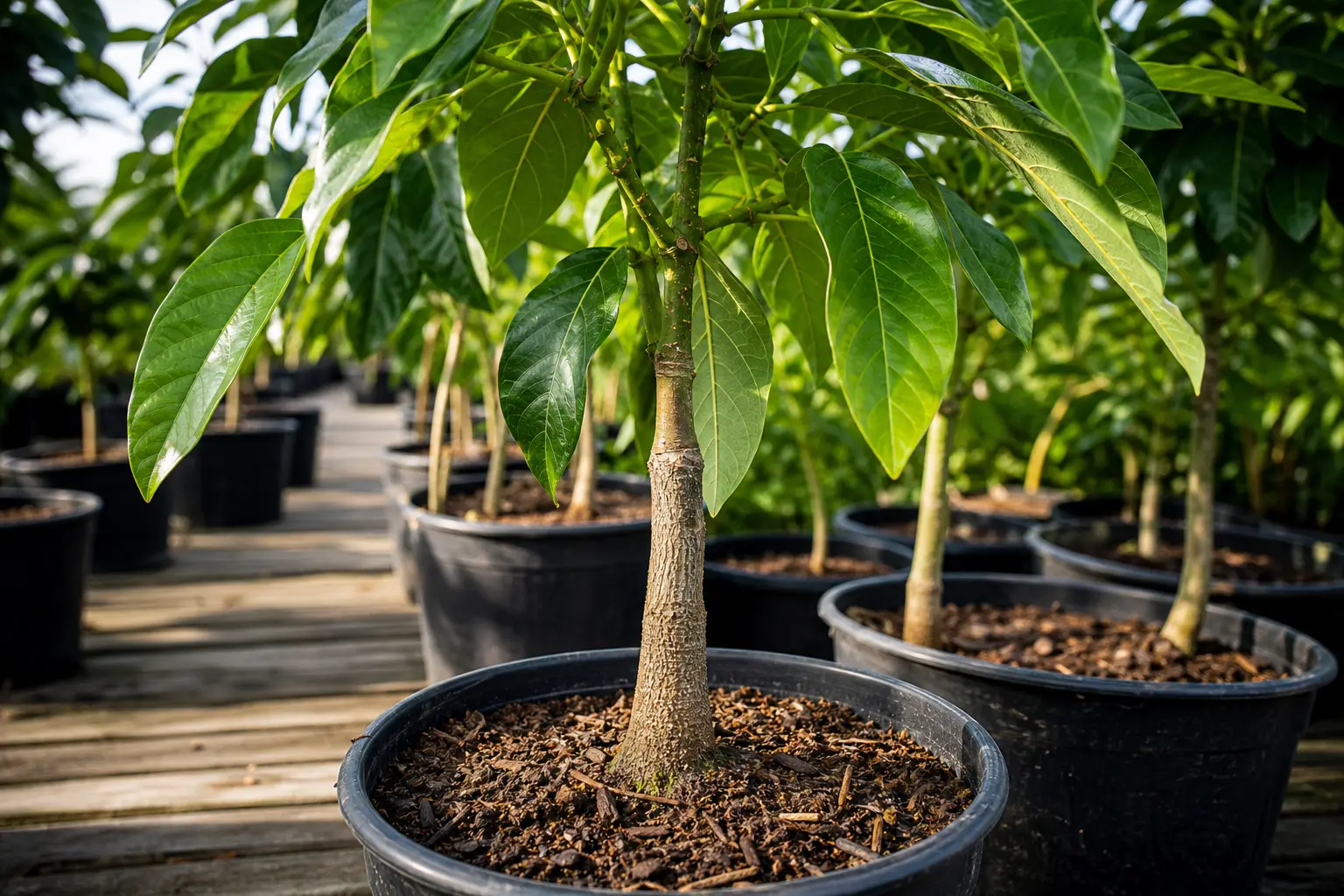
Container-grown chico can fruit, but it requires closer care:
| Growing situation | Likely result | What helps |
|---|---|---|
| Small container for many years | Slow growth, drying roots, low fruit set | Move gradually into a larger container |
| Large container in full sun | Possible fruiting, but lower vigor than in-ground trees | Use a well-drained mix and regular watering |
| Pot kept in shade | Leafy growth with little flowering | Move to brighter sun where climate allows |
| Root-bound plant | Poor water uptake and nutrient stress | Repot before roots become tightly congested |
Manage Water, Fertility, and Pruning Carefully
Water stress can reduce flowering and cause fruit drop. Newly marcotted trees need consistently moist, never waterlogged soil while establishing. Mature chico tolerates short dry periods better, but repeated severe drying followed by soaking can still disrupt fruit retention.
Good drainage matters as much as watering. If the planting area holds water after rain, improve drainage or plant on a raised mound before installing the marcot.
Use fertilizer moderately. Compost or a balanced fruit-tree fertilizer can support growth, but too much nitrogen often produces soft, leafy shoots instead of flowers. Before adding more fertilizer, check sunlight, drainage, watering, pests, and pruning history.
Prune lightly and purposefully:
- Remove dead, diseased, crossing, or badly crowded branches.
- Shape young trees gradually.
- Avoid severe annual pruning near flowering periods.
- Do not repeatedly remove mature branch tips where flowers may develop.
Excessive pruning can keep a chico in vegetative regrowth rather than fruiting.
Consider Pollination and Local Climate
Chico flowers can often set fruit on their own, so one tree may bear without another nearby. Still, fruit set may improve where pollinating insects are active or another flowering chico is nearby. This is worth considering if the tree flowers well but consistently sets few fruits.
Avoid broad-spectrum insecticides while the tree is blooming. A garden with flowering plants and insect activity is generally more useful than trying to hand-pollinate every flower.
Chico is best suited to warm, frost-free locations. Prolonged cold can slow growth, interfere with flowering, and prevent fruit from maturing well. In marginal climates, place the tree in the warmest protected part of the garden, with full sun and shelter from cold wind. Where frost is regular, a container that can be protected may be more practical than planting in open ground.
When It Is Better to Start With a Different Parent Tree
Choose another parent tree when the original chico is mature, healthy, well cared for, and has a long history of poor fruiting. Marcotting may save time compared with seed growing, but it can also reproduce the exact problem you want to avoid.
Look for material from a chico tree that:
- Fruits regularly in your local climate.
- Produces fruit with the flavor, texture, and size you want.
- Has healthy leaves and sound branches.
- Has good fruit retention, not merely many flowers.
- Grows under conditions similar to those you can provide.
If possible, take an air layer from a proven productive branch or obtain a marcotted or grafted tree from a reliable local grower. A productive local parent is usually safer than a large but barren backyard seedling.
A low-yielding tree may still be worth marcotting if its few fruits are exceptional and the parent’s poor site can be improved. But if it is both low-yielding and poor-quality, there is little reason to clone it.
Conclusion
A marcotted chico can fruit even when its parent rarely bears, but the outcome depends on the cause of the parent’s poor production. An air layer is genetically the same as its parent, so it can inherit weak fruiting behavior. It will not turn a naturally unproductive tree into a reliable heavy bearer.
However, it may perform better if the parent suffers from shade, poor drainage, drought, excessive nitrogen, root stress, pests, weak pollination, or unsuitable climate. Choose a healthy branch that has flowered or fruited, establish it carefully, and provide full sun, drainage, moderate feeding, and enough space.
If the parent has been healthy, mature, and consistently barren for years, use a proven productive chico tree as the propagation source instead.
FAQ
Will a marcotted chico fruit faster than a seed-grown chico?
Usually, yes. A marcotted chico comes from mature branch tissue, while a seed-grown tree must pass through a juvenile stage before flowering. Once established, a marcot can therefore fruit sooner.
Timing still varies. Transplant stress, poor light, cold weather, overfertilizing, a small container, or root problems can delay fruiting.
Does a marcotted chico have the same fruit quality as the parent tree?
Yes. A marcotted chico should produce fruit with the same genetic characteristics as the parent branch, including general size, shape, texture, sweetness, and seediness.
Conditions still affect the crop. Drought, shade, nutrient imbalance, and pests may result in smaller or lower-quality fruit than the parent produces in a better location.
Can a chico tree fruit well in a container?
A chico can fruit in a container, especially if it is marcotted or grafted, but it is more demanding than growing one in the ground. Use a sufficiently large container with excellent drainage and full sun.
Container trees dry out faster, become root-bound more easily, and rely entirely on the gardener for water and nutrients. Expect a smaller tree and potentially a lighter crop than from a comparable in-ground tree.
If the parent tree flowers but drops its fruit, will the marcot do the same?
It might, but not necessarily. If fruit drop is caused by inherited weak fruit set, the marcot may behave similarly. But fruit drop is often environmental, caused by irregular watering, poor drainage, heat or cold stress, weak pollination, excessive nitrogen, pest damage, or a crop load the tree cannot support.
A marcot in better conditions may retain fruit more successfully than the parent.
You Might Also Like