How to Tell If Plant Roots Are Moist When the Topsoil Looks Dry
Dry topsoil can be misleading. A plant may look ready for water because the surface is pale, dusty, or pulling from the pot edge, while the roots are still in damp soil below. To judge plant root moisture, check the root zone, not just the top half-inch.
This matters because watering by surface appearance is a common cause of overwatering. Roots need moisture, but they also need oxygen. If the root zone stays wet too long, plants can wilt, yellow, drop leaves, or develop root rot even when the top looks dry.
Why Dry Topsoil Doesn’t Always Mean Dry Roots
The top layer dries first because it is exposed to air, light, heat, and wind. Indoors, heating, air conditioning, fans, and low humidity can dry the surface while the lower potting mix remains moist.
In containers, the difference can be dramatic. A pot may have a dry, crusty surface but still hold water in the center or bottom, especially if it is large, peat-heavy, compost-rich, or not yet filled with roots. In garden beds, mulch, clay, and compacted layers can also keep the root zone moist after the surface dries.
Root moisture means moisture where active roots absorb water. For seedlings, that may be only an inch or two down. For a mature tomato, shrub, or large houseplant, it may be much deeper.
A useful rule: dry topsoil means “check deeper,” not automatically “water now.”
How to Check Moisture at the Root Level
Use more than one clue when possible. Touch, a skewer, pot weight, and occasional inspection are usually more reliable than any single method.
Finger Test or Trowel Check
For small pots, push your finger into the mix instead of touching only the surface.
- Small houseplants or herbs in 4- to 6-inch pots: check about 1 inch down.
- Medium containers: check about 2 inches down.
- Large pots, tubs, raised beds, and garden beds: check 3 inches or more if possible.
Moist soil feels cool, slightly dark, and may cling lightly to your finger. Dry soil feels warmer, lighter, loose, or dusty. If the top inch is dry but the soil below feels cool and damp, wait unless the plant needs consistently moist conditions.
In garden beds, use a small trowel. Dig a narrow slice several inches from the stem and feel the soil below the surface. If it forms a loose ball when squeezed, it still has moisture. If it crumbles into dust, the root zone is drying.
For seedlings and fine-rooted plants, check beside the root area rather than directly under the stem.
Wooden Skewer or Chopstick Test
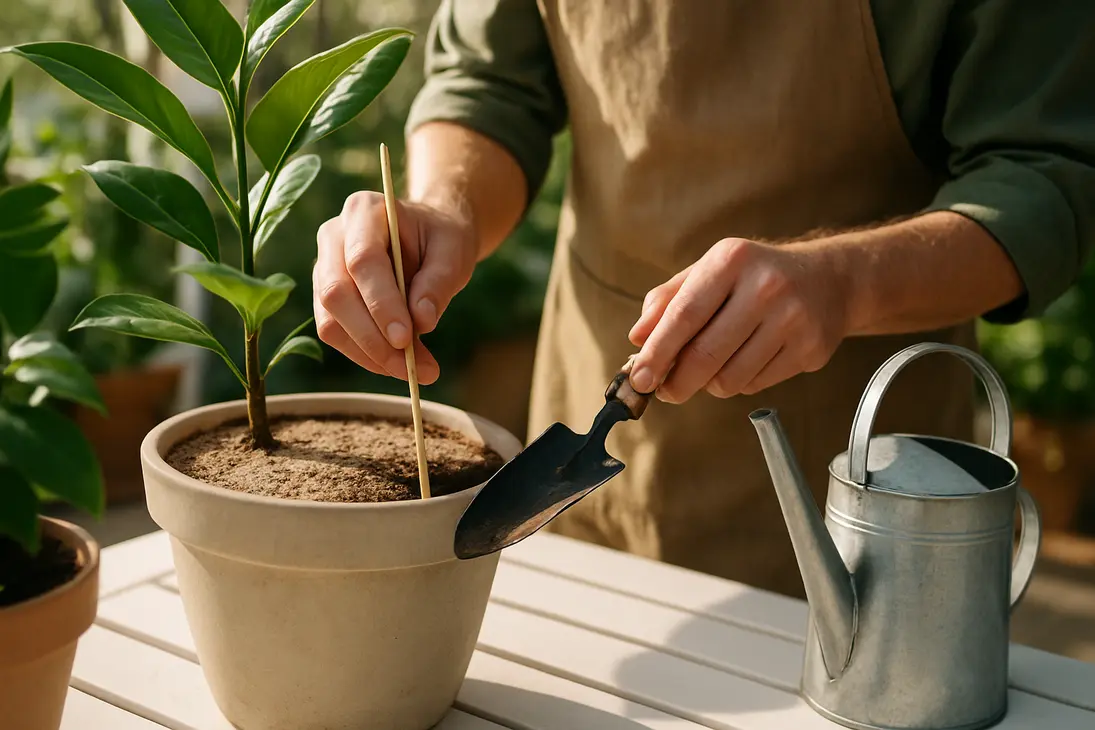
A wooden skewer, bamboo chopstick, or unfinished pencil is useful for deeper pots. Insert it near the root area, not through the crown or main stem. Leave it for a minute or two, then pull it out.
| What you see on the skewer | What it usually means |
|---|---|
| Clean, pale, and dry | Soil is dry along most of the depth |
| Darkened lower section | Moisture remains deeper |
| Soil crumbs stick | Mix is still damp |
| Cool skewer | Lower soil likely holds moisture |
| Muddy residue or wet streaks | Soil may be too wet |
This test is less exact in chunky mixes with bark, perlite, or large air gaps, but it still helps prevent watering when only the surface is dry.
For succulents, cacti, snake plants, jade plants, and other drought-tolerant plants, the skewer should come out mostly dry before watering. For moisture-loving plants, slight dampness may be acceptable, but it should not come out wet or muddy for days.
Pot Weight Method
Soil is heavier when wet than when dry. Learning the weight of a pot is one of the easiest ways to judge moisture without disturbing roots.
- Water thoroughly until water drains from the bottom.
- Let the pot drain completely.
- Lift it and note the “just watered” weight.
- Lift it over the next few days.
- When it feels much lighter, check the root zone to confirm.
This works best with nursery pots, small ceramic pots, hanging baskets, and indoor containers. For heavy planters, tipping the pot slightly may still reveal a difference.
Pot weight also shows changes in conditions. If a plant that usually dries in four days is still heavy after a week, it may be cooler, using less water, or sitting in mix that stays too wet. If it becomes light in a day, it may be rootbound, in strong sun, or planted in a fast-draining mix.
Moisture Meter Use and Limitations
Moisture meters can help, but they are not absolute. Inexpensive meters can be affected by salts, fertilizer residue, soil texture, compaction, air gaps, and uneven moisture.
To use one well:
- Insert the probe into the root zone.
- Test two or three spots.
- Avoid forcing it through thick roots.
- Wipe it clean after use.
- Compare the reading with touch, a skewer, or pot weight.
Meters can mislead in salty potting mix, recently fertilized soil, compacted clay, chunky orchid or cactus mixes, or pots that dry unevenly. Use them as a second opinion, not the final answer.
Signs Plant Roots May Be Too Wet
Overwatered plants can look thirsty because damaged or oxygen-starved roots cannot move water properly. If the soil below the surface is damp, pause before watering again.
Yellowing, Wilting, or Drooping Despite Moist Soil
Roots need oxygen in the spaces between soil particles. When those spaces stay filled with water, roots weaken, die back, or rot. Leaves may then wilt even though water is present.
Watch for:
- Drooping while the root zone is damp.
- Older leaves yellowing and falling.
- Weak or slow new growth.
- A pot that stays heavy for a long time.
- Little or no improvement after watering.
Underwatering usually comes with dry soil at root depth. Overwatering usually comes with damp soil and a stressed-looking plant.
Soft Stems, Leaf Drop, or Fungus Gnats
Soft, mushy, dark, or collapsing stems near the soil line can signal rot. Leaf drop can also occur when roots are stressed by wet mix, especially in decorative pots without drainage or oversized containers.
Fungus gnats are another clue. A few gnats do not prove root rot, but they often appear when organic potting mix stays moist near the surface. If gnats appear with yellowing, slow growth, or a pot that never dries, check deeper before watering.
Poor drainage is often part of the issue. Pots without drainage holes, saucers left full of water, or dense mix at the bottom can keep roots wet while the surface looks dry.
Sour Smell or Black, Mushy Roots
A sour, swampy, or rotten smell is a serious warning sign. Healthy mix may smell earthy, but it should not smell foul.
If the plant is declining, gently slide the root ball from the pot if possible. Healthy roots are usually white, cream, tan, or light brown and feel firm. Rotten roots may be black, dark brown, gray, slimy, hollow, or mushy.
If only a small section is affected, trim mushy roots, repot into fresh well-draining mix, and water cautiously. If most roots are rotten, recovery is uncertain; for plants that root from cuttings, save healthy stems as backup.
What Affects How Long Roots Stay Moist
There is no universal watering schedule. The root zone dries at different speeds depending on soil, pot, plant, and conditions.
Soil Type and Potting Mix
Soil structure controls water retention and air around roots.
Peat-heavy mixes hold moisture well, especially in the middle of the pot, but can become hard to rewet when fully dry. Compost-rich soil also holds water and may stay too wet if dense. Clay holds water for a long time, while sandy soil drains quickly. Chunky mixes with bark, pumice, perlite, grit, or coarse material drain faster and suit many succulents, orchids, aroids, and Mediterranean herbs.
The right standard depends on the plant. A fern and a cactus should not be watered by the same rule.
Pot Size, Drainage, and Root Density
An oversized pot holds more soil than the roots can use quickly, so the lower mix may stay wet while the top dries. This is a common reason small houseplants fail after being moved into much larger containers.
Rootbound pots have the opposite problem. With less soil to hold water, they dry quickly, water may run down the sides, and the plant may wilt soon after watering. The solution may be repotting or root pruning rather than watering more often.
Drainage holes are essential for most potted plants. Without them, excess water collects at the bottom. If using a decorative cachepot, remove the inner pot to water, let it drain, and return it only after excess water is gone.
Weather, Light, Season, and Indoor Conditions
Plants use more water when they are warm, actively growing, and in bright light. Heat, direct sun, wind, and low humidity increase water loss. Outdoor containers may need frequent watering in hot, windy weather but much less in cool, cloudy weather.
Indoors, seasonal changes matter. In winter, many houseplants grow slowly because light is weaker. Heating may dry the topsoil quickly, but roots may still use little water. This is when overwatering often happens.
Airflow can also dry pots unevenly. A plant near a vent, fan, sunny window, or draft may be dry on one side and damp on the other, so check more than one spot.
When to Water Based on Root Moisture
Once you know what is happening below the surface, match watering to the plant. “Moist” is not the same as “wet,” and “dry” means different things for different plants.
For Moisture-Loving Plants
Many ferns, calatheas, peace lilies, impatiens, and tropical foliage plants prefer evenly moist soil. Do not let the entire root zone become bone dry.
Water when the top inch has dried and the lower root zone is faintly moist, not soggy. If the soil is wet several inches down, wait. For garden plants that like moisture, mulch helps keep root moisture even, but avoid constant saturation unless the plant is adapted to boggy soil.
For Succulents, Cacti, and Drought-Tolerant Plants
Succulents, cacti, snake plants, jade plants, lavender, rosemary, and many drought-tolerant plants need a wet-dry cycle. They are more likely to suffer from excess moisture than from a short dry period.
Wait until the root zone is dry or nearly dry before watering. When you do water, soak thoroughly so the root ball is moistened, then let excess drain away. Frequent small sips can keep the surface damp while failing to water deeper roots.
For Seedlings and Newly Planted Plants
Seedlings and new transplants have small, shallow roots. If the top layer dries completely, tiny roots can dry quickly; if the mix stays soggy, damping-off and weak growth can follow.
For seedlings, keep the root zone lightly moist, like a wrung-out sponge. It should not be shiny-wet, muddy, or sour-smelling. Bottom watering can help, but remove trays from standing water after the mix absorbs enough.
For new garden plantings, check both the original root ball and surrounding soil. Sometimes the garden soil is damp but the nursery root ball is dry; other times the surrounding clay is wet while the root ball stays compacted. Water deeply enough to moisten the roots, then let the soil breathe.
Avoid “Fixing” Watering Problems With Fertilizer
Fertilizer does not fix poor root moisture. If roots are too wet, too dry, or damaged, fertilizer can add stress. Salts can also build up, especially where drainage is poor.
Yellow leaves and slow growth often come from watering problems, poor light, cold stress, pests, or root damage. Before fertilizing a struggling plant, check the root zone. Correct soggy, sour, or bone-dry soil first. Healthy roots can use fertilizer; stressed roots need better moisture, air, and conditions.
Conclusion
Dry topsoil is only a clue. It shows surface evaporation, not necessarily that roots need water. To judge plant root moisture, check below the surface with your finger, a trowel, a skewer, pot weight, or a moisture meter used carefully.
Water according to the plant’s needs: evenly moist for moisture-loving plants, mostly dry between waterings for succulents and drought-tolerant plants, and lightly moist for seedlings and new plantings. If a plant wilts or yellows while the root zone is damp, check for drainage problems or root stress before adding more water.
FAQ
Can plant roots still be wet if the topsoil is dry?
Yes. Sun, airflow, heating, and low humidity can dry the surface while the root zone stays moist, especially in large pots, peat-heavy mixes, clay soil, and containers with small root systems.
How deep should I check soil moisture before watering?
Check about 1 inch down for small pots, 2 inches for medium containers, and 3 inches or deeper for large pots, raised beds, and garden beds. Aim for the active root zone, not just the surface.
Is a moisture meter reliable for checking plant roots?
It can help, but do not rely on it alone. Salts, fertilizer residue, compaction, air pockets, and uneven moisture can affect readings. Test the root zone in more than one spot and compare with touch, a skewer, or pot weight.
Should I water every day if the top of the soil dries quickly?
Usually, no. Daily watering based only on dry topsoil can keep the lower root zone too wet. Check deeper first. Some seedlings, hot outdoor containers, or moisture-loving plants may need frequent water, but many houseplants and drought-tolerant plants should wait until the root zone dries to the right level.
You Might Also Like