How Often Should You Water a ZZ Plant?
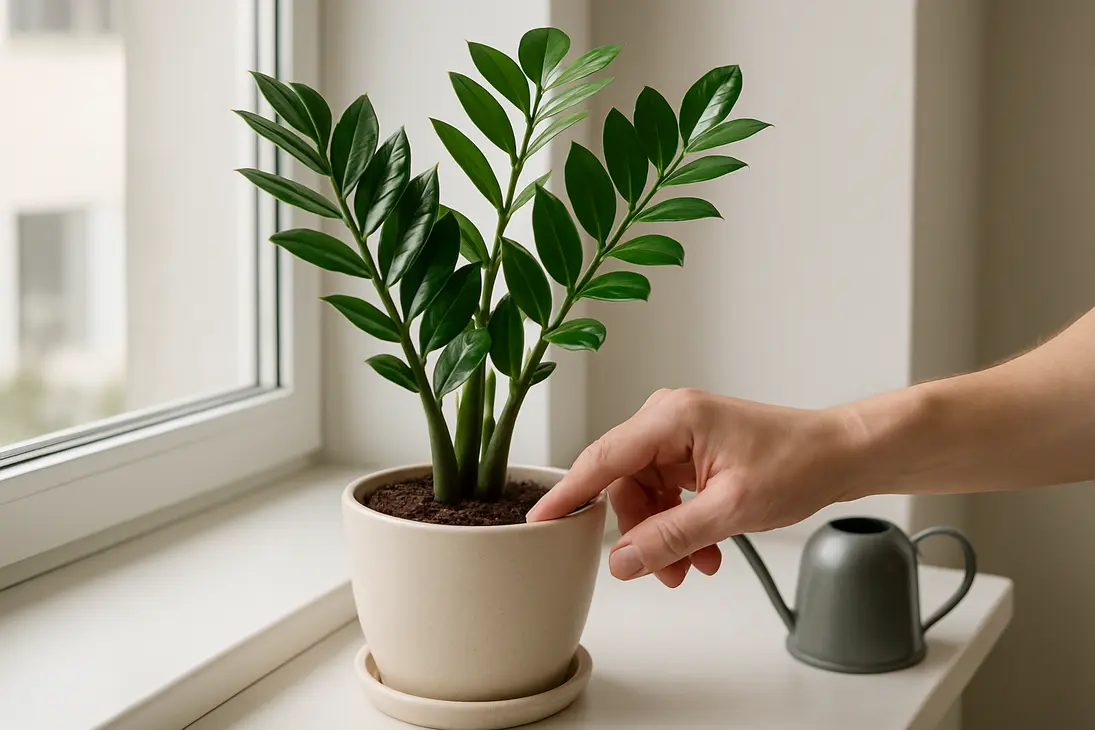
A good ZZ plant watering schedule is simple: water only when the soil has dried out almost completely. For many indoor ZZ plants, that means every 2–4 weeks, but timing depends on light, pot size, soil, temperature, season, and drainage.
ZZ plants store water in thick underground rhizomes and fleshy stems, so they tolerate missed waterings better than soggy soil. Check the soil first, water thoroughly when it is dry, then wait until it dries again.
The Best ZZ Plant Watering Schedule
The best schedule is not a fixed calendar date. Use a calendar to remind you to check the plant, not to water automatically.
| Growing condition | Typical watering frequency |
|---|---|
| Bright indirect light, warm room, well-draining soil | Every 2–3 weeks |
| Medium or low indoor light | Every 3–5 weeks |
| Cool room or winter conditions | Every 4–6+ weeks |
| Large pot, dense soil, or very low light | Only when nearly dry |
These are starting points. A ZZ plant in a small terracotta pot near a bright window may dry much faster than one in a large plastic pot in a dim corner.
Typical indoor watering frequency
Most indoor ZZ plants do well with water about every 2–4 weeks. If you are new to ZZ plant care, check the soil every two weeks instead of watering on a fixed schedule.
A simple routine:
- Set a reminder every 14 days.
- Check the soil 2–3 inches down.
- Water only if it feels dry or almost dry.
- If it still feels damp, wait another week.
When in doubt, wait. A slightly thirsty ZZ plant usually recovers after watering, but a waterlogged ZZ plant can develop root or rhizome rot.
Summer vs. winter watering
ZZ plants usually need water more often in spring and summer because warmth, longer days, and active growth dry soil faster. In bright indirect light, many need water every 2–3 weeks; in lower light or air-conditioned rooms, it may be closer to 3–4 weeks.
In winter, slow down. Shorter days and cooler conditions mean the plant uses less water, so watering may stretch to every 4–6 weeks or longer. The rule is not “water more in summer and stop in winter.” It is: check the soil and expect drying time to change.
Why ZZ plants prefer drying out between waterings
ZZ plants, or Zamioculcas zamiifolia, have thick rhizomes below the soil that store water and energy. These help the plant survive dry periods.
Those same rhizomes are vulnerable in wet soil. When potting mix stays soggy, roots cannot get enough oxygen, decay begins, and rot can spread into the rhizomes. Letting the soil dry most of the way between waterings matches how the plant is built to grow: occasional moisture followed by a dry period.
How to Tell When Your ZZ Plant Needs Water
The most reliable way to know when to water is to check below the soil surface. The top layer may look dry while the lower soil is still wet.
A ZZ plant is ready for water when the soil is dry several inches down and the pot feels noticeably lighter than it did after watering.
The 2–3 inch finger test
Push your finger 2–3 inches into the soil near the edge of the pot. If the soil feels dry at that depth, your ZZ plant may be ready for water. If it feels cool, damp, sticky, or dark, wait.
For small pots, 2 inches may be enough. For large pots, check more than one spot because moisture can linger in the center and bottom.
Quick guide:
- Dry and crumbly: likely ready to water.
- Slightly cool: wait a few days.
- Damp or sticky: do not water.
- Wet with a musty smell: possible overwatering.
Using a wooden skewer or moisture meter
A wooden skewer, chopstick, or dowel works like a dipstick. Insert it gently, leave it for a minute, then pull it out. If it comes out clean and dry, the soil is probably dry. If damp soil clings to it or the wood darkens, wait.
Be gentle, because ZZ rhizomes can sit close to the surface. Do not force the skewer through resistance.
Moisture meters can help, but use them as a guide rather than a final answer. Cheap meters can be unreliable in chunky or very dry mixes, so compare the reading with soil feel and pot weight.
What “almost completely dry” soil means
“Almost completely dry” means most of the mix, especially the upper and middle layers, has dried before you water again. It does not mean the plant must sit bone-dry for weeks.
The cycle should be:
- Water thoroughly.
- Let excess water drain.
- Allow the soil to dry.
- Water again when the upper and middle soil are dry.
In a small pot, this may take two weeks. In a large decorative planter with dense soil, it may take more than a month.
What Affects How Often You Should Water
Two ZZ plants can need very different watering routines. The main factors are light, temperature, pot size, drainage, soil type, and plant size.
Light and room temperature
A ZZ plant in bright indirect light usually uses water faster than one in a dim corner. Bright indirect light also helps potting mix dry at a healthier pace.
ZZ plants tolerate low light, but they grow more slowly there and use less water. Frequent watering in low light can leave soil damp too long.
Temperature also matters. Warm rooms dry pots faster, while cool rooms slow evaporation and growth. Heating vents can dry the topsoil quickly while the lower pot remains wet, so still check below the surface.
Pot size and drainage holes
Pot size strongly affects watering frequency. Small pots dry faster. Large pots hold more moisture, especially if the root system does not fill the container.
ZZ plants usually prefer to be somewhat snug. When repotting, move up gradually, often just one pot size. Oversized pots are a common cause of overwatering because unused soil stays wet around the roots and rhizomes.
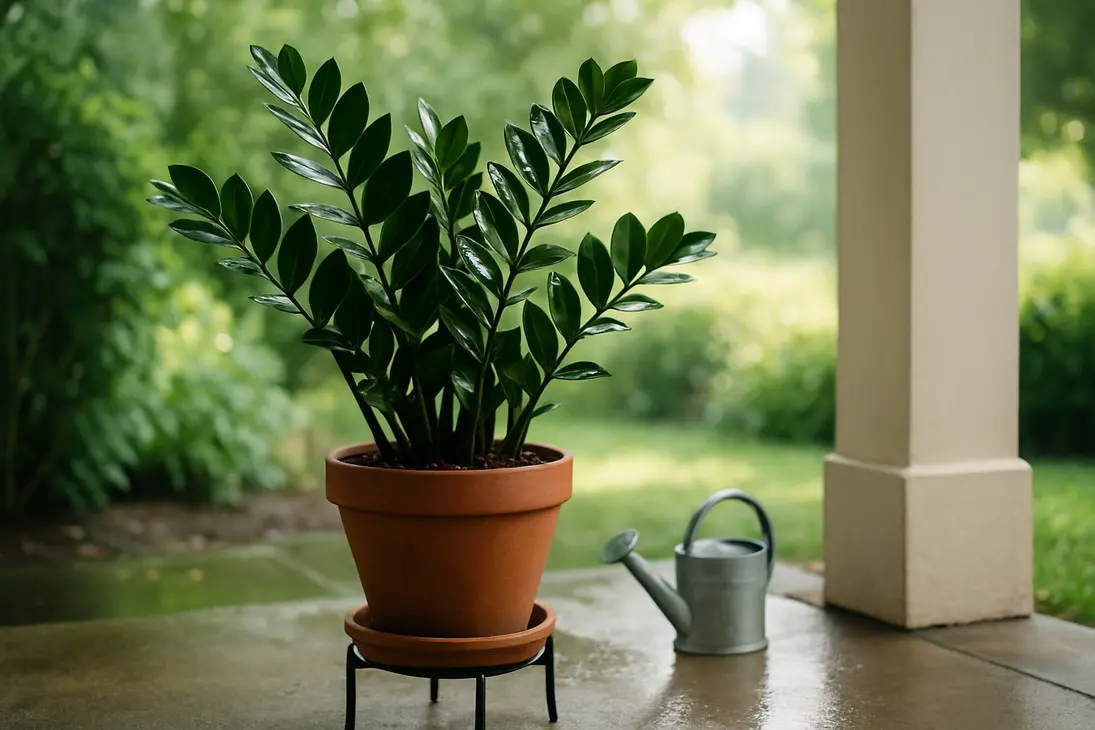
Drainage holes are essential. If you use a decorative cachepot, keep the ZZ plant in a nursery pot with drainage and place that inside the outer pot. After watering, make sure no water is pooling at the bottom.
Soil mix and how quickly it dries
ZZ plants need a loose, well-draining potting mix. Standard indoor potting soil may work, but dense mixes often need more aeration.
A good ZZ plant mix may include indoor potting mix plus perlite, pumice, orchid bark, coarse chips, cactus mix, or succulent mix. The goal is soil that absorbs moisture, drains well, and dries within a reasonable time.
If the soil stays wet for more than a week or two after watering, the mix may be too dense, the pot too large, or the plant too far from light.
Plant size and growth stage
A larger ZZ plant with more stems may use water faster than a small plant in the same pot size. A plant producing new shoots in spring or summer may also dry faster.
Still, ZZ plants are slow growers. Do not assume a large plant needs frequent watering. A mature ZZ in a large plastic pot can stay moist longer than expected.
After repotting, be cautious. Fresh soil often holds more moisture than old, root-filled soil. Water if needed, then wait until the mix dries again. Do not keep the soil wet “to help it adjust.”
The Right Way to Water a ZZ Plant
ZZ plants prefer deep, occasional watering over small, frequent sips. When the soil is dry enough, water thoroughly, let the pot drain, and then wait.
Water deeply, then wait
When your ZZ plant is ready, pour water slowly and evenly over the soil until it runs from the drainage holes. This helps moisture reach the full root zone instead of only wetting the surface.
After watering, let the pot drain completely. Return it to its spot and do not water again until the soil is almost completely dry.
If very dry soil repels water and it runs down the sides, water once, wait a few minutes, then water again more slowly.
Empty saucers and avoid waterlogged soil
Never leave a ZZ plant sitting in water. After watering, empty the saucer or outer decorative pot.
Standing water keeps the lower soil saturated, even if the surface feels dry. This is especially risky for ZZ plants because their rhizomes store water but do not tolerate constant saturation.
Why underwatering is usually safer than overwatering
With ZZ plants, underwatering is usually easier to fix than overwatering. A thirsty plant may show wrinkled stems, dry soil, or some yellowing after prolonged drought. Once watered properly, it often stabilizes.
Overwatering can cause root rot, rhizome rot, soft stems, yellow leaves, and foul-smelling soil. Once rot sets in, you may need to unpot the plant, remove damaged roots or rhizomes, and repot in fresh soil.
If you are debating whether to water today or check again in a few days, waiting is usually safer.
Signs Your ZZ Plant Is Getting Too Much or Too Little Water
Watering problems can look similar. Yellow leaves, drooping stems, and stalled growth can happen for several reasons. The soil condition is the key clue.
A yellowing ZZ plant in wet soil has a different problem than a yellowing ZZ plant in dusty-dry soil.
Signs of overwatering and root rot
Overwatering is the most common serious ZZ plant watering problem. Watch for:
- Yellow leaves, often lower on the plant.
- Soft, mushy, or collapsing stems.
- Soil that stays damp for many days or weeks.
- Sour, musty, or rotten smell.
- Dark, mushy, or slimy roots.
- Soft or rotting rhizomes.
- Leaves dropping while soil is wet.
If symptoms are severe, stop watering and inspect the roots and rhizomes. Healthy roots are firm and light-colored to tan. Rotten roots are dark, mushy, slimy, or foul-smelling.
Trim rotted tissue with clean tools, remove soggy soil, and repot into a fresh, well-draining mix in a pot with drainage.
Signs of underwatering
Underwatering is less common but can happen in small pots, bright light, warm rooms, or very fast-draining soil.
Signs include:
- Soil pulling from the pot sides.
- Very light pot.
- Dull or slightly curled leaflets.
- Wrinkled or leaning stems.
- Brown, dry leaf tips.
- Older leaves yellowing after long drought.
Water thoroughly. If water runs straight through, repeat slowly after a few minutes so the mix can rehydrate. Then return to a normal dry-down routine.
Fungus gnats and consistently damp soil
Fungus gnats are small flying insects often linked to moist potting soil. They are not unique to ZZ plants, but repeated gnats can mean the soil is staying too wet.
Sticky traps catch adults, but they do not fix the moisture problem. Review the basics: Are you watering before the soil dries? Is the pot sitting in water? Is the mix dense? Is the plant in very low light or an oversized pot?
Correcting moisture conditions is often more useful than adding treatments.
How to reset your watering routine
If your ZZ plant is struggling, stop guessing and inspect the pot.
Check soil moisture 2–3 inches down, pot weight, standing water in the saucer or cachepot, soil smell, and roots if the plant is declining in wet soil.
If the soil is wet, stop watering, empty standing water, and move the plant to brighter indirect light if possible. Repot if the soil is dense, sour-smelling, or staying wet too long.
If the soil is dry and the plant looks thirsty, water thoroughly and monitor recovery. Set a reminder to check again in two weeks, but water only if the soil is dry enough.
Conclusion
The best ZZ plant watering schedule is flexible: check the soil every couple of weeks, then water only when it is almost completely dry. For many homes, that means about every 2–4 weeks during active growth and less often in winter.
ZZ plants handle dry spells well because of their water-storing rhizomes. They do not handle soggy soil well. Use a pot with drainage, water deeply when the soil is dry, empty the saucer, and do not water just because the calendar says so.
If you remember one rule, make it this: check first and water second.
FAQ
Can I water my ZZ plant every week?
Usually, no. Weekly watering is too frequent for many indoor ZZ plants, especially in low light, cool rooms, large pots, or dense soil.
There are exceptions, such as a small plant in bright warmth and a fast-draining mix, but they are not the normal baseline. Check weekly if you want, but water only when the soil is dry 2–3 inches down.
How long can a ZZ plant go without water?
A healthy ZZ plant can often go several weeks without water, and sometimes longer in winter or low light. Many indoor ZZ plants can handle 3–6 weeks between waterings depending on conditions.
Do not intentionally leave it dry for months. Long droughts can cause wrinkled stems, leaf drop, and stalled growth. Still, a ZZ plant is usually more forgiving of dryness than soggy soil.
Should I mist my ZZ plant?
No. Misting is not necessary for ZZ plant watering, and it does not replace proper soil watering. ZZ plants do not need high humidity to grow well indoors.
If the leaves are dusty, wipe them with a damp cloth instead. Focus on correct soil moisture, drainage, and suitable light.
Do ZZ plants need less water in winter?
Yes. ZZ plants usually need less water in winter because they grow more slowly and the soil dries more slowly. In many homes, winter watering may be every 4–6 weeks instead of every 2–3 weeks.
Still, do not stop watering completely unless the soil remains moist. Check first; if the soil is dry several inches down, water thoroughly and let the pot drain.
You Might Also Like