How Much Sunlight Does a ZZ Plant Need?
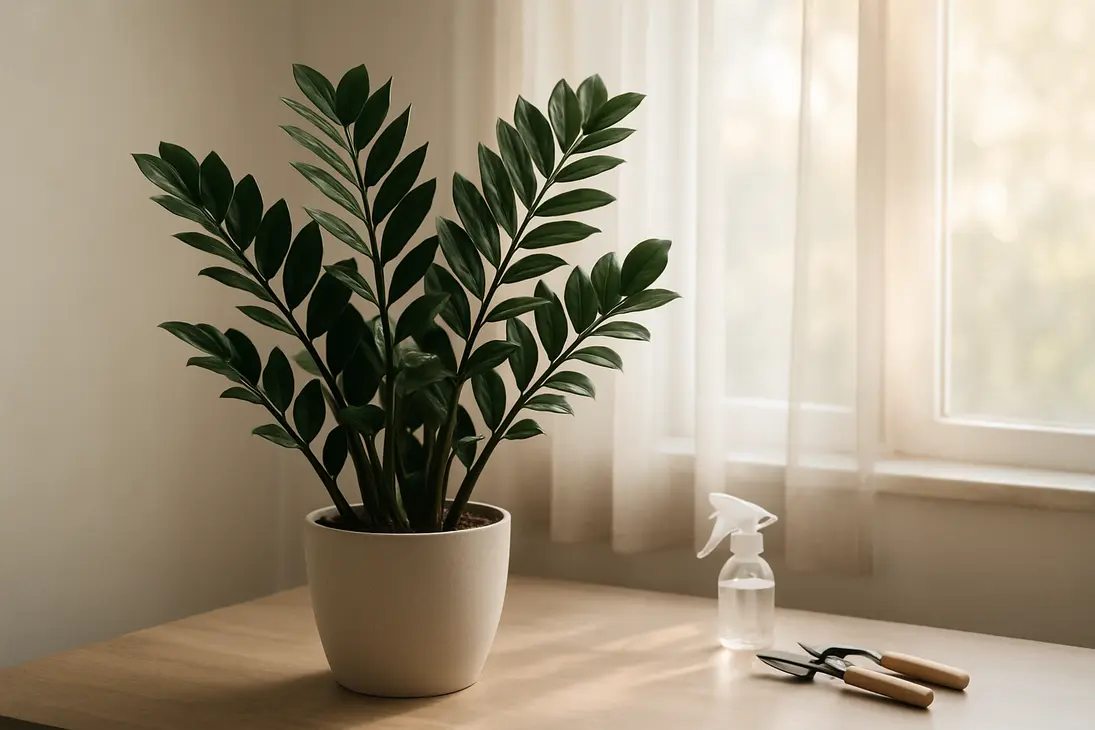
ZZ plants do best in bright, indirect light, but they also tolerate low to moderate indirect light better than many houseplants. In most homes, a good spot is near a north- or east-facing window, a few feet back from a brighter window, or under steady office lighting.
The key point is that “low light tolerant” does not mean “no light.” A ZZ plant can sit in a dim corner for a long time because it grows slowly and stores water and energy in thick underground rhizomes. But if light stays too weak, growth slows, new stems become rare, and the plant may lean toward the nearest light source.
ZZ Plant Sunlight Needs at a Glance
A ZZ plant’s ideal light is bright enough that the room feels naturally lit during the day, but not so harsh that leaves sit in hot direct sun for hours.
| Light condition | Is it suitable for ZZ plants? | What to expect |
|---|---|---|
| Bright, indirect light | Best | Strongest growth and fuller stems |
| Moderate indirect light | Good | Steady but slower growth |
| Low indirect light | Tolerated | Survival with limited growth |
| Direct morning sun | Usually acceptable | Helpful if gentle |
| Strong afternoon direct sun | Risky | Scorch, yellowing, heat stress |
| No light | Not suitable long term | Gradual decline |
Best Light Level for Healthy Growth
For healthy growth, ZZ plant sunlight needs are best met with bright, indirect light for much of the day. The plant should receive enough brightness to photosynthesize, but the leaves should not bake in a hot sunbeam.
A simple test: during the brightest part of the day, look at the wall or floor near the plant. If the area is bright and shadows are soft or blurry, the light is usually suitable. If direct sun creates a sharp, hot patch on the leaves for hours, the spot may be too intense.
In brighter indirect light, ZZ plants are more likely to produce new stems, stay upright, and develop larger leaflets. They are naturally slow growers, so even in good conditions they may grow in occasional flushes rather than continuously.
Can ZZ Plants Survive in Low Light?
Yes, ZZ plants can survive in low light, which is why they are common in offices, apartments, hallways, and rooms with small windows. Their rhizomes help them handle less-than-ideal conditions.
But survival is not the same as thriving. In low light, a ZZ plant usually grows very slowly, produces fewer stems, may make smaller leaves, may lean toward the light, and needs less frequent watering because soil dries slowly.
Low light is acceptable if you want a low-maintenance plant that stays attractive in a difficult spot. For fuller, faster growth, give it brighter indirect light.
How Much Light Is Too Little?
Light is probably too weak if the plant is far from any window in a dark room, overhead lights are rarely on, or you cannot comfortably read there during the day without a lamp.
Signs of too little light include:
- no new stems for a long time during the growing season;
- noticeably smaller new leaves;
- stretched, leaning, or widely spaced stems;
- soil staying wet longer than expected;
- growth gradually shifting toward one side.
ZZ plants can look fine for months in dim conditions, so low-light problems are often subtle. If your plant looks “frozen in time,” light may be part of the reason.
Direct Sunlight: When It Helps and When It Hurts
Direct sunlight is not always bad, but prolonged, hot direct sun can damage ZZ plant leaves. The biggest indoor risk is a south- or west-facing window where afternoon sun hits the same leaves for hours.
Gentle sun is different. A little early morning light from an east-facing window is often fine. Filtered sun through a sheer curtain, blinds, or another plant can also work well.
Plants moved suddenly from low light to direct sun are especially vulnerable, so increase brightness gradually when changing locations.
Signs of Too Much Direct Sun
Too much direct sun often shows up as leaf damage before the whole plant declines. Watch for:
- tan or brown patches;
- crispy spots on the window-facing side;
- yellowing after a move to brighter light;
- dry tips or edges;
- faded or washed-out leaf color.
Brown spots can also come from watering issues or physical damage, but if they appear mainly on the sun-facing side, direct light is a likely cause.
Scorched leaves will not turn green again. You can leave lightly damaged leaves in place or prune badly damaged stems at the base. The main fix is reducing direct exposure so new growth stays healthy.
Using Curtains or Distance to Filter Bright Light
If your best window is very sunny, soften the light rather than avoiding the window completely. Good options include:
- placing the plant 3 to 6 feet back from a bright south- or west-facing window;
- using a sheer curtain;
- positioning the plant beside the window instead of directly in front;
- adjusting blinds during hot afternoon sun;
- placing it behind taller plants that cast light shade.
Indoor light drops quickly as you move away from the glass. A ZZ plant that scorches on a windowsill may do well a few feet into the room.
Best Places to Put a ZZ Plant Indoors
The best indoor spot for a ZZ plant is bright, stable, and not overly hot. Window direction helps, but real light levels also depend on trees, roof overhangs, nearby buildings, season, and window size.
In the Northern Hemisphere, south-facing windows are generally brightest, west-facing windows get hotter afternoon light, east-facing windows get gentler morning light, and north-facing windows provide softer indirect light. In the Southern Hemisphere, north and south are reversed.
Near a North- or East-Facing Window
A north-facing window is often a safe place for a ZZ plant because the light is usually indirect and steady, with little scorch risk. Growth may be moderate, but the plant should remain healthy if the window is not heavily shaded.
An east-facing window is often even better. Morning sun is usually gentle, and the plant gets useful brightness without harsh afternoon heat. If leaves touch the glass or receive strong summer sun for several hours, move the pot slightly back.
Several Feet From a Bright Window
ZZ plants are excellent for spots a few feet back from brighter windows. This gives them useful light while reducing scorch risk.
Try placing a ZZ plant 3 to 5 feet from a bright south-facing window, 4 to 8 feet from a large west-facing window, across from a big unobstructed window, or near a patio door but outside the direct sunbeam.
If the plant leans strongly toward the window or stops growing, move it closer. If leaves develop sun patches, move it farther back or filter the light.
ZZ Plants in Offices, Hallways, or Low-Light Rooms
ZZ plants are good choices for offices and low-light rooms, but they still need some light. A windowless office with bright overhead lights on most workdays is better than a dark room where lights are rarely used.
Place the plant where it receives steady ambient light during the day. Avoid corners behind doors, spaces under desks, or areas far from both windows and artificial lights. If natural light is minimal, a grow light can help.
Light-Related ZZ Plant Problems and What They Mean
ZZ plant problems are often blamed on watering, but light affects how quickly soil dries, how much water the plant uses, and whether it has enough energy for new growth.
| Symptom | Possible light-related cause | What to do |
|---|---|---|
| Brown patches | Too much direct sun | Move or filter light |
| Small new leaves | Not enough light | Move closer to bright indirect light |
| No new stems | Low light or season | Improve light and wait |
| Leaning stems | Reaching for light | Rotate and increase light |
| Falling stems | Weak light or care stress | Check light and soil moisture |
| Very slow growth | Low light or winter | Use brighter indirect light |
Brown Spots or Scorched Leaves
Sun scorch is usually dry, tan to brown, and most obvious on leaves facing the window. It may appear after moving a ZZ plant from a dim spot to a sunny one.
If you suspect scorch, move the plant out of the direct sunbeam and check whether damage is only on the exposed side. Prune badly damaged stems only if needed.
Do not respond to scorch by watering heavily. Extra water will not repair burned tissue and may increase root problems, especially if the plant is now in lower light.
Small Leaves or No New Stems
Small leaves or long periods with no new stems often point to insufficient light, especially if the plant otherwise looks healthy. ZZ plants naturally grow slowly and may pause in winter, after repotting, or after moving homes, but very low light limits the energy needed for new shoots.
To encourage growth, move the plant to brighter indirect light and be patient. New stems emerge from below the soil, so results are not immediate.
Avoid adding extra fertilizer to force growth in a dark room. Fertilizer cannot replace light, and excess fertilizer can harm the plant.
Leggy, Leaning, or Falling Stems
ZZ plant stems naturally arch as they age, especially older outer stems. But if new stems are thin, stretched, or leaning strongly toward a window, the plant likely needs more light.
A one-sided plant usually means light comes from one direction and the pot is not being rotated. Falling stems can also come from watering stress, damage, or age, so check the whole plant before assuming light is the only cause.
For light-related leaning, move the plant closer to light, rotate the pot regularly, avoid very dark corners, and prune only damaged, yellowing, or collapsed stems. Staking is mostly cosmetic; better light helps future stems grow sturdier.
Slow Growth in Low Light
Slow growth is normal for ZZ plants and even more common in low light. A plant in a dim hallway may look unchanged for a year. That does not necessarily mean it is dying, but it does mean it has limited energy.
In low light, water less often. Soil that dries in two weeks near a bright window may stay damp much longer in a dim room. This is one reason ZZ plants in low light are easy to overwater.
If your ZZ looks healthy but never grows, brighter indirect light is the most practical improvement.
How to Adjust Light for Better Growth
ZZ plants adapt well, but sudden changes can cause stress. Moving a plant from a dark corner to a sunny window can scorch leaves. Moving it from bright light to deep shade can slow growth and keep soil wet longer.
The goal is to find a stable spot where the plant receives enough light without heat or sun damage.
Move the Plant Gradually
When increasing light, move the plant in stages. For example, shift it from a dark corner to a brighter part of the room, then closer to the window after a week or two. If the new spot receives direct sun, make sure it is gentle morning sun or filtered light.
Gradual changes are especially important for plants that have spent months in low light. After moving the plant, watch it for two to four weeks. Warning signs include yellowing, scorched patches, or soil staying wet much longer than before.
Rotate for Straighter Growth
Because indoor light usually comes from one side, ZZ plants often lean toward the window. Rotating the pot helps keep growth balanced.
Turn the pot a quarter turn every couple of weeks, especially when the plant is producing new stems. Existing stems may not fully straighten, but new growth will develop more evenly.
Also wipe dusty leaves with a damp cloth so more light reaches the leaf surface. Avoid heavy leaf-shine products, which can leave residue.
Consider a Grow Light in Dark Rooms
If your room has little useful natural light, a grow light is the most reliable solution. A simple full-spectrum grow bulb in a desk lamp or floor lamp can help if it is close enough to benefit the plant without overheating it.
Use a grow light when the room has no windows, the plant is far from the nearest window, overhead lights are weak or rarely on, growth has stopped for a long time, or stems lean strongly toward a distant light source.
Place the light above or slightly in front of the plant, and keep it on a consistent daytime schedule rather than leaving it on all night. Even with artificial light, water cautiously; ZZ plants still prefer to dry well between waterings.
Conclusion
ZZ plants are adaptable, forgiving houseplants, but they still need light to grow well. The best light for a ZZ plant is bright, indirect light—enough brightness to support new stems and healthy leaves, without harsh direct sun scorching the foliage.
Low to moderate indirect light is acceptable if you are content with slow growth. If your ZZ plant is not producing new leaves, is leaning, or has small new growth, improve the light before adding fertilizer. If it has brown, dry patches on sun-facing leaves, reduce direct exposure.
Good placements include near a north- or east-facing window, several feet back from a brighter window, or under a grow light in a dark room.
FAQ
Does a ZZ plant need direct sunlight?
No. A ZZ plant grows best in bright, indirect light. Gentle morning sun or filtered sun is usually fine, but prolonged hot direct sun can scorch the leaves.
Can a ZZ plant grow in a room with no windows?
A ZZ plant can survive for a while in a windowless room if there is bright artificial light, but it should not be kept in darkness. Use a grow light or place it where overhead lights are on regularly during the day.
Why is my ZZ plant not growing new leaves?
It may not be getting enough light. ZZ plants are naturally slow growers and may pause in winter or after repotting, but very low light can stop new growth for long periods. Move it to brighter indirect light and avoid overwatering.
Where is the best place to put a ZZ plant indoors?
The best place is near a bright window with indirect light. A north- or east-facing window is often ideal. You can also place it several feet back from a sunny south- or west-facing window, especially with filtered light. In darker rooms or offices, use the strongest available light or add a grow light.
You Might Also Like