How Long Can a ZZ Plant Thrive in a 7-Inch Pot?
Short Answer: A ZZ Plant Can Often Stay in a 7-Inch Pot for Years
A healthy ZZ plant can often thrive in a 7-inch pot for 2 to 4 years, and sometimes longer, if the plant is stable, the soil drains well, and the roots and rhizomes are not severely crowded.
ZZ plants grow slowly and store water in thick underground rhizomes, so they tolerate snug pots better than many tropical houseplants. A small ZZ with only a few stems may stay comfortable in a 7-inch pot for years. A large, full ZZ with many canes and bulky rhizomes may outgrow it sooner.
The best guide is the plant itself. If it is upright, growing at least occasionally, drying at a normal pace, and showing no signs of rot or crowding, there is usually no rush to repot. For many ZZ plants, the bigger risk is moving into a much larger pot too soon and then overwatering.
Why ZZ Plants Do Well in Small Pots
ZZ plants are naturally suited to dry periods and relatively tight root space. Their glossy leaves look tropical, but their care needs are closer to a drought-tolerant houseplant than a moisture-loving fern.
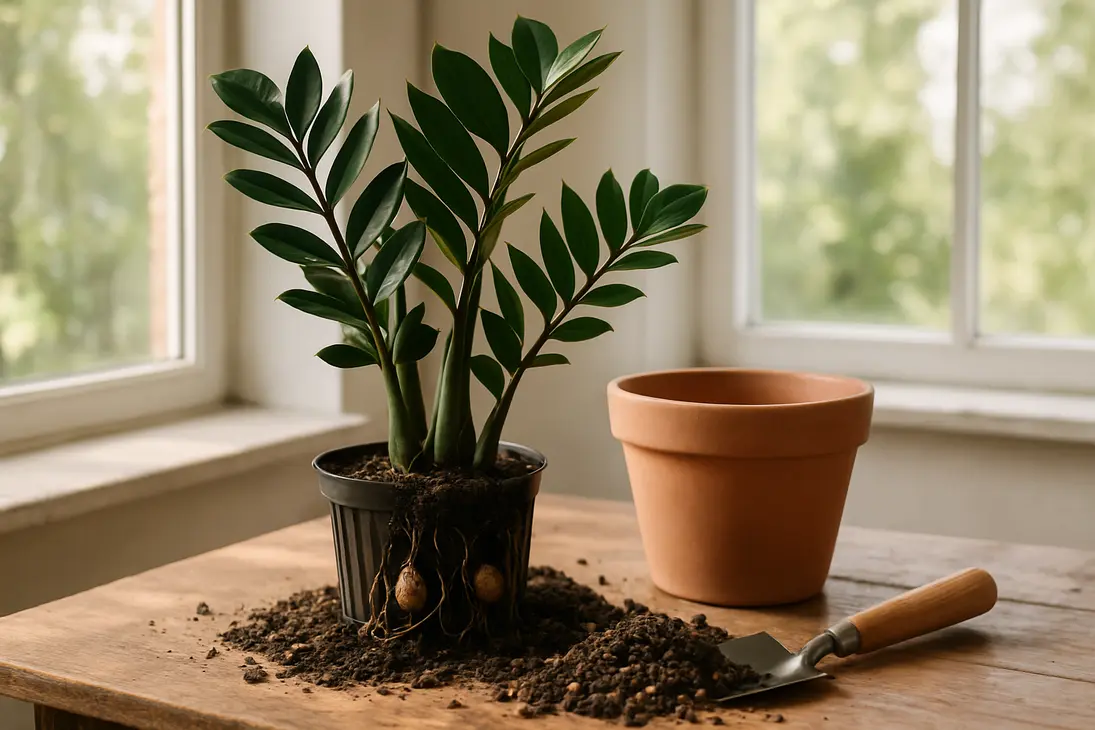
The key is the rhizome system. Under the soil, ZZ plants grow thick, potato-like rhizomes that store water and energy. Because of this, they do not need a large volume of constantly moist soil around their roots. A 7-inch pot can be enough for a modest ZZ plant when drainage, light, and watering are appropriate.
ZZ Plants Like Being Slightly Rootbound
ZZ plants often do well when they are slightly rootbound, meaning roots and rhizomes have filled much of the pot but are not badly compressed. In a snug pot, the soil usually dries more predictably, which reduces the risk of rot.
Slightly rootbound does not mean trapped or strangled. A comfortable ZZ may have roots around the outside of the root ball while still looking firm and healthy. A severely crowded plant may push upward, distort a plastic pot, dry out unusually fast, or become unstable.
Why a Bigger Pot Is Not Always Better
A bigger pot only helps when the ZZ actually needs more room. Moving a ZZ from a 7-inch pot straight into a 10- or 12-inch pot can leave too much unused soil around the root system. That soil may stay wet longer than the plant can use it, especially in low light or cool indoor conditions.
ZZ plants are more likely to decline from excess moisture than from being a little snug. Upsize only when there are clear signs of crowding, such as packed roots, rhizomes pressing against the pot, very rapid drying, or decline despite otherwise good care.
How Rhizomes Store Water and Affect Pot Size
ZZ rhizomes act as water reservoirs. After watering, they store moisture and release it gradually, which is why a ZZ can look fine even after the potting mix has dried.
Rhizomes also take up pot space differently from fine roots. Over time, several bulky rhizomes in a 7-inch pot may press against each other and the pot wall. Healthy rhizomes should feel firm; soft, dark, wet-looking, or foul-smelling rhizomes suggest rot. In a small pot, success depends on balancing rhizome size, root health, soil volume, drainage, and watering habits.
Signs Your ZZ Plant Has Outgrown Its 7-Inch Pot
Do not repot only because the plant has been in the same pot for a certain number of months. Repot when the plant’s underground growth is clearly exceeding the space available.
| Sign | What it usually means | How urgent is repotting? |
|---|---|---|
| A few roots at drainage holes | Normal aging in the pot | Low; monitor |
| Thick roots or rhizomes pushing out | Crowding | Repot soon |
| Soil dries much faster than before | Pot may be mostly roots | Inspect roots |
| Pot bulging or plant lifting upward | Rhizomes are crowded | Repot or divide |
| Yellowing with wet soil | Possible rot | Inspect immediately |
Roots Circling Heavily or Pushing Out of Drainage Holes
A root or two at the drainage holes is not an emergency. The concern is thick, numerous roots packed at the bottom or circling tightly around the root ball.
If you check, tip the pot gently, support the plant at the base, and slide it out. If the root ball holds the exact pot shape and is wrapped tightly in roots, the plant may need more space. If the roots are present but not heavily circling and some soil still loosens, the 7-inch pot may still be fine.
The Pot Dries Out Much Faster Than Usual
A major change in drying speed can signal crowding. If your ZZ used to take two or three weeks to dry but now dries in only a few days under the same conditions, the pot may contain more roots and rhizomes than soil.
Consider context first. Warmer weather, stronger light, terracotta, indoor heating, or a very airy mix can also make soil dry faster. But if conditions have not changed and the plant is drying extremely quickly or wrinkling, inspect the roots and consider a slightly larger pot or division.
Crowded Rhizomes Lifting the Plant or Distorting the Pot
Crowded rhizomes can physically push the plant upward. You may see soil rising, the base sitting higher than before, or a plastic nursery pot bulging at the sides. In ceramic pots, the plant may become difficult to remove if left too long.
This is one of the clearest signs that a 7-inch pot is too small. At that point, either move the plant into the next pot size or divide it into smaller plants.
Stalled Growth, Yellowing, or Decline Despite Proper Care
ZZ plants are naturally slow, so a lack of frequent new growth is not automatically a problem. They may sit quietly for months, then send up new shoots when conditions improve.
Decline is different. Watch for yellowing stems, soft bases, wrinkled stems after proper watering, thinning growth, sour-smelling soil, or mushy rhizomes. These symptoms do not always mean the pot is too small; they often point to overwatering or root rot. Inspect the roots before repotting, because moving a rotting ZZ into a bigger pot will not solve the problem.
When and How to Move a ZZ Plant to a Larger Pot
Repot when the 7-inch pot is clearly limiting the plant. Spring and early summer are ideal because recovery is easier, but act sooner if the pot is cracked, drainage is poor, or rot is suspected.
Handle rhizomes carefully. Remove loose old soil, but do not tear apart the root ball unless the mix is compacted or rot is present.
A simple repotting process:
- Choose a pot only slightly larger.
- Use a well-draining mix.
- Slide the ZZ out gently.
- Inspect roots and rhizomes.
- Trim only dead, mushy, or rotten material with clean tools.
- Set the plant at the same soil depth.
- Fill around the root ball without burying rhizomes deeply.
- Water carefully and let excess drain.
Choose the Next Pot Size Carefully
If a ZZ has outgrown a 7-inch pot, the next size is usually an 8-inch or 9-inch pot, not a much larger container. Moving up one size gives roots room without surrounding them with too much wet soil.
Use a mix that drains freely but does not become rock-hard. A cactus or succulent mix can work, or you can amend standard indoor potting mix with perlite, pumice, coarse bark, or another drainage-friendly material.
Use a Pot With Drainage Holes
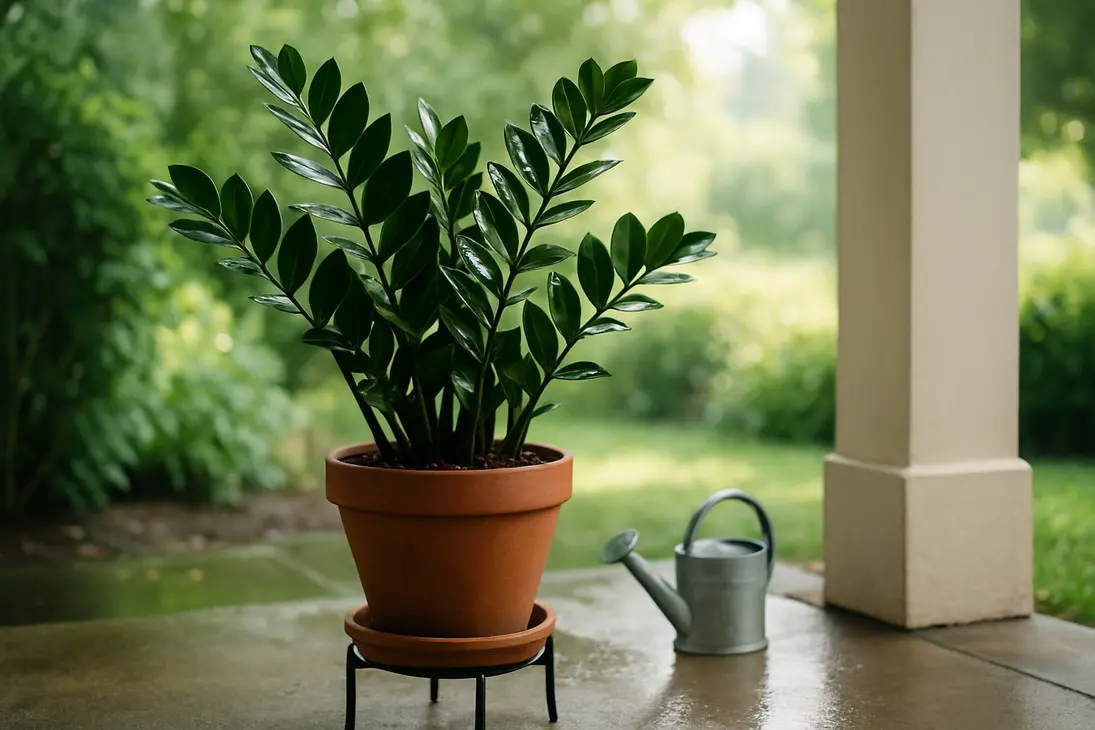
A ZZ plant should be in a pot with drainage holes. Excess water needs a way to leave the container rather than collect around the rhizomes.
If you want to use a decorative pot without holes, keep the ZZ in a plastic nursery pot with drainage and place that inside the decorative cachepot. After watering, empty any runoff so the plant is not sitting in water. ZZ plants tolerate dry soil far better than stagnant water.
Avoid Watering Too Much After Repotting
Do not overwater after repotting to “help” the plant. Newly disturbed roots are more vulnerable to rot when soil stays wet.
If the new mix is slightly moist, wait several days before watering. If it is dry and the plant was healthy, water lightly to settle the soil, then let the pot drain fully. After that, return to a normal dry-down routine. A ZZ may pause after repotting, so judge success by firm stems and healthy roots, not immediate new growth.
Keeping a ZZ Plant Healthy in a 7-Inch Pot
A ZZ plant can stay healthy in a 7-inch pot for years if care matches the container. The goal is not frequent watering; it is watering only when the plant is ready.
Let the Soil Dry Before Watering
Let the soil dry well before watering again. In many homes, that means every few weeks, but timing depends on light, temperature, humidity, pot material, and soil mix.
Do not water just because the surface is dry. Check deeper with your finger, a wooden skewer, pot weight, or a moisture meter used cautiously. When you water, water enough to reach the root zone, then let excess drain. Avoid tiny sips every few days, which can keep parts of the soil damp without properly hydrating the root ball.
In low light or winter, a ZZ may need much less water than it does in brighter, warmer conditions.
Give Bright Indirect Light, but Tolerate Lower Light
ZZ plants tolerate lower light, but they usually grow better in bright indirect light. In dim spaces, they grow slowly and the soil stays wet longer after watering.
Place the plant near a bright window out of harsh midday sun. Gentle morning sun or filtered light is usually fine. Strong direct sun can scorch leaves, especially if the plant was grown in lower light.
Light also affects how long a ZZ can stay in a 7-inch pot. Brighter conditions may produce faster growth and earlier crowding; lower light may keep the plant smaller for longer.
Watch for Root Rot: Mushy, Dark, or Smelly Rhizomes
Root rot is one of the main reasons ZZ plants fail, especially in oversized pots or after frequent watering. Because rhizomes store water, they can rot if they stay wet too long.
Signs of rot include yellowing stems, soft bases, leaf drop, soil that remains wet for many days, a sour smell, or mushy rhizomes. If you suspect rot, remove the plant and inspect it. Healthy rhizomes are firm. Cut away rotten sections with clean tools, let cut surfaces dry briefly, and repot into fresh, well-draining mix. Use a pot that fits the remaining healthy roots; do not automatically size up after removing rot.
Divide the Plant if It Becomes Too Crowded
If the 7-inch pot is packed with multiple rhizome clusters, division may be better than upsizing. It keeps plants manageable and reduces pressure inside the pot.
To divide a ZZ plant:
- Remove it from the pot.
- Loosen enough soil to see the rhizomes.
- Find natural clumps with roots and stems.
- Pull sections apart gently, or cut only where necessary.
- Pot each division into a container that fits its roots.
- Use fresh, well-draining soil.
- Water cautiously while divisions settle.
Each division should include rhizome material and roots. After division, a pause in growth is normal.
Conclusion
A ZZ plant can often thrive in a 7-inch pot for several years. For many plants, 2 to 4 years is realistic, and some slow-growing ZZ plants can remain comfortable even longer.
The pot is too small only when the plant shows it: tightly packed roots, rhizomes lifting the plant, very fast drying, pot distortion, or decline despite proper care. If you repot, move up gradually to an 8- or 9-inch pot with drainage and a well-draining mix. Avoid oversized containers and heavy watering.
FAQ
Is a 7-inch pot too small for a ZZ plant?
Not necessarily. A 7-inch pot can be a good size for a small to medium ZZ plant. It becomes too small when roots and rhizomes are heavily crowded, the pot dries extremely fast, or the plant declines despite proper care.
Do ZZ plants prefer small pots?
ZZ plants often prefer a snug pot over an oversized one. A slightly small pot can help prevent excess wet soil, but they should not be left so crowded that rhizomes distort the pot or roots cannot function.
How often should I repot a ZZ plant?
Most ZZ plants need repotting about every 2 to 4 years, though timing varies. Plants in bright light may outgrow pots sooner, while plants in lower light may stay in the same pot longer. Check roots and rhizomes rather than relying only on a schedule.
Should I water a ZZ plant more often in a small pot?
Only if the soil is actually drying faster. A small pot can dry more quickly, but ZZ plants still need the soil to dry well between waterings. Check soil depth, pot weight, and plant condition before watering.
You Might Also Like