ZZ Plant Light Requirements: How Much Light Does It Need?
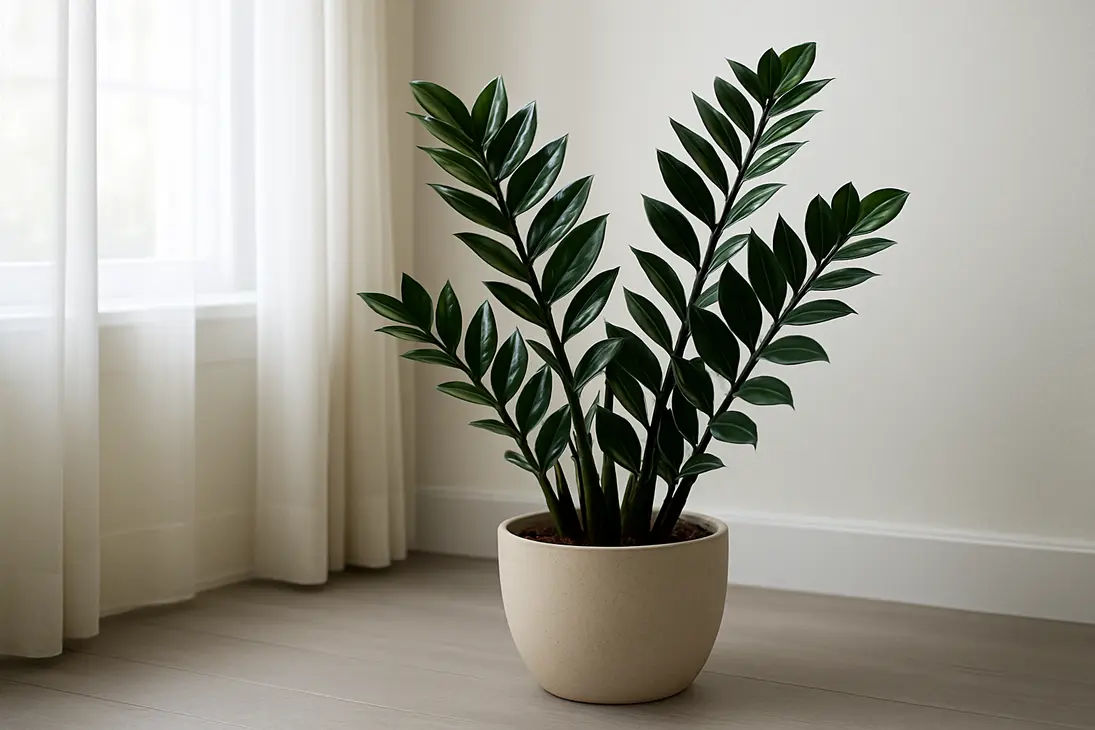
ZZ plants are famous for surviving in imperfect indoor conditions, including lower light. Their thick rhizomes store water and energy, helping them handle dim rooms better than many houseplants. But survival is not the same as ideal growth.
For the best results, give a ZZ plant bright, indirect light: a bright room where sunlight is filtered, softened, or not hitting the leaves for long periods. In this light, a ZZ plant usually grows fuller, stronger, and more evenly. In very low light, it may stay alive but grow slowly or not at all. In harsh direct sun, its leaves can scorch.
The Best Light for a ZZ Plant
ZZ plants grow best in bright, indirect light. The room should feel naturally bright during the day, but the plant should not sit in hot sunbeams for hours. This balance gives the plant enough energy for new stems without risking leaf damage.
They are often sold as low-light plants, but that label can be misleading. A ZZ plant can tolerate low light, but it still needs usable light to photosynthesize. A gloomy corner may keep it alive for a while, yet it is unlikely to produce much healthy new growth there.
Bright, Indirect Light Is Ideal
Bright, indirect light is found:
- Near an east-facing window
- A few feet from a south- or west-facing window
- Behind a sheer curtain
- In a bright room where the plant can “see” the sky
- Under a suitable grow light
In good light, new ZZ stems emerge from the soil as thick upright shoots before the leaves unfurl. Growth is still slow compared with many houseplants, but it is more reliable and compact.
If you want your ZZ plant to gain height, bright indirect light is the best starting point. Healthy height comes from strong new stems, not weak stretching toward a distant light source.
Low Light Is Tolerated, Not Preferred
ZZ plants tolerate low light because their rhizomes store resources, but low light changes how they grow. A ZZ plant in dim conditions may:
- Produce few new stems
- Grow very slowly
- Lean toward the nearest window or lamp
- Develop thinner or more stretched growth
- Stay smaller
- Use water more slowly
A simple test: if you can comfortably read in the room during the day without a lamp, a ZZ plant may survive there. If the room stays gloomy and always needs artificial light, the plant likely needs a brighter spot or a grow light.
Direct Sun Can Damage Leaves
ZZ plants can handle a little gentle morning or late-day sun, but strong direct sun through glass can burn the foliage, especially from south- or west-facing windows.
Too much sun may cause:
- Pale or washed-out leaves
- Dry brown scorch marks
- Crispy edges
- Yellowing on the window-facing side
- Leaves that feel hot during the day
Sun damage does not heal. Brown or bleached patches may remain, so the goal is to prevent more damage by moving the plant back or filtering the light.
Where to Place a ZZ Plant Indoors
The best location depends on window direction, season, climate, and outdoor shade from trees, buildings, balconies, or roof overhangs. In general, place the plant where it receives steady daylight but is protected from harsh afternoon sun.
If the room is darker, choose the brightest available spot and water less often, because a ZZ plant in low light uses water slowly.
Best Window Directions for ZZ Plants
| Window direction | Light quality | Placement tip |
|---|---|---|
| East-facing | Gentle morning sun | Usually excellent close to the window |
| North-facing | Soft, lower light | Keep near the glass; growth may be slow |
| South-facing | Bright, sometimes intense | Place back from the window or use a sheer curtain |
| West-facing | Strong afternoon sun | Filter light or keep several feet away |
East-facing windows are often easiest because morning sun is mild. North-facing windows can work if they are unobstructed. South- and west-facing windows provide strong brightness but may need filtering to prevent scorch.
How Far to Keep It From a Window
There is no exact distance that works in every home, but these ranges are useful starting points:
- East window: On the sill or within 1–3 feet if the sun is gentle.
- North window: Within 1–2 feet to capture as much light as possible.
- South window: Start 3–6 feet back, or closer with a sheer curtain.
- West window: Start 4–8 feet back if afternoon sun is strong.
Check the plant’s shadow. A soft, blurry shadow usually means indirect or filtered light. A sharp, dark shadow suggests stronger direct light that may be risky if it lasts long or feels hot.
Also touch the leaves during sunny periods. If they feel warm or hot, the plant is too exposed.
Using Grow Lights for ZZ Plants
ZZ plants can grow under artificial light, making them useful in offices, interior rooms, basements, and apartments with limited window access. A full-spectrum LED grow light is usually enough; you do not need an intense professional setup.
If the grow light is the main light source, 10–12 hours a day is a practical starting point. If the plant also receives natural light, it may need less supplemental light.
Helpful grow light tips:
- Use a timer for consistency.
- Keep the light close enough to help but not so close that leaves heat or bleach.
- Adjust gradually.
- Watch for leaning, which can mean the light is too weak or too far away.
- Give the plant darkness at night.
In a windowless room, artificial light is essential. Without natural or artificial light, a ZZ plant will eventually decline.
How Light Affects ZZ Plant Height and Growth
Light affects how often a ZZ plant produces new shoots, how upright its stems stay, how closely leaflets are spaced, and how full the plant looks.
ZZ plants are naturally slow growers, so slow growth is not always a problem. But if your plant has not produced new stems in a long time and sits in a dim area, light is one of the first things to improve.
More Light Encourages Stronger, Fuller Growth
In bright, indirect light, a ZZ plant has more energy for growth. You may notice:
- Thicker shoots
- More upright stems
- Richer green foliage
- A fuller shape
- Less leaning
- More frequent growth during the active season
ZZ plants often grow in flushes. They may look unchanged for months, then send up several stems at once. Good light supports these flushes, but the plant’s naturally slow rhythm remains.
Low Light Slows Growth
Low light usually does not kill a ZZ plant quickly. Instead, it slows the plant down. It uses less water, produces fewer stems, and may remain the same size for a long time.
This can be acceptable if you want a low-maintenance plant for a less-than-ideal spot. Just do not expect vigorous growth. A ZZ plant in a dim hallway that has not grown taller in a year may not be dying; it may simply be maintaining itself with limited light.
Why a ZZ Plant May Get Leggy or Lean Toward Light
Leggy or leaning growth often means the plant is not getting enough usable light, or the light is coming strongly from one direction.
Common signs include:
- Long stems with wider gaps between leaflets
- Stems angled toward a window or lamp
- One side looking fuller than the other
- Thin new stems
- A loose, floppy shape
Rotation helps prevent uneven growth. If stems are already stretched, they will not become shorter, but better light can improve future growth. You can prune unattractive stems if needed.
Signs Your ZZ Plant Is Getting the Wrong Light
ZZ plants are tough, but they show stress when light is too weak or too intense. Some symptoms overlap with watering problems, so look at the whole situation: light exposure, soil moisture, recent moves, and which part of the plant is affected.
Signs of Too Much Light
Too much light usually means too much direct sun, not simply a bright room. Damage often appears on the side facing the window.
Signs include:
- Dry brown patches
- Bleached or faded leaves
- Crispy tips or edges
- Yellowing where sun hits
- Slight curling away from intense light
- Soil drying much faster than usual
The fix is not to move the plant into darkness. Instead, filter the sun with a sheer curtain, move it farther from the window, or switch to a spot with gentler morning light.
Signs of Too Little Light
Too little light appears gradually. A ZZ plant may look fine for months before slow decline becomes obvious.
Signs include:
- Little or no new growth
- Thin, stretched stems
- Strong leaning toward light
- Wider spacing between leaflets
- Dull foliage
- Soil staying wet for a long time
- Yellowing older leaves if overwatering is also happening
Low light and overwatering often go together. When light is low, the plant uses less water. If you water on the same schedule as before, the rhizomes may stay too wet.
Brown Spots and Yellow Leaves: Light or Watering?
Brown spots and yellow leaves can come from light, watering, or both. The pattern helps identify the cause.
| Symptom | More likely light-related when… | More likely watering-related when… |
|---|---|---|
| Brown spots | Dry, tan, or bleached spots are on the sun-facing side | Spots are soft, dark, or spreading with wet soil |
| Yellow leaves | Yellowing appears where direct sun hits | Lower leaves yellow while soil stays wet |
| Crispy edges | Plant sits in hot direct sun | Plant has been extremely dry |
| Limp stems | Rare from light alone | Soil is soggy or rhizomes are stressed |
| No growth | Plant is in a dim room but otherwise stable | Roots are stressed or soil stays wet |
If the plant is yellowing and the soil is wet, check watering first. ZZ plants are especially prone to problems from excess water in low light. If damage appears only where sun hits, adjust the light.
An occasional older yellowing leaflet or stem is normal. Multiple yellowing stems, spreading brown spots, or sudden decline need closer attention.
How to Adjust ZZ Plant Light Safely
ZZ plants adapt well, but sudden changes can stress them. Do not move a plant from a dim corner straight into strong sun. Also avoid abruptly moving a plant from a bright window to a dark area unless necessary.
Make changes gradually and observe. ZZ plants respond slowly, so give the plant time before judging the new position.
Move It Gradually to Brighter Conditions
If your ZZ plant needs more light, increase exposure in stages:
- Move it from a dark corner to a brighter part of the room.
- After one to two weeks, place it closer to indirect window light.
- If needed, introduce gentle morning sun.
- Avoid hot afternoon sun.
- Watch for fading, scorch marks, or sudden yellowing.
As light increases, the soil may dry faster. If light decreases, the soil may dry much more slowly. Adjust watering based on conditions, not a fixed calendar.
Rotate the Pot for Even Growth
ZZ plants naturally grow toward light. Rotate the pot a quarter turn every two to four weeks to keep growth balanced.
Rotation is especially useful when:
- The plant is near a window
- New stems lean one way
- One side looks fuller
- The plant is tall or top-heavy
If the plant already leans heavily, rotate it gradually rather than forcing stems upright. A plant stand can also help raise it into brighter, more even light.
Recheck Light Levels in Winter and Summer
Indoor light changes with the seasons. A perfect winter spot may be too hot in summer, while a bright summer room may become dim in winter.
In winter:
- Days are shorter
- Rooms may be darker
- Growth slows
- Soil dries more slowly
Move the plant closer to a window or add a grow light if needed, and be careful not to overwater.
In summer:
- Sun is stronger and hotter
- West- and south-facing windows can scorch leaves
- Soil may dry faster
Move the plant back from hot glass or use a sheer curtain. Small adjustments of one or two feet can make a big difference.
Conclusion
ZZ plant light requirements are simple: bright, indirect light is best. A ZZ plant can tolerate low light, but it will usually grow more slowly. Strong direct sun can burn the leaves.
Place your ZZ plant near a bright window with gentle or filtered light, rotate it regularly, and adjust its position as seasons change. If your home is dark, use a grow light. With steady indirect light and careful watering, a ZZ plant can stay glossy, upright, and attractive for years.
FAQ
Can a ZZ plant survive in a room with no windows?
Only with artificial light. A ZZ plant may survive for a while in a windowless room, but it cannot thrive in darkness. Use a grow light if there is no natural light.
How many hours of light does a ZZ plant need?
A ZZ plant does well with a full day of normal indoor daylight. If using a grow light as the main light source, start with about 10–12 hours per day.
Can a ZZ plant grow under artificial light?
Yes. ZZ plants can grow under full-spectrum LED grow lights. Use a timer, avoid placing the light so close that leaves heat or bleach, and adjust based on the plant’s growth.
Should I put my ZZ plant in direct sunlight?
Avoid strong direct sun. A little gentle morning sun is usually fine, but hot midday or afternoon sun can scorch the leaves. Bright, indirect light is safer.
You Might Also Like