Why Are My Zinnias Drooping and Losing Color?
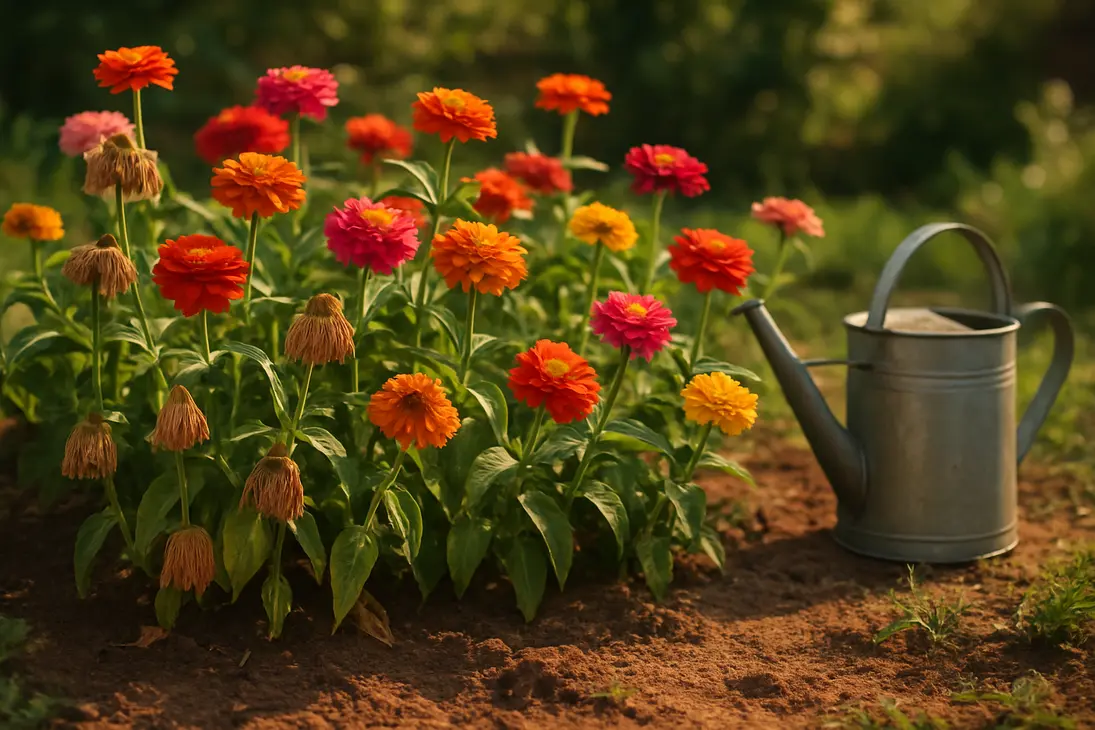
Zinnias droop and lose color for a short list of reasons: water stress, heat, poor drainage, too little sun, nutrient imbalance, aging flowers, pests, or disease. The fastest way to diagnose the problem is to notice when they droop and what is fading.
Afternoon wilt that disappears by evening is often heat stress. A plant that stays limp in wet soil may have root trouble. Faded petals on healthy plants are usually normal aging, while pale leaves, spots, mildew, or collapsing stems suggest a bigger problem.
Quick Diagnosis: What Kind of Drooping or Fading Are You Seeing?
Check the soil, leaves, stems, and blooms separately before adding water or fertilizer.
| What you see | Most likely cause | First thing to check |
|---|---|---|
| Wilting in hot afternoon, recovery later | Heat stress or temporary water loss | Soil moisture 1–2 inches down |
| Drooping after watering or rain | Soggy soil or root stress | Drainage and soil texture |
| Pale or yellow leaves | Nutrient, root, water, or light issue | Sun, moisture, feeding history |
| Faded blooms, healthy leaves | Normal aging or sun bleaching | Flower age and deadheading |
| Limp stems, spots, mildew, collapse | Disease, pests, rot, damage | Leaves, stems, roots, spacing |
Drooping only during hot afternoons
If zinnias droop in the hottest part of the day but recover later, they may be losing water faster than roots can replace it. This is common in heat, wind, and containers. Check the soil before watering; moist soil means the plant is heat-stressed, not necessarily thirsty.
Drooping after rain or watering
Drooping after rain or watering often means the roots are too wet. Zinnias need moisture but dislike soggy soil. Waterlogged roots cannot breathe well, so the plant may wilt even when the soil is wet. This is common in clay, compacted beds, low spots, and poorly drained pots.
Pale, yellow, or washed-out leaves
Pale or yellow leaves point beyond normal flower fading. Causes include overwatering, poor roots, low nitrogen, compacted soil, low sun, or nutrient imbalance. Older lower leaves yellowing can suggest nitrogen shortage or age; pale new growth may point to micronutrient problems or root stress.
Faded flower petals but healthy foliage
Zinnia flowers naturally fade as they age. Reds dull, pinks look dusty, oranges bleach, and petals become papery. Strong sun and heat speed this up. If leaves are green, stems are firm, and buds keep forming, deadhead the old blooms and wait for fresh color.
Limp stems, spots, mildew, or sudden collapse
Limp plants with spotted leaves, white powder, blackened stems, mushy bases, or sudden collapse may have disease or root rot. Zinnias commonly develop powdery mildew and leaf spots, especially when crowded or watered from above.
Water and Weather Stress: The Most Common Causes
Water and weather are the most common reasons zinnias droop. They prefer full sun, warm weather, and soil that drains well while staying lightly moist. Trouble starts when soil swings from bone-dry to saturated.
Underwatering and heat stress
Underwatered zinnias have limp leaves, drooping flower heads, dry soil, and sometimes crispy lower leaves. Containers dry faster than garden beds and may need daily checks in hot weather.
Push a finger 1–2 inches into the soil. If it is dry, water deeply at the base. A light sprinkle is not enough. In pots, water until excess drains out, then let the pot drain fully.
Overwatering, soggy soil, and root stress
Overwatered zinnias can wilt like dry ones, but the soil gives the clue. Wet, sticky, sour-smelling, or slow-draining soil can stress or rot roots.
Signs include drooping despite wet soil, yellow lower leaves, weak stems near the soil line, dull foliage, stunted growth, algae, or mushrooms. Stop watering until the top couple of inches dry, and improve drainage if possible.
Heavy rain, compacted soil, and poor drainage
Heavy rain can flatten blooms, bend stems, and saturate soil. In compacted ground, water fills air spaces roots need, and plants may droop for days.
For current plants, avoid digging deeply around roots. Remove standing water if possible, improve airflow, and let the soil dry. For future plantings, add compost, avoid low wet areas, and consider raised or mounded beds.
Transplant shock or sudden weather changes
Newly planted zinnias may droop after being moved, especially from sheltered conditions into full sun, wind, or heat. Keep soil evenly moist but not soggy, and protect young plants from harsh afternoon sun for a few days if needed.
Cold nights, heat spikes, and strong winds can also cause temporary drooping and duller color.
Soil, Sunlight, and Nutrient Problems That Affect Color
If watering seems right but zinnias still look pale, weak, or dull, review their growing conditions. Zinnias are not fussy, but they need full sun, decent soil, drainage, and moderate nutrition.
Too little sun
Zinnias need at least 6 hours of direct sun daily for strong stems and vivid blooms. In shade, they stretch, flop, and produce fewer or smaller flowers. In very hot areas, light late-afternoon shade may help, but deep shade weakens plants.
Soil that is too poor, compacted, or waterlogged
Zinnias tolerate average soil, not hard, airless, exhausted soil. Compaction limits root growth and drainage; poor soil may not hold enough moisture or nutrients.
Good soil should be crumbly, drain after rain, and retain light moisture. For containers, use potting mix, not garden soil, which often compacts in pots.
Nitrogen, phosphorus, potassium, and micronutrient imbalances
Nutrient problems can affect color and strength.
- Nitrogen supports green leaves; too little can cause pale growth.
- Phosphorus supports roots and flowering.
- Potassium helps water regulation and stem strength.
- Micronutrients such as iron and magnesium affect leaf color.
If many plants in the same bed look pale, a soil test is better than guessing. If only one plant is affected, suspect roots, pests, or disease first.
Overfertilizing and weak, floppy growth
Too much fertilizer, especially nitrogen, can create tall, leafy, floppy plants with fewer blooms. In containers, excess fertilizer salts can also stress roots.
If plants are lush but weak, pause feeding. Focus on sun, spacing, staking, and deadheading. A light, balanced fertilizer or compost is usually enough.
Pests and Diseases That Make Zinnias Wilt or Fade
If drooping does not match the watering pattern, inspect under leaves, along stems, at the soil line, and inside crowded growth. Many pest and disease problems worsen when plants are stressed or packed too tightly.
Powdery mildew and leaf diseases
Powdery mildew appears as white or gray powder on leaves, often late in the season or in crowded plantings. Leaf spots may be brown, yellow, purple, or black, sometimes with yellow halos. Severe leaf loss weakens the plant and reduces flower quality.
To reduce disease:
- Space plants for airflow.
- Water at soil level.
- Remove badly affected leaves.
- Avoid handling wet plants.
- Clean up old zinnia debris after the season.
Root rot and fungal wilts
Root rot is likely when zinnias stay limp in wet soil and the plant base turns soft or dark. Roots may be brown and mushy instead of pale and firm. Advanced root rot is hard to reverse.
Fungal wilts can cause part or all of a plant to wilt even when soil moisture seems adequate. Badly collapsed or diseased plants are usually best removed. Do not compost severely diseased material.
Aphids, spider mites, and sap-sucking pests
Sap-sucking pests can make zinnias look faded, speckled, curled, or weak. Aphids cluster on tender growth and may leave sticky residue. Spider mites thrive in hot, dry weather and cause fine stippling, bronzing, and sometimes webbing.
Spray pests off with water when possible. For heavier infestations, insecticidal soap may help if used according to the label. Avoid spraying during extreme heat or when pollinators are active.
Stem damage, broken branches, or crowded planting
Drooping may be physical damage. Wind, rain, pets, or brushing past plants can bend or snap stems. Large double blooms become heavy when wet.
Crowded zinnias also stretch, lean, and develop mildew more easily. Thin weak or diseased plants to improve airflow. Tall varieties may need staking or flower netting.
How to Revive Drooping Zinnias and Prevent It Happening Again
Match the fix to the cause. More water will worsen root rot, and fertilizer will not solve heat wilt. Start with soil moisture, then check drainage, sun, pests, disease, and spacing.
Check soil moisture before watering
Check 1–2 inches below the surface. The top may look dry while the root zone is still moist.
Use this routine:
- If dry, water deeply at the base.
- If moist, wait and check later.
- If wet and wilted, improve drainage and inspect roots.
- Check pots more often than garden beds.
For containers, learn the pot’s weight when wet and dry. It is one of the easiest moisture checks.
Improve drainage and spacing
For pots, make sure drainage holes are open and the container is not sitting in water. If the mix is dense and sour-smelling, repotting may help only if the plant is still healthy enough.
In beds, improve future drainage with compost, less foot traffic, raised beds, or mounded rows. Space plants so leaves are not packed into a damp mass.
Water at the base, not over the leaves
Overhead watering wets leaves and flowers, encouraging mildew and leaf spots. It can also weigh down blooms.
Water at the base with a hose, watering can, drip line, or soaker hose. Morning is best because splashed foliage dries faster. Mulch can help conserve moisture, but keep it slightly away from stems.
Deadhead faded flowers
If petals are the main issue, deadhead. Remove dull, browned, or papery blooms by cutting back to a leaf node or side stem. This improves appearance and helps the plant put energy into new flowers instead of seed.
If saving seed, leave a few healthy blooms late in the season.
Feed lightly and avoid excess nitrogen
For pale plants in poor soil, use a light balanced flower fertilizer or compost. Follow the label and avoid high-nitrogen products. More fertilizer is not better.
Potted zinnias may need occasional light feeding because nutrients wash out faster. Garden zinnias in fertile soil may need little beyond compost and consistent watering.
Remove badly diseased plants or leaves
Remove a few mildewed or spotted leaves if the plant is otherwise healthy. If a whole plant is collapsing, rotting, or badly diseased, pull it out to protect nearby plants.
Use clean pruners and clean up old stems and leaves at season’s end to reduce carryover disease.
Conclusion
Zinnias droop and lose color most often from water stress, heat, soggy soil, poor drainage, low sun, nutrient imbalance, aging flowers, pests, or disease. Start with the clues: dry or wet soil, recovery by evening, fading leaves versus fading petals, and any spots, mildew, pests, or stem damage.
If soil is dry, water deeply. If it is wet, stop watering and improve drainage. If blooms are aging, deadhead. If leaves are pale or stems are weak, review sun, soil, spacing, and fertilizer. With the right correction, many zinnias recover and keep blooming until cold weather arrives.
FAQ
Why are my zinnias drooping even though I watered them?
The soil may already be too wet, roots may be stressed, or water may not be reaching the root zone evenly. Check 1–2 inches down. If wet, wait. If dry below the surface, water more slowly and deeply.
Drooping after watering can also happen during extreme heat, after transplanting, or when roots are damaged by rot or compaction.
Do zinnia flowers naturally fade as they age?
Yes. Zinnia flowers fade as they age, especially in strong sun and heat. Petals may become washed out, dull, or papery while leaves remain healthy. Deadhead old blooms to encourage fresh flowers.
If leaves are also yellow, pale, spotted, or wilted, look for water, soil, nutrient, pest, or disease problems.
Can too much rain make zinnias droop?
Yes. Heavy rain can weigh down flowers and saturate soil, stressing roots. If zinnias droop after rain, check whether the soil drains or stays soggy.
Improve spacing, avoid unnecessary overhead watering, and plant future zinnias in a better-drained spot if water pools around them.
What fertilizer helps zinnias keep strong stems and bright color?
Use a light, balanced flower fertilizer or compost. Avoid high-nitrogen fertilizers, which can cause soft, leafy, floppy growth with fewer blooms. Strong stems and bright color also depend on full sun, drainage, steady moisture, and proper spacing.
You Might Also Like