Can a Potted Tree Survive Winter in a Garage?
Can You Overwinter a Potted Tree in a Garage?
Yes, a potted tree can often survive winter in a garage, but success depends on the tree, container, and garage conditions. The goal is not to keep the tree warm and growing. For hardy trees, the goal is to keep it safely dormant: cold, protected from severe root freezing, and not allowed to dry out completely.
A garage works best for hardy or nearly hardy trees that naturally go dormant in winter. It works poorly for tropical trees, actively growing citrus, or any tree that needs bright light and warmth through winter.
The best garage is unheated, consistently cold, and protected from wind. It should stay cold enough to prevent early growth, but not so cold that the pot freezes solid for long periods.
The short answer: yes, for many dormant hardy trees
A garage is often a good winter holding place for deciduous potted trees such as figs, maples, magnolias, apples, peaches, pears, and other hardy ornamental or fruit trees, as long as they are dormant before storage.
Dormant means the tree has stopped active growth. For deciduous trees, this usually means the leaves have dropped or the tree has clearly shut down after chilly autumn weather. Once leafless and dormant, it needs little or no light.
A garage can help by:
- Reducing drying winter wind
- Moderating freeze-thaw stress
- Keeping the pot from reaching the coldest outdoor temperatures
- Protecting branches from snow, ice, and animals
- Making moisture checks easier
This does not mean the garage should be warm. A heated garage can break dormancy too early.
When a garage is not the right place
A garage may be unsuitable if it stays warm, fills with vehicle exhaust, freezes as hard as outdoors, or is completely dark while the tree still has leaves.
Be cautious if:
- The tree is tropical or subtropical, such as ficus, hibiscus, rubber tree, or banana.
- The tree is citrus, such as lemon, lime, orange, or grapefruit.
- The garage stays above about 45–50°F for long periods.
- The potting mix drains poorly and stays wet.
- Rodents are common.
- The tree is newly transplanted, stressed, or only marginally hardy.
Tender trees usually need a cool, bright indoor room, sunroom, greenhouse, or grow-light area. A dark, cold garage may work for a dormant fig, but not for a lemon tree.
Why potted trees are more vulnerable than trees planted in the ground
In-ground trees benefit from soil insulation. Ground temperatures change slowly, and roots are buffered by a large mass of soil.
A potted tree has roots surrounded by air on all sides. The container can freeze from the top, bottom, and sides. Roots are generally less cold-hardy than trunks and branches, so a tree that survives in the ground may still suffer root damage in a pot.
Gardeners often treat container-grown trees as if they are one to two hardiness zones less protected than the same tree planted in the ground. Small pots are especially vulnerable. Large insulated containers are much safer than small nursery pots left exposed.
How to Prepare a Potted Tree Before Winter Storage
Good overwintering starts before the tree goes into the garage. Move in a clean, hydrated, dormant plant—not a wet, pest-ridden, actively growing one.
Wait for dormancy before moving hardy trees
For hardy deciduous trees, do not move them into the garage at the first cool night. Autumn chill and shorter days help trigger dormancy. If you shelter them too early, especially in a mild attached garage, they may keep growing.
A practical approach:
- Leave the tree outside through early autumn.
- Let it experience cool nights and, for many hardy deciduous trees, a light frost or two.
- Move it after leaf drop or once growth has clearly stopped.
- Do not wait until the pot is frozen solid.
Broadleaf evergreens and marginally hardy trees may need protection before full dormancy. In that case, provide as much cool light as possible.
Water thoroughly before storage
Water well before moving the tree into the garage. A dry root ball going into winter is a common cause of loss. Dry roots are more vulnerable to cold injury, and bone-dry potting mix can be difficult to rewet.
Water until moisture runs from the drainage holes, then let the pot drain fully. Do not leave it standing in water. The tree should enter storage moist, not soggy.
Remove dead leaves, weeds, and debris from the pot
Clean the container before storage. Remove fallen leaves, weeds, rotten fruit, dead stems, broken twigs, and moldy mulch. This reduces hiding places for insects, slugs, and rodents.
Keep mulch or insulation away from direct contact with the trunk, especially on young trees with thin bark.
Inspect for pests before bringing trees into sheltered spaces
Check the tree before moving it near other overwintering plants. Look at branch crotches, bark cracks, the pot rim, drainage holes, soil surface, stakes, ties, and any remaining leaves.
Scale, aphids, spider mites, ants, slugs, snails, and rodents can all become problems in protected storage. Treat issues before the tree goes inside. Evergreens and citrus need closer inspection because they keep foliage.
Winter Care for Potted Trees in a Garage
Once the tree is stored, do less. Do not fertilize, do not warm it, and do not water on a summer schedule. Check it regularly, but let it rest.
Keep temperatures cold but protected from hard freezes
For many dormant hardy trees, the best garage temperature is cold and fairly stable. Near freezing or somewhat above freezing is usually useful. Brief dips below freezing are not automatically fatal, especially for hardy trees in large pots. The risk rises when small containers freeze hard for extended periods.
Avoid placing the pot:
- Against an exterior metal garage door
- Directly on bare concrete in the coldest corner
- Near heaters, boilers, or warm interior walls
- Where sun through a window warms branches daily
- Where snowmelt or rainwater collects
If the garage swings between warm days and freezing nights, insulate the container to moderate the root zone.
Water sparingly, but don’t let the root ball dry out completely
Dormant trees use little water, but they are still alive. Keep the roots lightly moist, not wet and not dust-dry.
Check most dormant trees about once a month. Check small pots, dry garages, warmer attached garages, and evergreens every two to three weeks.
To decide whether to water:
- Feel a few inches into the mix, if possible.
- Use a wooden dowel or moisture meter for large pots.
- Lift small pots to judge weight.
- Check the root zone, not just the surface.
Water when the mix is approaching dry. Add enough to moisten the root ball, then let excess drain. Do not keep the pot constantly wet.
Avoid fertilizing during dormancy
Do not fertilize a dormant potted tree in the garage. Fertilizer encourages growth when the tree should be resting and can contribute to salt buildup when watering is infrequent.
Resume feeding only after the tree is back outside, temperatures are suitable, and new growth has begun. Start modestly.
Limit warmth and light for dormant trees
Leafless deciduous trees do not need light while dormant. Warmth plus light can encourage premature bud break. For dormant figs, maples, magnolias, and many fruit trees, a dark or dim garage is acceptable if temperatures stay cool and roots stay slightly moist.
Trees that keep leaves are different. Citrus, olive, bay, broadleaf evergreens, and many conifers still lose moisture and may need light, especially if conditions are above freezing for long periods.
Insulate the pot if the garage gets very cold
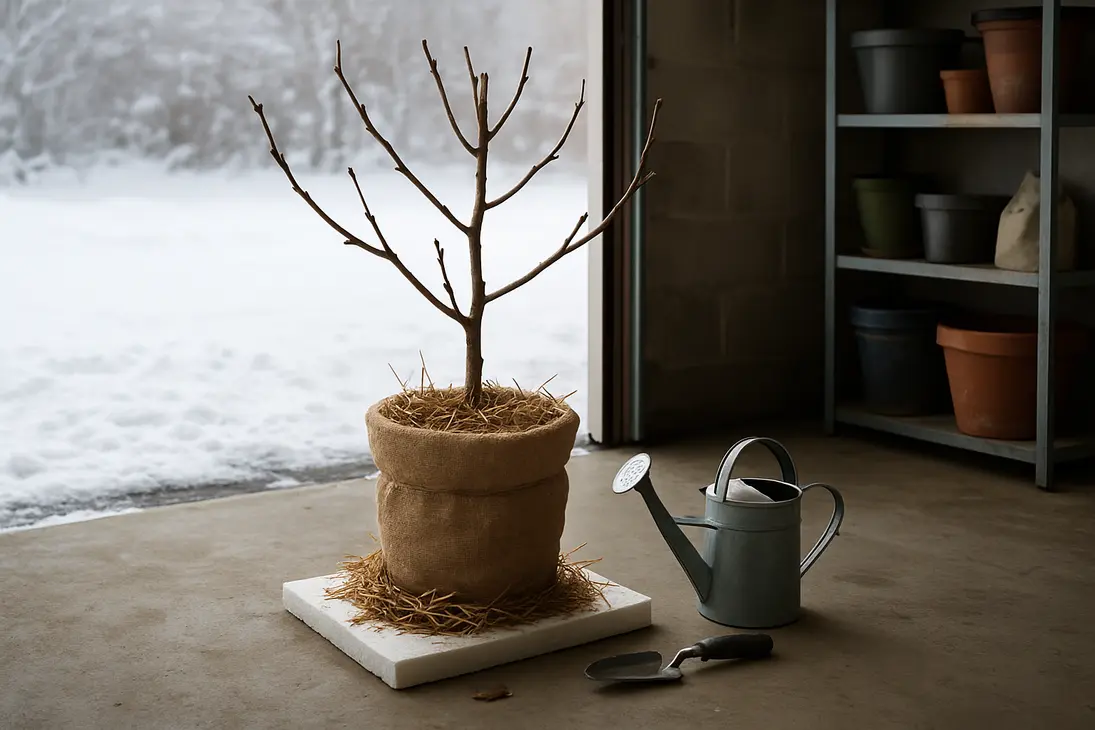
If the garage regularly drops well below freezing, focus insulation on the pot, not the branches. Roots are the vulnerable part.
Useful methods include:
- Setting the pot inside a larger container and filling the gap with dry leaves, straw, wood chips, or shredded paper
- Wrapping the pot with burlap, bubble wrap, blankets, or foam insulation
- Placing the pot on foam board or wood instead of concrete
- Grouping pots together
- Banking dry leaves or straw around containers
Do not wrap branches tightly in plastic. It can trap moisture and heat, causing mold or premature growth.
Care Differences by Type of Potted Tree
Different trees need different winter treatment. A dormant fig and a lemon tree should not be handled the same way.
Deciduous trees: figs, maples, magnolias, fruit trees
Deciduous trees are usually the best candidates for garage overwintering because they naturally rest without leaves.
Examples include fig, Japanese maple, magnolia, apple, pear, peach, plum, serviceberry, and crabapple.
Figs are commonly overwintered in garages in cold climates. Once dormant and leafless, they can be stored cool and dark with occasional watering. Maples, magnolias, and potted fruit trees can also overwinter this way, but their roots still need protection from deep freezing.
Evergreen trees: watch moisture more closely
Evergreens slow down in winter, but they keep foliage. That foliage can lose moisture on mild or dry days.
Potted evergreens may include dwarf Alberta spruce, arborvitae, boxwood standards, holly, olive, bay laurel, and some conifers. Hardy conifers and broadleaf evergreens often do best outdoors with pot insulation and wind protection rather than in a dark garage all winter.
If you use a garage, keep it cool and check moisture more often than you would for a leafless deciduous tree. Broadleaf evergreens such as bay and olive generally do better with cool light.
Citrus and tender trees: garage storage may not be enough
Citrus trees are not dormant like maples or figs. Lemons, limes, oranges, and grapefruits keep leaves, need light, and dislike freezing temperatures.
An unheated garage may work briefly during cold snaps if it stays above damaging temperatures, but it is usually not ideal for the whole winter unless it is cool, bright, and does not freeze.
Better citrus locations often include a bright cool room, sunny window away from heating vents, greenhouse, sunroom, or garage with windows and safe temperatures. Tropical trees such as rubber tree, weeping fig, and tropical hibiscus should usually be treated as houseplants in winter, with reduced watering and as much light as possible.
Newly potted or young trees: give extra root protection
Young trees and newly potted trees are less forgiving. Their roots may not fill the container, and fresh potting mix may hold more water than expected.
For young or newly potted trees:
- Avoid severe freezing of the pot.
- Add extra container insulation.
- Check moisture carefully.
- Do not repot again in midwinter unless drainage is a serious problem.
- Protect thin trunks from rodents and damage.
If a sapling arrives late in the season, keep it cold but protected. Prevent both drying and forced growth before spring.
Common Winter Problems and Mistakes
Most garage overwintering failures come from a few issues: too warm, too wet, too dry, or the wrong tree for the location.
The tree starts growing leaves in winter
If a deciduous tree leafs out in January or February, the garage is probably too warm or the tree has had enough warmth to break dormancy. Once leaves open, it needs light.
What to do:
- Move it to the coolest bright location available.
- Keep it away from hot indoor air.
- Water modestly as needed.
- Do not fertilize immediately.
- Do not put tender new growth outside in freezing weather.
- Harden it off gradually in spring.
If buds are only slightly swollen, moving the tree to a colder protected spot may slow growth.
The soil stays wet for too long
Cold, wet potting mix can suffocate roots and encourage rot. Common causes include fixed-schedule watering, saucers under pots, dense garden soil, poor drainage, snowmelt, or repotting into an oversized container before winter.
If the mix is soggy, stop watering until it dries somewhat. Make sure drainage holes are open. Tilt the pot slightly if water is trapped at the base. Do not fertilize or heavily prune to “help” a waterlogged dormant tree.
The root ball dries out completely
A potted tree can dry out slowly in a garage. By spring, branches may look normal even if fine roots are dead.
This is common with small pots, fabric pots, dry attached garages, warm walls, and evergreens. Check periodically. If the root ball has pulled away from the pot or the mix is powder dry, water slowly in stages so moisture soaks in instead of running down the sides.
The garage gets too warm
A warm garage can trigger premature growth. Once tender shoots appear, the tree is harder to manage.
If your garage is too warm, consider an unheated shed, cold cellar, enclosed porch, protected outdoor corner with pot insulation, temporarily burying the pot in the ground before winter, or grouping and insulating containers outdoors against a north or east wall.
For hardy dormant trees, colder is usually better than cozy, as long as roots are protected from extreme freezing.
Assuming a leafless dormant tree is dead
A dormant tree can look dead. Leafless branches and quiet buds are normal in winter.
Signs of life include swelling buds, flexible small twigs, green tissue under the bark when gently scratched, firm roots near the drainage holes or soil surface, and no sour smell from the potting mix.
Use the scratch test carefully on a small twig. Green under the bark usually means living tissue. Avoid heavy pruning in midwinter; many trees reveal winter damage only after spring growth begins.
Moving the Tree Back Outside in Spring
Spring transition matters. A tree stored for months in a dim, still garage can be damaged by sudden sun, wind, or late frost.
Wait until severe freezes have passed
Do not move the tree outside permanently after the first warm day. Watch nighttime forecasts.
Hardy dormant trees can return outdoors earlier than tender plants, but if buds have opened in the garage, new growth is vulnerable. A leafed-out fig, maple, or fruit tree may need frost protection even if the species is hardy.
Move it out when the worst winter lows have passed, the pot is unlikely to freeze hard for long periods, and you can protect it during late cold snaps.
Reintroduce light gradually
Even dormant trees benefit from gradual exposure. Bark and buds that spent winter in dim conditions can be sensitive to sudden sun and wind.
A simple transition:
- Start in bright shade or morning sun.
- Move to a slightly brighter position after a few days.
- Increase sun over one to two weeks.
- Protect from strong wind while leaves expand.
- Move sun-loving trees into full sun after acclimation.
This is especially important if the tree leafed out indoors or in the garage.
Resume regular watering slowly
As temperatures rise and buds open, the tree will use more water. Increase watering based on actual moisture, not habit.
In early spring, potting mix may still dry slowly. Once leaves expand, water demand rises quickly, especially in sun or wind. Make sure the pot drains freely. Spring is also a good time to assess whether the tree needs root pruning, repotting, or fresh mix once active growth begins.
Prune only after you can assess winter damage
Remove obviously broken or diseased branches, but avoid major pruning too early. Some branches that look dead may still leaf out.
Wait until buds swell or leaves emerge, then prune back to living wood. For fruit trees, follow normal pruning timing for the species while accounting for winter damage. For figs, cut dead tips once healthy growth is clear.
Conclusion
A potted tree can often survive winter in a garage if it is dormant, cold-hardy enough, and kept cool, lightly moist, and protected from extreme root freezing. The goal is not to grow it indoors, but to hold it safely until spring.
The best candidates are hardy deciduous trees such as figs, maples, magnolias, and many fruit trees. Evergreens need closer moisture monitoring, and citrus or tropical trees usually need brighter, safer indoor conditions.
The key principle is simple: protect the roots while preserving dormancy. A cool garage, occasional moisture checks, no fertilizer, and a careful spring transition can help a potted tree wake up normally when the season returns.
FAQ
How often should I water a potted tree in the garage during winter?
Check about once a month for most dormant deciduous trees. Small pots, dry garages, and evergreens may need checking every two to three weeks. Water only when the root ball is approaching dry, and let excess water drain away.
Do not keep the soil constantly wet. In cold conditions, overwatering can be more damaging than slight dryness.
Does a dormant potted tree need light in the garage?
A fully dormant, leafless deciduous tree does not need light during winter storage because it is not actively photosynthesizing.
Trees that keep leaves, such as citrus, olive, bay, and many evergreens, need light if stored for more than brief cold protection. A dark garage is usually not a good full-winter location for leafy tender trees.
What should I do if my potted tree starts growing leaves in winter?
Move it to the coolest bright place available. Once leaves open, the tree needs light and more consistent moisture. Do not fertilize right away, and do not put tender new growth outside during freezing weather.
In spring, transition it outdoors gradually because early indoor growth is often soft and easily damaged by sun, wind, or frost.
Can citrus or lemon trees overwinter in an unheated garage?
Sometimes, but only if the garage stays safely above freezing and has enough light, or if the tree is there briefly during cold snaps. Citrus trees are not dormant like leafless hardy trees. They keep leaves, need light, and can be damaged by cold.
For a lemon tree, a bright cool room, sunroom, greenhouse, or garage with windows and suitable temperatures is usually safer than a dark unheated garage for the entire winter.
You Might Also Like