What Do Plant Appearance and Growth Tell You?
Plant appearance and growth are practical clues to how a plant is responding to its environment. They can show whether it is receiving suitable light, water, space, nutrients, and support—or whether something needs closer attention.
Appearance is the plant’s visible condition at a particular moment. Growth is the pattern of change you see over days, weeks, seasons, or years. Neither should be judged against a single “perfect” standard. A healthy tomato in midsummer, a dormant deciduous shrub in winter, and a slow-growing houseplant in low winter light will all look and grow very differently.
The most useful approach is to learn what is normal for the species, then watch for changes that are sudden, widespread, or out of step with the season.
What Plant Appearance and Growth Mean
Plant appearance and growth describe two connected but slightly different things. Appearance is what you can observe now; growth is how the plant develops over time.
Plant appearance
Plant appearance includes the visible features that help identify a plant and assess its condition:
- Leaves: color, size, shape, texture, thickness, glossiness, and arrangement along stems
- Stems: thickness, strength, color, branching pattern, and whether they stand upright or sprawl
- Flowers and fruits: the number and condition of buds, blooms, fruit, seed heads, or developing pods
- Roots: visible root growth in containers, roots emerging from drainage holes, or a plant that appears firmly anchored in the soil
- Overall form: upright, trailing, mounding, climbing, bushy, compact, open, or spreading
A plant’s natural appearance matters. Lavender is expected to be somewhat woody and gray-green; hostas naturally have broad, soft leaves; rosemary is narrow-leaved and shrubby; a squash plant is large, sprawling, and often rather untidy by late summer. Judging all plants by the same standard can lead to unnecessary watering, pruning, or fertilizing.
Plant growth
Plant growth refers to changes in size, structure, and development. Depending on the species and season, this may include:
- Germination and seedling establishment
- Vegetative growth, such as new leaves, stems, and roots
- Flower bud formation and flowering
- Fruit and seed development
- Dormancy or seasonal dieback
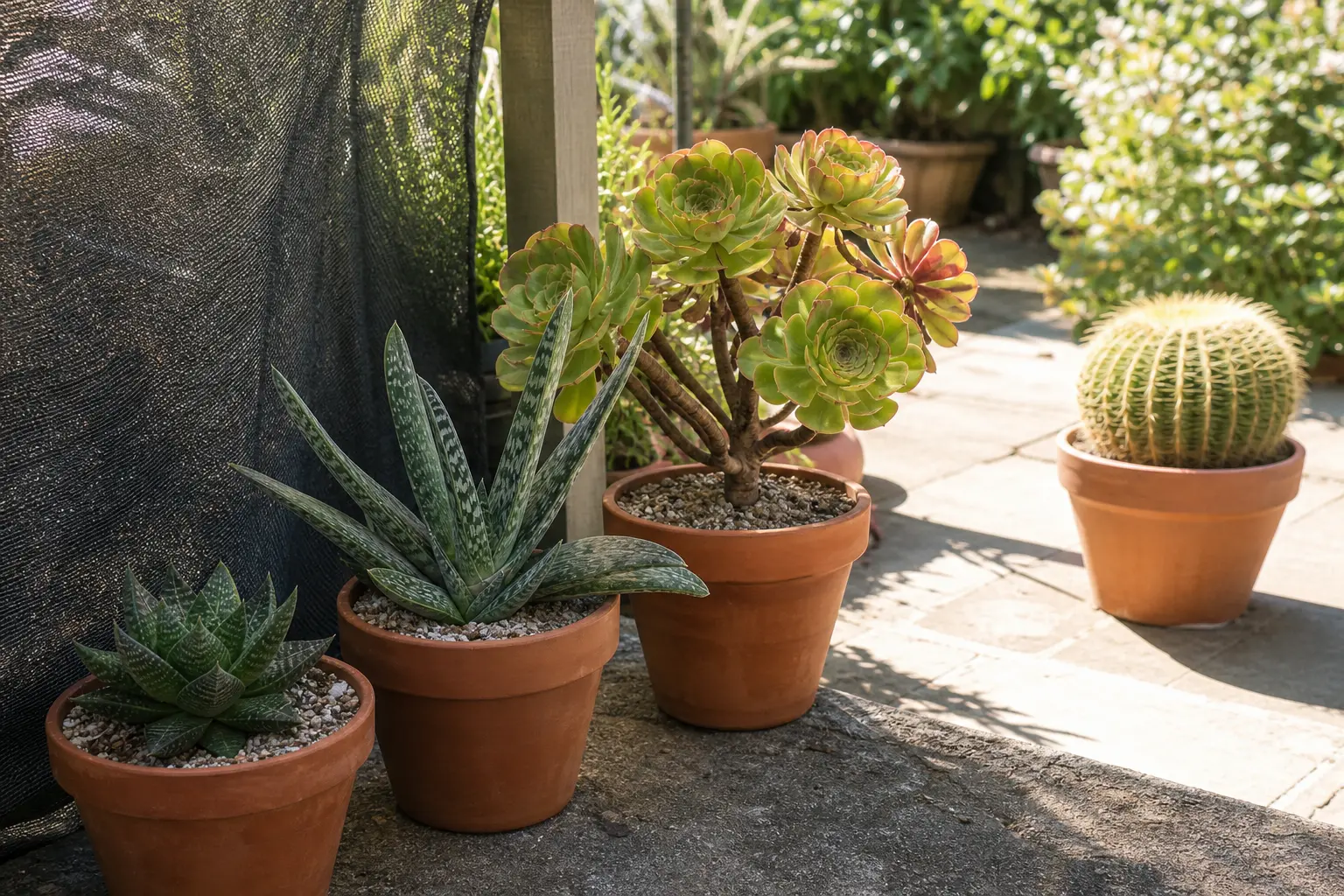
Growth can be measured by increasing height, width, leaf area, stem diameter, root mass, or the number of shoots and branches. It may be rapid, as with beans, cucumbers, squash, and annual flowers. It may be gradual, as with many shrubs, perennials, cacti, and woody trees.
Life cycle also affects expectations. Annual plants generally complete their lives in one growing season and often grow quickly before flowering and setting seed. Perennials return for several years but may spend their first season establishing roots rather than producing a large top growth. Woody plants, including shrubs and trees, often develop more slowly and may need several seasons to settle into a new site.
How Healthy Plant Growth Usually Looks
Healthy growth does not always mean fast growth, dark green leaves, or constant flowering. A healthy plant is one developing in a balanced way for its type, age, and season.
Signs of normal growth
Common signs that a plant is growing normally include:
- New leaves, shoots, buds, or roots appearing during its usual growing period
- Leaves that have the typical color, texture, and firmness for that species
- Stems sturdy enough to support the plant’s foliage, flowers, or fruit
- Growth that is reasonably proportional, rather than a large leafy top sitting on weak stems or a root-bound plant that repeatedly dries out
- Flowering and fruiting at the expected stage of development
- A gradual increase in size without major leaf loss, collapse, or discoloration
For example, a healthy young tomato usually produces new leaves and side shoots steadily in warm weather. A healthy peony may grow strongly in spring, flower briefly, then remain mostly unchanged for the rest of summer. A healthy deciduous tree may lose its leaves in autumn without any problem at all.
Look especially at new growth. Older leaves often show wear first, while healthy new leaves suggest that the plant is still functioning well overall.
Natural changes that are not always problems
Some changes look alarming but are part of a plant’s normal cycle.
- Older leaves yellowing: Lower leaves may yellow and drop as a plant redirects energy toward new growth, flowers, or fruit.
- Winter slowdown: Many houseplants grow little in short, dim winter days. Outdoor plants may enter dormancy or die back to the ground.
- Midday wilting: Large-leaved plants can temporarily droop in intense heat, especially if they lose water faster than roots can replace it. If they recover in the evening or early morning, this may be heat stress rather than a serious root problem.
- Seasonal color change: Foliage can deepen, fade, redden, bronze, or yellow as temperatures and day length change. Some plants also alter leaf color while flowering or fruiting.
- Post-transplant pause: A recently moved plant may slow down while it establishes new roots. This is common, provided it does not continue declining.
The key is to watch the direction of change. A few aging leaves are different from rapid yellowing across the whole plant. Brief afternoon drooping is different from persistent limp foliage in cool morning conditions.
Factors That Affect Plant Appearance and Growth
A plant’s visible condition reflects its genetics, its stage of life, and the conditions around it. Even a well-cared-for plant may perform poorly if it is in the wrong place.
Light, temperature, and season
Light strongly influences plant shape, color, flowering, and growth rate. A sun-loving plant placed in shade may grow slowly, become pale, and stretch toward available light. This stretched, sparse growth is often called legginess.
Conversely, a shade-loving plant exposed to harsh afternoon sun may scorch, bleach, or wilt repeatedly. Before moving or planting anything, check whether it needs full sun, partial sun, bright indirect indoor light, or shade.
Temperature matters just as much. Cool-season crops such as lettuce and peas often slow down or bolt in heat. Warm-season plants such as peppers, basil, tomatoes, and cucumbers can stall in cold soil or chilly nights. Frost can damage tender leaves and stems, while sustained heat can cause leaf scorch, flower drop, and moisture stress.
Seasonal changes also affect what “good growth” looks like. Do not expect a spring-flowering shrub to keep producing flowers through autumn, or a perennial to grow actively when it is naturally dormant.
Water, soil, and nutrients
Water problems often create similar-looking symptoms. Both underwatering and overwatering can cause drooping, yellowing, and leaf loss.
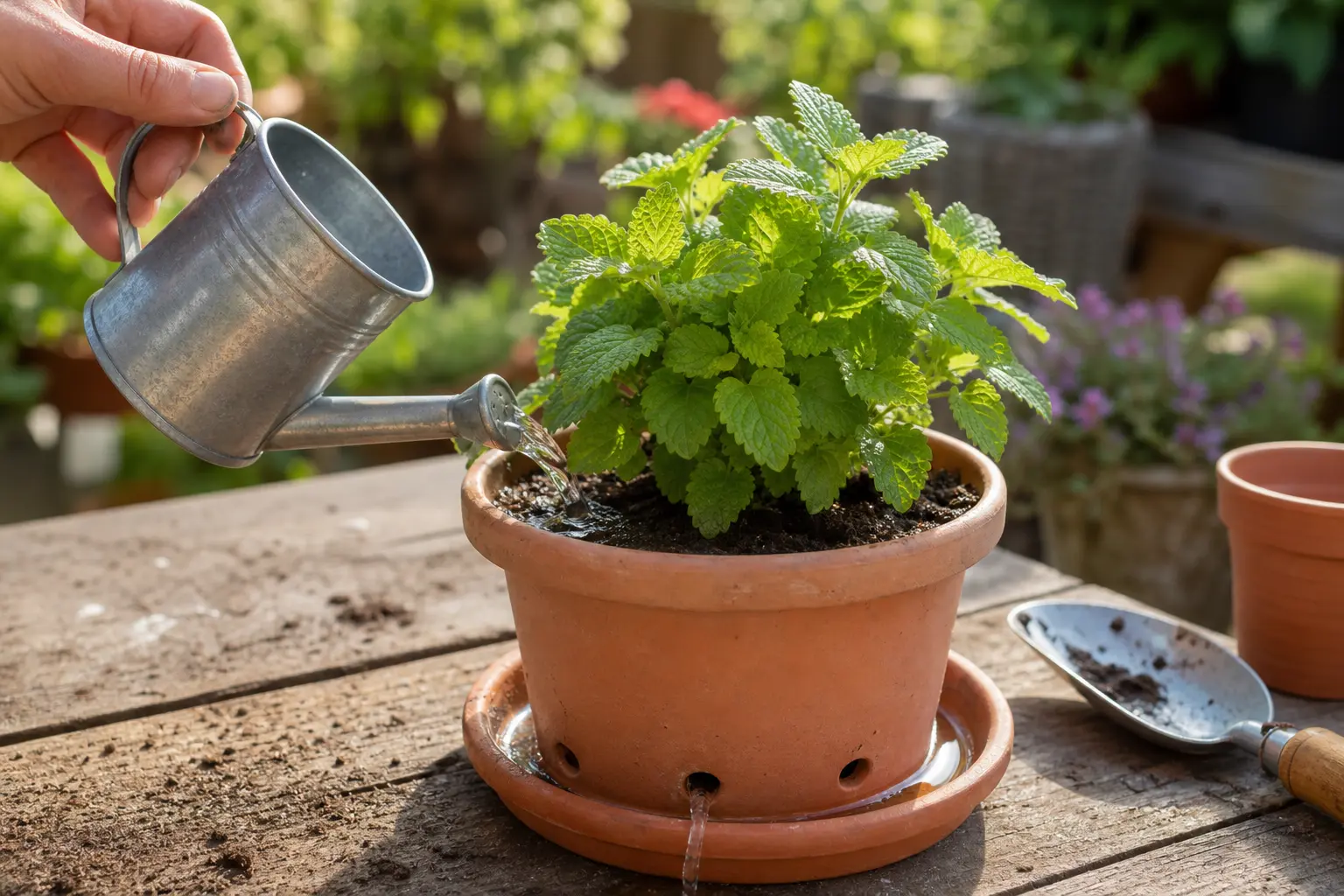
Underwatered plants may have dry soil, limp leaves, crisp brown edges, and a pot that feels unusually light. Overwatered plants may have constantly wet soil, yellowing leaves, weak stems, a sour smell from the potting mix, or roots that begin to decay. More water is not automatically the answer to a drooping plant.
Soil affects how reliably water and nutrients reach the roots. Good garden soil or potting mix should suit the plant’s needs while allowing enough air around roots. Heavy, compacted soil can remain wet too long. Very sandy soil may dry too quickly. Organic matter can improve moisture retention and soil structure, but it does not replace the need for drainage.
Soil pH also affects nutrient availability. A plant can be sitting in nutrient-rich soil yet struggle to use those nutrients if the pH is unsuitable for that species.
Nutrient shortages or excesses can change leaf color and growth. Pale new growth, yellowing between leaf veins, weak stems, unusually dark foliage, or excessive leafy growth with few flowers can all have several possible causes. Before adding fertilizer, check light, watering, root space, and pest damage. Fertilizer cannot compensate for poor drainage, inadequate light, or damaged roots.
Space and growth habit
A plant’s current size is not a reliable guide to its eventual needs. Small seedlings and nursery plants can become large, wide, tall, or invasive-looking within one season.
Plan for:
- Mature height and spread
- Root room, particularly for containers and young trees
- Whether the plant climbs, trails, suckers, spreads by runners, or self-seeds
- How quickly it grows in your conditions
- The shade it will cast on smaller neighbors
Crowded plants compete for light, water, and nutrients. They also have poorer airflow, which can leave foliage wet longer and make some disease problems more likely.
Vigorous plants need particular care in placement. Squash vines, cucumbers, pumpkins, sweet potatoes, and some climbing beans can quickly cover nearby crops. Give them room to run, train them onto a sturdy support where suitable, or direct their growth away from smaller plants. A compact pepper or lettuce plant can easily be shaded and overwhelmed by a sprawling vine planted too close.
Plant care and physical support
Care practices can improve a plant’s structure and reduce avoidable stress, but timing matters.
Pruning can remove dead, damaged, diseased, or crossing growth and can encourage branching in plants that respond well to it. Thinning crowded seedlings gives the remaining plants room to develop. Weed control reduces competition, particularly while young plants are establishing.
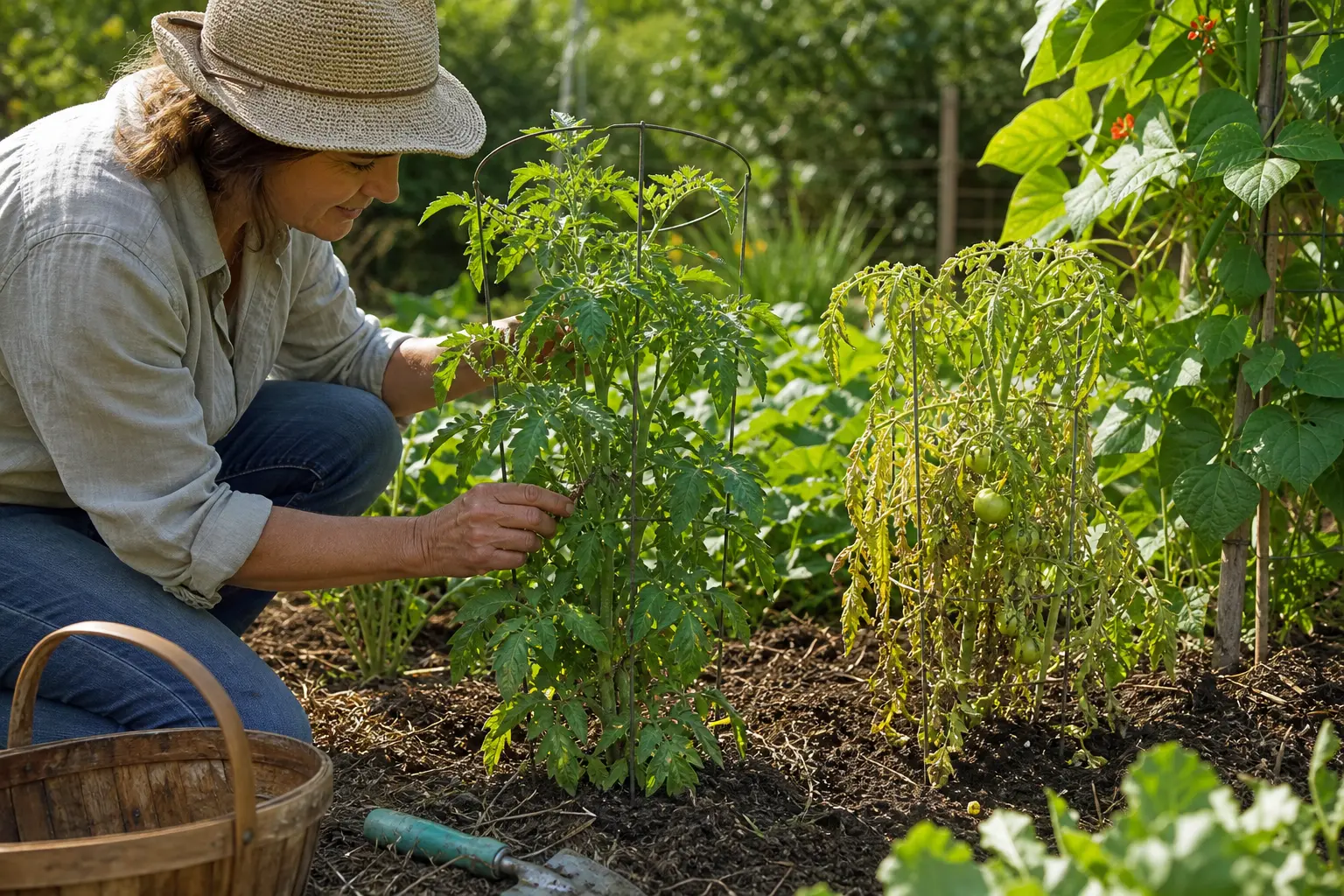
Staking, caging, and trellising are most effective when installed early. A tomato cage added before the plant becomes heavy is easier to use than one forced around sprawling stems later. Tall flowers, fruit-laden stems, and climbing vegetables may bend or break if support is delayed.
At the same time, avoid treating every slow or untidy plant as a project. A recently transplanted shrub, a heat-stressed perennial, or a plant entering dormancy may need stable conditions and time rather than repeated pruning, feeding, or moving.
How to Recognize Signs of Plant Stress
Visible symptoms rarely identify one problem on their own. Drooping can result from dry soil, wet roots, heat, transplant shock, pests, or disease. Look at the entire plant, its recent care, and its growing conditions before making a change.
Drooping or wilting leaves
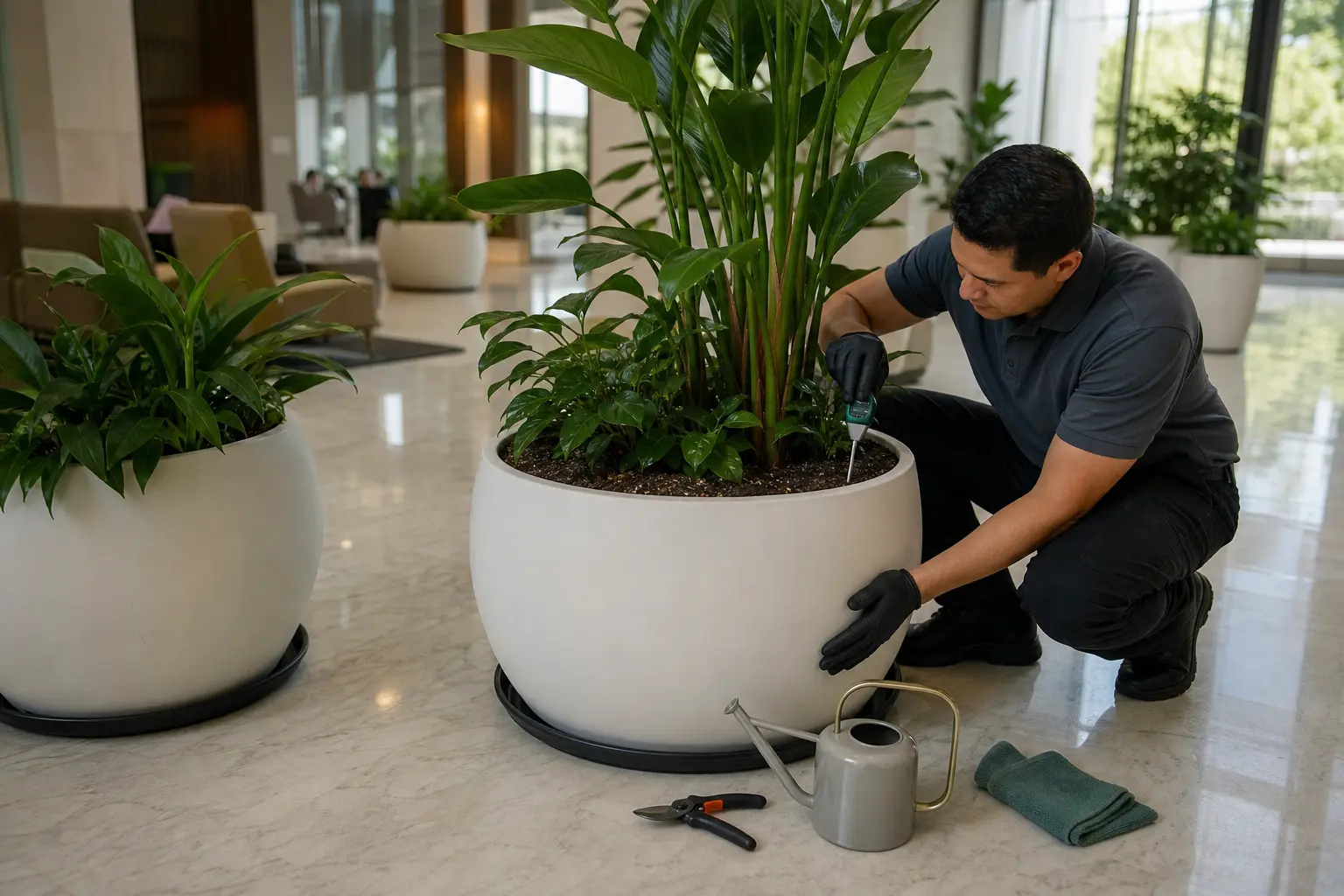
Start with the soil. Check moisture a few inches below the surface rather than relying only on the dry-looking top layer. For containers, lift the pot if possible; a very light pot may indicate dryness.
Then consider:
- Has the plant been exposed to unusually hot sun or wind?
- Does it recover in the evening or by morning?
- Was it recently transplanted, divided, or moved indoors or outdoors?
- Is the soil staying wet for too long?
- Are roots restricted, damaged, or suffering from poor drainage?
If a plant droops only in strong afternoon heat and perks up later, give it appropriate water and monitor it rather than immediately soaking it again. If it stays wilted despite wet soil, root stress is more likely than simple thirst.
Yellowing, browning, or leaf loss
Leaf color changes are most useful when you notice their pattern.
| Pattern | Conditions worth checking |
|---|---|
| Older lower leaves yellow first | Normal aging, low nitrogen, inconsistent watering, low light |
| Brown crispy edges | Underwatering, dry air indoors, heat, wind, salt buildup in containers |
| Soft yellow leaves with wet soil | Overwatering, poor drainage, root damage |
| Spots, patches, or lesions | Pest feeding, fungal or bacterial disease, physical injury |
| Widespread yellowing including new leaves | Root problems, nutrient availability, unsuitable pH, severe low light |
Remove leaves only when they are fully dead, badly damaged, or clearly diseased. If new growth remains green and firm, the plant may be managing a temporary stress. If discoloration progresses rapidly into new growth, investigate more closely for pests, disease, root issues, or major environmental change.
Leggy, weak, or leaning growth
Long gaps between leaves, pale stems, and growth leaning toward a window are classic signs of insufficient light. Indoors, move the plant to brighter appropriate light or rotate it regularly so growth remains balanced. Outdoors, consider whether neighboring plants have begun shading it.
Overcrowding can also produce tall, weak plants as each plant competes upward for light. Thin seedlings and follow spacing recommendations rather than waiting until stems are already tangled.
Some plants naturally require support even in good conditions. Stake tall delphiniums, use cages for tomatoes, and provide trellises for climbing beans or cucumbers before their stems become heavy. Leaning caused by large fruit, flowers, or wind damage is not always a sign of poor health, but unsupported stems can snap.
Stalled growth or no new growth
A lack of visible growth is not necessarily a failure. First, compare it with the plant’s normal seasonal rhythm. Many plants pause in cold weather, after flowering, after transplanting, or while establishing roots.
If growth should be active, check:
- Temperature: Is the plant too cold or overheated?
- Light: Is it receiving enough of the right kind of light?
- Root space: Is it severely pot-bound or planted in compacted soil?
- Watering: Is the root zone repeatedly drying out or staying saturated?
- Competition: Are weeds, dense roots, or nearby plants taking resources?
- Pests and disease: Are there insects, webbing, distorted leaves, spots, or stem damage?
Avoid repeatedly fertilizing a stalled plant without correcting the underlying condition. A stressed plant often cannot use added nutrients effectively.
Using Plant Appearance to Plan Better Placement
Observing plant appearance is useful before planting as well as after problems appear. Mature form tells you where a plant is likely to fit and what it will need from its surroundings.
Before choosing a location, check the plant label or reliable variety information for its mature height, width, light needs, and growth habit. A plant described as “compact” may work near a path or in a container; one described as “vigorous,” “spreading,” or “climbing” needs more deliberate placement.
Use this planning checklist:
- Place full-sun plants where they will receive the amount of direct sun they need, not simply where the bed looks brightest in early spring.
- Keep shade-tolerant plants out of hot, reflective sites beside paving or walls.
- Leave space for mature width, airflow, weeding, harvesting, and pruning access.
- Consider the shadow cast by taller plants during the height of summer.
- Install supports at planting time for crops and flowers likely to become top-heavy.
- Put vigorous vines or spreading plants where they can be trained, trimmed, or allowed to expand without smothering smaller neighbors.
- Avoid planting trees and large shrubs too close to buildings, fences, paths, or each other simply because they look small now.
A garden often becomes difficult not because plants are unhealthy, but because healthy plants have outgrown the space allowed for them. Planning for future size prevents crowding, shading, broken stems, and repeated transplanting.
Conclusion
Plant appearance and growth offer valuable information, but they are clues rather than a diagnosis by themselves. Leaf color, wilting, growth rate, stem strength, flowering, and overall shape all need to be interpreted in the context of the plant species, season, recent weather, and growing conditions.
Watch for patterns instead of reacting to one imperfect leaf. Learn the plant’s normal growth habit, give it suitable light, soil, water, space, and support, and make changes only after checking the likely causes. With regular observation, plants become much easier to understand—and problems are often easier to prevent than repair.
FAQ
What is meant by plant appearance?
Plant appearance means the visible features of a plant, including its leaf color and shape, stem thickness, branching pattern, flowers, fruits, roots, and overall growth habit. It describes how the plant looks at a given time.
What are the main signs of healthy plant growth?
Healthy growth usually includes timely new leaves or shoots, foliage with normal color and firmness for the species, sturdy stems, and balanced development between roots, leaves, flowers, and fruit. The exact appearance varies by plant type and season.
Why is my plant drooping even though I watered it?
Drooping after watering can happen when soil is too wet and roots lack oxygen, when roots are damaged or restricted, during intense heat, after transplanting, or because the plant is affected by pests or disease. Check soil moisture below the surface and see whether the plant recovers during cooler parts of the day before watering again.
How do I know how much space a plant will need at maturity?
Check the plant’s stated mature height and spread, then account for its growth habit. Climbing, trailing, spreading, and fast-growing plants usually need more room than their nursery size suggests. Also leave access space for watering, harvesting, pruning, and airflow around the plant.
You Might Also Like