Can Dracaena Fragrans ‘Massangeana’ Grow Indoors?
Yes—Why Mass Cane Is Well Suited to Indoor Growing
Yes, you can grow Dracaena fragrans ‘Massangeana’ indoors. Often sold as a mass cane or corn plant, it is one of the more adaptable large-leaved houseplants for ordinary home conditions.
Its long, arching green leaves have a broad yellow-green stripe down the center, and mature plants develop sturdy, woody canes. Outdoors in a warm tropical climate, it can become a tree-sized plant. Indoors, growth is much slower and more contained. A small nursery plant may remain tabletop-sized for several years, while a well-established multi-cane specimen can eventually reach 4 to 6 feet or more, depending on light, pruning, and ceiling height.
The key is not to mistake “low-light tolerant” for “no-light tolerant.” Mass cane survives in modest light, but it grows more steadily, holds better color, and dries out more safely when given bright, indirect light. Most indoor failures come from keeping it too wet—especially when low light, dense soil, and a pot without drainage combine.
Give It Bright, Indirect Light and a Stable Indoor Location
A bright room with filtered or indirect sunlight is the best setting for an indoor mass cane. Good light supports stronger growth and helps the potting mix dry at a reasonable pace between waterings.
The plant can tolerate lower-light rooms, which is part of its appeal, but it will not use water as quickly there. In a dim corner, a plant may grow very slowly, lose lower leaves gradually, and remain wet long enough for roots to decline. Adjust watering downward whenever light levels drop.
Avoid moving the plant repeatedly from a dim room to strong sun and back again. A stable location lets you learn how quickly its soil dries and makes changes in its appearance easier to interpret.
Choosing the Right Window and Light Level
An east-facing window is often ideal: it provides gentle morning sun and bright ambient light. A plant can also do well near a south- or west-facing window if it sits back from the glass or the sunlight is softened by a sheer curtain.
Useful placement options include:
- A few feet from an east, south, or west window
- Beside a bright window but out of the direct beam of afternoon sun
- In a bright room with light-colored walls and several hours of daylight
- Under a suitable grow light if natural light is genuinely limited
Direct, hot sun—particularly through a west or south window in summer—can bleach foliage or leave dry, tan patches. If the center stripe looks faded or leaves develop pale, papery areas on the window side, pull the plant farther back or diffuse the light.
A north-facing window may be adequate in a bright, unobstructed room, but it is more likely to produce slow growth. In a darker office or interior room, use a grow light rather than compensating with more water or fertilizer.
Temperature, Drafts, and Seasonal Changes
Mass cane is happiest at ordinary indoor temperatures. Aim for a consistently warm room and avoid prolonged exposure to chilly conditions. Keep it away from cold window glass in winter, exterior doors that open frequently, and air-conditioning vents.
It also dislikes hot, dry blasts from radiators, forced-air heating, and heat registers. These conditions can dry leaf edges and make watering uneven: the surface dries quickly while the deeper root zone remains wet.
Seasonal changes matter. During short winter days, the plant usually grows more slowly and needs less water. In spring and summer, stronger light and warmer temperatures may increase drying and growth. Check the soil rather than watering on the same weekly schedule throughout the year.
Water, Soil, and Potting: Prevent Soggy Roots
If there is one priority when you grow Dracaena fragrans indoors, it is preventing constantly wet soil. Mass cane does not need to be treated like a thirsty tropical annual. It prefers a thorough watering followed by a period in which the root zone can breathe.
A pot that stays heavy and damp for weeks is a warning sign. Before changing watering frequency, consider light, pot size, drainage, and soil texture together. A plant in dim light and a large pot of dense mix can develop problems even if it is watered only occasionally.
How to Tell When to Water
Water when the upper portion of the mix has dried—not merely when the surface looks dry. For many indoor plants, checking roughly the top 2 to 3 inches is a useful starting point, though a small pot may dry more evenly and a deep pot may retain moisture lower down.
Use several checks:
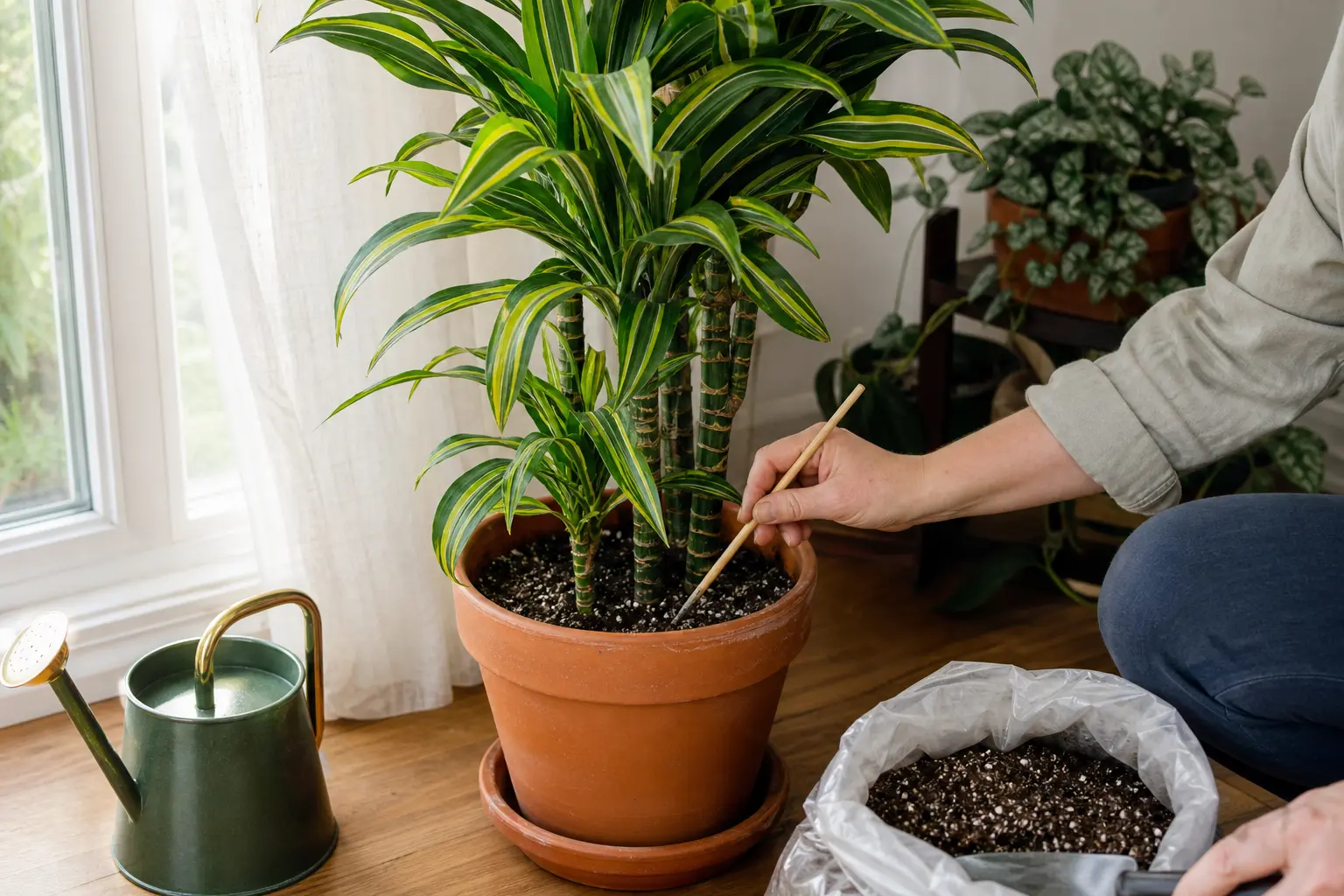
- Insert a finger or wooden chopstick into the soil. It should come out mostly dry from the upper root zone.
- Lift the pot if practical. A dry pot is noticeably lighter than one that has just been watered.
- Look for healthy, slightly firm leaves rather than watering because the calendar says it is time.
- Check again after several days if you are unsure. Waiting briefly is usually safer than watering a still-damp mass cane.
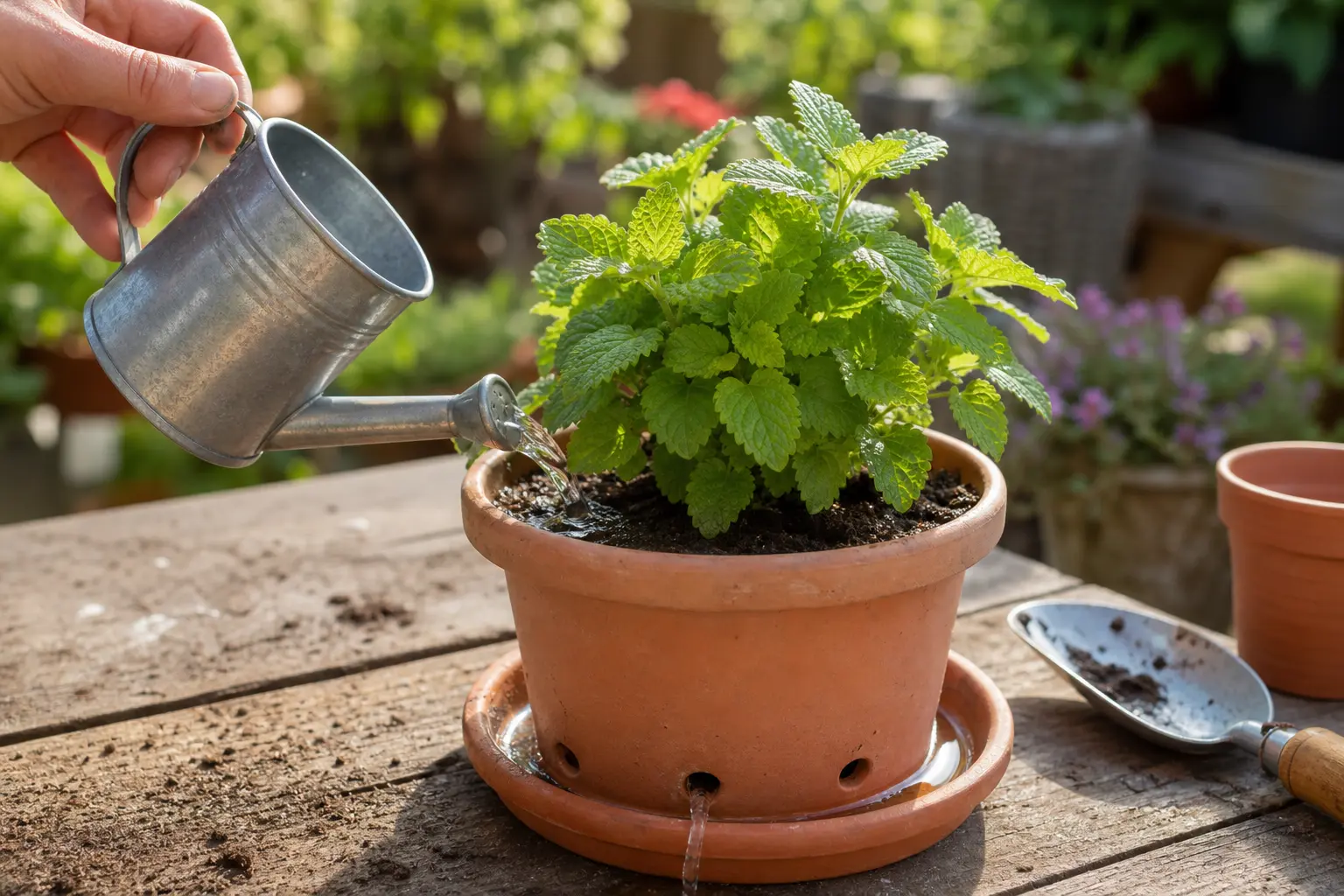
When the plant is ready, water slowly until excess runs from the drainage holes. Let it drain fully, then empty the saucer or cachepot. Do not leave the base of the nursery pot standing in water.
Use a Fast-Draining Mix and a Pot With Drainage Holes
Use a loose, well-draining houseplant mix. A standard indoor potting mix can work if it does not become dense and muddy; adding materials such as perlite, pumice, or fine orchid bark improves air space and drainage.
Choose a pot with drainage holes. Decorative containers without holes are risky unless they are used only as an outer cover for a drainable nursery pot. If water collects unseen at the bottom of a sealed container, roots can rot quickly.
Avoid packing soil tightly around the canes. Firm it gently enough to stabilize the plant, then leave the mix open enough for water and air to move through it.
Gardeners commonly run into trouble after placing dracaenas in oversized pots. As discussed in a Reddit r/plantclinic thread, extra soil does not automatically produce faster growth; it can simply hold moisture longer than the smaller root ball can use. That is a practical concern, even though each plant and home dries at a different rate.
Repot Only When the Root Ball Needs More Room
Repot a mass cane when it is genuinely root-bound, unstable, or drying exceptionally fast because roots have filled most of the pot. Signs include roots circling heavily inside the pot, roots emerging persistently from drainage holes, or a root ball that occupies nearly all available soil space.
Move up only one pot size—usually about 1 to 2 inches wider in diameter. A modest increase gives new roots room to grow without surrounding them with a large volume of wet compost.
Spring and early summer are convenient repotting times because the plant is entering its stronger growth period. However, a plant with rotting soil or no drainage should be corrected promptly rather than waiting for the ideal season.
Tap Water, Mineral Buildup, and Brown Leaf Tips
Brown leaf tips can result from several conditions, including inconsistent watering, dry heated air, fertilizer residue, and minerals in tap water. Dracaenas can be sensitive to accumulated salts and certain water additives.
If your plant has otherwise healthy growth but repeatedly develops crisp brown tips, try these steps:
- Use filtered, distilled, or rainwater when practical.
- Let tap water sit briefly before use if that suits your local water situation, though this does not remove every dissolved mineral.
- Flush the pot occasionally by watering thoroughly and allowing excess to drain away.
- Avoid overfertilizing.
- Trim only the dead brown tip with clean scissors, following the natural leaf shape.
Do not assume every brown tip means the plant needs more water. Watering more often can make a mineral or drainage problem worse.
Routine Care for a Healthy Indoor Mass Cane
Once positioned and potted well, a mass cane is relatively low-maintenance. It does not need daily misting, constant feeding, or frequent repotting. Consistent observation is more valuable than an elaborate care routine.
Expect slow to moderate growth indoors. A plant may add leaves regularly while gaining little visible height, especially if it is in moderate light. New shoots may emerge from canes after pruning, and older lower leaves may yellow and drop gradually as part of normal aging.
Fertilizing and Cleaning the Foliage
Feed lightly during active growth in spring and summer with a balanced houseplant fertilizer, following the product label and using a conservative approach. Do not fertilize a stressed plant with wet soil, root damage, or weak winter growth. Fertilizer cannot compensate for inadequate light or poor drainage.
Dust reduces the foliage’s ability to capture light and can hide pests. Wipe leaves gently every few weeks with a soft damp cloth, supporting each leaf with your hand. Plain water is enough; avoid leaf-shine products that leave residue.
Average household humidity is usually acceptable. Rather than misting every day—which provides only temporary humidity and can leave water sitting in leaf folds—keep the plant away from heating vents and group it with other plants if the air is exceptionally dry. A humidifier can help people and plants in very dry winter homes, but it is not required for most mass canes.
Pruning an Overgrown Plant or Cutting Back a Cane
Pruning is useful when a plant becomes too tall, leggy, or uneven for its space. Use sharp, clean pruners and cut a cane at the height you want, ideally just above a node or leaf scar.
You can remove yellow lower leaves by pulling or cutting them away cleanly. If only tips are brown, trim the dead tissue rather than removing an otherwise healthy leaf.
Avoid cutting several canes severely at once unless the plant is very healthy and you are prepared for a temporary sparse appearance. A staged approach—pruning one cane, then reassessing later—maintains a fuller plant.
Will Dracaena Fragrans Regrow After the Top Is Cut?
Usually, yes. A healthy Dracaena fragrans cane can produce one or more new shoots below a pruning cut. The new growth may emerge from dormant buds along the cane rather than directly from the exact cut surface.
Regrowth takes time. Keep the plant in bright indirect light, water carefully, and avoid fertilizing heavily in an attempt to force new shoots. A cane weakened by root rot, cold injury, or prolonged low light may be slower to respond.
The removed top can sometimes be rooted as a cutting if it includes a section of healthy stem and foliage. Rooting success depends on warmth, light, clean material, and avoiding saturated propagation media.
Troubleshooting Common Indoor Dracaena Fragrans Problems
Symptoms often overlap. Yellow leaves, for example, can be normal aging on one old lower leaf, but widespread yellowing with wet soil points to a different issue. Look at the entire plant, the potting mix, and the recent care pattern before making changes.
Slow or No Growth
Slow growth is common in low light and during winter. It is not necessarily a problem if leaves look firm and healthy.
If growth has stopped for months during the growing season, check for:
- Insufficient light
- A potting mix that stays wet too long
- Roots crowded tightly in a small pot
- Compacted soil with little air space
- Cold drafts or a location near an air vent
- Lack of fertilizer after a long period in the same mix
Move the plant to brighter indirect light first. Then confirm that the pot drains well before repotting or feeding. In discussions about struggling dracaenas, growers often identify the same combination of dim light, wet soil, and oversized containers as a cause of poor performance, such as this r/IndoorGarden conversation. These reports are useful reminders to assess the whole setup rather than blaming one factor alone.
Yellowing Leaves and Soft Stems
One aging lower leaf turning yellow occasionally is normal. Multiple yellowing leaves, particularly alongside soil that remains damp, usually indicate overwatering or poor root conditions.
Soft, dark, or mushy stems are more urgent. Healthy canes should feel firm. If a cane is soft near the soil line, roots may have been damaged by prolonged wetness.
Stop watering until you inspect the soil. Make sure excess water can escape, remove the plant from any standing water, and assess whether the mix is dense or sour-smelling. If the stem itself is extensively soft, saving the healthy upper portion as a cutting may be more realistic than waiting for the damaged base to recover.
Brown Tips, Brown Edges, or Crispy Leaves
| Symptom | Likely causes | First response |
|---|---|---|
| Small brown tips on otherwise healthy leaves | Mineral buildup, low humidity, inconsistent watering, excess fertilizer | Review water quality, flush the mix, and trim dead tips |
| Brown, crisp leaf margins | Hot dry air, underwatering, roots unable to take up water | Check soil deeper down and move away from heat vents |
| Pale or bleached patches | Excess direct sun | Shift to filtered light |
| Dark brown areas with soft tissue | Overwatering or rot-related damage | Check roots, drainage, and stem firmness |
Crispy leaves do not always mean dry soil. Roots in saturated soil can deteriorate and stop supplying water effectively, leaving foliage with dry-looking damage even while the pot remains wet.
Signs of Root Rot and What to Do Next
Root rot is most likely when the mix stays wet, drainage is poor, or the pot is much larger than the root ball. Warning signs include a sour smell, widespread yellowing, drooping despite wet soil, black or mushy roots, and softening at the cane base.
Act promptly:
- Remove the plant from the pot and gently shake away loose wet soil.
- Inspect the roots. Healthy roots are generally firm and light-colored; rotten roots are dark, soft, or hollow.
- Trim away clearly rotten roots with disinfected pruners.
- Remove any fully soft, decaying cane tissue.
- Repot the remaining healthy plant in fresh, fast-draining mix and a pot with drainage holes.
- Water lightly enough to settle the soil, then wait for the upper mix to dry before watering again.
If most of the root system and cane base are rotten, propagation from a firm, healthy cane section may offer the best chance of preserving the plant.
Conclusion
Dracaena fragrans ‘Massangeana’ can grow very successfully indoors. It is a forgiving choice for homes with bright, indirect light and ordinary warm temperatures, and it tolerates less-than-perfect conditions better than many large houseplants.
Its biggest vulnerability is not a lack of daily attention—it is persistently wet soil. Give it a pot with drainage, a loose mix, a reasonably sized container, and time for the upper soil to dry between waterings. With those basics in place, a mass cane can remain an attractive indoor plant for many years.
FAQ
Can Dracaena fragrans ‘Massangeana’ survive in low light?
Yes, it can survive in lower light, but it will grow slowly and need less frequent watering. A bright, indirect-light location is better for fuller growth, stronger foliage color, and safer soil drying. In a truly dim room with little natural daylight, add a grow light.
How often should I water an indoor mass cane?
There is no reliable fixed schedule. Check the soil and water when the upper 2 to 3 inches have dried, then allow excess water to drain completely. The interval may be much longer in winter, low light, or a cool room than it is in summer near a bright window.
Why are my Dracaena fragrans leaves turning yellow or brown?
A single older yellow lower leaf can be normal. Widespread yellowing commonly points to overwatering, poor drainage, or roots staying wet too long. Brown tips may be related to minerals in water, fertilizer buildup, dry heated air, or inconsistent watering. Brown, soft patches or soft stems deserve immediate attention because they may signal rot.
Is Dracaena fragrans ‘Massangeana’ toxic to pets?
Yes. Mass cane should be kept away from cats and dogs that chew houseplants. Ingestion can cause illness, so place it where pets cannot reach it and contact a veterinarian promptly if you suspect a pet has eaten part of the plant.
Sources
You Might Also Like