Should You Water 4-Inch-Tall Lemon Balm Deeply Once a Week or Lightly Every Day?
The Best Watering Approach for Young Lemon Balm
For a 4-inch-tall lemon balm plant, water thoroughly when the soil needs it rather than giving it a light sprinkle every day. The goal is consistently moist soil around the roots—not soil that stays soggy all week.
A deep watering encourages the young roots to grow downward and outward through the pot or garden bed. By contrast, frequent light watering wets only the surface, where it evaporates quickly. It can also leave the lower root zone dry while making the top layer look adequately watered.
That does not necessarily mean your lemon balm will need water only once a week. A small plant in a small pot may need watering every few days, or even daily during hot, windy weather. The important distinction is how you water, not just how often:
- Water slowly enough for moisture to reach the root zone.
- Let excess water drain away in containers.
- Wait until the upper layer of soil has begun to dry before watering again.
- Adjust the schedule for weather, pot size, sunlight, and soil type.
Young lemon balm is more vulnerable to drying out than a well-established clump because its root system is still small. At the same time, it does not benefit from constantly saturated soil. A predictable weekly schedule can be useful as a reminder to check the plant, but the soil should make the final decision.
How to Check Whether Your Lemon Balm Needs Water
The simplest and most reliable method is the finger test. Push a finger into the soil beside the stem, rather than directly against it.
For a young lemon balm plant, check the top 1 to 2 inches of soil:
- If that layer feels dry and crumbly, it is time to water.
- If it feels cool, damp, or leaves soil clinging to your finger, wait.
- If only the very surface is dry but the soil beneath is still moist, do not water yet.
Avoid judging by the surface alone. Potting mix can look pale and dry on top while still holding plenty of moisture below. Conversely, a small container in strong sun can dry quickly throughout, even if it was watered recently.
For potted plants, lifting the container is another useful habit. A pot that feels noticeably lighter than it did after watering is likely ready for more. With practice, this is often faster than probing the soil.
Drainage also changes the answer. Soil in a pot with open drainage holes can dry at a reasonable rate. Soil in a decorative container without holes may remain wet for too long, even if you add only a small amount of water at a time. Lemon balm needs moisture, but its roots also need air spaces in the soil.
Watering Lemon Balm in Pots
Potted lemon balm generally needs more frequent attention than lemon balm planted in the ground. Small pots contain little soil, and that limited volume can dry rapidly in sunshine, wind, or warm indoor conditions.
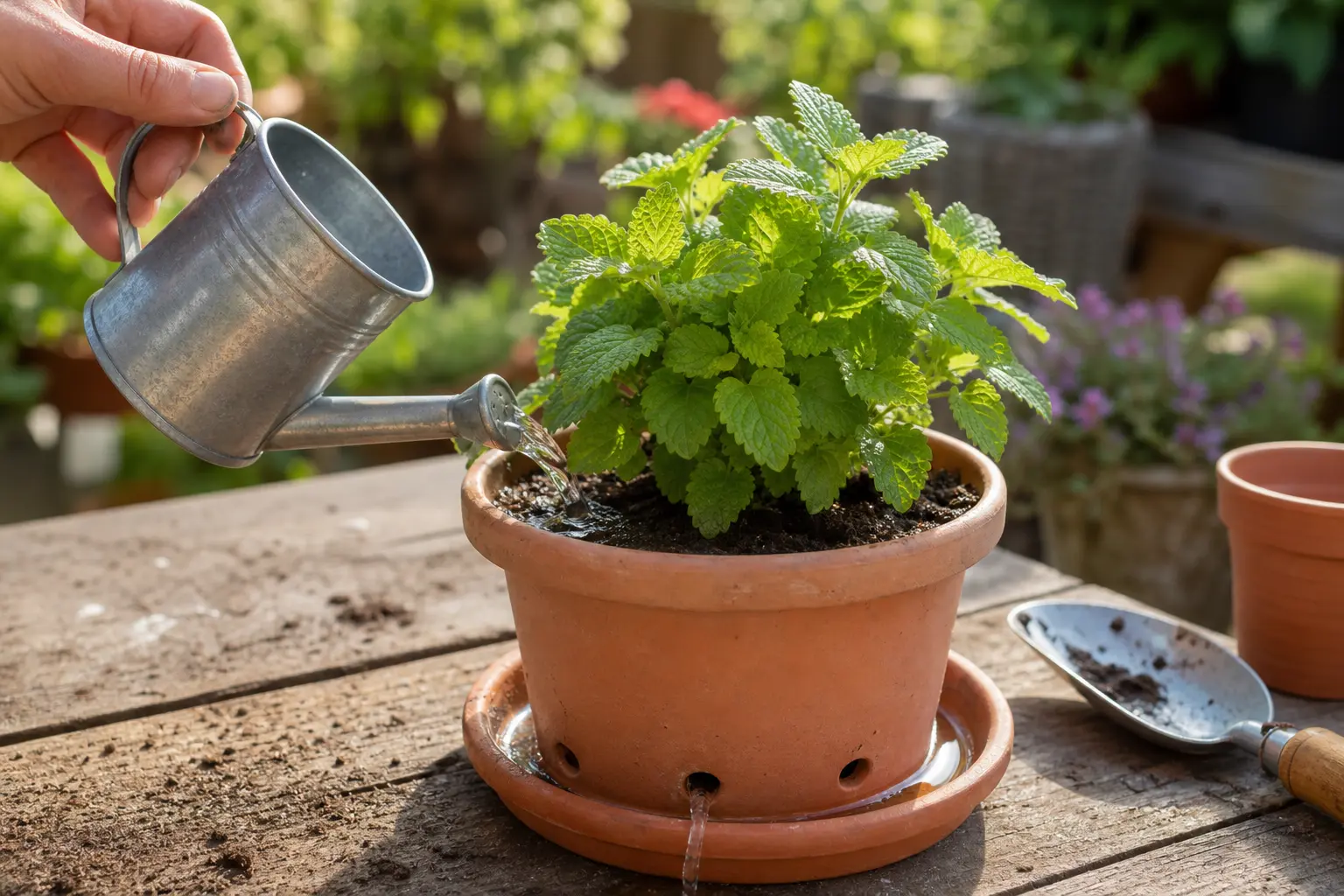
When the upper inch or two of mix has started to dry, water the pot thoroughly. Pour water slowly over the soil surface until a little runs out of the drainage holes. This confirms that the root ball has been moistened rather than merely dampened at the top.
After watering:
- Let the pot drain fully.
- Empty any saucer beneath it after a short draining period.
- Do not leave the pot standing in collected water for hours or days.
A saucer is useful for protecting a windowsill or patio, but standing water keeps the lower roots too wet and raises the risk of root problems.
If water runs straight down the inside edge of the pot and immediately escapes through the bottom, the potting mix may have become very dry and is no longer absorbing water evenly. In that case, water slowly in two or three passes, allowing a minute or two between each. The first pass dampens the mix; the next can soak into the root zone more effectively.
Container size matters, too. A 4-inch plant growing in a very small nursery pot may dry out quickly, while the same plant moved into a much larger pot may stay wet for a long time. Do not compensate for an oversized pot by watering lightly every day. Instead, use a well-draining potting mix and water only after checking the soil.
Watering Lemon Balm in Garden Beds
Lemon balm planted in a garden bed usually dries more slowly than a plant in a container, especially once its roots begin extending into surrounding soil. The larger soil volume buffers temperature changes and holds moisture longer.
For a newly planted 4-inch-tall start, water the root area thoroughly after planting to settle the soil around the roots. Then check it every day or two during the first couple of weeks, particularly in dry or warm weather. The plant may need water more often while it is establishing, but it should not sit in a permanently wet patch.
A light layer of mulch can make watering easier to manage. Spread about 1 to 2 inches of shredded leaves, fine bark, or other organic mulch around the plant, keeping it a small distance away from the stems. Mulch slows evaporation, moderates soil temperature, and reduces the need for frequent watering.
Rainfall counts, but do not assume every shower watered the plant deeply. A brief drizzle may wet mulch and the soil surface without reaching the roots. After rain, check the soil beneath the mulch before deciding whether to water.
Soil type strongly affects the schedule:
- Sandy garden soil drains and dries quickly, so young plants may need more frequent soaking.
- Loamy soil usually holds moisture well while still draining excess water.
- Clay-heavy soil retains water longer and should be watered cautiously, especially after rain.
When Young Lemon Balm May Need More Frequent Watering
Daily watering is sometimes appropriate, but it should be a temporary response to conditions—not the default routine.
A small lemon balm plant in a pot can dry out in a day during a heat wave, particularly if it receives several hours of direct afternoon sun. In that situation, check the soil each morning and water if the root zone is drying. Give enough water to moisten the potting mix evenly, then let the pot drain.
Do not replace a proper watering with repeated light sprinkles. A daily surface sprinkle can encourage shallow roots, leave the lower mix dry, and create a damp surface that is more prone to fungus gnats in indoor pots. If the plant truly needs water daily, it needs a complete root-zone watering daily until weather or growing conditions change.
If frequent drying becomes normal rather than occasional, consider whether the plant needs a slightly larger pot, more shade during the hottest part of the day, or a more moisture-retentive—but still well-draining—potting mix.
Heat, Sun, and Wind
Warm temperatures speed up evaporation from the soil and water loss from leaves. Full sun can be ideal for vigorous lemon balm growth in mild weather, but a young plant may need closer monitoring when the weather turns hot.
Wind can be just as drying as heat. A plant on an exposed balcony, beside a breezy doorway, or in a windy garden bed may lose moisture quickly even when temperatures are moderate.
Watch especially closely when these conditions occur together:
- Full or strong afternoon sun
- Temperatures above the plant’s usual growing conditions
- Dry, gusty wind
- A small dark-colored pot that heats up quickly
- Newly transplanted lemon balm with roots not yet established
Moving a container where it receives morning sun and some afternoon protection can reduce stress in very hot periods. In a garden bed, temporary shade from a nearby plant or light shade cloth may help a newly planted seedling settle in. However, avoid keeping lemon balm in deep shade long term; reduced light can lead to weaker, stretched growth.
Soil Type and Drainage
Watering frequency only makes sense in relation to the soil.
Sandy soil has large particles and wide air spaces. Water passes through quickly, so it may need more frequent watering. The advantage is that roots are less likely to remain waterlogged. Adding compost can help sandy soil hold moisture for longer.
Ordinary potting mix is usually suitable for lemon balm when used in a pot with drainage holes. It should hold some moisture but still allow air to reach the roots. A quality mix may dry faster near the top than at the bottom, which is why checking beneath the surface matters.
Heavy, compacted, or poorly draining soil is the situation that calls for the most restraint. It can stay saturated long after the surface appears dry. Repeated watering in this soil can suffocate roots and contribute to rot. Improve drainage with organic matter where practical, avoid planting in low spots that collect water, and do not water on a fixed schedule.
Signs of Too Much or Too Little Water
Lemon balm can look droopy when it is either too dry or too wet, so do not diagnose watering problems from leaf position alone. Check the soil before changing your routine.
A dry root ball calls for watering. A wet, heavy root zone calls for patience, better drainage, or a change in growing conditions.
Signs Lemon Balm Is Too Dry
Underwatered lemon balm commonly shows:
- Drooping or limp leaves, especially late in the day
- Dry, loose soil that pulls away from the pot edge
- Leaves that feel thin or soft rather than fresh and springy
- Browning or crisping along leaf edges
- Slow growth, particularly in a small container
- A pot that feels unusually light when lifted
If the plant is wilted and the soil is dry, water it thoroughly. A mildly wilted plant may perk up within several hours once the roots have access to moisture again. If the potting mix is extremely dry, water slowly so it can absorb moisture rather than shedding it down the sides.
Do not overcorrect by keeping the plant continuously wet afterward. Return to checking the upper soil layer and watering as needed.
Signs Lemon Balm Is Overwatered
Overwatered lemon balm may show:
- Soil that remains wet day after day
- Yellowing leaves, often beginning on older lower leaves
- Soft, weak, or slow new growth
- Persistent drooping despite damp soil
- A stale or sour smell from the potting mix
- Dark, soft roots if the plant is removed from its pot
Overwatering is often caused by poor drainage rather than a single generous watering. A pot without drainage holes, a saucer that is never emptied, compacted soil, or watering before the previous moisture has been used can all keep roots too wet.
If the soil is sodden, pause watering and let it dry somewhat. Make sure drainage holes are open and that the container is not sitting in water. If the mix stays wet for an unusually long time or smells sour, repotting into fresh, well-draining potting mix may be necessary. Trim away any clearly mushy, dark roots during repotting, but avoid aggressively disturbing healthy roots.
Conclusion
To water young lemon balm successfully, do not choose between a rigid once-a-week soak and a daily light sprinkle. Check the soil frequently, then water thoroughly only when the upper 1 to 2 inches have started to dry.
For many young plants, that may mean watering every few days. During hot, windy weather or in a small pot, it may mean daily. In cool weather, shade, or heavy soil, it may be much less frequent. Keep the root zone evenly moist, let excess water drain away, and adjust based on what the soil and plant are telling you.
FAQ
How often should I water a 4-inch lemon balm plant?
Check it every day or two, especially if it is in a small pot. Water when the top 1 to 2 inches of soil feel dry. This may be every few days under ordinary conditions, more often in hot weather, or less often in cool, cloudy weather or moisture-retentive soil.
Is it okay to water lemon balm every day?
It is okay if the soil is actually drying that quickly, such as during hot, windy weather or when the plant is in a small container. Water deeply enough to moisten the roots, not just the surface. If the soil is still damp from the previous watering, daily watering is too frequent.
Should lemon balm soil stay moist all the time?
Lemon balm prefers evenly moist soil, but not constantly wet soil. The upper layer should be allowed to begin drying between waterings while the lower root zone remains lightly moist. Soil that stays saturated excludes air from the roots and can lead to yellowing, weak growth, and root rot.
What time of day is best for watering lemon balm?
Morning is usually best. The plant can take up water before daytime heat increases moisture loss, and any water splashed onto leaves has time to dry. Water at the soil level rather than soaking the foliage. If your lemon balm is wilted from dry soil later in the day, water it then rather than waiting until morning.
You Might Also Like