Why Do Plant Cuttings Fail? Common Propagation Mistakes to Avoid
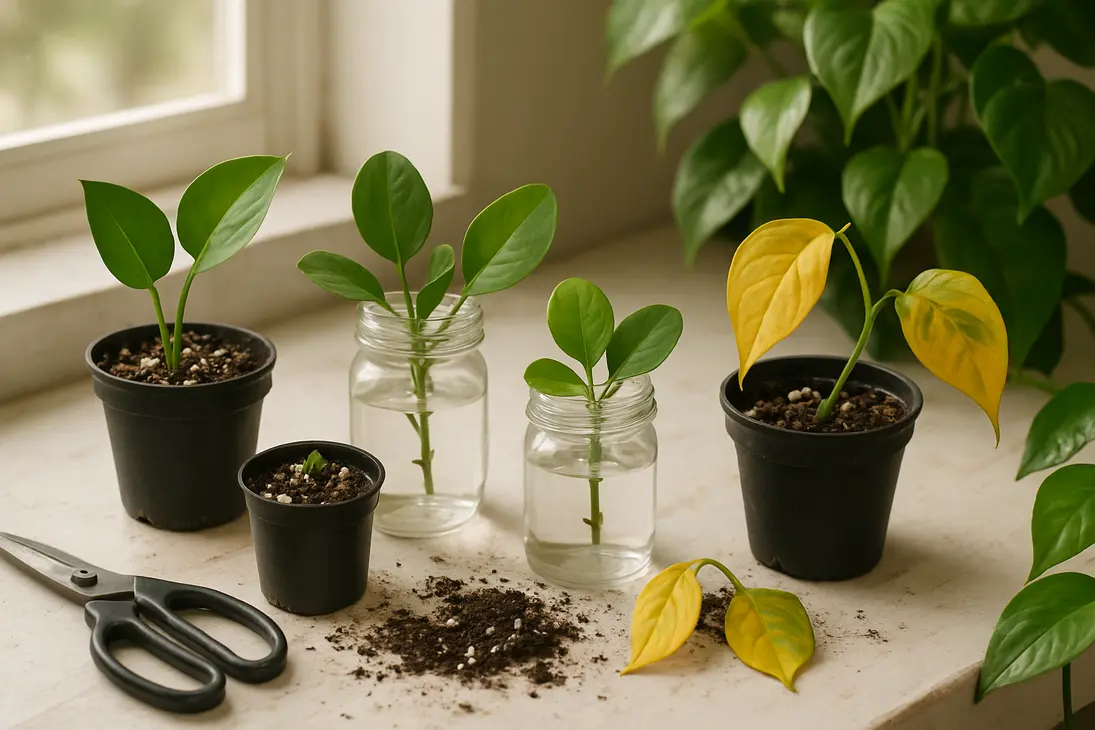
Plant propagation from cuttings looks simple: snip a stem, place it in water or soil, and wait. In reality, small details decide whether a cutting roots, rots, dries out, or stalls.
Most mistakes in plant propagation come down to five things: weak plant material, the wrong setup, poor moisture control, unsuitable light or temperature, and rushing the process. A cutting is not a small plant yet. It has leaves that lose moisture, but no roots to replace it. Your job is to keep it clean, lightly moist, warm, bright but not scorched, and mostly undisturbed until roots form.
Choosing the Wrong Cutting Before You Start
Propagation success begins before the cutting touches water or soil. The parent plant’s health, where you cut, how many leaves remain, and tool cleanliness all matter.
A strong cutting usually comes from healthy, firm, actively growing material. Even a perfect setup may not save a cutting that was already infected, dehydrated, pest-ridden, or damaged.
Taking cuttings from a stressed, rotting, or pest-infested plant
It is tempting to take cuttings from a dying plant to save it. Sometimes that works, but stressed cuttings have fewer reserves and are more likely to rot.
Avoid cuttings that are:
- Soft, mushy, blackened, or foul-smelling
- Covered in pests or sticky residue
- Severely yellowed, shriveled, or wilted
- Damaged by cold, heat, sun scorch, or root rot
If the plant has pests, treat them first if possible. If you are rescuing a rotting plant, cut well above the damaged area into clean, firm tissue. Do not include any soft or discolored stem.
Cutting in the wrong place or missing a node
Many stem cuttings need at least one node. A node is where a leaf, bud, branch, or aerial root emerges, and it is often where new roots and shoots form.
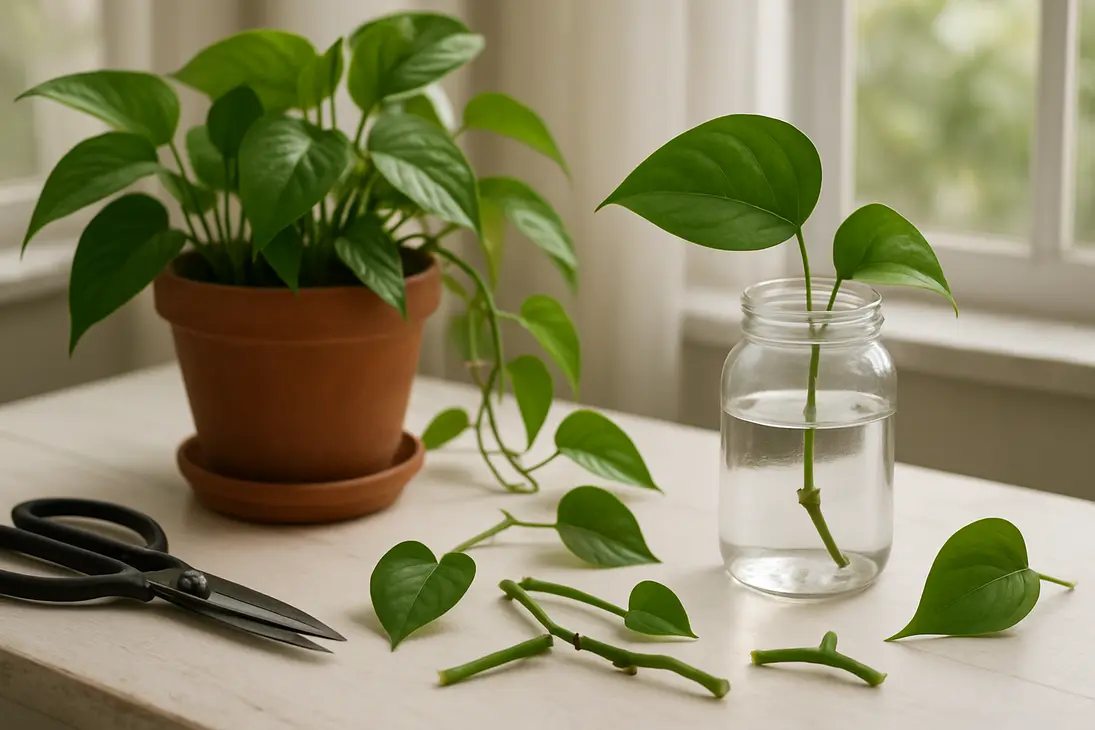
For vining houseplants such as pothos, philodendron, monstera, tradescantia, and many hoyas, a leaf with only a petiole and no node usually will not become a new plant. It may stay green in water for a while, but it lacks the growth point needed to continue.
A good stem cutting usually has:
- At least one node
- One to three healthy leaves
- A clean cut just below a node
- Firm, non-flowering growth when possible
Some plants are different. Snake plants can root from leaf sections, African violets from leaves, and many succulents from individual leaves. But for many common houseplants, missing the node is the reason nothing happens.
Leaving too many leaves on the cutting
Leaves photosynthesize, but they also lose water. Before roots form, too much foliage can make a cutting wilt faster than it can recover.
Remove lower leaves that would sit in water or soil. Keep only enough foliage to support the cutting.
| Cutting type | Leaf amount to keep |
|---|---|
| Small-leaved stems, such as tradescantia | 2–4 small leaves |
| Vining houseplants, such as pothos or philodendron | 1–2 leaves |
| Large-leaved plants, such as monstera | 1 leaf, sometimes trimmed |
| Woody herbs, such as rosemary or lavender | Lower leaves removed; small top cluster kept |
| Succulent leaves or snake plant sections | No extra foliage adjustment needed |
If a leaf is very large, trimming part of the blade can reduce moisture loss.
Using dirty, dull scissors or pruning tools
Dirty tools can introduce bacteria or fungi into fresh cuts. Dull tools crush stems, leaving damaged tissue that is slower to heal and more likely to rot.
Use sharp scissors, pruners, or a clean blade. Wipe blades with rubbing alcohol or wash them well, especially after pruning diseased plants.
Using the Wrong Propagation Method or Setup
There is no single best propagation method for every plant. Some cuttings root easily in water. Others prefer a light potting mix. Succulents may need callusing and drier conditions. Woody cuttings often need more patience and steady humidity.
Putting cuttings in heavy, soggy soil
Cuttings need moisture, but they also need oxygen around the base. Heavy garden soil or dense potting mix can stay wet too long, suffocating the cutting and encouraging rot.
A good propagation medium is lightly moist, airy, and free-draining. Useful options include:
- Seed-starting mix
- Potting mix amended with perlite
- Coco coir mixed with perlite
- Perlite or pumice for some cuttings
- Cactus/succulent mix for drought-tolerant plants
Avoid compacted outdoor soil indoors. It can contain pests, pathogens, weed seeds, and fine particles that hold too much water.
Using pots or containers without drainage
Containers without drainage are a major cause of failure. A cutting without roots cannot use much water, so excess moisture collects around the stem.
Use pots with drainage holes for soil propagation. If using a decorative cachepot, place a nursery pot inside and remove it when watering so it can drain fully.
Small containers are usually better for small cuttings. A tiny cutting in a large pot is surrounded by more wet mix than it can use.
Submerging leaves during water propagation
In water propagation, only the node or lower stem should be underwater. Submerged leaves decay, cloud the water, and encourage bacterial growth.
Remove any leaves below the waterline. If the cutting slips too low, use a narrow-necked container or clean support to hold it in place: node underwater, leaves above water, bright indirect light.
Forgetting to refresh propagation water
Water propagation is not completely hands-off. Over time, water can become low in oxygen and contaminated with decaying plant matter. Cloudy, smelly, or slimy water is a warning sign.
Refresh the water every few days, or sooner if it looks dirty. Rinse the container if algae or slime builds up. Remove rotting leaves or failed cuttings promptly.
Assuming every plant propagates the same way
Different plants need different methods and timelines. A pothos may root quickly in water, while a hoya may take much longer. A succulent leaf may rot if treated like a tropical stem cutting.
| Plant type | Common propagation approach | Common mistake |
|---|---|---|
| Pothos, philodendron, monstera | Stem cutting with node in water or airy mix | Trying to root a leaf with no node |
| Snake plant | Leaf section or division | Overwatering before roots form |
| Succulents | Leaf or stem cutting, often callused first | Planting and watering immediately |
| Basil and mint | Soft stem cuttings in water or mix | Leaving too many leaves |
| Rosemary, lavender | Semi-ripe cuttings in gritty mix | Keeping soil too wet |
| Begonia, African violet | Leaf or leaf-section cuttings | Burying too deeply or using dense soil |
Match the method to the plant instead of assuming one approach fits all.
Getting Water, Humidity, and Root Rot Prevention Wrong
Moisture is one of the hardest parts of propagation. Too wet, and the cutting rots. Too dry, and it wilts before roots form. Humidity can help, but stagnant humidity can also cause mold.
The goal is steady hydration with oxygen and cleanliness, not constant saturation.
Overwatering cuttings before roots have formed
A fresh cutting has little or no root system, so it does not need the same watering routine as an established plant. Daily heavy watering can keep the medium saturated and cause the base to turn brown, translucent, or mushy.
For soil propagation, moisten the medium before inserting the cutting, then keep it lightly damp rather than soaked. Check with your finger, a wooden skewer, or the weight of the pot. Water when the medium is starting to dry slightly, not when it is already wet.
Letting cuttings dry out completely
The opposite mistake is allowing cuttings to dry so much that the stem collapses. Thin-stemmed tropical plants, herbs, and leafy cuttings often fail if the medium dries completely before roots form.
Signs of excessive dryness include:
- Limp leaves that do not recover
- Shriveled stems
- Crispy leaf edges
- Leaning or collapsing cuttings
- Potting mix pulling away from the container
Small propagation containers dry faster than regular pots, especially in warm rooms, near fans, on sunny windowsills, or under grow lights.
Creating too much humidity without airflow
Humidity domes, plastic bags, and clear containers can help leafy cuttings retain moisture. But sealed, stagnant humidity can lead to mold and rot.
If you use a cover:
- Keep it out of direct sun
- Open it daily for fresh air
- Remove dead leaves immediately
- Keep leaves from pressing against wet plastic
- Reduce humidity gradually once roots or new growth appear
Succulents, snake plants, and many thick-leaved plants usually do not need a humidity dome and may rot faster in one.
Missing early signs of rot
Rot is easier to stop early than late. Check the base of the cutting, the node, or the submerged part in water.
| Symptom | What it may mean | What to do |
|---|---|---|
| Brown or black mushy base | Rot has started | Cut above rot into firm tissue and restart if possible |
| Bad smell | Decay or stagnant water | Replace water or discard affected cutting |
| Slimy stem in water | Bacterial buildup | Rinse gently, trim if needed, refresh water |
| Yellowing lower leaves | Stress or too much moisture | Remove dying leaves and check stem firmness |
| Mold on soil surface | Excess moisture or poor airflow | Improve ventilation and reduce watering |
| Shriveled but not mushy stem | Dehydration | Increase humidity or adjust watering |
A cutting can lose an old leaf and still root. The key is whether the stem and node remain firm.
Ignoring Light, Temperature, and Timing
Even healthy cuttings can fail in the wrong environment. Most prefer bright indirect light, mild warmth, and consistent placement. They do not want harsh sun, deep shade, cold drafts, or constant relocation.
Placing cuttings in harsh direct sun
Direct sun can overheat cuttings and cause rapid moisture loss, especially in water jars, humidity domes, and small pots. A sunny windowsill may seem safe, but glass can intensify heat.
Signs of too much sun include:
- Wilting during the brightest part of the day
- Bleached or scorched patches
- Curling leaves
- Fast algae growth in water jars
- Collapse despite available moisture
Choose bright indirect light, such as an east-facing window, a spot near but not directly in a south or west window, or a gentle grow light.
Keeping cuttings somewhere too dark
Too little light can leave cuttings alive but stalled. They may sit unchanged for weeks, slowly yellow, or drop leaves because they lack energy to root.
Bright indirect light supports photosynthesis without overwhelming the cutting. If your home is dim, use a grow light positioned far enough away to avoid heat stress.
Propagating in cold conditions or during poor timing
Warmth encourages rooting for many plants. Cold slows the process and increases rot risk because wet media stays wet longer.
Avoid placing cuttings:
- On cold windowsills in winter
- Near drafty doors
- Beside air-conditioning vents
- In unheated rooms
- On cold stone or tile
Many houseplants root best during active growth in spring and summer. They can root at other times, but it may take longer. If propagating in winter, be patient and careful with watering.
Moving cuttings around too often
Cuttings do best in stable conditions. Constantly moving them changes light, temperature, airflow, and humidity.
A good propagation spot is:
- Bright but out of harsh direct sun
- Warm but not hot
- Away from drafts
- Easy to check without excessive handling
- Safe from pets, spills, and curious hands
Rushing the Rooting and Potting-Up Process
Propagation rewards patience. Many cuttings fail because they are disturbed, transplanted, or overpotted too soon.
Tiny new roots are fragile. The first white bumps or root tips are encouraging, but they are not yet a strong root system.
Tugging cuttings to check for roots
Pulling on a cutting can break the roots you are trying to grow. This is especially tempting with soil propagation because progress is hidden.
Instead, look for gentler signs:
- The cutting stays firm and upright
- Leaves remain hydrated
- New leaf growth appears
- Roots show at drainage holes
- The cutting resists slightly if accidentally nudged
If you must check, do it rarely and carefully. Clear cups can help you monitor roots, but keep them out of direct sun to prevent overheating and algae.
Potting up before roots are strong enough
Tiny roots may not be ready to support the cutting in regular potting mix. Potting too early can cause wilting, stalled growth, or rot.
For many water-propagated houseplants, wait until roots are at least a couple of inches long and preferably branching. For soil-propagated cuttings, wait for steady growth or enough roots to lightly hold the medium together.
Moving water-propagated cuttings to soil too abruptly
Water roots and soil roots are not identical. A water-rooted cutting may struggle if moved into dense, dry, or overly wet soil.
To improve success:
- Use a small pot with drainage.
- Choose a light, airy potting mix.
- Pre-moisten the mix so it is damp, not soggy.
- Make a hole before inserting the roots.
- Firm the mix gently around them.
- Keep the mix lightly moist for the first week or two.
- Keep the cutting in bright indirect light and avoid fertilizing immediately.
Do not let a newly potted water-rooted cutting dry out completely right away. Gradually shift to normal watering once it stays firm and grows.
Using a pot that is too large for a new cutting
A large pot holds more soil and more moisture than a small root system can use. This often leads to rot.
Start small. Use a pot only slightly larger than the root system. Several rooted cuttings can be grouped into one modest pot for a fuller plant, but avoid oversized containers.
Conclusion
Most plant cuttings fail for predictable reasons: the cutting was unhealthy, the node was missing, the medium stayed too wet, the container lacked drainage, leaves dried out, humidity became stagnant, light was too harsh or too weak, or the cutting was disturbed before roots were ready.
Start with clean, healthy material. Match the method to the plant. Keep the base moist but not suffocated. Provide bright indirect light, warmth, and airflow. Then give the cutting time.
Not every cutting will root, even when you do everything right. Taking more than one cutting, labeling dates, and watching what works for each plant will make propagation more reliable.
FAQ
What is the most common mistake when propagating plant cuttings?
The most common mistake is too much moisture without enough oxygen. In soil, that usually means heavy mix, overwatering, or no drainage. In water, it can mean submerged leaves, dirty water, or rotting tissue left in the container.
A close second is using the wrong cutting, especially trying to root a plant that needs a node without including one.
How do I know if my cutting is rotting instead of rooting?
A rotting cutting often becomes soft, brown or black, slimy, translucent, or smelly at the base. In water, the stem may feel slippery and the water may turn cloudy. In soil, the cutting may collapse even though the mix is wet.
A rooting cutting should remain firm. It may lose an older leaf, but the node or base should not be mushy. Pale root growth, new leaves, and a firm stem are good signs.
Should cuttings be propagated in water or soil?
It depends on the plant. Water propagation lets you see roots and works well for many easy houseplants such as pothos, philodendron, monstera, tradescantia, basil, and mint. Soil propagation avoids the later transition from water roots to soil and is often better for plants that dislike staying wet.
Succulents, snake plants, woody herbs, and many thick-stemmed plants often need a drier, airier approach than standard water propagation.
Why is my snake plant cutting failing to root?
Snake plant cuttings often fail because they are kept too wet, placed in a container without drainage, cut from rotting tissue, or not given enough time. They can be slow, especially in cool or low-light conditions.
Use a firm, healthy leaf section, let the cut end callus briefly, and plant it in a small pot with gritty, well-draining mix. Keep it lightly moist to nearly dry rather than soggy. Also plant the cutting in the correct direction; an upside-down leaf section will not root properly.
You Might Also Like