Should You Repot a Cactus in Winter if the Soil Is Bad?
Decide Whether to Repot Now or Wait Until Spring
Usually, it is best to wait until spring to repot a cactus. Warmer temperatures, stronger light, and active growth help it recover from root disturbance.
However, repot promptly in winter if the current soil is likely to damage the roots or stem. Wet soil that will not dry, a pot without drainage, visible rot, active pests in the mix, or a cactus becoming soft or unstable are all reasons to act. In these cases, leaving the cactus until spring can be riskier than winter repotting.
If the soil is merely unattractive, too organic, or less than ideal but the cactus is firm, dry, and stable, wait until spring. Keep it dry, warm, and in bright light until then.
| Situation | Best approach |
|---|---|
| Soil is peat-heavy or looks poor, but is dry and the cactus is firm | Wait until spring |
| Pot is slightly too large, but has drainage and soil dries normally | Wait until spring |
| Soil remains wet for many days or weeks | Repot now |
| Pot has no drainage hole | Repot now |
| Roots or stem are black, brown, mushy, or foul-smelling | Repot now |
| Cactus is loose, collapsing, or rapidly shriveling | Inspect and repot now if root trouble is present |
| Active pest problem or moldy, decomposing soil | Repot now |
Signs the Current Soil Is Dangerous Enough for a Winter Repot
Cacti can tolerate imperfect soil temporarily, but they cannot tolerate cold, wet roots for long. Winter slows evaporation and root activity, making dense mixes especially risky.
The soil stays wet, dense, or smells sour
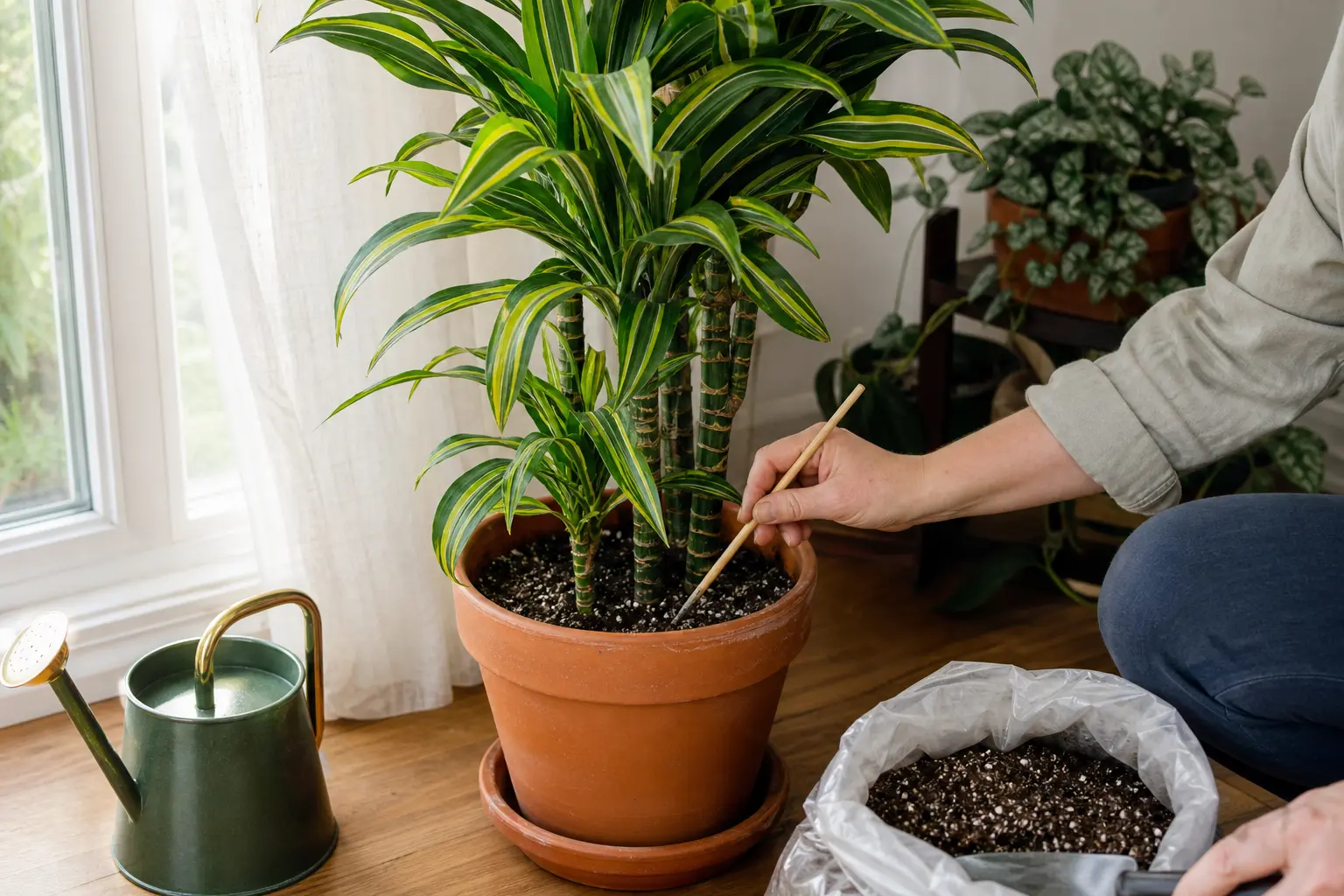
Check below the surface with a finger or wooden skewer. If the mix remains damp deep in the pot long after watering, it may be holding too much moisture. Dense peat, compost, garden soil, and old compacted potting mix can limit airflow around the roots.
A sour, swampy, or fermented smell is an important warning. It suggests wet organic material is decomposing in low-oxygen conditions. Do not rely on a dry-looking surface; the lower half of the pot may still be saturated.
The pot has no drainage hole or retains standing water
A pot without a drainage hole is a reason to act, especially if the cactus was watered recently. Water collects at the bottom, where roots are most vulnerable to rot.
If a nursery pot sits inside a decorative cover pot, check for pooled water. Empty it and let the nursery pot drain fully. If the root ball is not soaked and the inner pot has drainage, a full winter repot may not be needed.
Terracotta can help soil dry faster, but drainage holes matter more than pot material.
Roots, stem, or base show signs of rot
Root rot is often hidden until the cactus declines. Inspect beneath the soil line if the base is discolored or the plant has become wobbly.
Healthy roots are firm and may be pale, tan, or reddish-brown. Rotten roots are often dark, limp, hollow, slimy, or easily pulled apart. A soft, translucent, blackened, or brown patch at the stem base is more serious because rot may be moving upward.
Repotting will not save every cactus with stem rot, but removing wet soil and assessing the damage quickly gives the plant its best chance.
The soil contains pests, mold, or decomposing material
White fuzzy growth, mushrooms, or decomposing organic material indicate that the mix is staying moist. Fungus gnats also suggest overly damp, organic soil. Mealybugs may hide around roots and the cactus base.
If pests are active in the soil, remove the old mix rather than treating only the surface. Clean the pot before reusing it or use a clean replacement.
The cactus is loose, collapsing, or suddenly withering
A cactus that rocks in its pot may have a small root system, but it can also mean that roots have died. Leaning, narrowing at the base, or collapse warrants inspection.
Wrinkling can mean thirst, but it can also mean damaged roots cannot absorb water. If the soil is dry and the cactus remains firm, mild winter wrinkling may be normal. If the soil is damp while the cactus shrivels, softens, or changes color, unpot it and inspect the roots.
How to Repot a Cactus Safely During Winter
Winter repotting should be conservative. Avoid unnecessary root disturbance, avoid an oversized pot, and do not water immediately afterward.
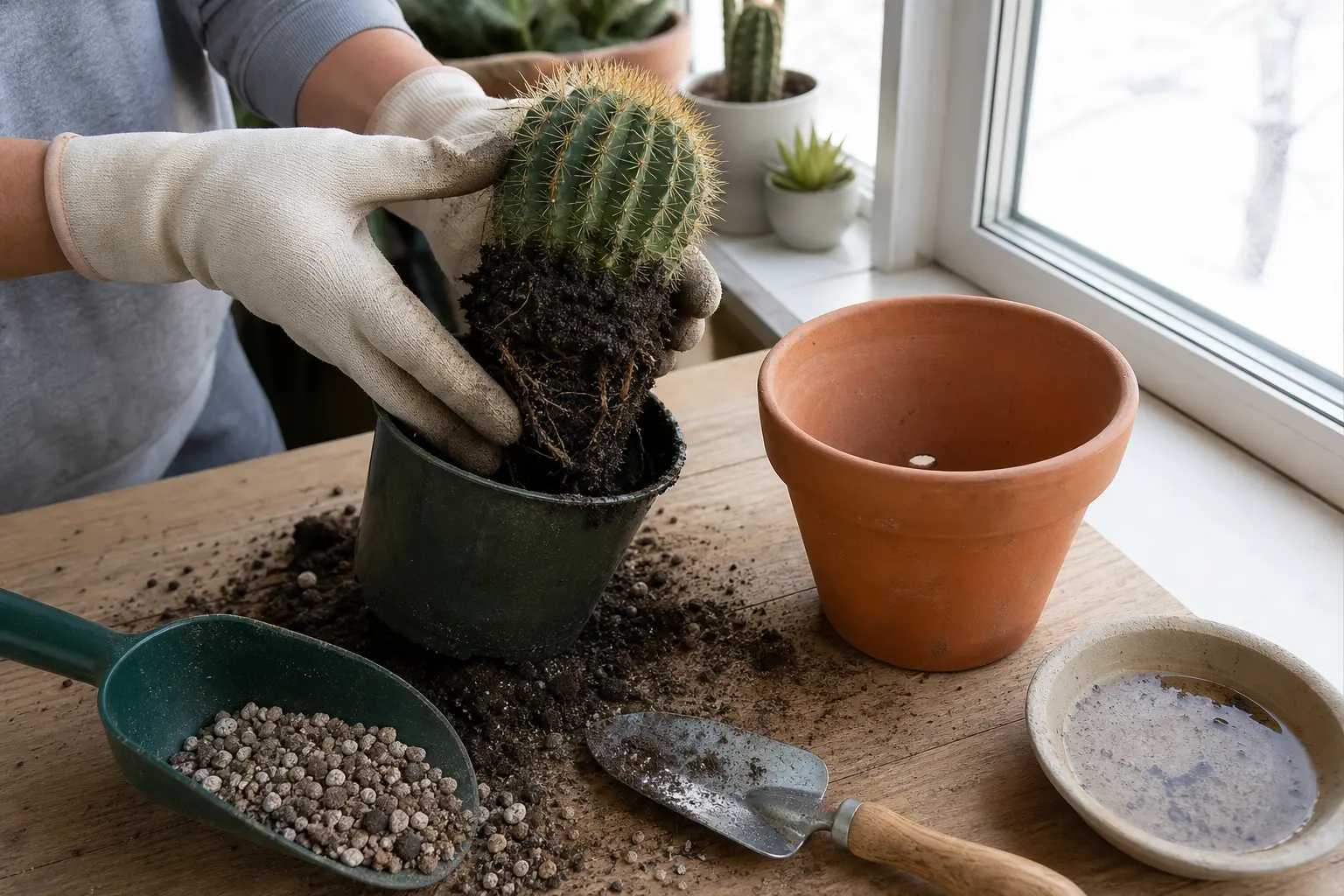
Prepare a clean pot, dry cactus mix, gloves, and a tool for loosening soil. Use folded newspaper, cardboard, or padded tongs to handle spiny plants without squeezing the stem.
Choose a small pot with a drainage hole
Use a pot with at least one unobstructed drainage hole. Choose one only slightly larger than the surviving root system—often 1 to 2 inches wider than the root ball for a small cactus.
An oversized pot holds excess wet mix around roots, which is especially risky in winter. Do not add rocks to the bottom instead of providing drainage; they do not make a pot without a hole safe.
Use a fast-draining cactus and succulent mix
Use a cactus and succulent mix. If it feels fine-textured or peat-heavy, add a coarse mineral component such as pumice, perlite, grit, or small horticultural gravel.
Desert cacti generally need a more mineral, fast-drying mix than jungle cacti such as Christmas cactus, which tolerate more organic material. Still, no cactus benefits from compacted, waterlogged soil.
Use dry or barely moist mix for a winter rescue.
Remove as much wet or compacted soil as practical
Slide the cactus from its pot and gently loosen soil around the roots. If the old mix is sodden, compacted, sour-smelling, or pest-ridden, remove as much as practical.
Do not aggressively strip healthy fine roots just to leave a perfectly bare root ball. Remove harmful material while preserving viable roots. If dry old soil is tightly stuck to healthy roots, it is often better to leave some in place.
Inspect roots and trim only dead or rotten sections
With clean, sharp scissors or pruners, remove roots that are black, mushy, hollow, or clearly dead. Keep roots that are firm, even if they are tan or dry-looking.
If rot has reached the stem base, cut back to clean, firm tissue with a sterile blade. Let the wound dry thoroughly before replanting or rooting the healthy portion.
Do not fertilize freshly cut or stressed roots.
Let damaged roots dry before planting when needed
If you removed rotten roots, made cuts, or found the root ball very wet, let the cactus air-dry in a shaded, frost-free spot with airflow before replanting.
A small cactus with minor root trimming may need only a day or two. Larger plants or substantial cuts may need several days. The goal is for cut surfaces to callus rather than remain wet in fresh soil.
If the roots are healthy and you only replaced poor but dry soil, potting the same day is usually fine.
Keep the cactus dry after repotting
Do not water immediately after a winter repot, particularly if roots were trimmed or the old mix was wet.
As a general guide, wait about one week after minimal root disturbance. Wait longer—often 10 days to two weeks—if roots were cut or rot was removed. Then water lightly only if the mix is fully dry and the cactus is warm enough to use moisture.
Cool, dim conditions require a longer dry period than a warm, bright indoor setting.
If the Cactus Can Wait Until Spring
If the cactus is firm, the pot drains, and the soil dries reliably, delaying the repot is usually less stressful. The priority is preventing mediocre soil from becoming a wet-soil problem before spring.
Keep it warm, bright, and protected from cold drafts
Give the cactus the brightest available light, ideally near a sunny window, while avoiding freezing glass and cold nighttime drafts. Most houseplant cacti should remain indoors above freezing.
Brighter winter light helps soil dry more reliably and reduces the chance that the cactus will sit in damp mix.
Water sparingly and only after the mix dries completely
Check moisture deep in the pot rather than relying on the surface. A bamboo skewer or chopstick can reveal dampness around the roots.
When the mix is completely dry, water enough to moisten it evenly and let excess drain. Empty saucers and cover pots afterward. A resting cactus may need much less water than it did in summer.
Do not force extreme dehydration if a warm indoor cactus begins visibly wrinkling, but assess the soil before watering.
Avoid fertilizing or moving the cactus repeatedly
Do not fertilize a dormant, stressed cactus or one awaiting a spring repot. Fertilizer cannot fix poor soil structure and may encourage weak growth in limited winter light.
Avoid repeatedly moving, rotating, or unpotting the plant without a clear reason. Stable conditions and restrained watering are more helpful.
Plan to repot when spring light and growth resume
When days lengthen and the cactus begins active growth, repot using a modestly sized pot and gritty, free-draining mix. Fresh spines, new pads, swelling buds, or increased water use can indicate growth has resumed.
Spring is also the best time to correct crowding, replace exhausted mix, or separate offsets on an otherwise healthy cactus.
Aftercare: What to Watch for After a Winter Repot
A cactus may pause after repotting. Watch its firmness, color, and condition over the next few weeks rather than reacting to one slightly wrinkled day.
Normal transplant stress versus signs of rot
Mild wrinkling, temporary loss of firmness, or a pause in growth can be normal after root disturbance. The cactus should still remain generally firm, without spreading dark patches or wet-looking tissue.
Rot usually progresses: soft areas enlarge, discoloration spreads, the base becomes unstable, or an unpleasant smell develops. If this occurs, remove the cactus again and cut back to firm tissue.
What to do if the cactus wrinkles or shrivels
Check the mix first. If it is still damp, do not water; wrinkling in damp soil often indicates roots are not functioning.
If the mix is dry, the cactus is firm, and root wounds have had time to dry, give a modest watering and allow excess to drain. Do not repeatedly soak it in an effort to plump it up quickly. Root recovery can take time.
Severe shriveling with softness, discoloration, or a loose base requires another root and stem inspection.
Why flowers may shrivel after a move or repot
Flowers and buds are sensitive to changes in light, temperature, watering, and location. A cactus may drop buds or shrivel flowers after being moved, even without repotting. This is common with holiday cacti.
If a flowering cactus has dangerous wet soil or developing rot, repot it anyway. Saving the roots is more important than preserving the current flowers. If the plant is healthy and the soil is merely imperfect, wait until flowering ends and spring growth begins.
When to take cuttings or seek help for a failing cactus
Take cuttings if rot is spreading through the base or roots but healthy stem tissue remains above the damaged area. Cut well above soft or discolored tissue, let the cutting callus in a dry place, and root it later in suitable dry mix.
For a rare, valuable, or sentimental cactus, seek help from a local cactus society, specialist nursery, or university extension service. Photos of the whole plant, roots, stem base, and old soil can help with diagnosis.
Conclusion
You can repot a cactus in winter when bad soil is an active threat. Soggy, compacted mix; missing drainage; pests; mold; and signs of root or stem rot outweigh the usual preference for spring repotting.
If the cactus is stable and the soil is simply not ideal, wait for spring. Keep it bright and warm, water only after the mix dries completely, and repot when active growth resumes. The deciding question is whether leaving it in the current soil is likely to cause damage before spring.
FAQ
Can I repot a cactus in winter if it has been overwatered?
Yes. If soil stays wet, the pot lacks drainage, or the cactus has soft tissue or suspected root rot, repotting in winter is appropriate. Remove wet soil, trim clearly rotten roots, use dry fast-draining mix, and delay watering afterward.
If it was overwatered once but the pot drains well and the cactus is firm, let the mix dry completely instead of automatically repotting.
How long should I wait to water a cactus after repotting?
Wait at least several days, commonly around one week, after a routine repot with minimal root disturbance. If you trimmed roots, removed rot, or repotted a very wet plant, wait longer—often 10 days to two weeks.
Cool, low-light conditions call for a longer dry period than warm, bright conditions.
Can I use regular potting soil for a cactus?
Regular potting soil alone is usually too moisture-retentive for most desert cacti, especially indoors in winter. It can compact and keep roots wet too long.
A cactus and succulent mix is a better starting point. If it still feels heavy, add pumice, perlite, or horticultural grit to improve drainage and air space.
Should I repot a flowering cactus or wait until it finishes blooming?
Wait until flowering finishes if the cactus is healthy and the soil drains properly. Repotting can cause buds or flowers to shrivel or drop.
Do not wait solely to protect flowers when the soil is soggy, the pot has no drainage, or rot is developing. Remove the immediate root risk and accept that the current bloom may not last.
You Might Also Like