How Do You Care for a Money Tree Indoors in the UK?
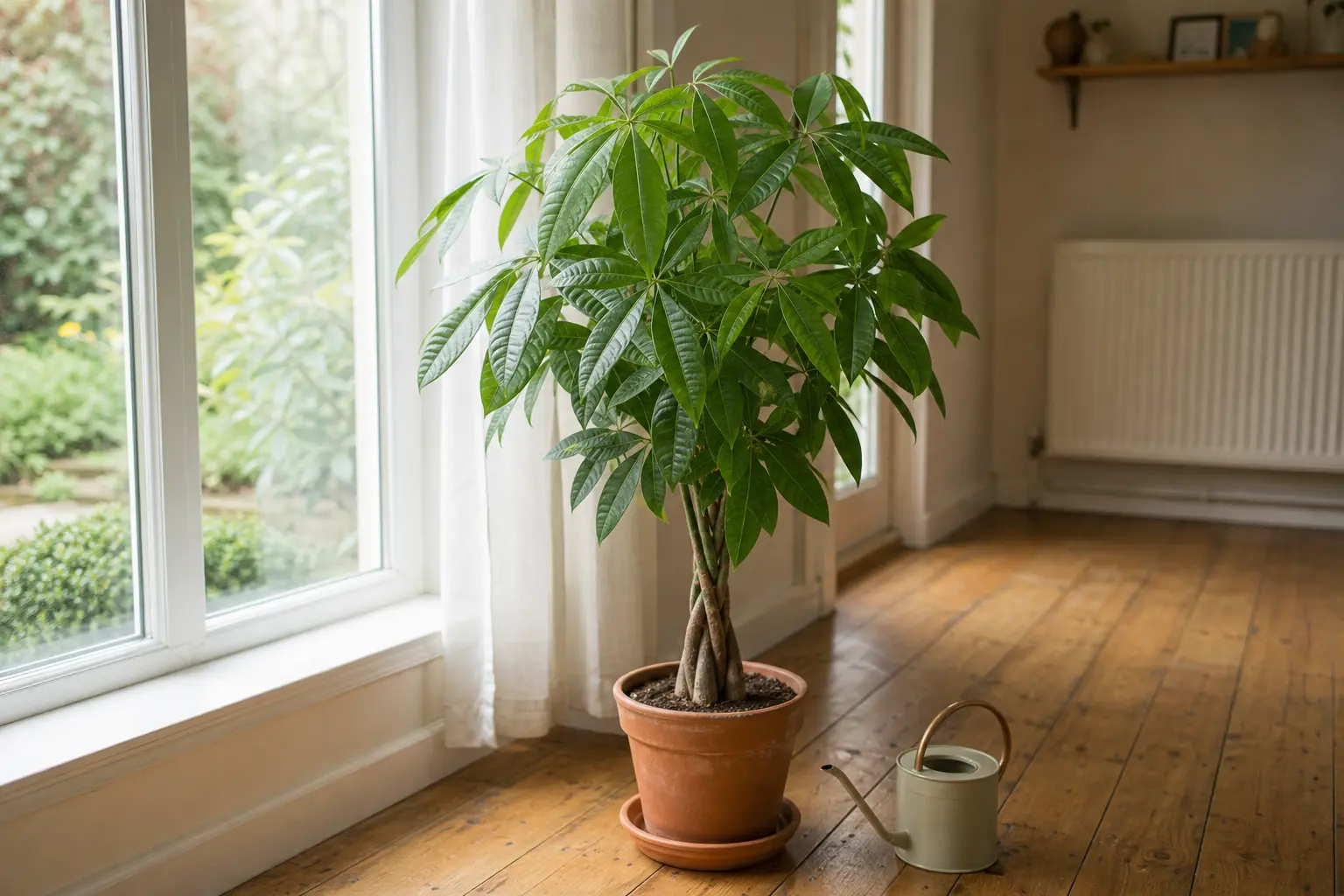
A money tree, usually Pachira aquatica, is a forgiving houseplant when its roots are kept healthy and its conditions remain reasonably steady. In a UK home, the main challenges are often short, dim winter days, compost that stays wet for too long, dry air from central heating and cold draughts near windows or doors.
The most reliable approach is simple: provide bright indirect light, use a pot with drainage and an airy compost, then water only when the upper layer has dried. Avoid trying to compensate for low winter light with extra water or feed—both can create more problems than they solve.
Choose the Right Spot, Pot and Compost
Light and placement in a UK home
Money trees grow best in bright, indirect light. In practical terms, place yours near a bright window where it receives plenty of daylight but is not baked by strong direct sun for hours each day.
An east-facing window is often ideal. A south- or west-facing window can also work, but position the plant a little back from the glass or soften harsh summer sun with a sheer curtain. Direct midday sunshine can scorch leaves, especially after a plant has been kept in lower light.
UK winter light is naturally weaker, so a money tree may need to sit closer to a window from autumn to spring. Do this gradually if it has been in a darker part of the room. Avoid pressing foliage against cold glass, particularly overnight.
A money tree can tolerate moderate light, but it will grow more slowly and may become sparse or lean towards the window. Rotate the pot by a quarter turn every week or two so the canopy develops more evenly.
Temperature, draughts and humidity
Normal indoor temperatures suit a money tree well. Aim for a stable room that stays roughly between 16°C and 24°C where possible. It is more important to avoid sudden temperature swings than to maintain a perfect number.
Keep the plant away from:
- Cold, frequently opened external doors
- Unheated porches and conservatories in winter
- Draughty windowsills
- Radiators, wood burners and hot air vents
- Air-conditioning units or cold ventilation streams
A heated home can make the air dry, particularly in winter. Money trees cope with average household humidity better than many tropical houseplants, but very dry air can contribute to brown leaf tips and curled foliage.
Rather than misting repeatedly, which provides only a short-lived increase in humidity, group houseplants together, keep the plant away from direct heat and use a pebble tray beneath the pot if desired. Make sure the base of the pot sits above the water level, not in it.
Pots with drainage and a free-draining compost mix
A drainage hole is essential. A decorative outer pot or cachepot is fine, but the plant should be in a nursery pot or other container with holes at the base. Never allow it to stand in a puddle of water inside the outer pot.
Choose a pot only slightly larger than the current root ball. A very large pot holds more compost than the roots can use, so it stays wet for longer and increases the risk of root rot.
Use a peat-free houseplant compost mixed with an ingredient that improves drainage, such as perlite, horticultural grit or fine orchid bark. A useful starting mix is:
- Two parts houseplant compost
- One part perlite or horticultural grit
The aim is compost that holds some moisture but still allows air around the roots. Avoid using garden soil indoors: it can compact easily, drain poorly and may carry pests or weed seeds.
Water an Indoor Money Tree Correctly
How to tell when it needs water
Do not water a money tree by the calendar alone. Check the compost first, as light, temperature, pot size and heating all affect how quickly it dries.
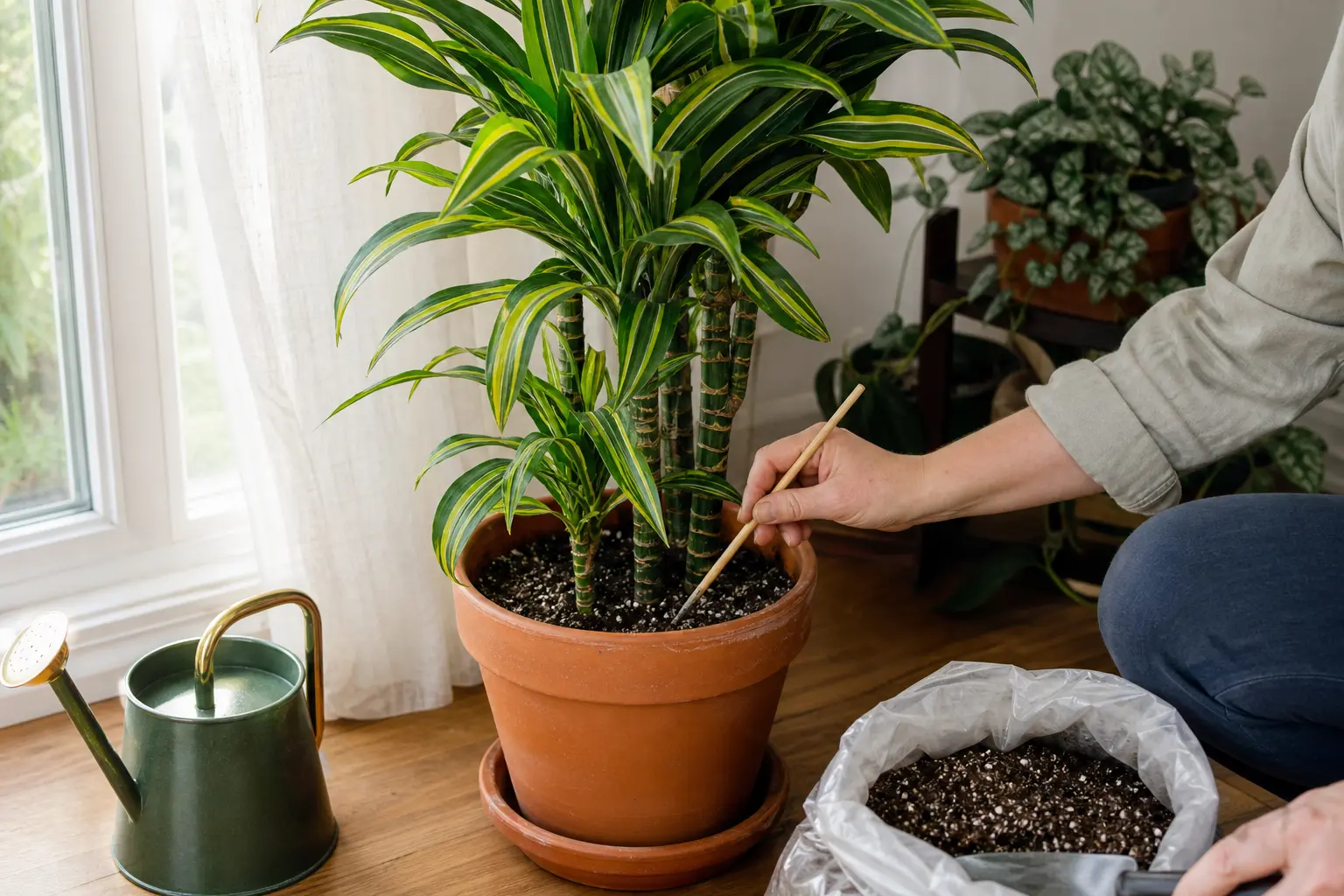
Push a finger 2–4cm into the compost. Water when this upper layer feels dry and the pot feels noticeably lighter than it did after a thorough watering. For a larger pot, a wooden chopstick pushed into the compost can help: if it comes out with damp compost clinging to it, wait a few more days.
When the plant needs water:
- Take it to a sink, bath or draining board if practical.
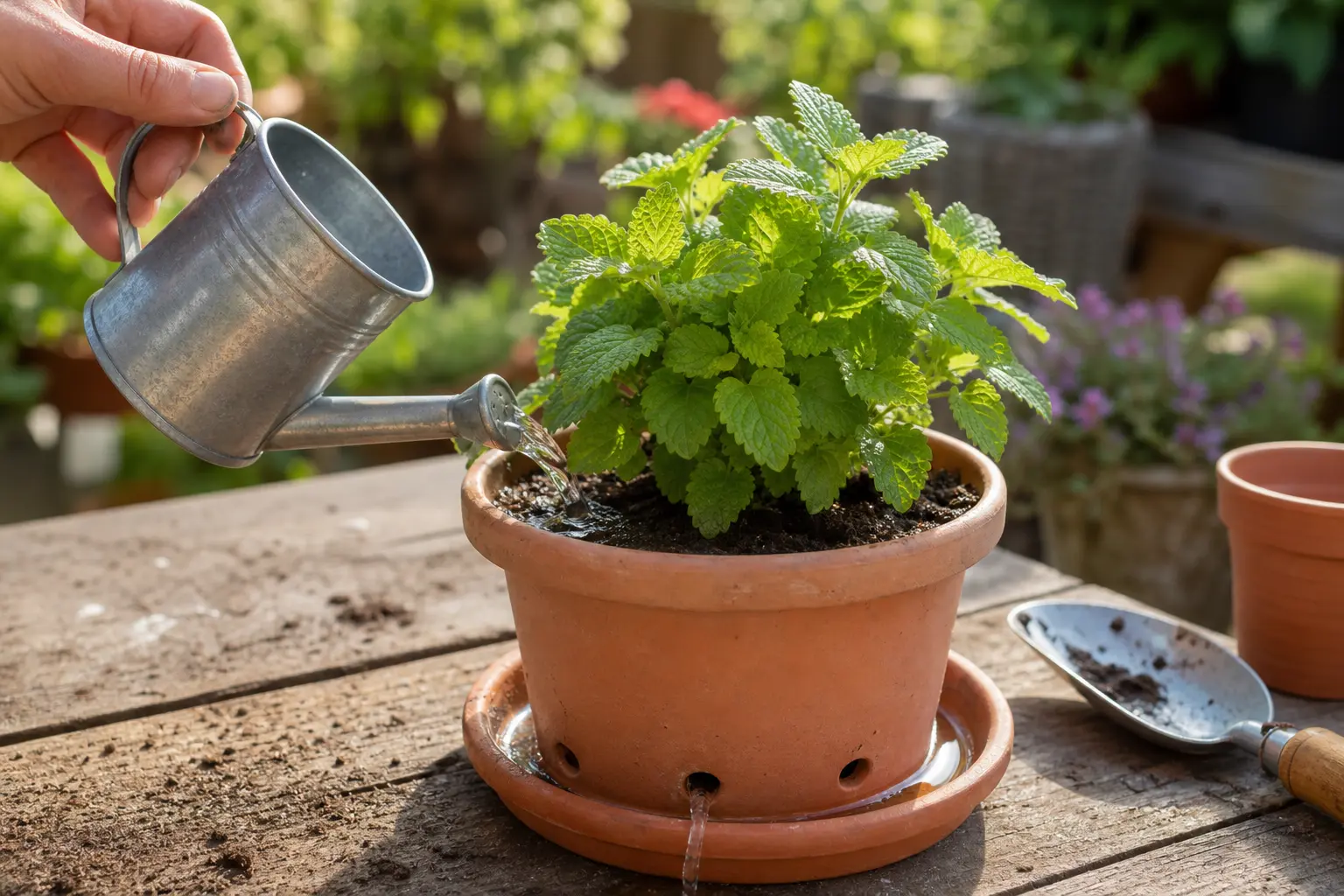
- Water the compost slowly and evenly until water runs from the drainage holes.
- Leave it to drain fully for several minutes.
- Empty any water collected in the saucer or outer pot.
A thorough soak followed by a drying period is healthier than frequent small splashes. Small amounts often dampen only the surface while leaving parts of the root ball either dry or continuously wet.
Watering less in winter and more during brighter, warmer periods
A money tree uses less water in winter because the days are shorter, growth slows and the compost evaporates more slowly. In a cool room, wet compost may remain wet for much longer than expected.
There is no fixed UK watering interval, but the seasonal pattern usually looks like this:
| Season and conditions | Typical approach |
|---|---|
| Spring and summer, in bright light | Check regularly; water once the top layer has dried. |
| Autumn | Let the compost dry a little more between waterings as growth slows. |
| Winter, especially in a cool or dim room | Check less often and water sparingly only when the upper compost has dried. |
| Warm, centrally heated room | Compost may dry faster, but still check below the surface before watering. |
A plant in a bright, warm living room may need water more often than one in a cooler bedroom, even in the same week. Respond to the compost, rather than copying a schedule from another home.
Use room-temperature water where possible. Very cold water can be an unnecessary shock to roots in winter.
Signs of overwatering and underwatering
Overwatering is the more common problem with indoor money tree care in the UK. It is usually caused by compost staying wet, poor drainage or watering again before the root zone has started to dry.
| Symptom | More likely cause | What to check |
|---|---|---|
| Yellowing lower leaves, soft stems or consistently wet compost | Overwatering | Drainage holes, water left in outer pot, compacted compost |
| Several leaves dropping while compost is wet | Root stress, cold conditions or sudden environmental change | Root health, draughts and light levels |
| Dry, crispy leaf edges and a very light pot | Underwatering or very dry air | Moisture deeper in the compost and proximity to radiators |
| Limp leaves with dry compost | Underwatering | Water thoroughly and allow excess to drain |
| Yellow leaves with dry compost | Could be previous root damage, low light or natural ageing | Check roots and recent care changes |
One yellow lower leaf occasionally is not automatically a problem. A pattern of yellowing leaves, particularly alongside wet compost, needs attention.
Feed, Prune and Repot for Healthy Growth
Feeding during the growing season
Feed only when the plant is actively growing, usually from spring through late summer. Use a balanced liquid houseplant feed at the dilution stated on its label, applied to damp compost after watering.
Feeding every four to six weeks is generally enough for a healthy indoor money tree. More fertiliser will not make up for insufficient light, and excessive feed can damage roots or leave salts in the compost.
Do not feed a struggling plant with suspected root rot, a newly repotted plant or a plant sitting in very low winter light. First correct the underlying issue. Resume feeding only when it is growing again.
Pruning leggy, damaged or crowded growth
Pruning is mainly about shape, not necessity. Remove yellow, brown or badly damaged leaves at their stalks using clean, sharp scissors or secateurs.
If your money tree has become tall and leggy, prune back long bare shoots in spring or early summer. Cut just above a leaf node—the point where a leaf or side shoot joins the stem. This can encourage branching below the cut and produce a fuller shape over time.
Avoid removing a large amount of healthy foliage at once, especially in winter. A plant already coping with low light will recover more slowly.
Many money trees are sold with braided trunks. Do not tighten existing ties or attempt to force mature stems into a new braid. Check that any nursery ties are not cutting into swelling stems, and remove restrictive material carefully.
When and how to repot a money tree
Repot every two to three years, or sooner if roots are densely circling the pot, growing through drainage holes or causing water to run straight through without wetting the compost properly.
Spring is the best time, as the plant is entering its main growing period.
To repot:
- Choose a clean pot with drainage holes, around 2–5cm wider than the existing pot.
- Prepare a free-draining houseplant compost mix.
- Slide the plant from its pot and gently loosen only the outermost circling roots.
- Trim away any black, mushy or hollow roots with clean scissors.
- Position the plant at the same depth as before.
- Fill around the root ball, firming lightly rather than packing the compost down hard.
- Water lightly enough to settle the mix, then allow excess to drain.
Do not move a healthy money tree into a dramatically larger pot “to give it room”. Slight increases are safer and easier to manage.
Solve Common Indoor Money Tree Problems
Why leaves turn yellow or fall off
Yellow leaves and leaf drop commonly follow a change in conditions. A money tree may shed some leaves after being brought home from a shop, moved to a new room, repotted or exposed to a cold journey. Give it stable care rather than making several rapid changes.
Persistent yellowing is more often linked to overwatering, low light or poor drainage. Check the compost before giving more water. If it is wet and heavy several days after watering, improve the plant’s drainage and review how often you water.
Leaf drop can also occur after cold exposure. A plant left beside a chilly window or near a door may react even if the rest of the room feels comfortable.
Brown leaf tips, curling leaves and slow growth
Brown tips may result from dry indoor air, inconsistent watering, a build-up of fertiliser salts or roots sitting in poor compost. Trim only the brown tissue with clean scissors if appearance bothers you; the damaged part will not turn green again.
Leaves that curl inward can signal dryness, heat from a radiator, intense direct sun or root stress. Check the compost and then assess the plant’s position. If it is close to a heater or gets hot afternoon sun, move it slightly rather than drastically.
Slow growth is normal in the UK from late autumn to early spring. A money tree may produce little or no new growth in winter. Provided its leaves remain firm and green and its roots are not waterlogged, slow growth alone is not a reason to feed or repot.
Checking for spider mites, scale and mealybugs
Inspect your money tree when watering, particularly the undersides of leaves and where leaf stalks meet stems.
Look for:
- Spider mites: Fine webbing, pale stippling and dull-looking leaves, often encouraged by dry, warm air.
- Mealybugs: White, cottony clusters in leaf joints and along stems.
- Scale insects: Small brown or tan bumps attached firmly to stems or leaf veins, sometimes with sticky residue nearby.
Isolate a plant with suspected pests so they do not spread. Wipe visible mealybugs or scale gently with a cotton bud dampened with water or rubbing alcohol, taking care not to soak the plant. Shower foliage with lukewarm water to dislodge spider mites, then repeat checks weekly. For a heavy infestation, use an indoor plant pest treatment according to its label.
Root rot and what to do if the trunk feels soft
A soft, darkened or wrinkled trunk is serious, especially if accompanied by wet compost, a sour smell or widespread yellowing. It can indicate rot at the roots or base of the stems.
Remove the plant from its pot and inspect the roots. Healthy roots are generally pale and firm. Rotten roots are dark, soft or slimy and may smell unpleasant.
Remove affected compost and trim away clearly rotten roots with sterilised scissors. Repot the plant in fresh, free-draining compost and a clean pot with drainage. Do not water heavily straight away; allow the plant to settle, then water only once the upper compost begins to dry.
If the rot has moved far up a braided trunk, recovery may be limited. Save any healthy stem sections only if they are firm and free from discolouration.
Keep Your Money Tree Healthy Through a UK Winter
Winter care is mostly about doing less. Short days mean slower growth, while cool windows and reduced evaporation mean compost remains wet longer.
Move the money tree into the brightest suitable position available, but keep leaves away from cold glass. If the room drops noticeably at night, move it farther into the room rather than leaving it on a windowsill.
Water less frequently, stop feeding and check that water is not collecting in the outer pot. Dust leaves gently with a damp cloth every few weeks so they can make the most of limited daylight.
Central heating can dry the air, but avoid placing the plant next to a radiator. If brown edges become persistent, increase distance from heat sources and maintain more even watering. Misting is optional, not essential, and should not be used as a substitute for correct watering or a suitable position.
Conclusion
Successful indoor money tree care in the UK comes down to steady conditions rather than constant attention. Give the plant bright indirect light, a pot with drainage and loose, free-draining compost. Water deeply only after the upper compost has dried, then reduce watering and stop feeding through the darker months.
If leaves yellow or drop, resist the urge to water or feed immediately. Check moisture, drainage, temperature and recent changes first. In most cases, a money tree responds well once its roots are allowed to dry appropriately and its environment becomes more stable.
FAQ
How often should I water a money tree indoors in the UK?
Water when the top 2–4cm of compost feels dry, rather than on a fixed weekly schedule. This may be more frequent in bright, warm summer conditions and much less frequent during a dim UK winter. Always empty water that drains into the saucer or outer pot.
Can a money tree live in a low-light room?
It can survive in moderate light, but it is unlikely to thrive in a genuinely low-light room. Growth may become slow and stretched, and the compost will dry very slowly. Place it near the brightest available window with indirect light, or consider a suitable grow light if the room has little natural daylight.
Why is my money tree dropping leaves after I brought it home?
A change in light, temperature, humidity and watering routine can cause temporary leaf drop. Keep it warm, out of draughts and in bright indirect light. Avoid repotting, feeding or repeatedly moving it while it adjusts, and water only when the upper compost has dried.
Should I mist my money tree to increase humidity?
You do not need to mist a money tree routinely. Misting has only a brief effect on room humidity and can leave water sitting on foliage. Keeping the plant away from radiators, grouping plants together and maintaining consistent watering are usually more useful measures in a centrally heated UK home.
You Might Also Like