I Watered My Plant With Tap Water by Accident—What Should I Do?
Usually, One Tap-Water Watering Is Not a Problem
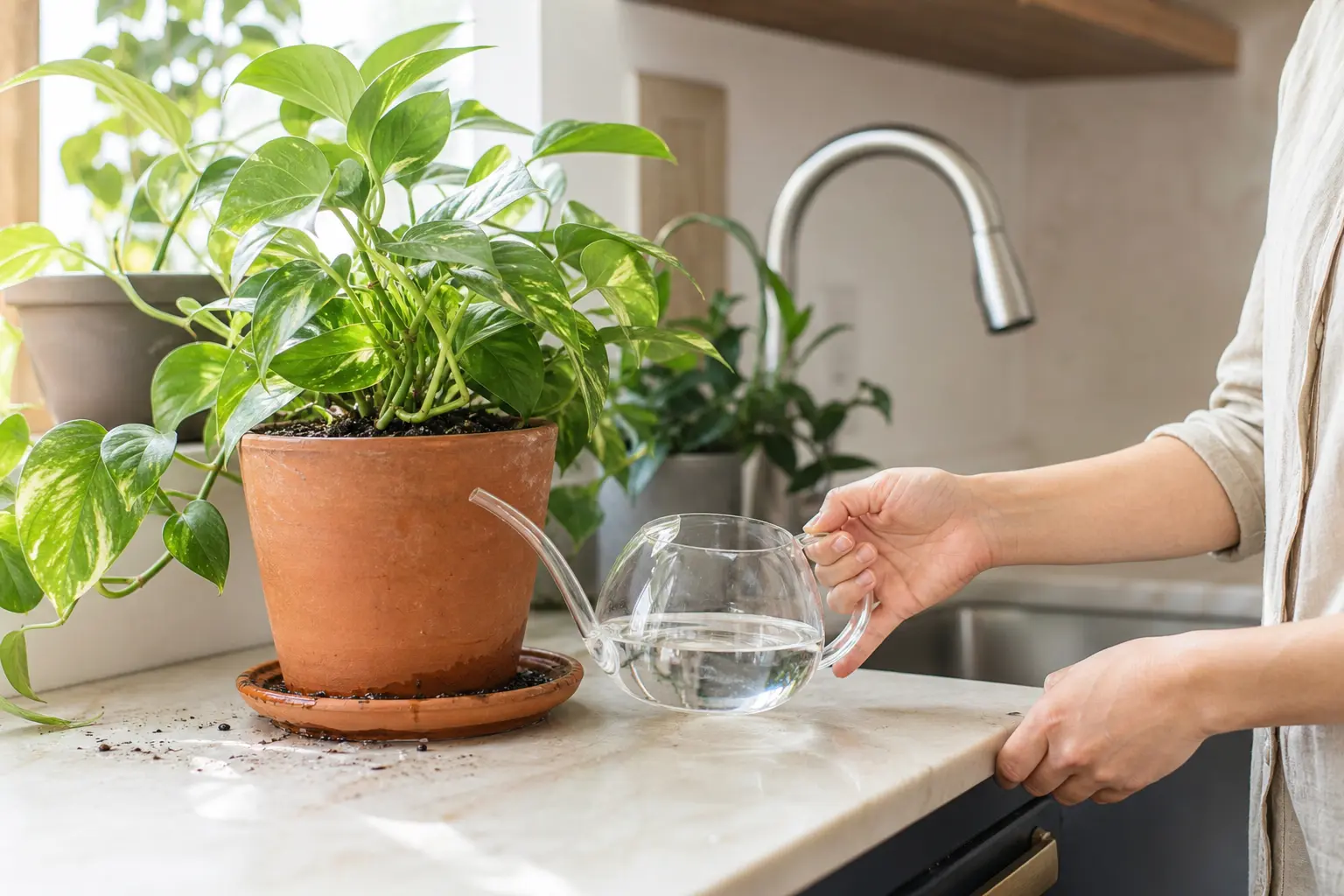
If your plant was watered with tap water once when you normally use filtered, distilled, or rainwater, it will almost certainly be fine. Ordinary municipal tap water is suitable for many houseplants, garden plants, and container plants. A single watering does not usually add enough minerals, chlorine, or salts to cause visible damage.
The most helpful response is usually no response: let the pot drain normally, return to your usual routine, and avoid trying to “fix” a problem that probably does not exist.
Tap-water concerns tend to develop through repeated use in a small pot, particularly where the water is very hard, softened with sodium, or high in fluoride or dissolved salts. They are not normally caused by one accidental watering.
When to Simply Resume Your Usual Watering Routine
Resume your regular routine if all of the following are true:
- The water was clear, normal-smelling household tap water.
- Your plant was watered once, not repeatedly soaked.
- The pot has drainage holes and excess water could escape.
- The plant was healthy before the watering.
- You do not know of a specific local water-quality issue.
Do not water again merely because you used tap water. The potting mix still contains the moisture the plant needs, and adding more water can create a much more immediate problem: soggy soil and stressed roots.
When the Water Itself May Be a Concern
Take a closer look if the water was noticeably unusual rather than simply unfiltered tap water. For example:
- It was brown, rusty, cloudy, oily-looking, or had visible sediment.
- It tasted or smelled strongly salty, sulfurous, chemical, or metallic.
- It came from a household water softener rather than the regular cold-water tap.
- You used water from a source known to be contaminated or not intended for drinking.
- You accidentally used pool water, cleaning water, aquarium medication water, or water mixed with fertilizer or another product.
In those situations, the question is not really whether tap water is safe for plants. It is whether that particular water contained an unusually high level of salts or another substance the plant did not need.
What to Do Right Now
For a normal plant watered with tap water, keep the response simple:
- Empty the saucer or cachepot if water is standing in it.
- Put the plant back in its usual light and temperature conditions.
- Do not add filtered water, fertilizer, or soil amendments.
- Check the potting mix before the next watering, rather than following a calendar date.
- Watch the plant over the next week or two, but do not inspect it anxiously for damage that is unlikely to appear.
A plant that looks slightly limp immediately after watering may simply be adjusting to moisture, especially if it had been dry. It is not usually reacting to the type of water.
Do Not Water Again Until the Potting Mix Needs It
The main risk after an accidental watering is overcorrecting. If you immediately water again with distilled or filtered water, the root zone becomes wetter for longer. Roots need both moisture and air; constantly saturated mix contains too little oxygen and can contribute to root decline.
Instead, assess moisture at the root level:
- Insert a finger into the potting mix rather than judging by the dry-looking surface.
- Lift the pot if practical. A pot that feels light generally needs water sooner than a heavy one.
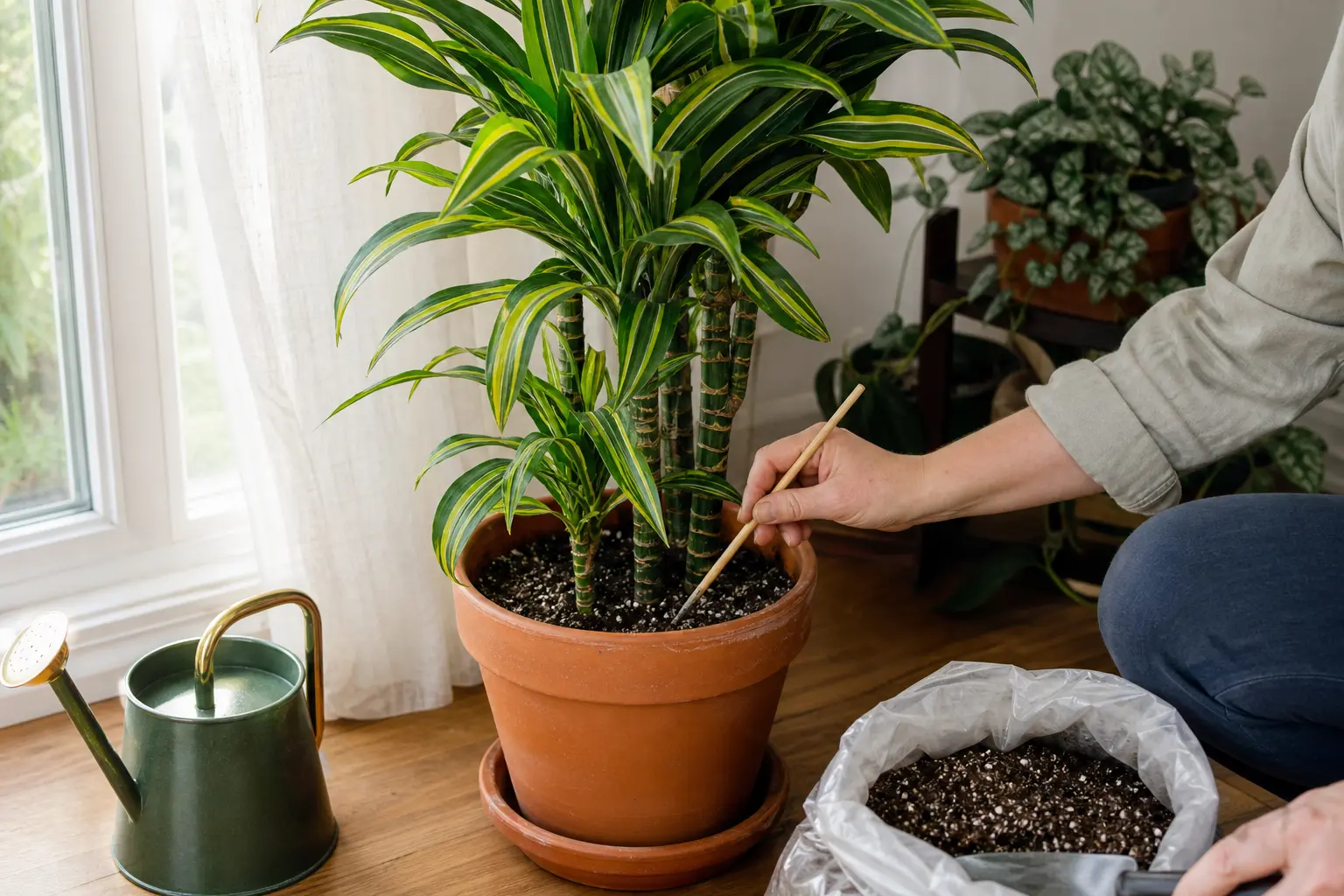
- Use a wooden skewer or chopstick in larger pots. If it comes out with damp mix clinging to it, wait.
- Consider the plant type. Succulents, cacti, snake plants, and ZZ plants should dry much more thoroughly than ferns, calatheas, or many tropical plants.
There is no universally correct amount of water every seven days. Light, temperature, season, pot size, root growth, and soil type all change how quickly a plant dries.
Avoid Flushing the Soil After One Normal Watering
Flushing means running a large quantity of water through the pot to wash out dissolved salts. It can be useful in some long-term mineral-buildup situations, but it is not a sensible response to one normal tap-water watering.
Flushing immediately can:
- Keep the root zone wet for too long.
- Wash away nutrients along with soluble salts.
- Be difficult for plants in pots without drainage.
- Create mess and stress without solving a real problem.
Save flushing for a genuine buildup issue—such as recurring white crust on the soil, persistent leaf-edge browning on a sensitive plant, or a history of hard or softened water. Even then, only flush a pot that drains freely and allow it to drain completely afterward.
Check for Unusual Water Conditions
If the water was discolored for a few seconds after turning on the faucet, it may have contained sediment from plumbing rather than being typical tap water. One small watering is still unlikely to be catastrophic, but use clear, fresh cold water next time.
If you suspect the water was unusually salty or came through a water softener, let the pot drain and do not add more water immediately. Once the plant is due for watering again, use your preferred low-mineral water source. If you see ongoing symptoms or crusting later, consider a careful flush or repotting into fresh mix, depending on the plant’s condition.
If you used water that may have been chemically contaminated, do not compound the issue with repeated watering. Keep the plant separate from edible crops or herbs until you understand what was in the water, and use clean water going forward. For a serious known contamination, local water-quality guidance is more useful than generic houseplant advice.
When Tap Water Can Affect Plants Over Time
“Tap water” is not one uniform product. Its effect depends on your local supply, plumbing, whether you use a water softener, and how often you water a plant in a confined container.
Plants growing outdoors in the ground usually have a larger soil volume and more rainwater dilution than houseplants in pots. A small indoor pot, by contrast, can gradually accumulate minerals because water evaporates or is used by the plant while dissolved materials remain behind.
Hard-Water Minerals, Fluoride, and Salt Buildup
Hard water contains relatively high levels of dissolved minerals, often including calcium and magnesium. These minerals are not automatically harmful; in fact, many plants tolerate them well. The issue is repeated accumulation in potting mix.
Over time, you may notice:
- White, beige, or yellowish crust on the soil surface or pot rim.
- A chalky film on terra-cotta pots.
- Slower growth despite otherwise reasonable care.
- Brown, dry-looking leaf edges or tips, especially on sensitive plants.
Fluoride can also contribute to leaf-tip or margin damage in some plants, though brown tips alone do not prove fluoride is the cause. Underwatering, low humidity, excess fertilizer, root stress, and inconsistent watering can create similar symptoms.
Water from a sodium-based household softener deserves special caution for regular plant watering. Softened water may contain more sodium, which can build up in potting mix and interfere with plant health over time. If possible, use an unsoftened tap, rainwater, filtered water, or distilled water for containers and houseplants.
Chlorine and Chloramine
Municipal water is commonly disinfected with chlorine or chloramine. Most established houseplants tolerate ordinary levels of these disinfectants, especially when tap water is used occasionally or when the potting mix contains healthy organic matter.
Letting water sit uncovered overnight may allow some chlorine to dissipate, but it is not a reliable solution for chloramine, which is more persistent. If your concern is chloramine, use a filter designed to reduce it or choose another water source rather than assuming standing water solves the issue.
There is usually no need to leave water out before every watering unless you have identified a plant-specific sensitivity or dislike watering with very cold water. Bringing cold tap water closer to room temperature can be reasonable for tropical houseplants, but do not store water indefinitely in open containers where dust or debris can enter.
Plants More Likely to Be Sensitive
Many common plants manage tap water without trouble: pothos, philodendrons, spider plants, dracaenas, peace lilies, snake plants, rubber plants, and numerous outdoor annuals can often adapt well when drainage and watering practices are sound.
Some plants are more likely to show problems when mineral-heavy water is used repeatedly. These include:
- Calatheas and related prayer plants
- Some dracaenas
- Spider plants
- Peace lilies
- Carnivorous plants
- Orchids grown in bark-based mixes
- Seedlings and young plants in small containers
- Plants grown hydroponically or in water rather than soil
Sensitivity also varies by cultivar, growing conditions, and the exact composition of the local water. A plant that thrives on tap water in one home may show brown edges in another.
Tell Water-Quality Issues Apart From Overwatering and Root Problems
It is easy to blame tap water when leaves yellow or brown shortly after watering. In practice, excess moisture, poor drainage, compacted mix, and damaged roots are more common explanations.
A single tap-water watering does not usually cause immediate widespread decline. If your plant was struggling before the accident, the timing may simply be coincidental.
Signs More Consistent With Overwatering or Poor Drainage
Look first for conditions that keep roots wet too long:
| Symptom or condition | More likely explanation |
|---|---|
| Yellowing lower leaves and consistently wet soil | Overwatering or slow drainage |
| Pot smells sour, swampy, or like rotten eggs | Stagnant, oxygen-poor potting mix and possible root trouble |
| Soft, dark stems near the soil line | Rot or prolonged wetness |
| Fungus gnats around the pot | Persistently moist organic mix |
| Wilted leaves while the mix is still wet | Roots may be unable to take up water properly |
| Water pooling in a decorative outer pot | Roots sitting in standing water |
A pot without drainage holes is especially challenging. In that situation, even good-quality water can become a problem if too much remains around the roots.
Signs That May Point to Mineral Buildup
Water quality becomes a stronger possibility when symptoms appear gradually and repeatedly despite appropriate moisture levels:
- Crust on the soil, pot rim, or drainage hole.
- Brown tips that recur on newer leaves.
- A sensitive plant improves after switching to low-mineral water.
- The plant has been in the same potting mix for a long time and is regularly fertilized.
- Your household water leaves substantial scale on faucets, kettles, or shower doors.
These signs are suggestive, not conclusive. Fertilizer salts can produce the same crusting and leaf-tip damage. Before blaming tap water, review your fertilizer frequency and make sure the pot drains well.
How to Assess Watering Needs Instead of Following a Fixed Schedule
A fixed schedule can be a useful reminder, but it should not dictate watering. A plant may need water much faster in bright summer conditions and far more slowly in winter.
Before watering, check:
- Soil moisture: How far down is the mix actually dry?
- Pot weight: Does the container feel noticeably lighter?
- Leaf behavior: Is the plant normally firm and upright, or is it showing true thirst?
- Drainage: Does excess water run out freely?
- Season and location: Has light, heating, air conditioning, or temperature changed?
Water thoroughly enough to moisten the root ball when the plant needs it, then allow excess to drain. Avoid frequent small sips that moisten only the upper layer and encourage shallow roots.
Choosing Tap, Filtered, Distilled, or Bottled Water Going Forward
The best water choice is the one that suits your plant, your local supply, and your realistic routine. For most people, using ordinary tap water correctly is more important than chasing a perfect water source.
When Tap Water Is Usually Fine
Tap water is usually a practical choice when:
- Your water is clear and suitable for household use.
- Your plants are tolerant species.
- You repot periodically and do not overfertilize.
- Pots have drainage holes.
- You do not see repeated mineral-crust or leaf-tip problems.
If you use tap water, let it run until it is clear and cool rather than collecting water that has been sitting in hot plumbing. Empty saucers after watering, especially for plants that dislike wet feet.
When Filtered or Distilled Water Is Worth Considering
Filtered or distilled water can be worthwhile for sensitive plants, particularly when your water is very hard, softened, or linked to recurring symptoms.
Choose based on the issue:
- Filtered water: A practical middle ground if the filter reduces the minerals or disinfectants relevant to your local supply.
- Distilled water: Very low in dissolved minerals and useful for highly sensitive plants, carnivorous plants, and situations where mineral buildup is a known problem.
- Rainwater: Often useful when collected cleanly, though it can pick up contaminants from roofs, gutters, or storage containers.
Distilled water contains essentially no plant nutrients, so it does not replace appropriate fertilizing for plants grown long-term in containers. Use fertilizer sparingly and according to the product instructions rather than assuming distilled water itself feeds the plant.
Why Bottled Water Is Not Automatically Better
Bottled water is not automatically low in minerals. Some bottled spring waters contain substantial dissolved minerals, which may be no better than hard tap water for a sensitive plant. It can also be expensive and wasteful for routine use.
If you are considering bottled water, check whether it is purified, distilled, spring, or mineral water. For most ordinary houseplants, spending money on bottled water makes less difference than using a pot with drainage, suitable potting mix, and a watering routine based on actual dryness.
Conclusion
A plant watered with tap water once is rarely an emergency. Do not flush the pot, water again, or change your whole care routine because of a single accidental watering. Let the mix dry according to the plant’s needs and continue with your normal care.
If problems develop over months—not hours—look at your local water quality, fertilizer use, drainage, and root health. For sensitive plants or very hard, softened, or mineral-heavy water, filtered or distilled water may be a sensible long-term adjustment. But for most plants, consistent watering and healthy roots matter far more than one watering from the tap.
FAQ
Should I flush my plant after watering it with tap water?
Usually, no. One normal tap-water watering does not justify flushing, and flushing can leave the potting mix too wet or wash away nutrients. Consider flushing only when there is an ongoing buildup problem, such as visible mineral crust, repeated salt-related symptoms, or long-term use of hard or softened water.
Can tap water kill houseplants?
Normal tap water rarely kills a houseplant after one watering. Over time, very hard water, softened water, excessive fertilizer salts, or water containing unusual contaminants can contribute to problems in sensitive plants. More immediate risks usually come from overwatering, poor drainage, cold injury, pests, or root rot.
How long should I let tap water sit before watering plants?
For most plants, you do not need to let tap water sit at all. Leaving water out overnight may reduce some chlorine, but it does not reliably remove chloramine or dissolved minerals. If your plant is sensitive to your water, filtering or using distilled water is more dependable than simply letting water stand.
Is filtered water better than tap water for all plants?
No. Filtered water can help with sensitive plants or problematic local water, but many plants grow well with tap water. Use filtered or distilled water when you have a reason—such as hard-water buildup, softened water, recurring leaf-edge damage, or a particularly sensitive species—rather than assuming every plant needs it.
You Might Also Like