When Should You Repot a Bonsai Tree, and What Soil Mix Should You Use?
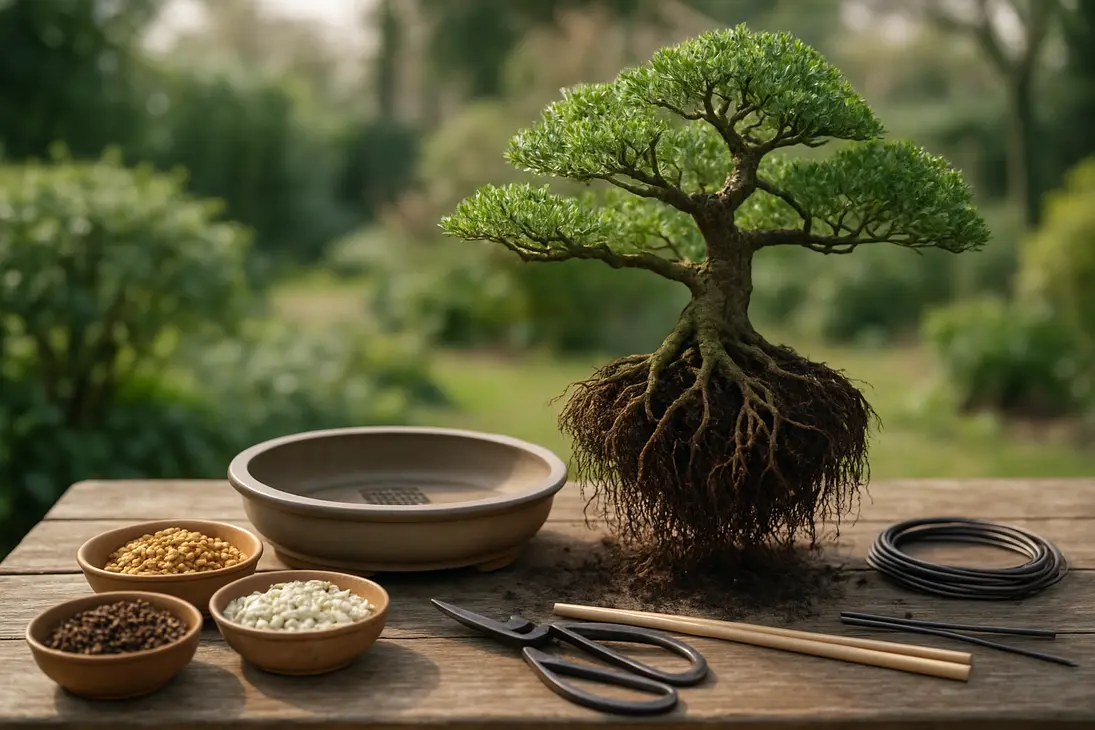
Repotting a bonsai tree is not simply moving it into a larger pot. It renews old soil, restores drainage, and manages roots so the tree can keep living in a shallow container.
For most temperate bonsai, the best time to repot is late winter to early spring, just before strong new growth begins. The best soil is usually a free-draining granular bonsai mix made from materials such as akadama, pumice, lava rock, and grit, not ordinary potting compost.
The exact timing and mix depend on species, health, climate, and recent work.
When to Repot a Bonsai Tree
Timing matters. A healthy bonsai repotted as growth begins can replace fine roots quickly. The same work during heat, frost, flowering, drought stress, or illness can weaken the tree.
Best time of year to repot
For many outdoor bonsai in temperate climates, the safest window is late winter to early spring, when buds are swelling but leaves have not fully opened. Root growth is about to increase, while the canopy is not yet demanding maximum water.
| Bonsai type | Usual repotting window | Notes |
|---|---|---|
| Deciduous trees, such as maple, elm, hornbeam | Late winter to early spring | Often tolerate more root work if healthy |
| Pines, junipers, spruce, other conifers | Early spring; sometimes late summer for certain species | Avoid severe root pruning and full bare-rooting |
| Flowering bonsai | Usually after flowering or in the normal spring window | Wrong timing can reduce flowers |
| Tropical bonsai, such as ficus | Late spring to summer | Repot when warm and actively growing |
| Succulent bonsai, such as jade or portulacaria | Warm active growth period | Use a very free-draining mix |
Avoid repotting during extreme heat, frost, drought stress, pest problems, disease, recent defoliation, or heavy pruning. Emergency repotting is different: if soil has gone sour, the pot has no drainage, or roots are rotting in wet compost, improve drainage carefully, remove clearly rotten roots, and protect the tree afterward.
How often bonsai trees need repotting
Bonsai need repotting more often than ordinary potted shrubs because they live in small pots with limited soil. Over time, roots fill the container, soil particles break down, drainage slows, and oxygen around the roots declines.
Typical intervals:
- Young, vigorous bonsai: every 1 to 2 years
- Fast-growing deciduous bonsai: every 1 to 3 years
- Established mature bonsai: every 3 to 5 years
- Conifers: often every 3 to 5 years, sometimes longer
- Tropical bonsai: often every 2 years, sooner for vigorous ficus
- Succulent bonsai: less often, unless compacted or unstable
These are guidelines, not rules. A young Chinese elm may fill a pot quickly, while an old pine in good mineral soil may not need work for years.
Check near the normal repotting season. If the tree lifts from the pot as one tight root mat, or water runs off instead of soaking in, it is probably time.
How long to wait after transplanting or buying a bonsai
If your bonsai was recently repotted or transplanted, do not repot again unless there is a serious drainage or root problem. Repeated root disturbance is a common way to weaken bonsai.
As a rule:
- If it was properly repotted this season, wait until the next appropriate window.
- If it was only slip-potted, you can usually still wait unless drainage is poor.
- If it came from a reputable nursery and looks healthy, let it acclimate first.
- If it is a mass-produced bonsai in dense, wet soil, inspect drainage and plan a proper repot when the season allows.
New owners often want to repot immediately because the tree looks cramped or unfinished. Unless the soil is failing, first give the tree stable light, watering, and protection.
Signs Your Bonsai Needs Repotting
The calendar helps, but the tree gives better evidence. Repot when the root system or soil condition is limiting growth.
Look for these signs:
- Tightly circling roots. A dense coil around the root ball means congestion.
- Poor drainage. Water should pass freely through a bonsai pot.
- Broken-down soil. Old soil may become dusty, muddy, or hard.
- Rapid drying. A pot packed with roots may hold little usable soil.
- Reduced vigor. Weak buds, shorter shoots, smaller leaves, or sparse growth can indicate root restriction.
- The tree lifts or wobbles. A solid root mass may push upward or destabilize the tree.
- Heavy roots through drainage holes. A few roots are normal; many can signal congestion.
- Mineral buildup. Crusts from fertilizer or hard water may mean the root environment needs refreshing.
Do not assume every sick bonsai needs repotting. Yellow leaves, leaf drop, or weak growth can also come from poor light, watering errors, pests, heat, cold, or unsuitable indoor conditions.
Ask: Is the root environment the problem? If soil stays soggy, smells sour, drains poorly, or is packed solid with roots, repotting may help. If the soil drains well and the tree recently faced heat, pests, cold, or low light, fix those issues first.
The Best Soil Mix for Repotting Bonsai
Good bonsai soil balances drainage, air, and moisture. Roots need oxygen as well as water, and shallow pots leave little room for error.
A reliable starting mix for many outdoor bonsai is:
- 1 part akadama
- 1 part pumice
- 1 part lava rock
This is not the only good mix, but it is a proven baseline when matched to proper watering.
Why regular potting soil is usually a poor choice
Normal houseplant potting soil is made for deeper containers and different watering patterns. It often contains peat, coir, compost, bark fines, perlite, and wetting agents. In a shallow bonsai pot, these materials can hold too much water and collapse into a dense mass.
Problems with ordinary potting soil include:
- Poor aeration after compaction
- Slow drainage in shallow pots
- Higher root rot risk if overwatered
- Uneven watering once peat dries out
- Less control over root structure
A small amount of coarse organic matter can help in some climates or for some species, but bonsai soil should not behave like heavy potting compost. Beginners especially should avoid mixes that stay wet for too long.
Common bonsai soil components
Good bonsai soil is about structure, not a secret ingredient. Each component affects water, air, and stability.
Akadama is a Japanese fired clay. It holds moisture and nutrients while draining well when fresh and properly graded, but it breaks down over time.
Pumice is a lightweight volcanic rock that holds some moisture inside its pores while keeping the mix airy.
Lava rock adds drainage, structure, and long-lasting air spaces, helping prevent the mix from collapsing.
Grit or coarse sand improves drainage and adds weight. Use sharp horticultural grit, granite chips, or similar particles. Avoid fine play sand or beach sand, which can clog air spaces.
Organic matter, such as coarse pine bark fines, can increase moisture retention and nutrient-holding capacity. Use it sparingly; too much fine organic matter makes the mix wet and compacted.
Particle size matters. Fine particles clog drainage, while overly coarse particles may dry too quickly. Small bonsai usually need smaller particles; larger trees can use coarser material. Sifting out dust is often worthwhile.
Adjusting the mix for species, climate, and watering habits
There is no single best bonsai soil mix for every tree. Adjust based on how quickly pots dry, how often you water, and what the species prefers.
| Situation | Soil adjustment |
|---|---|
| Hot, dry, windy climate | Add more moisture-holding akadama or pumice |
| Cool, wet climate | Add more lava rock, pumice, or grit |
| Frequent watering | Use a faster-draining mineral mix |
| Occasional missed watering | Use slightly more water-retentive material |
| Deciduous bonsai | Often like more akadama or moisture retention |
| Pines and junipers | Need excellent drainage and conservative root work |
| Ficus and many tropicals | Like moisture but still need air |
| Jade or succulent bonsai | Use a very free-draining mineral mix |
A deciduous mix might be 2 parts akadama, 1 part pumice, 1 part lava rock. A conifer mix may use more pumice and lava with less akadama. In rainy climates, sharpen the mix; on hot balconies, increase moisture retention.
After watering, the pot should drain freely, then stay evenly moist long enough for the tree to use the water. It should not remain waterlogged.
How to Repot a Bonsai Tree Safely
Prepare everything before lifting the tree. Exposed roots dry quickly, and rushing can lead to broken branches, poor positioning, or uneven soil.
Preparing the pot and tools
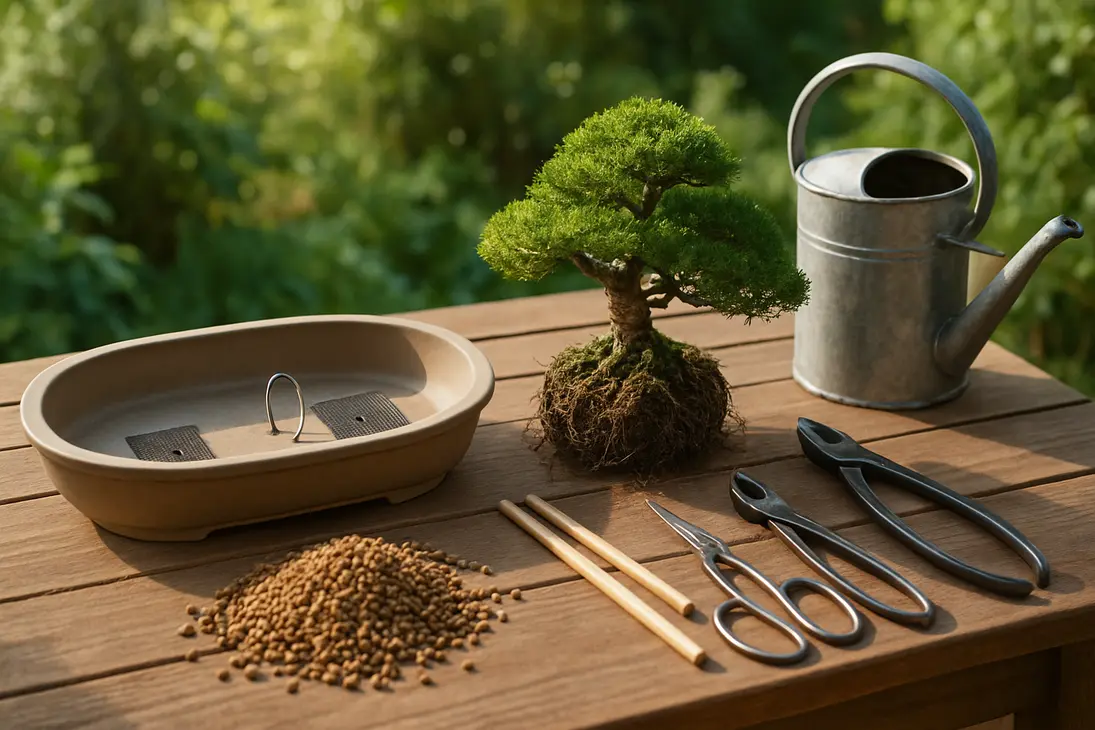
Before starting, gather:
- Fresh bonsai soil mix
- Clean bonsai pot with drainage holes
- Drainage mesh
- Bonsai wire for anchoring
- Root hook, chopstick, or small rake
- Sharp scissors or root shears
- Watering can with a gentle rose
- A shaded recovery spot
If reusing the pot, clean it and clear the drainage holes. Fit mesh and anchor wires before removing the tree so you do not pause while roots are exposed.
Many bonsai are repotted into the same pot rather than a larger one. If using a new pot, choose one with enough root space but not so much extra soil that it stays wet.
Removing old soil and pruning roots
Remove the tree gently. Cut old anchor wires first, then loosen the edges and ease the root ball out.
Work from the outside inward. Comb out circling roots and remove compacted soil where appropriate. Healthy deciduous trees often tolerate more old soil removal. Conifers, especially older pines and junipers, usually need a more conservative approach and should often not be fully bare-rooted.
Trim roots with sharp tools rather than tearing them. Focus on:
- Long circling roots
- Thick downward roots that do not fit the pot
- Dead, black, mushy, or rotten roots
- Dense mats that block fresh soil
As a broad guide, a healthy deciduous bonsai may tolerate removal of up to about one-third of the root mass during routine repotting. Conifers, weak trees, collected trees, and stressed bonsai should receive much less root work. When unsure, do less.
Replanting, anchoring, and filling with soil
Add a shallow layer of fresh mix to the pot. Some growers make a small mound under the trunk so roots spread outward and slightly downward.
Position the tree carefully. Check the front, angle, height, and spacing before filling. Once soil is worked in, placement is harder to correct.
Anchor the tree firmly with wire. Wobbling damages new root tips, so the tree should be secure without wire cutting into roots or trunk.
Fill around the roots with fresh soil. Use a chopstick to work mix into gaps, especially under the trunk and between roots. Do not crush the soil; aim for firm contact with open structure.
Water thoroughly until water runs from the drainage holes. If the soil level drops, add more mix and water again.
Aftercare: Helping Your Bonsai Recover From Repotting
Aftercare is critical. A freshly repotted bonsai has fewer fine roots and cannot take up water as efficiently until new roots grow.
For the first few weeks:
- Keep it in bright shade or filtered light
- Protect it from strong wind
- Keep soil evenly moist, not soggy or bone dry
- Avoid freezing temperatures after root work
- Avoid heat buildup on patios or against walls
- Do not fertilize immediately
- Do not combine repotting with heavy pruning, defoliation, or major wiring
Check watering carefully. Fresh granular soil may dry differently from the old mix. Use your finger, a chopstick, or the pot’s weight to judge moisture. Water when needed, not by a fixed schedule.
Return the tree gradually to normal light once recovery is visible, such as swelling buds, new leaves, or steady shoot growth. Wait to fertilize until active recovery is underway, often about three to six weeks. Fertilizer does not heal damaged roots faster and can add stress too soon.
If leaves wilt after repotting, move the tree to shade, protect it from wind, and check moisture. Do not repeatedly soak an already wet pot; wilting can come from root loss, not just dryness.
Conclusion
Repotting bonsai tree roots is about timing, root health, and soil structure. Most bonsai are repotted just before active growth, with young vigorous trees needing it more often than mature or slow-growing ones.
The best bonsai soil mix is airy, free-draining, and suited to your species and climate. Akadama, pumice, lava rock, and grit are common because they create the oxygen-rich root environment bonsai need. Ordinary potting soil is usually too fine and water-retentive for shallow bonsai pots.
Repot carefully, remove only as much root as the tree can handle, anchor it firmly, and provide calm aftercare. Done well, repotting is routine maintenance that keeps a bonsai healthy for years.
FAQ
Can I repot a bonsai tree at any time of year?
No, not unless there is an emergency. Most temperate bonsai are safest in late winter to early spring, just before strong growth begins. Tropical bonsai are usually repotted in warm weather while actively growing.
Repot out of season only if the current soil is a bigger risk, such as severe root rot, sour soil, or a pot with no drainage.
How long should I wait to fertilize after repotting?
Wait until the tree shows recovery and active growth. For many bonsai, that is about three to six weeks. A strong tropical in warm weather may be ready sooner; a conifer or stressed tree may need longer.
Do not use fertilizer as a cure for transplant shock. Shade, wind protection, and correct watering matter more immediately after repotting.
Can I use normal houseplant potting soil for bonsai?
Usually, no. Houseplant potting soil often holds too much water and compacts in shallow bonsai pots, reducing oxygen and increasing root problems.
Use a granular, free-draining bonsai mix instead. A little coarse organic material can be included for some trees and climates, but the main structure should come from mineral components such as akadama, pumice, lava rock, or grit.
Is repotting a good fix for a sick bonsai tree?
Only if the problem is in the roots or soil. Repotting can help with compacted soil, poor drainage, root rot, or severe root binding.
If the real issue is low light, pests, underwatering, heat stress, cold damage, or recent overwork, repotting may add stress. Identify the cause first, and stabilize care before major root work when possible.
You Might Also Like