How Can You Improve Drainage in Potted Plants Without Drainage Holes?
Improving potted plants drainage is easiest when excess water has a real way out. Ideally, that means drainage holes, or a grow pot with holes set inside a decorative outer pot. If you cannot add holes, you can still reduce soggy-root risk by using less water, choosing an airy potting mix, avoiding oversized containers, and checking moisture carefully before watering again.
The key limitation is simple: a pot without holes does not truly drain. Any water you pour in stays there until the plant uses it or it evaporates. Your goal is not to create drainage with tricks, but to prevent excess water from accumulating.
Why Drainage Matters for Potted Plants
In the ground, water can move downward and outward. In a pot, water is trapped in a small space. Without a drainage hole, the bottom of the pot can stay saturated long after the surface looks dry.
Roots need both moisture and oxygen. When potting mix stays waterlogged, roots can suffocate, die back, and absorb less water. That is why an overwatered plant can look wilted even though the soil is wet.
Poor drainage commonly causes:
- Yellowing lower leaves
- Wilting despite damp soil
- Soft stems or mushy crowns
- Slow or stalled growth
- Leaf drop
- Sour or rotten soil smells
- Fungus gnats
- Brown, black, mushy, or foul-smelling roots
A single heavy watering is not always fatal. The bigger problem is repeated saturation, especially in low light, cool rooms, dense soil, or oversized pots.
Are Drainage Holes Really Necessary?
Drainage holes are not always absolutely necessary, but they are strongly recommended. They give you a margin of safety: if you water too much, excess can leave instead of collecting at the bottom.
Many decorative planters are sold without holes because they protect furniture and floors, not because they are ideal growing containers. Plants can live in no-hole pots when watering is careful, but there is less room for error. You cannot flush the soil easily, water deeply and let excess run out, or reliably detect water hidden at the bottom.
For most people, especially beginners, drainage holes make plant care simpler and more forgiving.
Why Some Plants Tolerate No-Drainage Pots Better Than Others
Some plants cope better with no-drainage pots because they tolerate drying between waterings. Others decline quickly if their roots stay wet.
More forgiving choices include:
- Snake plant
- ZZ plant
- Pothos
- Heartleaf philodendron
- Peperomia
- Some hoyas
- Succulents, only in a gritty mix with restrained watering
Riskier choices include ferns, calatheas, marantas, herbs, many flowering annuals, citrus, and cacti or succulents planted in dense, peat-heavy soil.
Light matters too. A pothos in bright indirect light may use water steadily, while the same plant in a dim corner may stay wet for weeks.
The Best Ways to Add Drainage to Pots Without Holes
The safest way to improve drainage is to create an actual exit for water or use a removable inner pot that already has one. Decorative workarounds can help with presentation, but they do not replace drainage.
Drill Drainage Holes When Possible
If the pot material allows it, drilling is usually the best fix. One or more holes in the bottom turn a risky decorative container into a functional planter.
General tips:
- Use the right bit for the material. Masonry bits are commonly used for unglazed terracotta and ceramic; diamond-tipped bits are often used for glazed ceramic, porcelain, or glass.
- Go slowly and avoid heavy pressure.
- Place painter’s tape over the drilling spot to reduce slipping.
- Support the pot on a stable surface.
- Wear eye protection.
- Keep hard glazed materials damp while drilling to reduce heat and dust.
- Use one central hole or several smaller holes across the base.
Avoid drilling fragile, valuable, antique, or likely-to-shatter pots. If you are unsure, use the pot as a cachepot instead. For most houseplants, the exact number of holes matters less than having open holes that are not blocked.
Use a Nursery Pot Inside a Decorative Cachepot
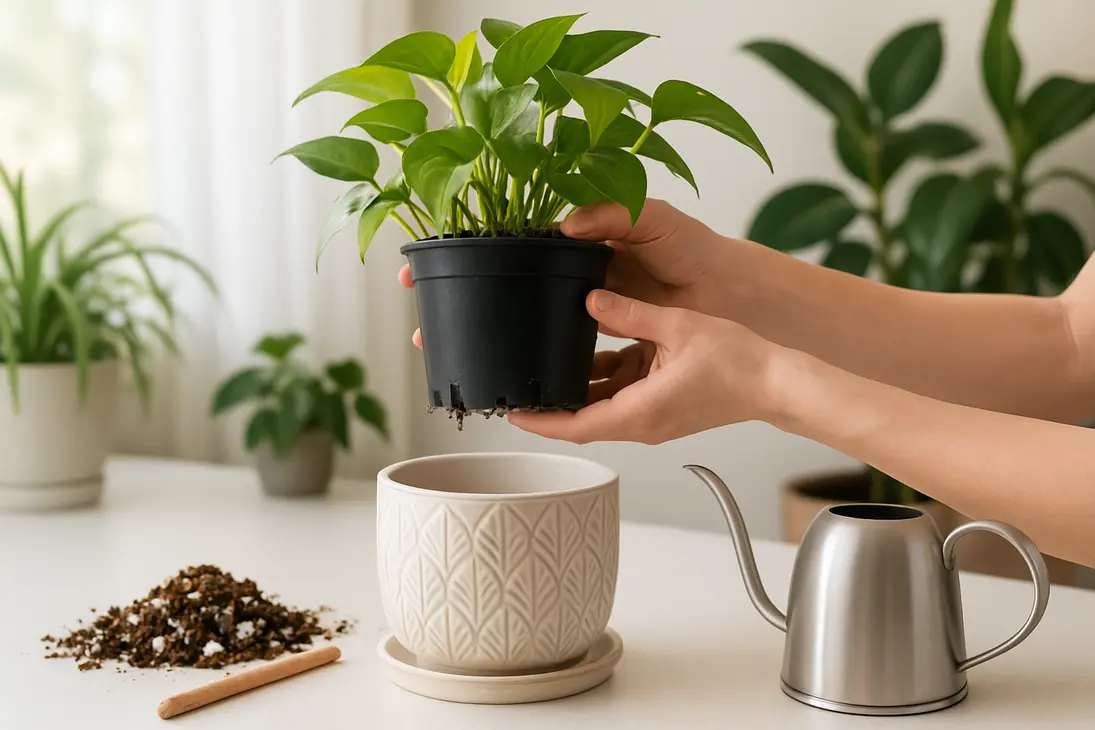
This is the best solution when you love a pot that has no holes. Keep the plant in a plastic nursery pot with drainage holes, then set that pot inside the decorative container, also called a cachepot.
You can water in two ways:
- Remove the nursery pot to water. Take it to a sink, tub, or outdoor area. Water thoroughly, let it drain, then return it to the cachepot.
- Water in place, then empty the cachepot. Check after watering and pour out any collected water.
The second method is convenient but easy to forget. Even a healthy plant can suffer if its nursery pot sits in water for hours or days.
A cachepot system also makes plant checks easier. You can lift the inner pot to feel its weight, inspect roots, and see whether water is pooling.
Create a Removable Inner Pot System
If your plant is already planted directly in a no-hole container and you do not want to drill it, rebuild it as a removable setup.
To do this:
- Choose a nursery pot that fits inside the decorative pot with a little room around the sides.
- Repot the plant into the nursery pot with fresh potting mix.
- Set the nursery pot on small feet, a riser, or an inverted plastic saucer inside the cachepot.
- Remove it for watering and let it drain fully before replacing it.
The riser keeps the inner pot from sitting in leftover water and should not block the drainage holes. If the decorative pot is much taller than the nursery pot, use a stable, non-absorbent platform rather than filling the bottom with gravel.
Choose the Right Saucer or Tray Setup
If you drill holes or use a draining inner pot, you still need to manage runoff.
A good saucer should be:
- Wide enough to catch water
- Shallow enough that the pot is not sitting in deep water
- Easy to remove and empty
- Waterproof if used on furniture
- Paired with pot feet if the pot seals flat against the saucer
After watering, empty the saucer once dripping slows. Temporary runoff is normal; standing water is the problem. For heavy floor plants, remove excess water with a turkey baster, sponge, or small cup if lifting the pot is difficult.
How to Water Plants in Pots Without Drainage Holes
When holes cannot be added, watering must be controlled. You are not watering until water runs out the bottom, because there is nowhere for it to go. Instead, add only what the root ball can reasonably absorb.
Use Less Water Than You Would in a Draining Pot
In a pot with drainage holes, you can water thoroughly and let the excess escape. In a pot without holes, that same amount may collect at the bottom.
Use measured, modest amounts rather than pouring freely. For small pots, water a little at a time and pause to let it soak in. For larger pots, water in stages so you do not create dry channels near the edges and a soggy pocket below.
A practical approach:
- Start with less than you think the plant needs.
- Water evenly around the root zone.
- Wait a few minutes.
- Check whether the upper root zone has moistened.
- Stop before the whole pot becomes saturated unless the plant truly needs evenly moist soil.
If you accidentally overwater a no-hole pot, carefully tilt it to pour off any free water without dumping soil. If the mix is soaked and the plant is valuable, remove the root ball, let it air briefly on newspaper or a towel, and repot into a container with drainage.
Check Soil Moisture Before Watering Again
Fixed watering schedules cause many drainage problems. “Every Saturday” may be too often in winter and not often enough in summer.
Before watering, check moisture below the surface. The top layer can dry while the lower pot remains wet, especially in containers without holes.
Useful methods include:
| Method | How to Use It | What It Tells You |
|---|---|---|
| Finger test | Push a finger 1–2 inches into the mix, deeper for large pots | Whether the upper root zone is dry or damp |
| Wooden skewer | Insert a dry skewer or chopstick, leave briefly, then remove | Damp soil clings or darkens the wood |
| Pot weight | Lift the pot when freshly watered and again when dry | Helps you learn wet versus dry weight |
| Moisture meter | Insert into several areas | Can help, but readings vary by mix and salt buildup |
Do not rely only on the soil surface. Fungus gnats, algae, or a musty smell are signs to let the mix dry more and consider whether it is too dense.
Match Watering to Plant Type, Light, and Pot Size
Water use changes with conditions.
Plants need less water when:
- They are in low light
- Temperatures are cool
- Growth slows in winter
- The pot is large relative to the root ball
- The mix contains a lot of peat, compost, or fine particles
- Humidity is high
Plants need water more often when they are in bright indirect light, actively growing, root-filled, planted in a chunky mix, or exposed to indoor heat or outdoor wind.
The best habit is observation. Check the plant and soil, then water based on what you find.
Soil and Pot Choices That Improve Drainage
Drainage is not only about holes. Potting mix texture, container size, pot material, and plant choice all affect how long roots remain wet.
In a no-hole pot, the mix should hold enough moisture for the plant but still contain air after watering. Dense, muddy soil is the enemy.
Use Potting Mix Instead of Garden Soil
Garden soil belongs in the ground, not in containers. In pots, it often compacts, drains slowly, and leaves roots with too little air. It may also contain weed seeds, pests, or clay that behaves poorly in a confined space.
Use a quality potting mix labeled for containers or houseplants. These mixes are usually lighter and contain ingredients such as peat, coir, bark, perlite, or composted forest products.
For pots without drainage holes, avoid mixes that feel heavy, sticky, or silty when wet. If the mix turns into a dense block after watering, roots will struggle.
Add Aerating Ingredients Like Perlite, Pumice, or Bark
You can improve a standard potting mix by adding coarse ingredients that create air spaces.
Common amendments include:
- Perlite: Lightweight, widely available, and good for aeration.
- Pumice: Heavier than perlite and useful for long-term structure.
- Orchid bark or pine bark fines: Adds chunky texture and air pockets.
- Coarse sand or grit: Useful in some mixes, but fine sand can make soil denser.
For many houseplants, potting soil plus extra perlite or bark is enough. For succulents and cacti, use a grittier mix that dries faster. The more limited the drainage, the more important air-filled texture becomes.
Do not make the mix so coarse that water runs around a dry root ball without wetting it. Very chunky mixes work best with plants adapted to them and pots that have actual drainage.
Avoid Oversized Pots That Hold Too Much Moisture
A pot that is too large can be as risky as a pot with no holes. Extra soil around a small root system stays wet because there are not enough roots to use the water.
When repotting, choose a container only slightly larger than the root ball. Oversized no-hole pots are especially problematic because the lower soil can remain wet while the top appears dry, encouraging repeated watering.
If you want a plant to look larger in a big decorative pot, keep it in a properly sized nursery pot and raise it inside the outer planter instead of filling the whole container with soil.
Pick Plants That Can Handle Slightly Drier Watering
Because no-hole pots require restraint, choose plants that tolerate drying between waterings. Good candidates include:
- Snake plant
- ZZ plant
- Pothos
- Scindapsus
- Heartleaf philodendron
- Hoya
- Jade plant, in a gritty mix and bright light
- Haworthia, in a gritty mix and bright light
Be more cautious with plants that need evenly moist soil. They may survive for a while, but the balance between “moist enough” and “too wet” is harder to maintain without drainage.
What Not to Do: Rocks, Gravel, and Other Drainage Myths
Putting rocks, gravel, broken pottery, or pebbles at the bottom of a pot is one of the most common drainage myths. It feels logical, but a rock layer does not remove water from a sealed pot.
Why Rocks at the Bottom Usually Make Drainage Worse
In a container, water clings to small soil particles by capillary action. Before water moves from fine potting mix into a coarse gravel layer, the soil above often has to become very wet. This creates a saturated zone often called a perched water layer.
When you add rocks to the bottom, you do not eliminate that wet zone. You raise it higher in the pot, closer to the roots, while reducing usable soil.
In a pot with no drainage holes, water in the rock layer still has nowhere to go. If the water level rises high enough, roots can sit in stagnant water.
Better Alternatives to a Gravel Layer
Instead of gravel at the bottom, use methods that actually reduce waterlogging:
- Drill drainage holes if possible.
- Use a nursery pot inside the decorative container.
- Choose a smaller inner pot rather than filling a large no-hole planter with soil.
- Use a lighter, airier potting mix.
- Water measured amounts instead of soaking the pot.
- Check moisture at depth before watering again.
- Use a riser under an inner pot so it does not sit in collected water.
If you need to keep soil from washing out of drainage holes, use a small piece of mesh, window screen, coffee filter, or broken pot shard over the hole. This is not a drainage layer; it is only a barrier that still allows water through.
When Decorative Pebbles Are Fine on Top of Soil
Pebbles on top of the soil are different from gravel at the bottom. A thin decorative top dressing can be fine if used carefully.
Top pebbles may help:
- Keep lightweight mix from floating during watering
- Give a finished look
- Reduce soil splashing
- Discourage pets from digging, though not completely
However, top dressing can slow surface drying and make moisture harder to judge. In no-drainage pots, keep the layer thin and check below it before watering. Avoid thick, sealed, or glued-on pebble layers.
Conclusion
The best way to improve potted plants drainage is to provide real drainage holes or keep the plant in a draining nursery pot inside a decorative cachepot. Those methods let excess water leave the root zone and make watering more forgiving.
If you cannot add holes, focus on prevention: use an airy potting mix, choose a properly sized container, water less than you would in a draining pot, and check moisture below the surface before watering again. Empty cachepots and saucers promptly, and watch for warning signs such as yellow leaves, fungus gnats, stalled growth, or sour-smelling soil.
A pot without drainage holes is not automatically useless, but it does require closer attention. The less drainage your container provides, the more precise your watering needs to be.
FAQ
Can potted plants survive without drainage holes?
Yes, some potted plants can survive without drainage holes, especially if they are watered carefully and planted in an airy potting mix. However, the risk of overwatering is much higher because excess water cannot escape.
For best results, choose plants that tolerate drying between waterings, use a pot that is not oversized, and check soil moisture below the surface before adding more water. If possible, use the no-hole pot as a decorative cachepot with a draining nursery pot inside.
Should I put rocks in the bottom of a planter for drainage?
No, rocks at the bottom of a planter usually do not improve drainage. They do not remove water from the pot, and they can raise the saturated layer of soil closer to the roots. In a planter without holes, water in the rock layer still has nowhere to go.
A better solution is to drill holes, use an inner nursery pot, improve the potting mix with aerating ingredients, and water more carefully.
How do I know if my potted plant has poor drainage?
Signs of poor drainage include yellowing leaves, wilting when the soil is still wet, fungus gnats, slow growth, leaf drop, mushy stems, and soil that smells sour or rotten. If you remove the plant from the pot, unhealthy roots may look brown, black, soft, or slimy instead of firm and pale.
Also notice how long the soil stays wet. If the lower mix remains damp for many days or weeks after watering, the plant may be at risk even if it still looks healthy.
What soil is best for pots without drainage holes?
Use a light container potting mix rather than garden soil. For most houseplants, improve aeration by adding perlite, pumice, or bark. For succulents and cacti, use a grittier mix and water very sparingly.
The best soil for pots without drainage holes holds some moisture but does not become dense, muddy, or airless. Pair it with a properly sized pot and careful watering.
Sources
- Reddit discussion on rocks in pots and perched water concerns: https://www.reddit.com/r/succulents/comments/kujciu/psa_stop_putting_rocks_on_the_bottom_of_your_pots
- Reddit discussion on plants in planters without drainage holes: https://www.reddit.com/r/houseplants/comments/ndxir5/it_is_okay_to_not_have_drainage_holes_in_planters
You Might Also Like