Should You Keep a Potted Rose Indoors or Outdoors in February?
Quick Answer: Where to Keep a Potted Rose Before Gifting
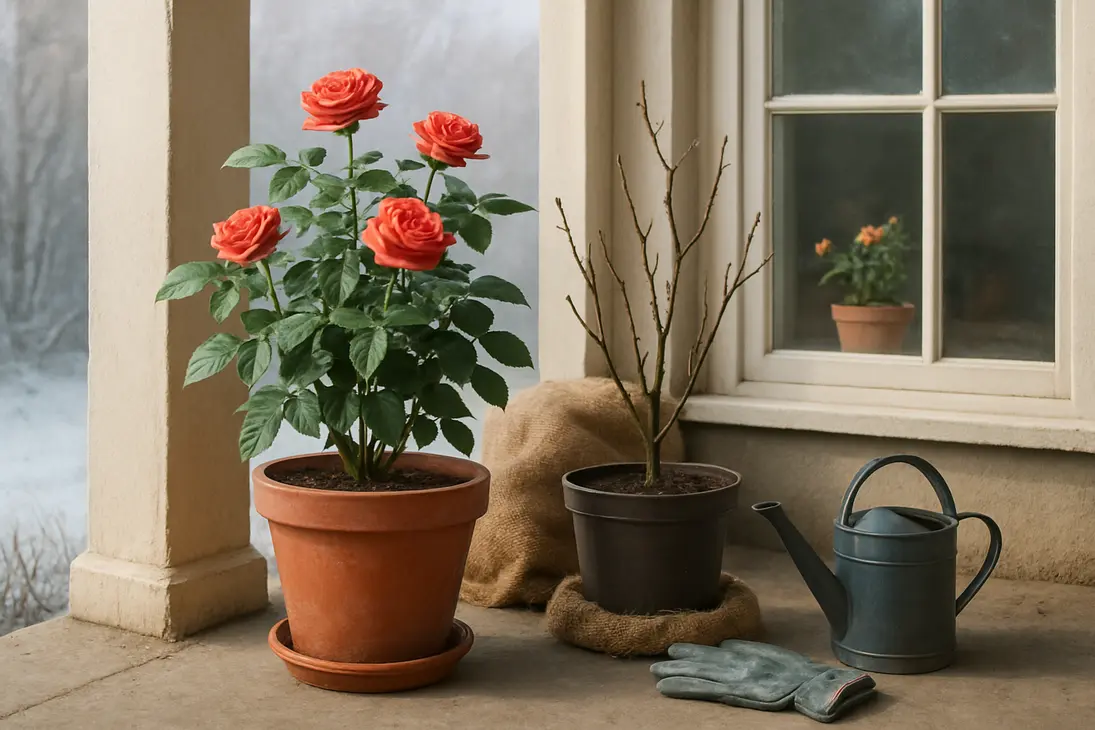
For most potted rose February care, keep the rose cool, bright, protected, and in one stable place until gift day. The right place depends on whether the rose is dormant or already growing.
A dormant potted rose with bare stems and no soft new growth usually does best outside in a sheltered spot or in an unheated garage, shed, porch, or cold frame, as long as the roots are protected from severe freezing. Household warmth can wake it too early.
A leafy, budding, or flowering rose, especially a florist or supermarket miniature rose, is usually safer indoors in a cool, bright room. These roses are often greenhouse-grown and may be damaged by sudden February frost.
Avoid extremes. Do not put a forced blooming rose straight into freezing weather, and do not place a dormant rose beside a radiator. Stable conditions are safer than moving the pot in and out every day.
Check the Rose’s Condition First
Look at the plant before deciding where to keep it. A dormant garden rose needs different care from a blooming miniature rose wrapped in gift foil.
| Rose condition | What it looks like | Best February holding place |
|---|---|---|
| Dormant outdoor-type rose | Bare stems, firm canes, little or no growth | Sheltered outdoors or unheated protected space |
| Leafy or budding rose | Green leaves, soft shoots, swelling buds | Cool bright indoor room or frost-free space |
| Florist/gift miniature rose | Compact, many buds or flowers, often wrapped | Indoors, bright and cool |
Also check drainage. A nursery pot with holes is easier to manage than a decorative pot or foil sleeve that traps water. Soggy compost can quickly weaken a potted rose in winter.
If the Rose Is Dormant
A dormant rose is resting. Bare stems are normal in February in many climates. The canes should be firm, not shriveled, blackened, or mushy. Tiny buds are fine; long pale shoots suggest the rose has been kept too warm.
Good holding places include:
- A sheltered house wall
- A covered porch
- A cold frame
- An unheated garage or shed with some light
- A group of pots protected from harsh wind
Roots in pots freeze and thaw faster than roots in the ground. During hard freezes, wrap the pot in burlap, bubble wrap, or horticultural fleece, or set it inside a larger container packed with dry leaves, straw, or compost. Avoid trapping moisture tightly around the stems.
Do not bring a dormant rose into a warm living room “just to be safe.” Warmth plus low indoor light can trigger weak, stretched growth before outdoor conditions are suitable.
If the Rose Has Leaves, Buds, or Flowers
If the rose is leafy, budding, or flowering, treat it as active growth. This is common with florist roses and Valentine’s Day miniature roses. A sudden move from greenhouse or shop conditions into freezing air can damage leaves, buds, and tender stems.
Keep it indoors in the coolest bright place available. A cool spare room, bright utility room, enclosed porch, or frost-free sunroom is often better than a warm living room. A windowsill can work if it is not icy at night or hot in direct afternoon sun.
Avoid placing it:
- Beside radiators, heaters, or fireplaces
- In hot dry air
- In cold drafts
- Pressed against freezing glass
- In a dark hallway for several days
Yellow leaves or dropped buds usually mean stress from temperature change, poor light, drying out, or soggy soil. Check conditions before assuming the plant is failing.
February Care Basics for Potted Roses
February is an in-between month. Outdoor roses may still be dormant, while gift roses may already be flowering. Your goal is not to force growth, but to keep the plant healthy, hydrated, and attractive until gifting.
Watering in Winter
Aim for lightly moist, never soggy potting mix.
Check with your finger. If the top inch feels dry and the pot feels light, water thoroughly until excess drains from the bottom. Let it drain fully before returning it to a decorative cover pot. If the mix still feels damp, wait.
Dormant roses use little water, so check occasionally. Leafy indoor roses need checking more often because leaves and warm rooms increase water use.
Good watering habits:
- Water at the base, not over leaves and flowers.
- Empty saucers after watering.
- Loosen or remove foil so water can drain.
- Do not let the pot stand in water.
- Avoid watering frozen compost; wait until it thaws if possible.
Light and Temperature
Roses like bright light, but February indoor light can be weak. A dormant rose does not need strong indoor light, but a leafy or flowering rose does.
For an indoor flowering rose, choose the brightest cool spot available. South- or west-facing windows can help in cooler climates, but watch for heat behind glass. An east-facing window may be gentler.
Cool conditions help flowers last and reduce weak growth. Avoid the warmest rooms, dry heat, and dark corners. You do not need a cold room; you need a bright, stable place away from extremes.
Fertilizer and Feeding
Most potted roses do not need fertilizer in February.
Do not feed a dormant rose. Feeding too early can encourage growth before light and weather are suitable. Wait until active growth begins naturally.
A leafy gift rose usually has enough nutrients in the potting mix for short-term display. If you are only holding it for a few days or a week, skip fertilizer. If it will stay indoors for several weeks and is actively growing, feed lightly later rather than heavily now.
Never try to fix a stressed rose with fertilizer. If it is yellowing, wilting, waterlogged, or pest-infested, correct the growing conditions first.
Outdoor Protection vs Indoor Holding
The best February location depends on how hardy and acclimated the plant is.
| Holding option | Best for | Watch-outs |
|---|---|---|
| Sheltered outdoors | Dormant, outdoor-acclimated roses | Protect pot from hard freezes and drying wind |
| Unheated garage or shed | Dormant roses during severe weather | Check moisture; provide some light if stored long |
| Cold frame | Dormant or semi-dormant roses | Vent on mild sunny days |
| Cool bright indoor room | Leafy, budding, or flowering roses | Avoid heat, dry air, and low light |
| Warm living room | Short display only | Flowers may fade faster |
The aim is not maximum warmth. It is the least stressful environment for the rose’s current growth stage.
Best Outdoor Spot
For a dormant or outdoor-acclimated potted rose, choose a sheltered outdoor position. A wall can reduce wind and provide slight protection. In mild climates, avoiding drying wind may matter more than extra warmth.
Raise the pot on feet, bricks, or gravel if drainage is poor. Do not let it sit in a puddle. Small containers need extra insulation before hard freezes because there is less soil around the roots.
If temperatures drop sharply, move the pot temporarily into an unheated garage, shed, or porch rather than a warm room. Return it when conditions moderate, but avoid making this a daily routine.
When Indoors Is Better
Indoors is better for florist roses, blooming miniature roses, and any rose already kept in warm shop or home conditions. Their tender leaves and buds can be damaged by frost.
Choose a cool bright room, not a dark warm corner. If the rose is in decorative wrapping, check that water is not collecting around the base. Many gift roses decline because they are kept too warm, too dark, or too wet.
If you only need to hold the plant for a few days, focus on appearance: bright light, moderate moisture, no heat blast, and no sudden chill.
Avoid Moving It Back and Forth
Repeated moves can cause yellow leaves, bud drop, wilting, or premature growth. A rose moved between a warm room and a freezing porch has to keep readjusting.
If you must move it for freeze protection, move it to a cool protected space, not a heated room. For a gift rose, choose one good holding place and leave it there until gift day.
Light Pruning, Cleanup, and Pest Checks
A little grooming is useful before gifting, but February is not usually the time for heavy reshaping.
Remove dead leaves from the soil surface. Snip off dead, broken, or blackened tips if they spoil the plant’s appearance. For flowering miniature roses, remove spent blooms. Use clean, sharp scissors or pruners.
Check undersides of leaves and new shoots for aphids. Indoor gift roses are prone to aphids because their growth is soft and conditions are sheltered. Also look for fine webbing, sticky residue, or distorted growth. If pests appear, isolate the rose and wipe or rinse them off gently.
Water at the base rather than over the foliage. Wet leaves in cool, still air can encourage mildew. Good air movement helps, but avoid cold drafts.
Should You Prune in February?
Light cleanup is fine. Major pruning depends on rose type and climate.
If the rose is dormant and late-winter pruning is normal where you live, light shaping may be acceptable. But for a gift, heavy pruning may make the plant look less attractive. Unless there is dead or damaged wood, leave significant pruning for later.
If the rose is leafy, budding, or flowering, do not hard-prune it before gifting. Remove only spent flowers or damaged leaves. Cutting it back can remove the buds and flowers that make it gift-worthy.
If you are unsure whether it is a shrub rose, patio rose, miniature rose, or climber, be conservative.
Common Problems to Watch For
| Problem | Likely cause | What to do |
|---|---|---|
| Yellow leaves | Low light, overwatering, temperature shock | Check drainage; move to brighter cool spot |
| Soggy soil | Poor drainage, foil holding water | Empty water; let top dry slightly |
| Crispy leaves or buds | Underwatering, radiator heat, dry air | Water if dry; move from heat |
| Wilting with wet soil | Waterlogging or cold wet compost | Stop watering; improve drainage |
| Aphids | Soft indoor growth | Wipe or rinse off; isolate plant |
| Powdery mildew | Damp foliage, poor air movement | Keep leaves dry; remove affected leaves if minor |
| Blackened soft stems | Cold damage or rot | Trim clearly dead tissue only |
Some leaf drop after purchase is common, especially with miniature roses moved from greenhouse conditions. Firm new growth and properly moist soil are good signs.
Preparing the Rose for Gift Day
The best presentation is clean and healthy, not overhandled. A day or two before gifting, inspect the plant.
Do a simple tidy-up:
- Remove dead leaves from the pot surface.
- Snip spent flowers or damaged leaves.
- Wipe dirt from the pot.
- Check that the pot drains.
- Water the day before gifting if the mix is starting to dry.
- Let it drain before placing it in a sleeve or cover pot.
Avoid heavy watering right before handing it over. A dripping pot is awkward, and saturated compost may stay wet too long in decorative wrapping.
Include a short care note if possible:
“Keep in bright light and cool conditions. Water when the top of the compost begins to dry; do not let it sit in water. If planting outside later, acclimate gradually after the worst frosts have passed.”
This is especially useful for miniature roses, which are often treated as temporary indoor flowers but may be grown on outdoors in suitable conditions.
If the Recipient Will Plant It Outdoors Later
A rose kept indoors or greenhouse-grown should not be planted straight outside in freezing weather. Wait until the worst hard freezes have passed and the soil is workable.
Harden it off gradually by placing it outside in a sheltered spot for a few hours, then increasing time outdoors over several days to two weeks. Protect it at first from frost, strong wind, and harsh sun.
A dormant, outdoor-acclimated rose may be planted earlier if the ground is not frozen or waterlogged. For container growing, the recipient should eventually move the rose into a larger pot with good drainage if the gift pot is small.
Conclusion
A potted rose in February usually does best in cool, bright, stable conditions. The right location depends on whether it is dormant or already growing.
A dormant outdoor-type potted rose can usually stay protected outdoors or in an unheated sheltered space. Protect the pot from hard freezing, drying wind, and standing water.
A leafy, budding, or flowering gift rose is usually safer indoors until you give it away, especially if it came from a florist, supermarket, or greenhouse. Give it bright light, cool temperatures, careful watering, and protection from drafts and radiators.
The simple rule: match the holding place to the plant’s current condition, then keep conditions steady until gift day.
FAQ
Can I keep a potted rose indoors in February?
Yes, if it is leafy, budding, flowering, or sold as a florist-style gift rose. Keep it in a bright, cool room away from radiators and cold drafts. Water only when the top of the potting mix begins to dry.
If the rose is fully dormant, a warm indoor room is usually not ideal because it can wake the plant too early.
Can a potted rose survive outside in February?
Yes, a dormant or outdoor-acclimated potted rose can often survive outside in February if the container is protected. Roots in pots are more exposed than roots in the ground, so shelter the pot from harsh wind and insulate it during hard freezes.
Do not put a greenhouse-grown flowering rose straight outside into frost. Keep it indoors or frost-free until it can be hardened off.
How often should I water a potted rose in winter?
Water by checking the pot, not by using a fixed schedule. If the top inch of potting mix is dry and the pot feels light, water thoroughly and let it drain. If it still feels damp, wait.
Dormant roses need less water. Leafy indoor roses may dry faster. Never leave the pot standing in water.
Should I fertilize or prune a potted rose before gifting it?
Usually, no. Dormant roses do not need fertilizer in February, and flowering gift roses usually have enough nutrients for short-term display.
Light cleanup is fine: remove dead leaves, spent flowers, or broken stems. Avoid heavy pruning before gifting unless the rose is dormant, you know the type, and it is the correct pruning time for your climate.
You Might Also Like