Can Plants Grow Without Sunlight in a Closed System?
The Short Answer: Plants Need an Energy Source to Keep Growing
Plants can survive for a while without sunlight, but they cannot sustain healthy, long-term growth in a truly light-free closed system. Green plants need light energy for photosynthesis, which turns carbon dioxide and water into sugars for leaves, roots, flowers, and repair.
A sealed container can recycle some water and gases, but it cannot create the energy supplied by sunlight or an artificial grow light.
The key distinction is simple: a plant may stay alive in darkness by using stored energy, but it cannot support itself through photosynthesis. Eventually, those reserves run out.
Survival vs. Active Growth
Plants can temporarily survive low or absent light because they store carbohydrates in leaves, stems, roots, bulbs, rhizomes, or seeds. They continue to respire, using stored sugars and oxygen to maintain basic functions.
That is not the same as active growth. To make sturdy leaves, roots, or flowers, a plant must produce more energy than it uses. Without light, its energy balance eventually becomes negative.
Seeds are a familiar example. Many germinate underground in darkness using stored food, but seedlings need light soon after emerging. Kept dark, they become pale, elongated, and weak.
What Happens When a Plant Is Kept in Darkness
Decline is often gradual. An established plant may look unchanged for days or weeks, particularly in cool conditions. Over time, you may notice:
- Growth stops.
- New leaves are small, pale, or absent.
- Stems stretch toward available light.
- Older leaves yellow and drop.
- Growth becomes weak and floppy.
- Roots decline because fewer sugars reach them.
- Fungal problems become more likely in damp enclosures.
Most houseplants cannot rest indefinitely in darkness. Even plants described as low-light tolerant still need some light long term.
Why a Sealed System Does Not Replace Light
A closed system can be self-contained in some ways, but it is not self-powered.
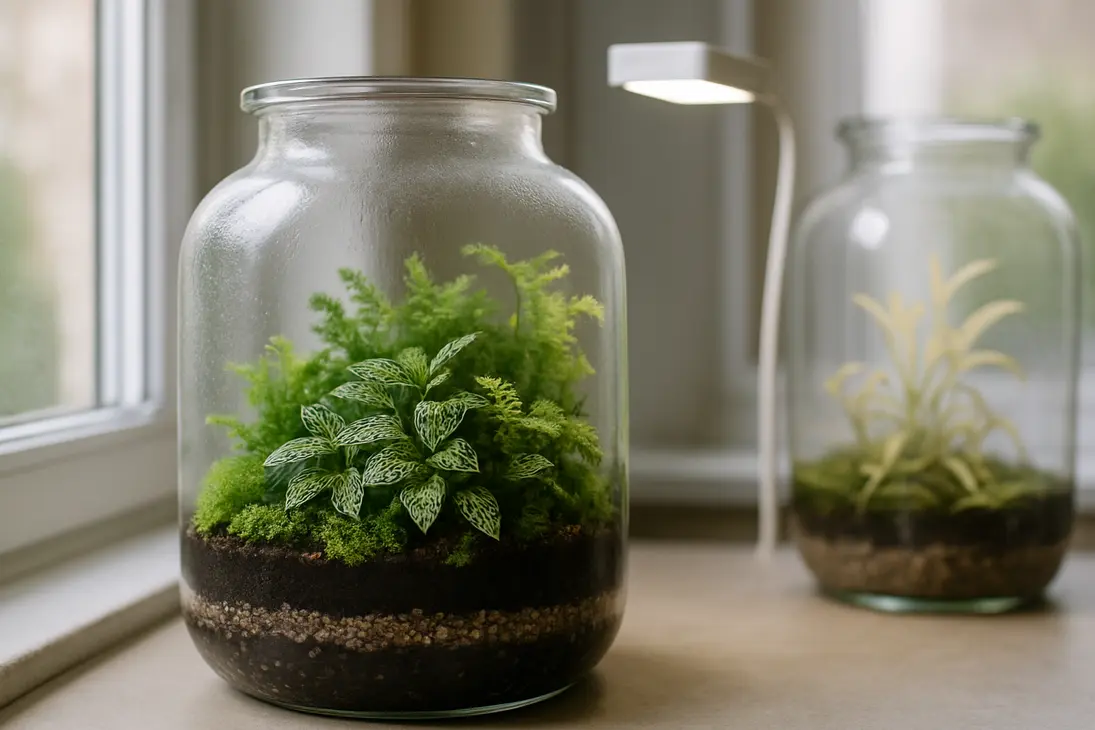
In a terrarium, water evaporates, condenses on the glass, and returns to the soil. During light periods, plants use carbon dioxide and release oxygen through photosynthesis. At night, they respire, using oxygen and releasing carbon dioxide.
Without light, photosynthesis stops. Respiration, decomposition, and moisture movement continue, but there is no ongoing energy input. Sealing a plant may reduce watering needs; it does not eliminate its need for light.
Sunlight, Indirect Light, and Artificial Grow Lights Are Not the Same
“Without sunlight” can mean several different things. A plant near a bright window may receive no direct sun but still get enough indirect daylight. A plant in a windowless cupboard receives no usable natural light.
Artificial grow lights offer another option: no sunlight, but enough light for photosynthesis.
| Situation | Does the plant receive usable light? | Can it support long-term growth? |
|---|---|---|
| Bright direct sun | Yes | Usually, if suited to the plant |
| Bright indirect window light | Yes | Often, for suitable plants |
| Dim room far from windows | Limited | Survival may be possible; growth is usually slow |
| Complete darkness | No | No, not indefinitely |
| Properly positioned grow light | Yes | Yes, if intensity and schedule are suitable |
Can Indirect Light Support Plant Growth?
Yes. Many houseplants grow well in bright indirect light: daylight reflected around a room or filtered through a sheer curtain rather than direct sun on the leaves.
Indirect light still contains wavelengths used in photosynthesis, but its intensity varies greatly. A spot near a large unobstructed window may support pothos, philodendron, peperomia, ferns, or terrarium plants. The same plant across a dark room may receive too little light.
Window direction, season, shading, curtains, and distance from the glass all matter. Light drops sharply farther into a room.
Can LED Grow Lights Replace Sunlight?
Yes. A suitable LED grow light can replace sunlight as a plant’s energy source in a closed cabinet, windowless room, or enclosed display, provided it reaches the leaves at useful intensity.
For a closed terrarium, use an LED intended for plant growth or a quality full-spectrum plant light. Keep it outside the enclosure unless it is specifically rated for humid conditions. Condensation, electricity, and trapped heat are a poor combination.
The light does not need to look purple to work; many effective full-spectrum LEDs appear white. What matters is intensity at the plant and consistent use.
Avoid placing a lamp too close to the glass. It can overheat the terrarium, scorch foliage, or cause excessive condensation. Start farther away and adjust gradually.
Light Intensity and Daily Light Duration Matter
Plants need sufficient brightness and enough time under light. A weak lamp left on all day may still be inadequate, while a strong lamp too close to a shade plant can bleach leaves.
For many foliage houseplants and terrarium plants, a practical starting schedule is:
- 10 to 12 hours daily in an already bright location.
- 12 to 14 hours daily when relying mainly on a grow light.
- A consistent dark period each day rather than 24-hour lighting.
Use a timer for a dependable cycle. If growth remains weak, improve intensity or placement before merely extending the lighting period.
What a Closed Plant System Must Provide
“Closed system” may mean a lidded terrarium opened occasionally or a fully sealed chamber. In home gardening, it usually means a container that retains moisture and needs little watering.
Light is the essential energy input, but successful growth also requires balanced moisture, gases, nutrients, temperature, and healthy roots.
Closed Terrariums vs. Fully Sealed Growing Chambers
A typical closed terrarium is not perfectly sealed. Its lid may be removed for pruning, cleaning, or ventilation, and small gaps may exchange air with the room.
A fully sealed chamber is less forgiving. Too much water, weak light, decaying leaves, or a temperature spike can destabilize it quickly.
For most home growers, a mostly closed terrarium is more practical. It retains humidity and reduces watering while allowing problems to be corrected.
Water, Carbon Dioxide, and Oxygen Cycling
A balanced terrarium can recycle water:
- Water evaporates from soil and leaves.
- Moisture condenses on cooler glass.
- Droplets return to the growing medium.
- Roots absorb water again.
Constant dripping glass, saturated soil, or heavy condensation usually indicate excess moisture rather than a healthy balance.
Gas cycling also relies on light. Photosynthesis uses carbon dioxide and releases oxygen, while plants, roots, microbes, and decaying material respire in darkness. A dark sealed container cannot maintain the same balance because daytime photosynthesis is absent.
Nutrients and Root Health in a Closed Environment
Nutrients do not appear from nowhere. Plants use minerals already in the soil, substrate, water, and decomposing material. This is why closed terrariums are best for slow-growing plants rather than tomatoes, herbs, large flowering plants, or fast vines.
Root-zone oxygen matters too. A container without drainage can work, but the substrate must remain airy and watering must be restrained. A drainage layer can hold excess water below the soil, but it does not make overwatering harmless.
Use an appropriate well-draining mix, remove decaying leaves, and avoid heavy fertilizing. Fertilizer salts can build up because flushing the soil is difficult.
Temperature, Humidity, and Mold Risks
Closed containers hold humidity, which suits some tropical plants but also promotes mold and rot in stagnant conditions.
Keep terrariums away from direct hot sun, radiators, heat vents, and cold windowsills. Sun through glass can raise temperatures rapidly in a sealed vessel.
Open the lid temporarily if you see:
- Persistent heavy condensation
- Fuzzy mold on soil or debris
- Mushy stems or leaves
- A sour smell
- Water pooling at the bottom
- Yellowing associated with constantly wet soil
Remove dead foliage and allow the substrate surface to dry slightly before closing the container again.
Plants That Tolerate Low Light—and Their Limits
Low-light-tolerant plants are useful where natural light is limited, but “low light” does not mean no light. Choose compact, humidity-tolerant, slow-growing plants for enclosed displays.
Low-Light-Tolerant Plants for Enclosed Displays
Suitable choices for a bright-to-moderately lit enclosure include:
- Small ferns, such as button fern or lemon button fern
- Mosses suited to terrarium conditions
- Selaginella (spikemoss)
- Fittonia (nerve plant)
- Small peperomias
- Compact Pilea species
- Baby tears, with careful moisture control
- Miniature begonias in brighter indirect light
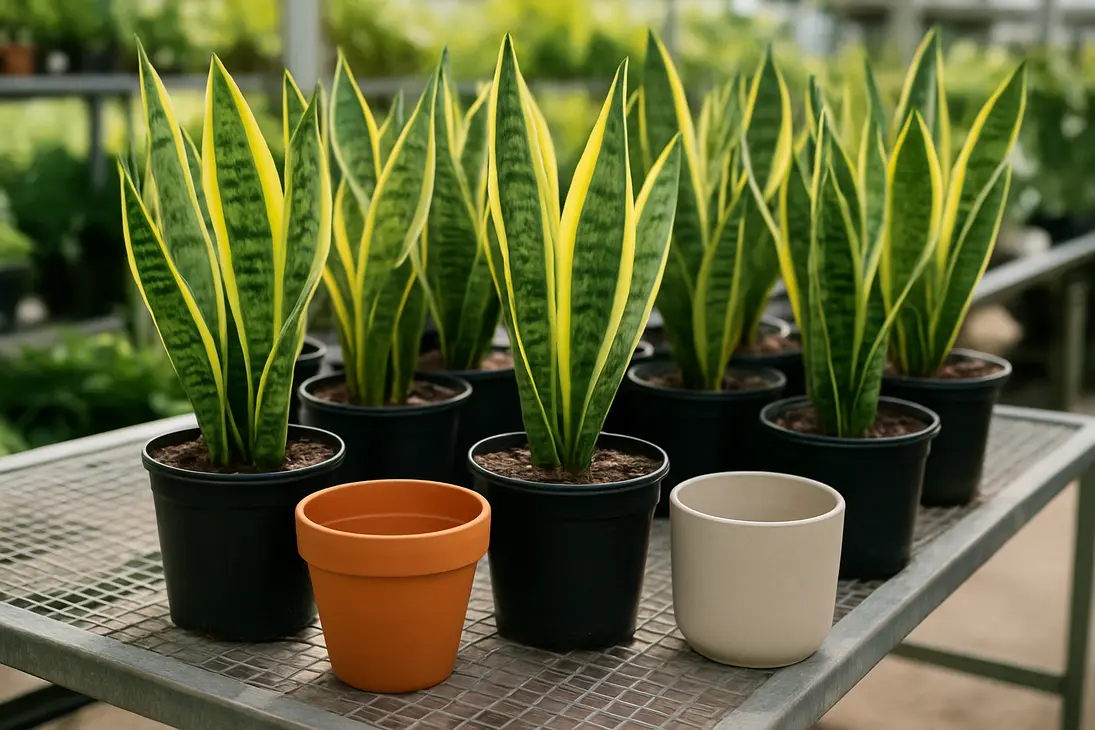
Not every easy houseplant suits a sealed terrarium. Snake plants and ZZ plants tolerate dim rooms but generally prefer drier roots than a humid enclosure provides.
Why “Low Light” Does Not Mean “No Light”
Low-light plants often grow beneath forest canopies and can use modest light efficiently. They are not adapted to closets, opaque containers, or permanently dark rooms.
In low light, plants grow more slowly and use less water and fertilizer. Extra watering or feeding cannot compensate for inadequate light; it more often causes root problems.
If the location is truly dark, use a grow light or choose a non-living display.
Signs a Plant Is Alive but Not Growing
A plant may remain green and retain leaves while producing little new growth. Signs of insufficient energy include:
- No new leaves during the normal growing season
- New growth smaller than older growth
- Long spaces between leaves
- Stretching toward a window or lamp
- Fading leaf color
- Loss of lower leaves without replacement
Slow growth can be normal in winter or after repotting, but persistent stagnation deserves attention, especially in a closed setup.
Troubleshooting Stalled Growth in a Closed Setup
When a plant stays alive but does not grow, do not assume it needs fertilizer. In a closed system, extra fertilizer or water can worsen the problem.
Check light first, then moisture, roots, temperature, and plant condition.
Check Light Level and Lighting Schedule First
Ask:
- Does the container receive bright indirect light or only vague room brightness?
- Is it far from a window?
- Is the grow light close enough to illuminate the leaves?
- Is the lamp on a reliable timer?
- Has seasonal light changed?
- Is condensation or dirty glass reducing light?
If there is no usable natural or artificial light, stalled growth is expected. Move the setup to brighter indirect light or add a suitable LED outside the enclosure.
Avoid moving a plant abruptly from deep shade to harsh direct sun. Increase light gradually.
Rule Out Overwatering, Root Rot, and Poor Drainage
Plants in closed containers use less water than those in open pots. Constantly wet soil can stall growth even under decent light because damaged roots cannot absorb water or nutrients.
Check for:
- Soil saturated for weeks
- Black, mushy, or foul-smelling roots
- Yellow leaves with soft stems
- Algae, mold, or standing water
- Dense substrate with little air space
Open the container, remove damaged material, and let the medium dry somewhat. For advanced rot, remove the plant, trim unhealthy roots with clean tools, and replant in a fresher, airier mix.
Watch for Yellowing, Stretching, Leaf Drop, and Mold
Symptoms overlap, so assess the whole environment.
| Symptom | Likely concern | First adjustment |
|---|---|---|
| Pale, stretched growth | Light is too weak | Increase usable light |
| Yellow, soft leaves and wet soil | Overwatering or root stress | Ventilate and reduce moisture |
| Crispy patches or bleached leaves | Light or heat is too intense | Move lamp farther away or reduce direct sun |
| Lower leaf drop with no new growth | Low energy, aging, or root stress | Check light and root moisture |
| Mold on soil or debris | Excess moisture and decay | Remove debris and vent temporarily |
| Condensation all day, every day | Container is too wet or too warm | Open briefly and reassess watering |
Low light reduces water use, so dim setups often become overwatered. Improving light may help, but it will not repair severely damaged roots.
Conclusion
Plants cannot grow indefinitely in a truly closed, light-free system. A sealed container can recycle water and support limited gas cycling, but it cannot replace the energy supplied through photosynthesis.
Indirect daylight can support many plants, and LED grow lights can replace sunlight in windowless spaces. Long-term success requires adequate light, controlled watering, an airy root zone, stable temperatures, and occasional monitoring.
The goal is not a completely hands-off ecosystem, but a balanced, low-maintenance growing environment with a reliable energy source.
FAQ
Can plants survive in a sealed container without sunlight?
They may survive temporarily by using stored carbohydrates, especially if they were healthy before being sealed. They will not sustain active growth indefinitely without usable light. In complete darkness, photosynthesis stops while respiration continues.
Can indoor plants grow with indirect light only?
Yes. Many indoor plants grow well in bright indirect light and do not need direct sun. The indirect light must still be sufficiently bright for the species; a plant near a bright window receives far more usable light than one deep in a dim room.
How long can a plant live in complete darkness?
There is no single timeframe. It depends on species, size, stored energy, temperature, health, and dormancy. Some plants decline within days or weeks, while others persist longer. Common green houseplants cannot maintain normal long-term growth in complete darkness.
Do grow lights work in a closed terrarium?
Yes. Grow lights can provide the energy a closed terrarium needs where natural daylight is unavailable. Keep the fixture outside unless it is designed for humid enclosed use, use a timer, and watch for excess heat, bleaching, or heavy condensation.
You Might Also Like