Potted Plants Care Tips for Healthy Indoor and Outdoor Plants
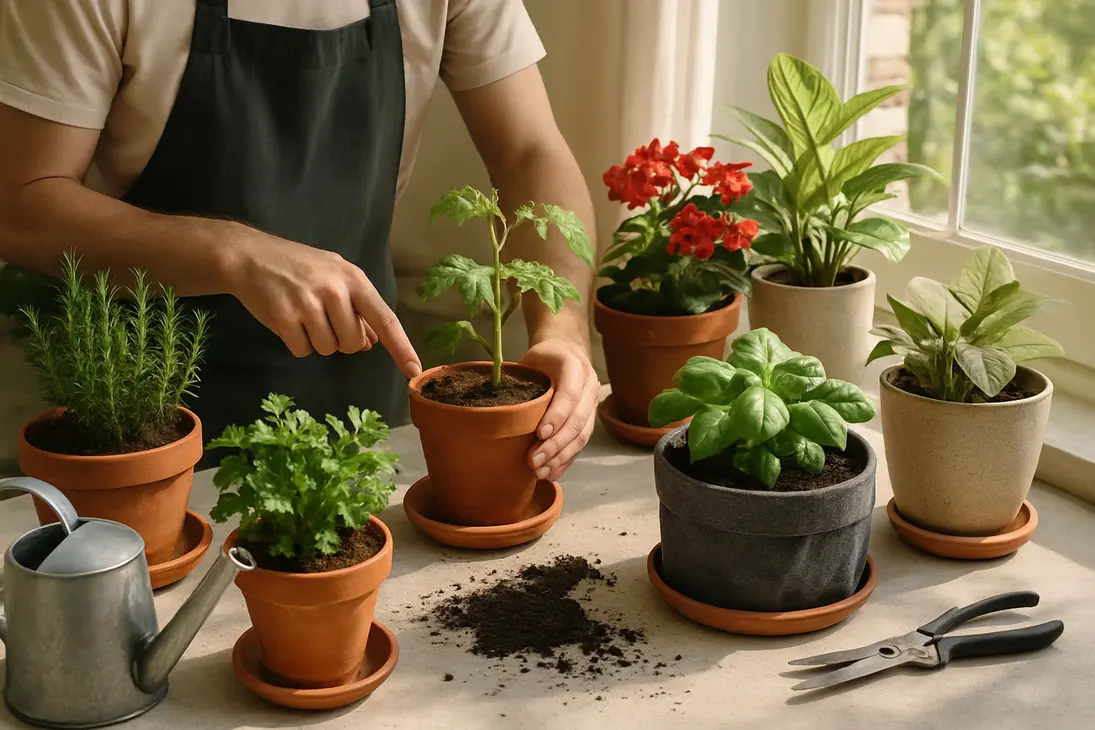
Potted plants let you grow herbs, vegetables, flowers, shrubs, and houseplants almost anywhere. But container plants rely on you more than plants in the ground: roots have limited space, water and nutrients run out faster, and pots can dry quickly, overheat, or stay soggy.
Healthy potted plants come down to the right container, loose potting mix, drainage, suitable light, and watering based on soil moisture rather than habit.
Start With the Right Pot, Soil, and Drainage
A container controls root space, moisture, drainage, and airflow. Roots need water and oxygen. If potting mix stays waterlogged, roots can suffocate and rot. Before focusing on fertilizer or pruning, make sure the pot supports healthy roots.
Choose a Pot With Room for Roots
Choose a pot large enough for the current root ball and some growth, but not so large that unused soil stays wet for too long. When repotting most houseplants or patio plants, move up one pot size at a time, such as from a 6-inch pot to an 8-inch pot. Fast-growing vegetables and shrubs may need larger containers from the start.
Pot material matters:
| Pot type | Best for | Watch out for |
|---|---|---|
| Terracotta | Herbs, succulents | Dries quickly |
| Plastic or resin | Moisture-loving plants | Can stay wet |
| Glazed ceramic | Decorative indoor plants | May lack drainage |
| Fabric grow bags | Vegetables | Dry fast in heat |
| Metal | Outdoor displays | Can overheat |
If you use a decorative pot without a hole, keep the plant in a nursery pot inside it. Remove the inner pot to water, let it drain, then return it.
Use Potting Mix, Not Dense Garden Soil
Garden soil usually compacts in containers, drains poorly, and may bring weeds, pests, or disease. Use a light container mix with ingredients such as peat or coco coir for moisture, perlite or pumice for drainage, bark for structure, and sometimes compost or slow-release nutrients.
Match the mix to the plant:
- Succulents and cacti: gritty, fast-draining mix.
- Tropical houseplants: airy but moisture-retentive mix.
- Mediterranean herbs: sharp drainage.
- Vegetables: rich container mix that holds moisture.
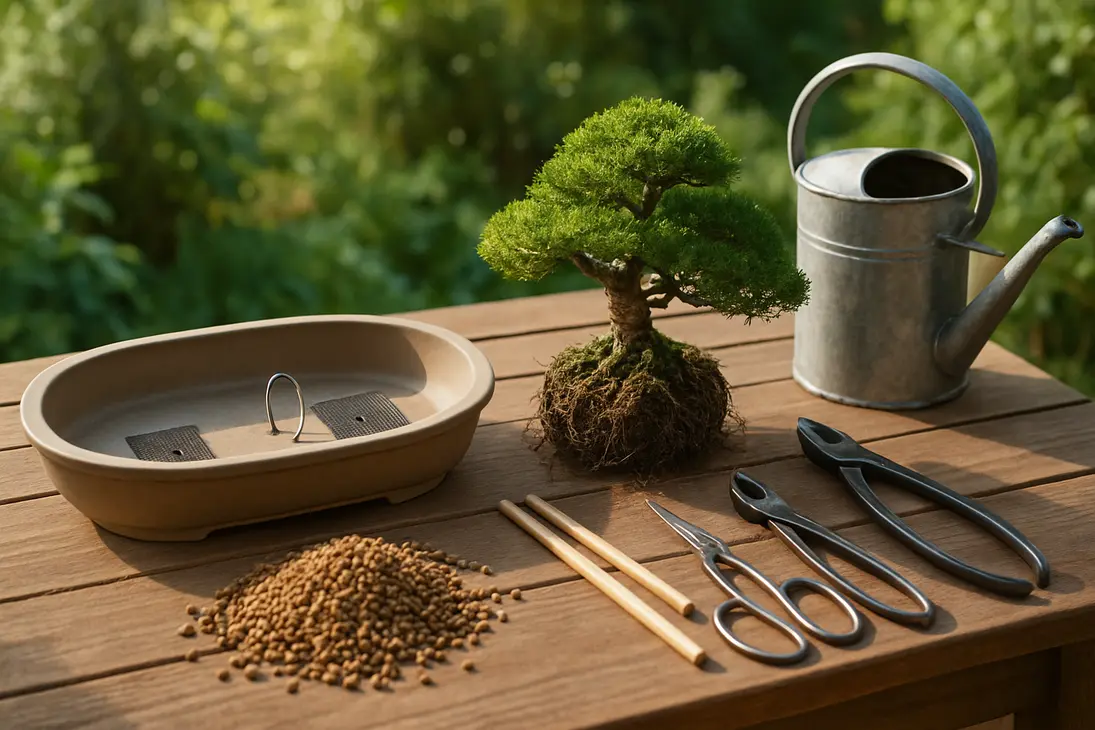
- Orchids, African violets, bonsai: specialty mixes.
If mix becomes hard, crusty, or pulls from the pot sides, water may run around the root ball. Rehydrate slowly or refresh the mix.
Make Drainage Non-Negotiable
Most potted plants need drainage holes. Without them, water collects at the bottom even when the surface looks dry. Rocks in the bottom do not solve this; they create a wet layer inside the pot.
Use saucers indoors, but empty them after watering. Outdoors, raise pots on feet, bricks, or stands if holes are blocked by a flat surface. Good drainage means excess water can leave and oxygen can reach roots.
Match Each Plant to the Right Light and Location
Light strongly affects plant health. In the wrong spot, a plant may become leggy, pale, scorched, weak, or reluctant to bloom. Check the plant’s needs, then place the container where conditions match.
Check Whether the Plant Needs Direct, Bright Indirect, or Low Light
Common light terms mean:
| Light description | Meaning | Examples |
|---|---|---|
| Direct sun | Sun rays hit leaves for hours | Tomatoes, peppers, basil, lavender |
| Bright indirect light | Very bright, but no harsh direct sun | Pothos, philodendron, peace lily |
| Low light | Bright enough to read, away from strong windows | Snake plant, ZZ plant |
| Part shade outdoors | Morning sun or filtered light | Ferns, begonias, some hydrangeas |
Indoors, south- and west-facing windows are often brightest in the Northern Hemisphere. East windows give gentler morning light, while north windows are usually dimmer.
Stretching, small leaves, or poor flowering may mean the plant needs more light. Pale, crispy, faded, or curled leaves after a move can mean too much direct sun too quickly.
Protect Pots From Heat, Wind, and Sudden Weather Changes
Containers heat and dry faster than garden beds. A full-sun plant may still struggle in a black plastic pot on hot concrete because roots overheat.
For outdoor pots:
- Give sensitive plants morning sun and afternoon shade.
- Group containers to reduce wind exposure.
- Use larger pots for plants that dry too quickly.
- Move small pots before storms, frost, heat waves, or strong winds.
- Avoid intense reflected heat from walls and pavement.
Balconies are often windy and drying, so use stable, heavier containers and avoid leaving water pooled in saucers.
Move Outdoor Potted Plants Indoors Carefully
Indoor conditions usually have lower light, less humidity, warmer nights, and less airflow. Plants also use water more slowly indoors, so outdoor watering routines may become too much.
Before bringing plants inside:
- Inspect for pests on leaves, stems, soil, and drainage holes.
- Remove dead leaves and debris.
- Acclimate gradually by moving plants to shade for a few days if possible.
- Choose a bright suitable window.
- Reduce watering and check deeper in the pot.
Some annuals decline indoors, but tender herbs, citrus, tropical foliage, and certain geraniums may overwinter well with enough light.
Water Potted Plants the Right Way
Watering problems usually come from watering by schedule instead of need. A patio pot in summer may need daily water, while the same plant indoors in winter may go much longer. Water thoroughly when needed, then let soil dry to the right level for that plant.
Test the Soil Before Watering
Do not rely only on the calendar. Push your finger 1 to 2 inches into small or medium pots. If it is moist, wait. If dry at that depth, many common plants are ready. For large pots, use a wooden skewer, chopstick, or moisture meter. A watered pot also feels much heavier than a dry one.
General dry-down preferences:
- Succulents and cacti: dry thoroughly.
- Most tropical houseplants: water when the top inch or two dries.
- Ferns: keep evenly moist, not soggy.
- Vegetables: keep consistently moist, especially when fruiting.
- Mediterranean herbs: avoid constantly damp soil.
Yellow leaves can mean overwatering, underwatering, low light, root stress, or natural aging. Check soil before reacting.
Water Deeply, Then Let Excess Drain
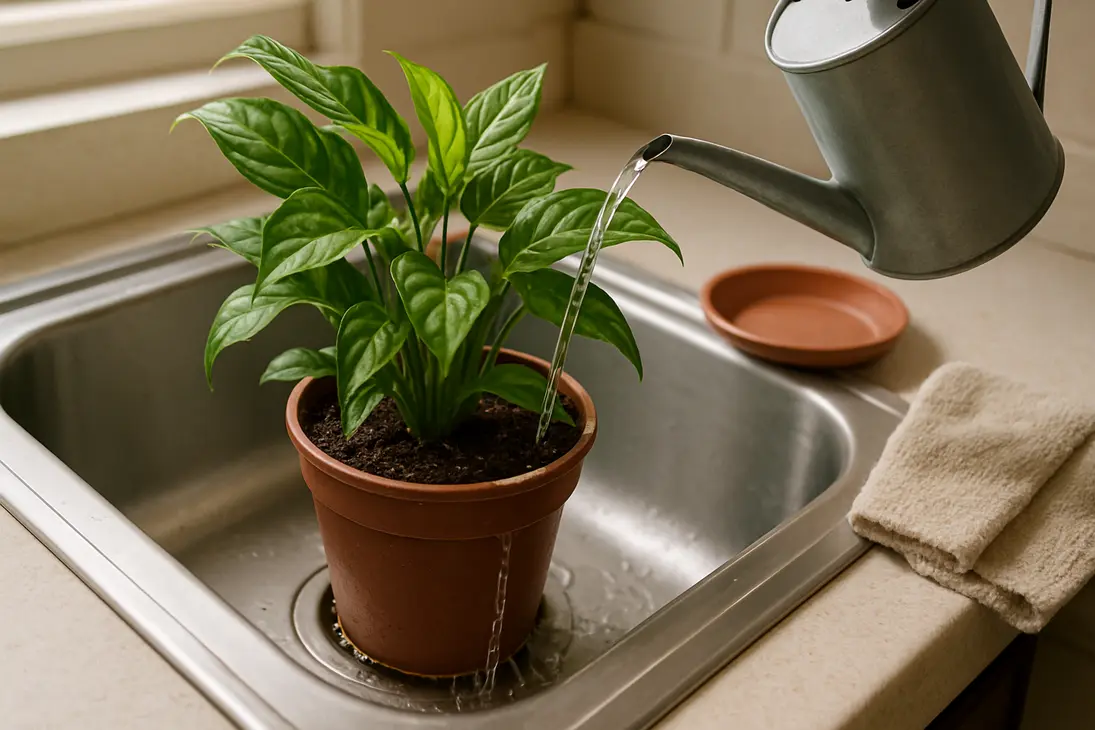
When a plant needs water, soak the whole root ball until water runs from the drainage holes. This encourages deeper rooting and helps flush mineral buildup.
Avoid frequent tiny splashes, which wet only the surface. After watering, let the pot drain and empty saucers or decorative outer pots. If water runs through immediately, the mix may be hydrophobic or the plant may be root-bound.
For very dry mix, water in stages: add a little, wait, then water again. Small pots can sometimes be bottom-watered briefly, then drained.
Adjust Watering by Season, Sun, and Plant Type
Plants use water at different rates depending on growth, heat, light, humidity, wind, and pot size.
Water more often when days are hot, sunny, windy, or the plant is flowering, fruiting, root-bound, outdoors, or in a small porous pot.
Water less often when the plant is indoors in winter, in low light, recently pruned, dormant, in a large pot, or in humid, still air.
Morning is usually best for outdoor watering because roots get moisture before heat peaks and wet leaves dry faster. Indoor plants can be watered whenever you can let them drain properly.
Feed, Prune, and Repot to Keep Plants Growing
Potting mix does not stay fertile forever. Watering washes nutrients out, and growing plants use what remains. Feeding, pruning, repotting, and support keep container plants productive and attractive.
Fertilize Lightly and Consistently
Fertilize during active growth, not when a plant is dormant, stressed, very dry, or newly repotted into fertilized mix. Many houseplants need more feeding in spring and summer and little or none in winter. Outdoor annuals and vegetables often need more because they grow fast and are watered often.
Follow the fertilizer label. More is not better; excess fertilizer can burn roots, brown leaf tips, cause weak growth, or leave crusty salts on the soil. If unsure, use a weaker dose more consistently. Water dry plants before fertilizing unless the label says otherwise.
Prune Dead or Damaged Growth
Remove yellow, brown, diseased, or damaged leaves with clean scissors or pruners. Clear dead leaves from the soil surface because they can hold moisture and attract pests.
Deadhead flowering plants when useful, especially annuals such as petunias and geraniums. Pinch herbs like basil to encourage bushier growth. Avoid heavy pruning on a struggling plant because leaves produce the energy it needs to recover.
Repot When the Plant Becomes Root-Bound
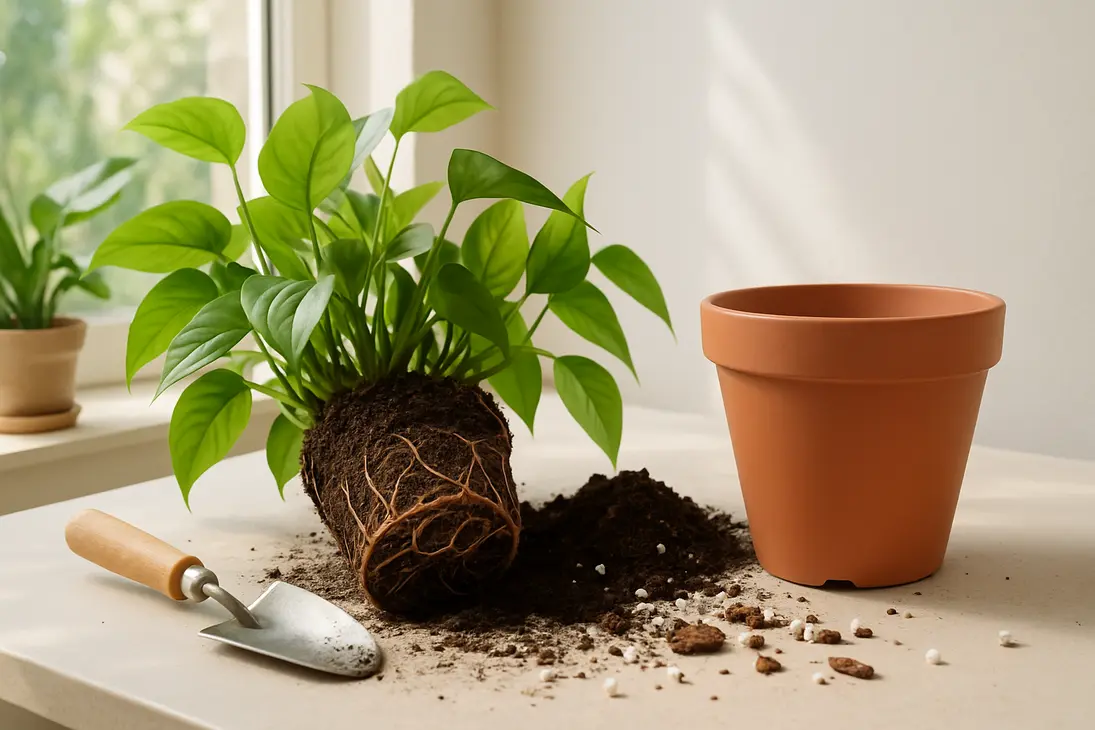
A root-bound plant has outgrown its container. Signs include roots circling the pot, roots coming through drainage holes, water running straight through, unusually fast drying, slowed growth, or the plant lifting out as one tight root mass.
Repot into a slightly larger container. Slide the plant out gently, loosen circling roots if possible, add fresh potting mix, and keep the plant at the same depth. Water well and protect it from harsh conditions for a few days.
Some plants tolerate snug pots, including snake plants, hoyas, and some succulents. Fast-growing vegetables and tropical foliage plants usually need more frequent repotting.
Add Support for Tall or Fruiting Plants
Tomatoes, peppers, dahlias, young trees, vines, and tall houseplants may need stakes, cages, trellises, or moss poles. Add supports early before stems bend or roots fill the pot.
Use soft ties rather than wire that can cut stems. For top-heavy plants, choose a wider or heavier pot and place it out of strong wind.
Avoid Common Potted Plant Care Mistakes
Most container problems come from applying the wrong care too often. Plants do not need constant attention; they need the right attention.
Overwatering Instead of Checking the Soil
Overwatering often happens when people water on a fixed schedule. A plant with damaged roots may wilt, which can lead to even more watering.
Possible signs include:
- Yellowing lower leaves.
- Soft stems.
- Soil that stays wet for days.
- Fungus gnats.
- Sour-smelling soil.
- Wilting while soil is damp.
If you suspect overwatering, stop until soil dries to the proper level. Check drainage and remove standing water. If decline continues, inspect roots. Healthy roots are usually firm and pale; rotting roots are brown, black, mushy, or smelly.
Giving Too Little Light
Low light can make plants look weak or thirsty even when watering is correct. Without enough light, plants use water slowly, so soil stays wet longer. Growth may become stretched, pale, or sparse.
Move plants gradually into brighter conditions. A shade-grown plant can scorch if suddenly placed in strong direct sun.
Using the Same Routine for Every Plant
A cactus, fern, tomato, orchid, pothos, and lavender do not need the same care. Even similar plants dry differently depending on pot size, material, location, and season.
Group plants by needs:
- Dry-loving plants.
- Moisture-loving plants.
- Full-sun patio plants.
- Low-light houseplants.
- Heavy-feeding vegetables.
- Slow-growing succulents.
This makes care easier while still encouraging you to check each pot.
Forgetting Plant Care During Busy Weeks
Containers, especially outdoor ones, may not wait until the weekend in hot weather. Simplify care so it fits your routine.
Helpful steps:
- Keep a watering can nearby.
- Group plants in one or two care zones.
- Use larger pots outdoors.
- Mulch outdoor containers to slow evaporation.
- Set reminders to check soil, not automatically water.
- Choose forgiving plants if you travel.
- Ask someone to check pots during heat waves.
- Use self-watering containers for thirsty plants, but monitor them.
If your schedule is unpredictable, avoid tiny pots in full sun and high-maintenance baskets. Snake plants, ZZ plants, pothos, succulents, and many drought-tolerant herbs are more forgiving.
Conclusion
Healthy potted plants depend on steady basics: enough root room, loose potting mix, drainage holes, suitable light, and watering only when the soil shows the plant needs it. Feed lightly during active growth, remove dead growth, repot crowded roots, and support tall plants before they topple.
The more you observe each container, the easier care becomes. Over time, you will learn which pots dry quickly, which plants need shade, and which can handle a busy week.
FAQ
How often should I water potted plants?
Water when the soil reaches the right dryness for that plant, not on a fixed schedule. Many houseplants are ready when the top 1 to 2 inches feel dry. Succulents need to dry more thoroughly, while ferns and vegetables often need more consistent moisture.
Outdoor pots in hot sun may need daily watering in summer. Indoor plants in winter may need much less. Always check first.
Is it better to water potted plants in the morning or at night?
Morning is usually best outdoors because roots get moisture before heat builds and wet leaves dry quickly. Evening watering may help during extreme heat, but avoid leaving foliage wet overnight in cool, still conditions.
For indoor plants, timing matters less. Water when the pot can drain fully and you can empty the saucer.
Why are my potted plants dying even though I water them?
Water alone is not enough. Common causes include poor drainage, overwatering, too little light, compacted mix, root-bound roots, pests, or fertilizer burn.
Check whether the pot drains, whether the soil is soggy or dry below the surface, whether the plant gets the right light, and whether roots are circling tightly. Fix the cause rather than adding more water.
How can I care for potted plants if I have a busy schedule?
Choose forgiving plants, use properly sized pots, and group plants by watering needs. Set reminders to check soil moisture. Outdoors, use larger pots and mulch to slow drying. Self-watering planters can help, but they still need monitoring.
If your schedule is unpredictable, avoid tiny full-sun pots and plants with narrow care needs. Start with resilient plants and expand once the routine feels manageable.
You Might Also Like