How to Create a Pet-Friendly Houseplant Environment
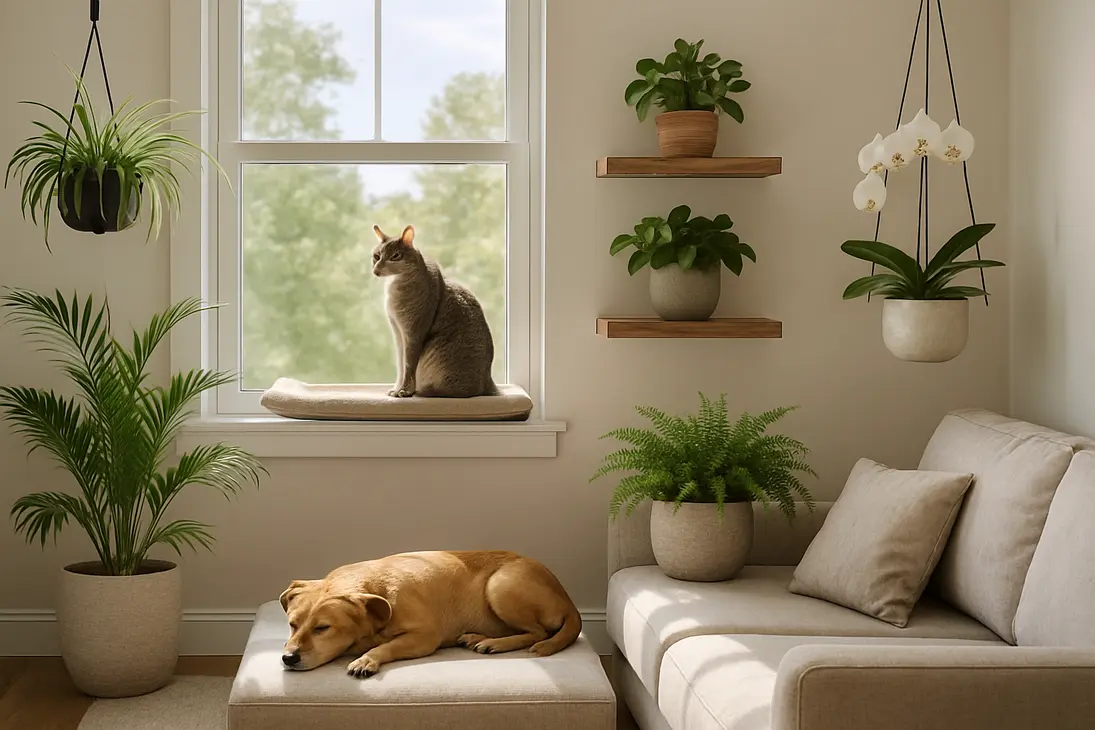
Living with pets and houseplants is possible, but it works best when you plan for real animal behavior. Some pets ignore plants. Others chew leaves, dig soil, knock pots over, or treat trailing vines like toys.
A pet-friendly setup starts with safer plant choices, but it also depends on placement, supervision, pest control, and emergency planning. Even non-toxic plants can cause vomiting or stomach upset if eaten in large amounts, and “out of reach” means something different for a senior dog than for a young climbing cat.
Choose Houseplants That Are Safe for Pets
Before buying pet friendly houseplants, verify the plant’s toxicity using its proper name. Common names are unreliable: “palm,” “lily,” and “fern” can describe many unrelated plants. If a tag says only “tropical foliage” or uses a vague trade name, look up the botanical name or ask the seller.
For cats and dogs, choose plants listed as non-toxic by a reputable veterinary poison database or animal welfare organization. Do not rely only on social media lists, store tags, or the fact that someone else’s pet “was fine.” Risk depends on the plant, the amount eaten, your pet’s size and health, and whether chemicals were applied to the plant or soil.
Start With Verified Non-Toxic Plants
“Non-toxic” means the plant is not known to cause serious poisoning in cats or dogs. It does not mean it is safe to eat freely. Pets may still vomit, drool, or have diarrhea from plant fiber, potting mix, fertilizer residue, or stomach irritation.
When checking a plant, confirm:
- The botanical name, not just the common name
- Whether it is safe for cats, dogs, or both
- Whether it has irritating sap, spines, or sharp leaves
- Whether the soil has been treated with fertilizer or pesticides
- Whether your pet has a chewing habit or medical condition
If you are unsure, treat the plant as unsafe until verified. This is especially important for cats, which can reach high shelves and are highly vulnerable to certain plants such as true lilies.
Pet-Safe Houseplants That Are Beginner-Friendly
The best beginner choices are non-toxic and forgiving indoors. Plants that need constant humidity, frequent treatments, or fussy care may be less practical in a busy pet household.
| Plant | Why it works | Basic care | Caution |
|---|---|---|---|
| Spider plant | Tough and easy to propagate | Bright indirect light; partial drying | Dangling babies may tempt cats |
| Parlor palm | Adaptable and compact | Medium to bright indirect light | Use a stable pot |
| Areca palm | Soft, airy foliage | Bright indirect light; even moisture | Pets may chew fronds |
| Boston fern | Classic non-toxic fern | Bright indirect light; consistent moisture | Can shed leaflets |
| Bird’s nest fern | Broad, attractive leaves | Bright indirect light | Leaves may invite chewing |
| Calathea / prayer plant | Colorful pet-safe foliage | Medium indirect light; steady moisture | Sensitive to dry air and water quality |
| Peperomia | Compact and varied | Bright indirect light; partial drying | Small pots tip easily |
| Ponytail palm | Drought-tolerant and sculptural | Bright light; sparse watering | Grassy leaves attract cats |
| African violet | Compact flowering plant | Bright indirect light | Keep soil from becoming a play target |
| Phalaenopsis orchid | Long-lasting flowers | Bright indirect light; orchid bark | Bark may interest diggers |
If your pet is a known chewer, start with one or two inexpensive, verified non-toxic plants and watch what happens before adding more.
Plants to Avoid or Keep Strictly Out of Reach
Some houseplants are best avoided in homes with curious pets. Others should be kept only in rooms pets cannot access. For cats that climb, “on a shelf” is not enough if the plant is highly toxic.
Be especially cautious with:
- True lilies, including Easter lilies, tiger lilies, Asiatic lilies, and daylilies, around cats
- Sago palm
- Pothos, philodendron, monstera, dieffenbachia, peace lily, and syngonium, which contain irritating calcium oxalate crystals
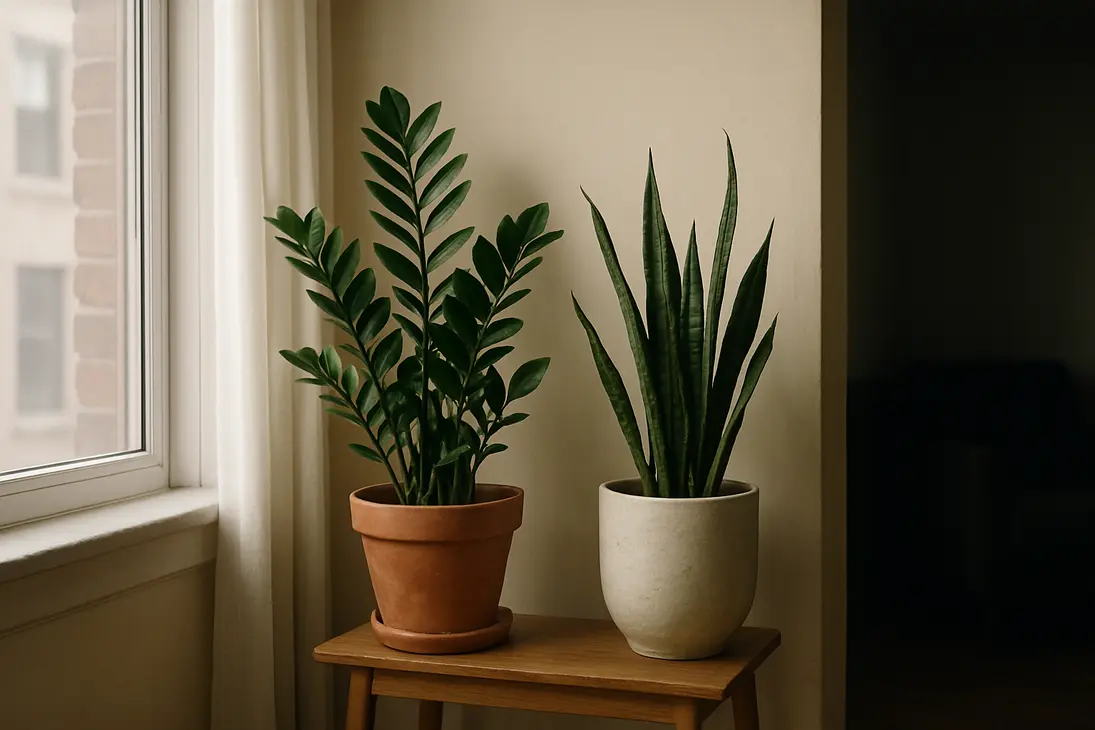
- ZZ plant and snake plant
- Aloe
- Jade plant and other crassulas
- Dracaena, including corn plant and dragon tree
- Oleander, cyclamen, and other known toxic ornamentals
Peace lily is not a true lily, but it can still irritate the mouth and digestive tract. True lilies are a separate and more urgent concern for cats. If you have a cat and cannot guarantee zero access, do not keep true lilies indoors.
Set Up Your Plants So Pets Can’t Easily Reach Them
Plant safety is also about design. The goal is to make chewing, digging, climbing, and batting at leaves difficult or uninteresting. If you are adding a kitten, puppy, or newly adopted pet to a home with plants, reassess the entire setup before problems start.
Use Shelves, Hanging Planters, and Tall Stands
Elevation helps, but it must match the animal. For dogs, tall stands, console tables, and wall shelves may be enough. For cats, assume they can jump, squeeze onto narrow surfaces, and reach dangling stems.
Useful placement strategies include:
- Ceiling-mounted hanging planters secured into studs or proper anchors
- Wall shelves with no nearby launch point
- Tall plant stands with wide, stable bases
- Heavy cachepots that resist tipping
- Window shelves only if your pet cannot access the windowsill
- Compact plants instead of trailing vines in pet-accessible rooms
Avoid placing tempting plants near feeding stations, litter boxes, pet beds, or favorite lookout spots. If your cat already owns the sunny window, adding a plant there creates unnecessary conflict.
Create Plant-Free Zones for High-Risk Pets
Some pets need zones, not just training. Kittens, puppies, newly adopted animals, and pets with a history of chewing should have spaces where no plants are accessible.
A plant-free zone might be a bedroom where the cat sleeps, a puppy playpen, a rough-play area, a pet-only windowsill, or a closed plant room with suitable light.
This is not overreacting. It is easier to relax boundaries later than to manage an emergency after a pet eats something dangerous. If you are bringing home a new cat, remove toxic plants from accessible spaces before the cat arrives.
Protect Soil From Digging, Chewing, and Tipping
Many pets are more interested in soil than leaves. Fresh potting mix smells interesting, and loose soil is fun to dig.
To reduce digging and tipping:
- Use heavier pots for floor plants
- Place nursery pots inside stable cachepots
- Keep large plants away from traffic paths
- Cover exposed soil with mesh or another breathable barrier
- Support stems so they do not flop into reach
- Clean spilled soil quickly
Be careful with decorative toppings. Large smooth stones can deter digging, but small stones may become choking hazards or toys. Avoid cocoa mulch. Do not use mothballs, coffee grounds, cayenne pepper, or essential oils as deterrents in plant pots; they can create new hazards.
Introduce Pets to Houseplants Slowly
A pet-friendly environment works better when plants are introduced calmly. If you bring in several new leafy objects and react dramatically whenever your pet approaches, you may make the plants more exciting.
Supervise New Plants at First
When you bring home a new plant, place it somewhere controlled and watch your pet’s first reactions. Sniffing is normal. Pawing, biting, digging, or repeated fixation means the plant needs a safer location.
For the first few days:
- Keep the plant in a supervised room
- Do not leave a curious pet alone with it
- Avoid placing it near toys or climbing routes
- Check for fallen leaves and soil spills
- Move it before a bad habit forms
This is also a good time to confirm that the plant is healthy and pest-free before it joins the rest of your collection.
Redirect Chewing With Safer Alternatives
Pets may chew because they are bored, teething, anxious, or attracted to movement. Offer better outlets such as cat grass, food puzzles, interactive play, suitable dog chews, scratching posts, climbing furniture, and regular exercise.
Do not wave leaves around, let pets bat at vines, or laugh when a kitten climbs into a pot. It may be cute once, but it teaches that plants are toys.
Use Training and Consistent Boundaries
Training is not just for dogs. Cats can learn patterns when the environment is consistent, even if they do not respond like dogs.
For dogs, practice cues such as “leave it” and reward moving away from plants. For cats, calmly interrupt unwanted behavior and redirect to a toy, perch, or scratcher. Use the same response every time. Yelling, spraying water, or chasing often increases stress.
If you use a deterrent spray, choose one labeled for use around pets and plants, and test it on a small leaf first. Physical prevention is usually more reliable than taste deterrents.
Keep Plant Care Pet-Safe
A plant may be non-toxic, but the care products around it may not be. Fertilizers, pest treatments, leaf shine products, and treated potting mixes can all change the risk.
Inspect New Plants Before Bringing Them Inside
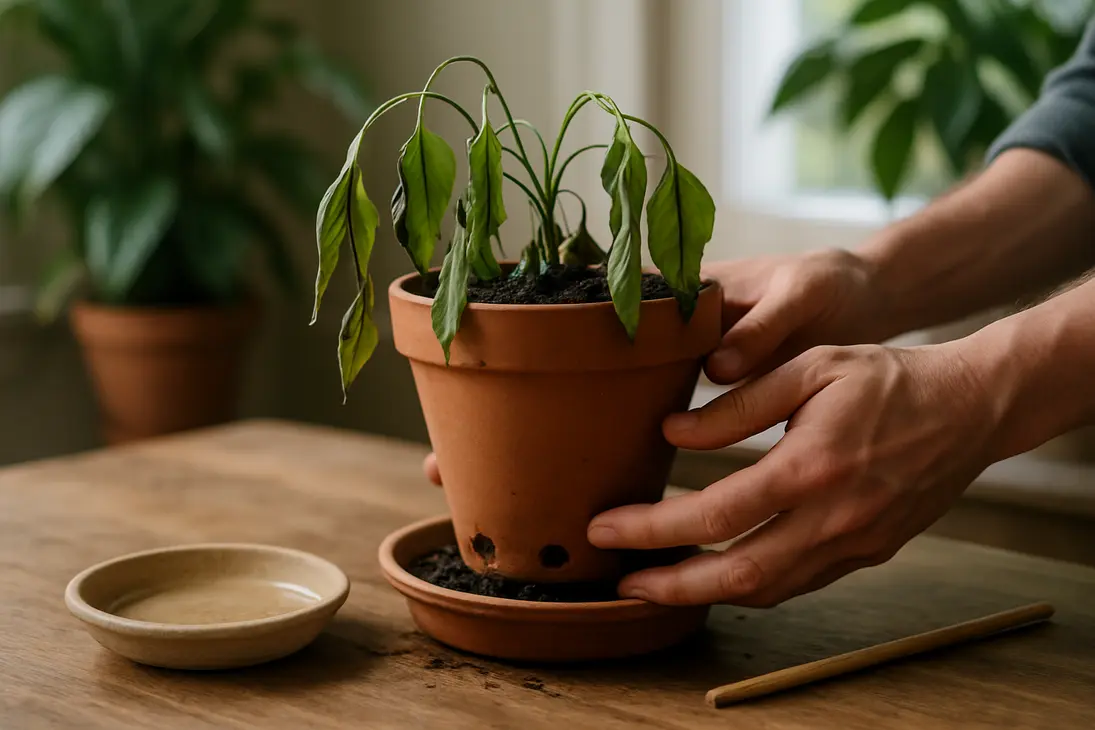
New plants can arrive with pests, fungus gnats, pesticide residue, or loose soil that attracts pets. Gardeners often report pest problems after buying plants from big-box stores or crowded plant sections. Not every store plant is a problem, but inspection is worth the time.
Before bringing a plant into your main living area:
- Check leaf undersides for webbing, speckling, scale, or sticky residue
- Look at stems, new growth, and the soil surface
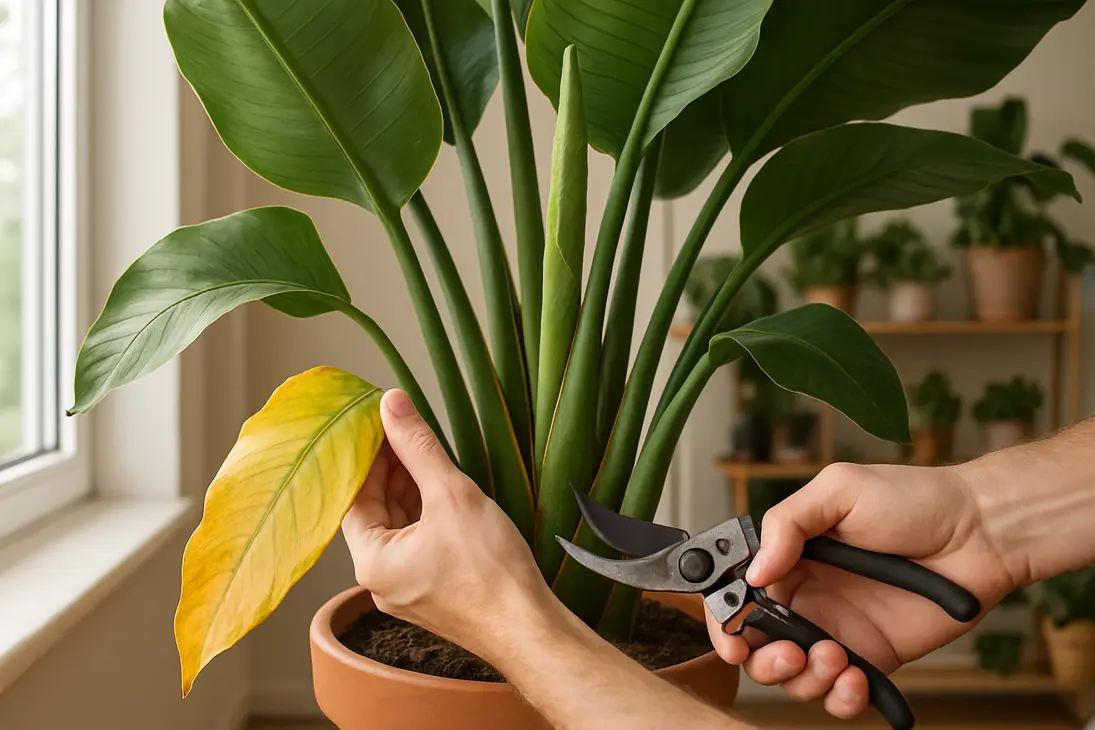
- Remove dead leaves and wipe the outside of the pot
- Quarantine the plant away from pets and other plants if possible
A two-week quarantine is helpful; longer is better if you have a large collection or have dealt with pests before.
Use Pet-Safe Pest Control Methods
Start with the least risky methods. Many common houseplant pests can be reduced with isolation, washing, pruning, and repeated monitoring.
Pet-conscious options include:
- Rinsing leaves in the sink or shower
- Wiping leaves with a damp cloth
- Pruning heavily infested growth
- Isolating affected plants
- Letting the top layer of soil dry when the plant tolerates it
- Using sticky traps only where pets cannot touch or chew them
- Replacing the top layer of potting mix if gnats are breeding there
If you use insecticidal soap, horticultural oil, neem-based products, or any pesticide, read the label carefully. Apply products away from pets, allow leaves and soil to dry fully, and do not assume “natural” means safe. Essential oils, homemade sprays, and systemic insecticide granules can be risky in a pet household.
Be Careful With Fertilizers, Soil Additives, and Treated Leaves
Store fertilizers like household chemicals: sealed, labeled, and out of reach. Organic fertilizers can be especially tempting to dogs because bone meal, blood meal, fish meal, or manure-based ingredients may smell edible.
Good habits include:
- Fertilize plants where pets cannot access them
- Wipe up spills immediately
- Avoid leaving diluted fertilizer water in saucers
- Do not let pets drink from watering cans
- Skip glossy leaf shine products on plants within reach
- Avoid top-dressing with anything your pet may eat
- Keep potting mix sealed and stored away
If your pet digs in soil, address access first instead of adding more amendments to cover the smell.
What to Do If Your Pet Eats a Houseplant
If your pet eats a houseplant, act calmly but promptly. Do not wait for symptoms if the plant may be toxic.
Take these steps:
- Move your pet away from the plant. Prevent further chewing or digging.
- Identify the plant. Take photos of the whole plant, leaves, flowers, tag, and chewed parts.
- Estimate what happened. Note how much may have been eaten and when.
- Check the soil and products. Fertilizer, pest treatments, or additives may matter too.
- Contact your veterinarian or a pet poison control service. Follow their instructions.
- Do not induce vomiting unless instructed.
- Watch for symptoms, but do not rely on symptoms alone. Some serious poisonings are not dramatic at first.
Urgent symptoms include vomiting, diarrhea, drooling, pawing at the mouth, swelling, loss of appetite, lethargy, weakness, tremors, trouble breathing, seizures, collapse, or unusual thirst and urination.
When you call, be ready with your pet’s species, weight, age, medical conditions, the plant name if known, the amount eaten, the time of exposure, and any symptoms. If you go to the clinic, bring a plant sample or clear photos.
Conclusion
Pets and houseplants can coexist when you design for curiosity. Choose verified pet friendly houseplants, avoid high-risk species, place plants carefully, manage soil and plant-care products, and have a plan for emergencies.
FAQ
Are all houseplants toxic to cats and dogs?
No. Many houseplants are considered non-toxic to cats and dogs, including spider plants, parlor palms, Boston ferns, peperomias, and many orchids. Still, non-toxic plants can cause mild stomach upset if eaten. Always verify the exact plant before buying.
What are some hardy pet-safe houseplants?
Good hardy options include spider plant, parlor palm, ponytail palm, peperomia, bird’s nest fern, and some orchids. Spider plants and ponytail palms are especially forgiving, though their grassy or dangling leaves may attract cats.
Do I need to get rid of my plants before getting a cat?
Not necessarily, but review every plant before the cat arrives. Remove or rehome highly toxic plants, especially true lilies. Move questionable plants into a closed room until identified. Because cats climb, do not assume a high shelf is safe for a toxic plant.
How can I stop my cat from eating my houseplants?
Remove toxic plants from reach first. Then use hanging planters, wall shelves, closed rooms, or barriers. Offer cat grass, increase playtime, and redirect chewing consistently. Avoid cayenne, essential oils, or harsh deterrents. If your cat fixates on one plant, move it.
Sources
- Reddit discussion on cats and protecting houseplants: https://www.reddit.com/r/houseplants/comments/174rezu/people_with_cats_how_do_you_keep_your_plants_safe
- Reddit discussion mentioning pest issues from newly purchased houseplants: https://www.reddit.com/r/houseplants/comments/tbwke3/home_depot_house_plants_buyno_buy
You Might Also Like