What’s Eating My Begonias? How to Identify the Pest and Stop the Damage
When begonias develop holes, silver streaks, sticky leaves, webbing, or sudden wilting, diagnose before spraying. Their tender, thin, or fuzzy leaves can be damaged by strong sprays, oils, repeated treatments, or direct sun after treatment.
Start with the damage pattern. Slugs, thrips, mites, mealybugs, and soil pests leave different clues, and the safest control depends on the cause.
Start With the Damage: What the Leaves Are Telling You
Not all begonia damage comes from pests. Sunburn, water stress, fungal spots, torn leaves, aging foliage, and root problems can look similar. Note the damage pattern, where it starts, and whether it keeps appearing on new growth.
Holes, Ragged Edges, or Missing Leaf Sections
Large holes, scalloped edges, and missing sections usually mean chewing pests. Outdoors, suspect slugs, snails, caterpillars, earwigs, grasshoppers, or beetles. Slugs and snails often feed at night and may leave shiny slime trails on pots, soil, or nearby surfaces.
Inspect after dark with a flashlight, especially under leaves, pot rims, and mulch. Indoors, chewing damage is less common, so also check for torn leaves or crisp edges that broke away.
Silvery Streaks, Black Specks, or Distorted New Growth
Silvery scarring, pale streaks, tiny black dots, and twisted new leaves often point to thrips. Thrips scrape plant tissue and feed on juices, especially on tender growth, flowers, and thin leaves.
The black specks are often droppings. Damage may look scraped or bleached rather than chewed, and leaves may curl or scar as they expand.
Fine Stippling, Dull Leaves, or Webbing
Fine pale speckles, dull foliage, dry edges, or very fine webbing suggest spider mites or similar mites. Mites pierce plant cells, creating tiny dots that can merge into a bronzed or faded look.
Do not wait for obvious webs. Early mite damage can look like general decline, especially on patterned Rex begonias. Mites build quickly in warm, dry, crowded indoor conditions.
Sticky Residue, Cottony Clumps, or Small Bumps on Stems
Sticky residue, or honeydew, usually comes from sap-feeding pests such as aphids, whiteflies, soft scale, or mealybugs. It can make leaves shiny and encourage dark sooty mold.
Cottony white clumps in leaf joints, stems, or near the soil line usually mean mealybugs. Small tan, brown, or gray bumps attached to stems may be scale. Aphids cluster on soft growth, while whiteflies flutter when disturbed.
Yellowing, Wilting, or Soil Activity Around the Roots
If a begonia wilts despite moist soil or declines without visible leaf pests, check the roots. Root mealybugs live in potting mix and may appear as white, waxy clusters on roots or inside the pot.
Fungus gnats are another soil-related pest. Adult gnats are small dark flies around wet mix. Their larvae mostly feed on fungi and decaying matter, but high numbers can damage fine roots, especially on young or stressed plants. Overwatering, root rot, compacted soil, and poor drainage can cause similar symptoms.
Common Pests That Damage Begonias
The likely pest depends on whether the begonia grows indoors, outdoors, in a greenhouse, or on a patio. These are the main suspects.
Thrips
Thrips are small, slender insects that may be yellowish, tan, brown, or dark. Young thrips are paler and harder to see.
Look for:
- Silvery streaks or scraped patches
- Tiny black specks
- Distorted new leaves
- Damaged buds or flowers
- Fast-moving insects in folds or flowers
Sticky cards can help confirm thrips, but they do not control an infestation by themselves.
Spider Mites and Other Tiny Mites
Spider mites are arachnids, not insects, and often look like moving dust. On begonias, they cause stippling, dull foliage, dry edges, and sometimes webbing.
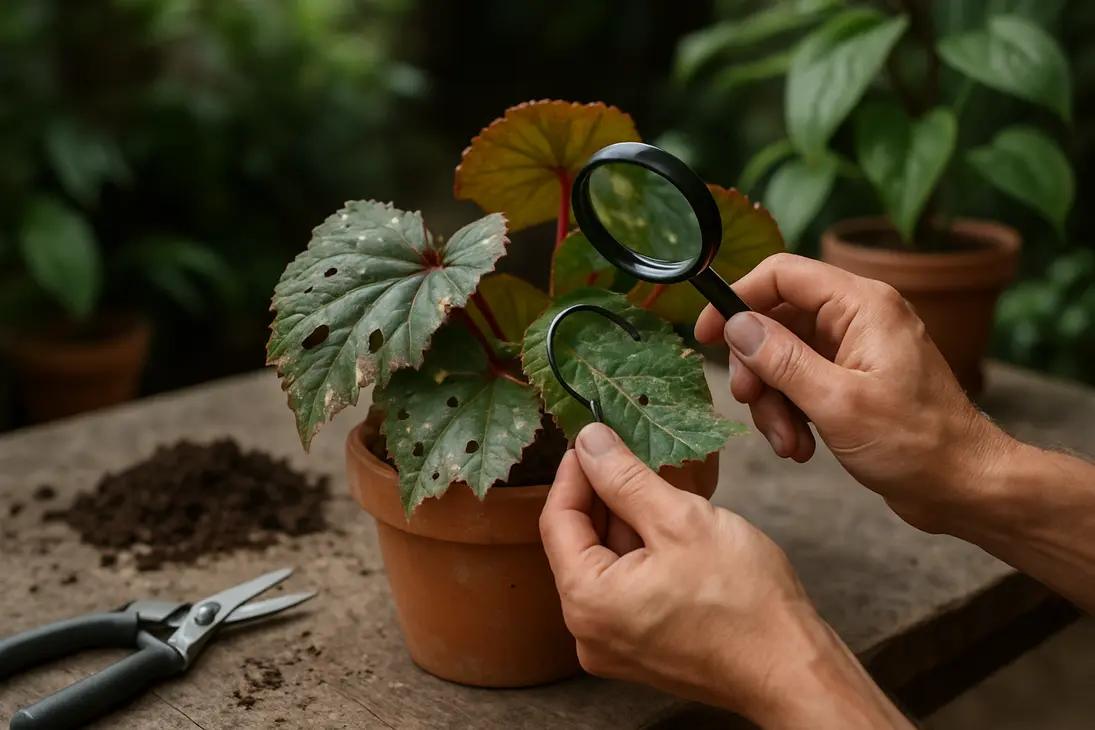
Check leaf undersides with a magnifying glass, or tap a leaf over white paper and watch for moving specks. Mites are more likely when indoor air is dry, leaves are dusty, and plants are crowded.
Mealybugs, Including Root Mealybugs
Mealybugs are soft-bodied sap feeders covered with white wax. Above the soil, they look like cottony bits tucked into nodes, crowns, leaf joints, or stems.
Root mealybugs hide in potting mix and cause weak growth, yellowing, wilting, and gradual decline. Slide the root ball from the pot and look for white waxy residue, cottony patches, or insects on roots or the inner pot wall.
Aphids, Whiteflies, and Scale
Aphids cluster on tender growth and flower stems. They may be green, black, yellow, gray, or pinkish and often leave honeydew.
Whiteflies are tiny white insects that scatter when disturbed and feed on leaf undersides. Scale insects look like small bumps or shells on stems, petioles, or veins. Soft scale produces honeydew; armored scale usually does not. These pests weaken begonias rather than chewing holes.
Slugs, Snails, Caterpillars, and Other Outdoor Chewers
Outdoor begonias, especially bedding, tuberous, and patio types, are vulnerable to chewing pests. Slugs and snails prefer tender leaves and damp hiding places. Caterpillars can strip soft leaves quickly.
Inspect at dusk, after rain, or at night. Look under pots, pot rims, leaves, mulch, and shaded debris near the plant.
Fungus Gnats and Soil-Dwelling Larvae
Fungus gnat adults are annoying but do not eat leaves. Their larvae live in moist potting mix and feed on fungi, organic matter, and sometimes fine roots.
A few gnats on an established begonia usually signal overly wet soil rather than an emergency. Heavy populations can stress cuttings, seedlings, and weak plants. Constantly wet organic mix is the usual cause.
How to Inspect a Begonia for Pests
A quick glance is rarely enough. Thrips, mites, young mealybugs, and scale crawlers hide in folds, undersides, stems, and potting mix.
Isolate the Plant First
Move the suspect begonia away from other plants. Isolation slows spread and makes inspection easier. Indoors, use a separate shelf, room, or ventilated clear bin if light and temperature remain suitable.
Do not leave a possibly infested plant beside healthy plants while you “wait and see.”
Check Leaf Undersides, Stems, Nodes, Flowers, and Soil
Inspect the whole plant, not just the damaged leaf. Check leaf undersides, veins, new growth, folded leaves, flowers, buds, nodes, crowns, stem bases, the pot rim, saucer, soil surface, and drainage holes.
If decline is severe, slide the root ball out and inspect the roots. For outdoor begonias, also check nearby mulch, shaded spots, and the underside of containers.
Use a Magnifying Glass for Thrips, Mites, and Young Mealybugs
A magnifying glass, jeweler’s loupe, or phone macro lens helps reveal tiny pests. Thrips may look like small slivers. Mites may look like pale or reddish moving dots. Young mealybugs can be small before they develop obvious white wax.
If damage continues but you see nothing, inspect again at a different time of day or after dark.
Look at Nearby Plants for Spread
Check nearby houseplants, hanging baskets, patio pots, and greenhouse plants. Thrips, mites, whiteflies, and mealybugs spread easily in crowded collections.
If several plants show similar symptoms, treat the area as a shared infestation. If only one begonia is affected, the problem may be localized damage or a cultural issue.
Rule Out Non-Pest Problems Like Sunburn, Water Stress, or Leaf Disease
Begonias are sensitive to stress. Sunburn causes pale, tan, or crispy patches on exposed leaves. Water stress can cause limp leaves, crisp edges, yellowing, or leaf drop. Leaf diseases may cause spots, water-soaked areas, or mushy tissue.
Pest damage usually keeps appearing on new growth or spreads in a feeding pattern. Cultural damage often follows stronger light, missed watering, soggy soil, cold drafts, or repotting.
How to Treat Pests on Begonias Safely
Choose treatment based on the pest and begonia type. Always read labels and test sprays first. Fuzzy-leaved, Rex, and delicate begonias can react badly to soaps, oils, alcohol, or repeated wetting.
Remove Visible Pests by Hand or With a Gentle Water Rinse
For light infestations, physical removal is often safest.
- Pick off slugs, snails, and caterpillars.
- Wipe aphids or mealybugs with a damp cotton swab.
- Rinse sturdy begonias gently with lukewarm water.
- Avoid blasting delicate leaves or soaking crowns.
For fuzzy begonias, targeted removal or pruning is usually safer than washing the whole plant.
Prune Badly Damaged or Heavily Infested Leaves
Scarred leaves will not heal. Removing the worst leaves can reduce pest numbers and make inspection easier. Use clean scissors and avoid stripping the plant bare.
Bag and discard infested material. Do not compost pest-covered leaves unless your compost system reliably kills pests.
Use Insecticidal Soap, Neem, or Horticultural Oil Carefully
Insecticidal soap can help with aphids, young whiteflies, mites, and exposed mealybugs. Neem-based products and horticultural oils may also suppress some soft-bodied pests and mites, but begonias can be spray-sensitive.
Test one leaf first and wait a couple of days. Spray in bright indirect light, not direct sun. Avoid heat-stressed or drought-stressed plants, and do not soak fuzzy leaves, crowns, or flowers. Follow the label exactly and repeat only as directed.
“Organic” does not automatically mean gentle. Oils and soaps can still burn begonia foliage.
Treat Root Mealybugs and Soil Pests With Repotting or Soil-Specific Controls
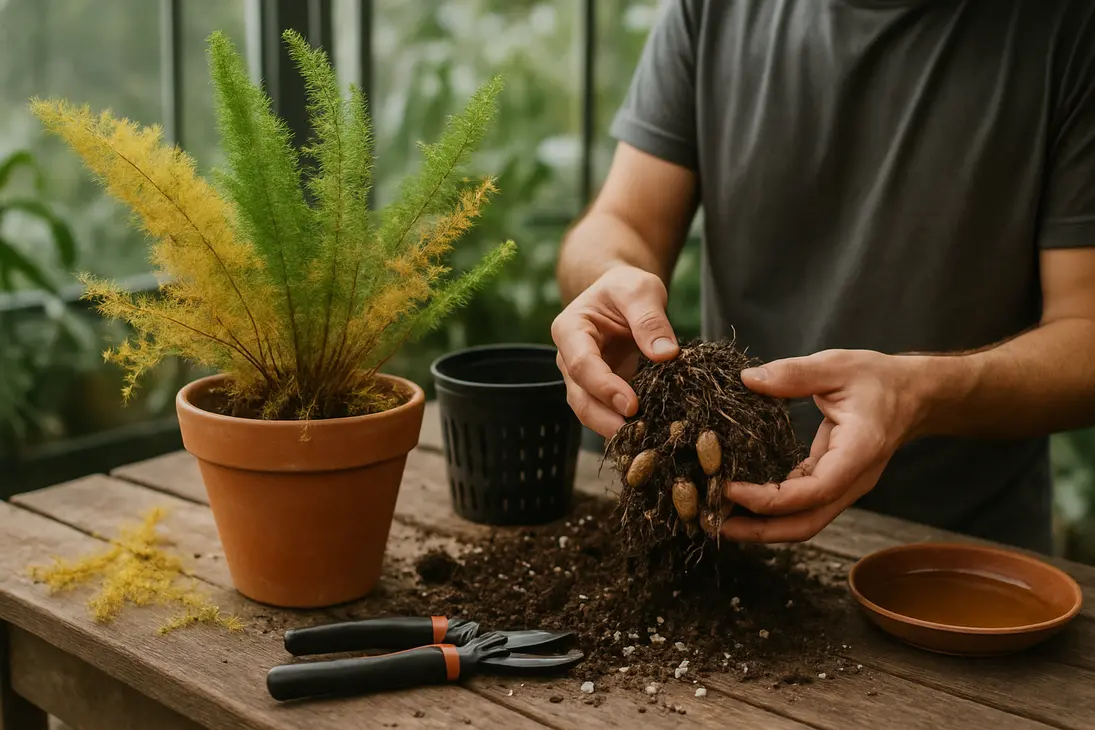
Root mealybugs usually require root inspection. Remove the plant from the pot, wash away old mix if needed, trim badly affected roots, clean the pot, and repot in fresh mix. With severe infestations, propagating clean cuttings or leaves may be more realistic than saving the original plant.
For fungus gnats, let the top layer dry more between waterings if the begonia tolerates it, remove dead leaves from the soil surface, use sticky cards to monitor adults, and use soil-targeted controls labeled for larvae if needed.
Avoid repeated drenches with random household remedies; begonia roots can be sensitive.
Be Cautious With Systemic Insecticides
Systemic insecticides are absorbed by the plant and may help with some sap-feeding pests, but they are not routine maintenance products. They may affect non-target organisms, may be unsuitable for outdoor flowering plants visited by pollinators, and must be used according to label restrictions.
For many begonias, isolation, pruning, washing, repotting, and targeted contact treatment are enough.
Choose Pet-Safer Pest Control Practices When Needed
If you have pets, use the lowest-risk method that works. “Pet-safe” only matters if the label supports that use and you follow directions.
Isolate treated plants, hand-remove pests when practical, keep sticky traps away from pets, avoid loose granules on accessible soil, and let sprays dry fully before returning plants to shared spaces. Call a veterinarian if a pet chews a treated plant or pest product.
Preventing Pests From Coming Back
Prevention means catching problems early and keeping begonias healthy enough to resist outbreaks.
Quarantine New Plants Before Adding Them to a Collection
Keep new begonias away from your main collection before placing them near other plants. Pests often arrive on nursery plants, trades, cuttings, or plants that spent time outdoors.
During quarantine, inspect new growth, leaf undersides, pot rims, and the soil surface.
Inspect Begonias Regularly, Especially New Growth
Weekly checks are easier than fighting a large infestation. Focus on new leaves, flowers, nodes, and undersides. Use magnification for Rex begonias, cane begonias, rare plants, or dense collections.
Avoid Overcrowding and Improve Airflow
Crowded plants hide pests and slow drying after watering or spraying. Give leaves space, rotate pots so all sides are visible, and use gentle airflow indoors. Avoid cold drafts or strong fans directly on delicate leaves.
Keep Soil Conditions Healthy Without Staying Soggy
Begonias generally prefer evenly moist, well-aerated mix, not stagnant wet soil. Constant sogginess encourages fungus gnats, root stress, and rot. Bone-dry conditions can weaken plants and favor mites in dry indoor air.
Use pots with drainage holes, empty saucers, and choose a mix suited to the begonia type.
Treat Active Infestations, Not Just as a Routine Habit
Routine pesticide use can damage leaves, stress plants, increase resistance risk, and expose people and pets unnecessarily. Treat when you have evidence: visible pests, fresh damage, sticky residue, webbing, or confirmed larvae.
Once new growth is clean and pests are gone, return to monitoring instead of continuing treatments indefinitely.
Conclusion
The damage pattern is your best clue. Big holes usually mean outdoor chewers such as slugs, snails, or caterpillars. Silver streaks and black specks suggest thrips. Fine stippling and webbing point to mites. Sticky residue, cottony patches, or stem bumps indicate sap feeders such as mealybugs, aphids, whiteflies, or scale. Yellowing and wilting may involve root pests, fungus gnat larvae, or non-pest root problems.
Inspect closely before treating, especially with delicate or fuzzy begonias. Quarantine, magnification, pruning, hand removal, and targeted treatment usually work with less risk than broad spraying.
FAQ
What is most likely eating holes in my begonia leaves?
Large holes, ragged edges, or missing sections are usually caused by chewing pests. Outdoors, slugs, snails, and caterpillars are most likely. Check at night with a flashlight and look under pots, leaves, and mulch. Indoors, also consider hitchhiking pests, torn leaves, or crisp edges that broke away.
How can I tell if my begonia has thrips or mites?
Thrips usually cause silvery streaks, black specks, scarred flowers, and distorted new growth. Mites usually cause fine stippling, dull or bronzed leaves, dry edges, and sometimes webbing. Use a magnifying glass and check leaf undersides, or tap a leaf over white paper and watch for moving specks.
Are mealybugs common on begonias?
Yes. Mealybugs often hide in leaf joints, nodes, crowns, and stems. Root mealybugs live in the potting mix and are harder to notice. If a begonia declines without obvious leaf pests, inspect the roots and inner pot wall for white cottony residue.
What pest treatment is safest for delicate or fuzzy begonias?
Start with quarantine, close inspection, hand removal, and careful pruning. Avoid soaking hairy leaves unless you know the plant tolerates it. If using insecticidal soap, neem, or horticultural oil, test one leaf first, keep the plant out of direct sun, and follow the label exactly. For severe infestations, propagating clean material may be safer than repeated spraying.
You Might Also Like