Can Philodendrons Survive in Dry Air?
Can Philodendrons Tolerate Dry Air?
Yes, many philodendrons can survive in dry air, especially tougher houseplant types like heartleaf philodendron. In average indoor humidity, they often keep growing, hold most leaves, and adapt reasonably well.
But there is a difference between surviving and thriving.
Philodendrons are tropical plants. Most grow best with warmth, bright indirect light, steady soil moisture, and moderate to higher humidity. In dry homes, especially in winter with heating systems running, they may stay alive but show stress through slower growth, smaller leaves, brown tips, or new leaves that unfurl poorly.
For most common philodendrons, you do not need greenhouse conditions. Moderate, stable humidity is usually enough. The practical answer is: philodendrons tolerate dry air better than many fussy tropical plants, but prolonged dry air can reduce leaf quality and vigor. Dry air becomes more damaging when combined with underwatering, heat vents, harsh sun, poor soil, or unhealthy roots.
Signs Your Philodendron Is Struggling With Dry Air
Dry air usually affects leaves first. Philodendrons lose moisture through foliage, and very dry air can make it harder for the plant to keep leaf tissue hydrated, especially at tips and edges.
Common signs include:
| Symptom | What it may look like | Other possible causes |
|---|---|---|
| Brown leaf tips | Tan, brown, or crispy tips | Irregular watering, fertilizer buildup, tap water minerals, root stress |
| Crispy edges | Dry, papery margins | Underwatering, direct sun, heat exposure |
| Curling leaves | Leaves curl inward | Dry soil, cold drafts, pests, root problems |
| Slow growth | Fewer or smaller new leaves | Low light, cool temperatures, lack of nutrients |
| Drooping | Limp leaves | Dry soil, overwatered roots, transplant shock |
| Leaf drop | Yellowing or falling leaves | Overwatering, underwatering, cold shock, sudden light change |
These symptoms overlap heavily with watering and light problems. Brown tips are often blamed on dry air, but they can also come from soil that swings between bone-dry and soggy, roots sitting in dense wet mix, or fertilizer salts building up.
Before assuming humidity is the only issue, check the whole setup:
- Is the soil staying wet too long?
- Is the plant near a heater, vent, radiator, fireplace, or air conditioner?
- Does the pot have drainage holes?
- Is the plant getting direct afternoon sun?
- Has watering changed with the season?
- Are new leaves stuck, torn, or damaged?
- Are pests present under leaves or along stems?
Dry air is often only part of the problem. A philodendron in dry air may look fine with bright indirect light, healthy roots, and consistent watering. The same plant near a heat vent in compacted soil may decline quickly.
How to Keep Philodendrons Healthy in Low Humidity
You do not have to chase perfect humidity. Focus on reducing extremes and creating a more stable microclimate.
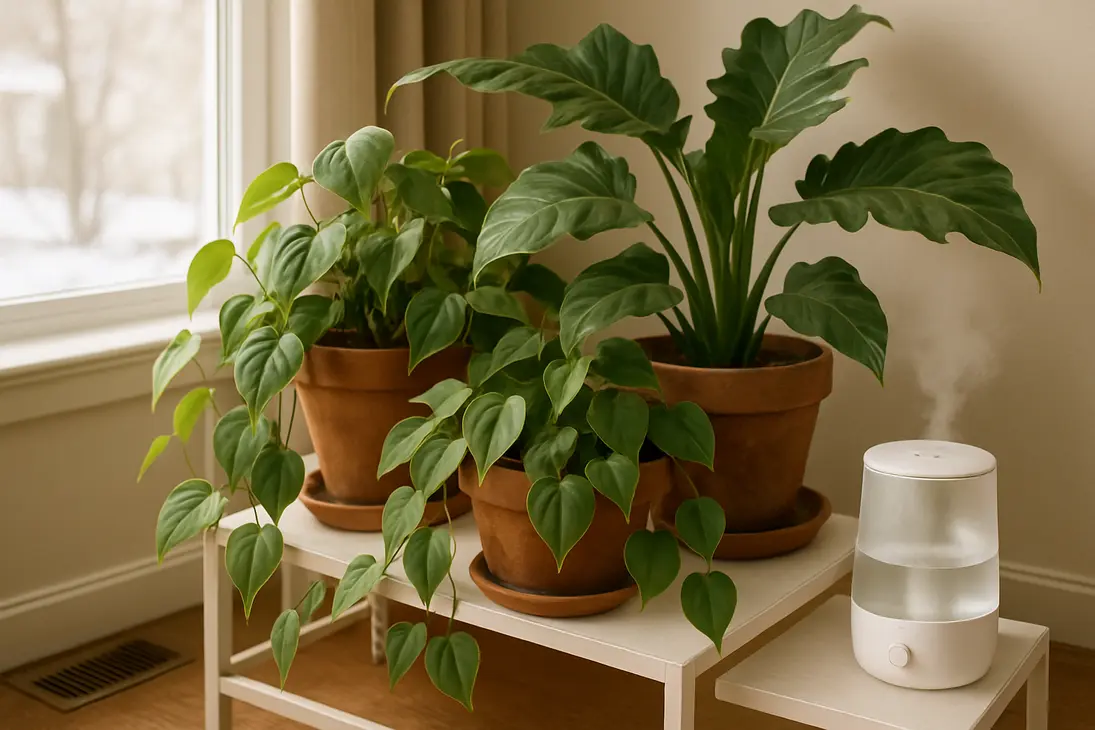
Grouping plants is one easy method. Plants release moisture through transpiration, so a cluster can make the air immediately around them slightly more humid. This will not fix severely dry air, but it helps when paired with good placement.
A humidifier is the most reliable option if your indoor air is consistently dry. It is especially useful in winter, in homes with forced-air heat, or for sensitive philodendron varieties. Place it near the plants, but not so close that leaves stay wet all day. The goal is improved air moisture, not damp foliage and stagnant air.
Keep philodendrons away from drying air currents. Heat vents, radiators, fireplaces, wood stoves, dehumidifiers, and air conditioners can cause crispy edges even when the room feels comfortable.
Better room placement can also help. Bathrooms and kitchens may be slightly more humid, but only use them if light is adequate. A bright bathroom can be excellent; a dark bathroom can lead to weak growth and soggy soil.
Pebble trays help only a little. If you use one, place pebbles in a tray, add water below the top of the pebbles, and set the pot above the water. The pot should not sit directly in water, or root problems may follow.
A few practical ways to support philodendrons in dry air:
- Move plants away from vents, heaters, and drafty windows.
- Group compatible houseplants together.
- Use a humidifier during the driest months.
- Choose bright kitchens or bathrooms if they have enough light.
- Avoid hot direct sun, which increases water loss.
- Keep leaves clean.
- Maintain gentle air movement without strong dry blasts.
Misting is often overestimated. It briefly wets leaves but does not raise room humidity for long. It can also leave mineral spots or encourage leaf issues if foliage stays wet in cool, still conditions. Occasional misting is usually fine, but it is not a dependable fix.
Watering and Soil Mistakes That Make Dry Air Problems Worse
Dry air makes plants lose moisture faster, but that does not mean your philodendron wants constantly wet soil.
Philodendron roots need moisture and oxygen. If soil stays wet, air spaces in the pot fill with water and roots can decline. Damaged roots cannot take up water well, so the plant may droop or develop brown leaves even though the pot is wet. This can look like underwatering or dry-air stress.
Instead of watering on a fixed schedule, check the soil. For many common philodendrons, watering when the top inch or two has dried works well in average indoor conditions. In larger pots, check deeper. If the top is dry but the lower pot is still wet, wait.
Good ways to check moisture include:
- Put a finger into the soil below the surface.
- Lift the pot; dry pots feel lighter.
- Use a wooden skewer or chopstick to see if damp soil clings.
- Learn how quickly the plant dries in your home.
When you water, water thoroughly so moisture reaches the root ball, then let excess drain away. Empty saucers and cachepots afterward. A pot sitting in drained water is not getting “extra humidity”; it is risking root rot.
Soil mix matters too. Philodendrons usually prefer a chunky, well-draining mix instead of dense potting soil that stays wet too long. Indoor potting mix amended with orchid bark, perlite, pumice, coco chips, or similar coarse materials can work well. The exact recipe matters less than the result: the mix should hold some moisture while still draining freely and allowing air around the roots.
Low humidity can make people overcorrect. A plant gets brown tips, so it is watered more often. The soil stays wet, roots weaken, and leaves brown more. The original dry-air issue becomes a root-health issue.
Watering also changes with the season. In warm months with longer days, philodendrons may dry faster. In winter, growth often slows and the plant may use less water even though the air feels dry. Heated air can dry the soil surface quickly while the lower pot remains damp, so checking deeper is important.
Light affects watering as well. A philodendron in bright indirect light usually uses water more efficiently and grows more strongly. A plant in a dim corner may stay wet much longer. If that corner is also warm and dry, leaves may crisp while roots remain too wet.
The safest approach is balanced care:
- Do not let the entire root ball stay bone-dry for long.
- Do not keep soil constantly wet.
- Use a pot with drainage.
- Choose a loose, airy soil mix.
- Adjust watering to light, temperature, pot size, and season.
- Treat brown tips as a clue, not a diagnosis.
If your philodendron is declining, check the roots and soil before assuming humidity is the only cause.
Which Philodendrons Handle Dry Indoor Conditions Best?
Not all philodendrons respond to dry air the same way. Leaf thickness, growth habit, and genetics all affect how forgiving a plant will be indoors.
The most adaptable types are common, sturdy houseplant philodendrons with a long history of indoor growing. Heartleaf philodendron is the classic example: forgiving, fast-growing, and more tolerant of average household humidity than many collector varieties. Philodendron ‘Brasil’, a variegated heartleaf type, is also adaptable, though it needs good light to keep strong coloring.
Many upright hybrids handle normal indoor conditions well too. Plants sold as ‘Imperial Green’, ‘Rojo Congo’, ‘Prince of Orange’, ‘Moonlight’, or similar types often have thicker leaves and sturdier growth. They appreciate moderate humidity but are usually less fragile than delicate climbing species.
More sensitive philodendrons often have thin leaves, velvety leaves, or demanding tropical growth habits. Varieties such as Philodendron verrucosum, melanochrysum, and some other collector types may show dry-air stress quickly. New leaves may stick while unfurling, edges may crisp, or growth may slow unless humidity is steadier.
Philodendron micans is a middle case. It has velvety leaves but is often more adaptable than rarer velvet philodendrons. In very dry air, it may still develop curled leaves, crispy patches, or smaller growth.
A simple comparison:
| Philodendron type | Dry-air tolerance | Notes |
|---|---|---|
| Heartleaf philodendron | High | One of the best choices for average homes |
| Philodendron ‘Brasil’ | High to moderate | Adaptable; needs enough light for variegation |
| Upright hybrids like ‘Imperial Green’ or ‘Rojo Congo’ | Moderate to high | Often sturdy with thicker leaves |
| Philodendron micans | Moderate | More forgiving than many velvet types |
| Velvet collector types like verrucosum or melanochrysum | Lower | Need steadier humidity and careful watering |
| Thin-leaved or newly imported plants | Lower | Prone to leaf damage and acclimation stress |
Acclimation matters. A philodendron grown in a humid greenhouse may react badly when moved suddenly into a dry living room. Even tough varieties can drop a few leaves or pause growth after a major change. Give new plants stable conditions, avoid repotting immediately unless necessary, and let them adjust before making multiple changes.
Conclusion
Philodendrons can live in dry air, and many common types adapt well to average indoor humidity. They are not as humidity-demanding as some tropical houseplants, which is one reason they are popular indoors.
Still, dry air can affect leaf quality and growth. Brown tips, crispy edges, curled leaves, slow growth, drooping, and leaf drop may appear when humidity is low, especially if the plant is also near a heater, watered poorly, or growing in weak light.
Aim for balanced care: moderate humidity, good placement, healthy roots, and consistent watering. Keep plants away from vents and heaters, use a loose mix, water only when the soil has dried appropriately, and choose tougher philodendrons if your home is very dry.
FAQ
Do philodendrons need high humidity?
Philodendrons do not always need high humidity to survive, especially common varieties like heartleaf philodendron. Many adapt to normal indoor humidity.
They usually grow better with moderate humidity and stable conditions. Higher humidity can help leaves unfurl properly, reduce crispy edges, and support stronger growth. Sensitive velvet or thin-leaved types often need more consistent humidity than tougher common philodendrons.
Should I mist my philodendron in dry air?
Misting is optional, but it is not the best solution for dry air. It raises moisture around the plant only briefly, and the effect disappears quickly. If leaves stay wet in cool or stagnant conditions, misting can also contribute to spotting or other leaf problems.
For lasting improvement, use a humidifier, group plants, move the plant away from vents, or choose a naturally more humid room with enough light. Occasional misting is usually fine, but do not rely on it as your main humidity strategy.
Why are my philodendron leaves turning brown at the tips?
Brown tips can be caused by dry air, inconsistent watering, overwatering, underwatering, fertilizer buildup, poor drainage, direct sun, or root stress.
Check the soil before making changes. If it stays wet, improve drainage and water less often. If it dries completely for long periods, water more consistently. If the plant is near a heater or vent, move it. Brown tips will not turn green again, but better care can prevent new damage.
Can dry air make philodendron leaves fall off?
Yes, dry air can contribute to leaf drop, especially when combined with dry soil, heat, low light, pests, or root problems. Usually, dry air alone causes tip browning or crispy edges before major leaf loss.
If your philodendron is dropping leaves, check roots, soil moisture, light, and temperature. Sudden leaf drop often points to a bigger stress than humidity alone, such as overwatering, cold shock, or a major environmental change.
You Might Also Like