How to Increase Sunlight Exposure for an Indoor Gardenia Without Burning the Leaves
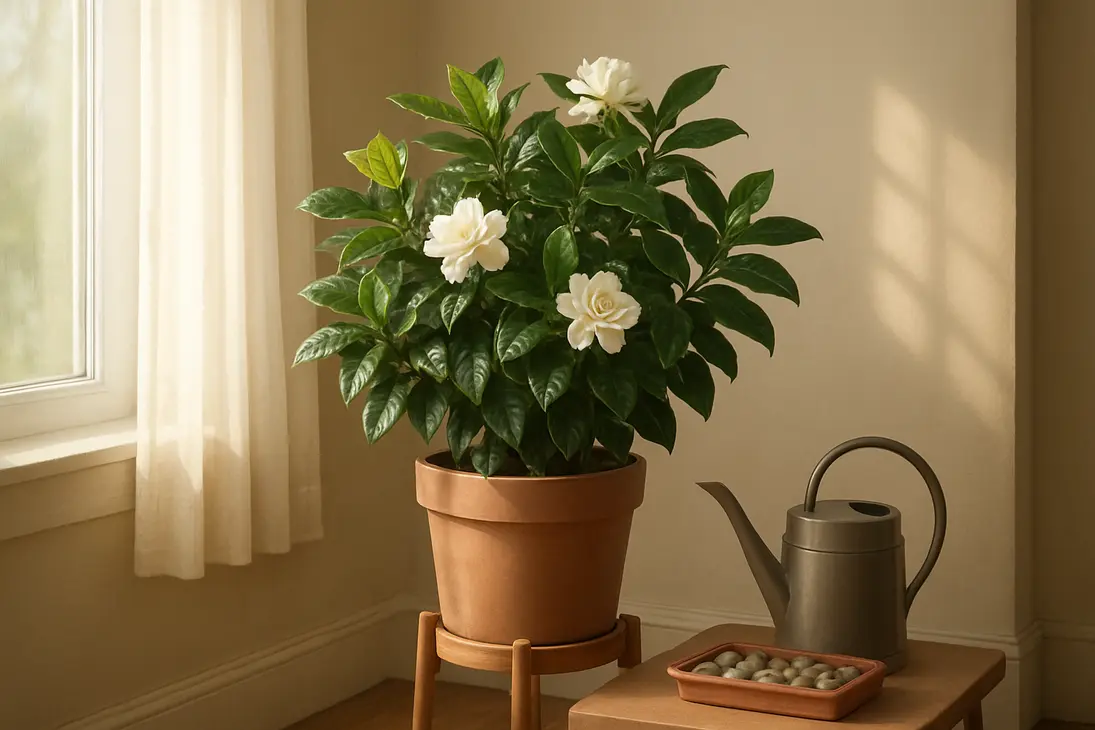
Indoor gardenias need bright light to grow and bloom, but their leaves can scorch if they are moved too quickly from dim indoor conditions into strong direct sun. The safest way to increase sunlight exposure for a gardenia is to choose a brighter location, make the change gradually, and watch the leaves for stress.
A gardenia that has lived in low light has shade-adapted foliage. Those leaves are not ready for hot afternoon sun, sudden outdoor exposure, or intense sun through glass. The goal is brighter light introduced slowly enough for the plant to adjust.
How Much Sunlight an Indoor Gardenia Actually Needs
Gardenias are not true low-light houseplants. Indoors, they do best with several hours of gentle direct sun, especially morning sun, plus bright indirect light for the rest of the day.
Good indoor options include:
- A very bright east-facing window
- A filtered south-facing window
- A bright sunroom or enclosed porch
- A window combined with a grow light
A gardenia may survive in moderate light, but it is less likely to bloom well without stronger light.
Bright indirect light vs. direct sun
Bright indirect light means strong daylight reaches the plant without direct rays hitting the leaves for long periods. A room that looks bright may still be too dim if the plant sits several feet from the window or the window is shaded by trees, screens, blinds, or buildings.
Direct sun means sunlight lands directly on the leaves. Some direct sun is helpful, but not all direct sun is equally safe.
| Type of sunlight | Risk level |
|---|---|
| Morning sun | Usually safest |
| Winter afternoon sun | Often tolerable |
| Midday south-window sun | May need filtering |
| Hot west-window sun | Higher scorch risk |
| Outdoor summer sun | High risk without acclimation |
For indoor gardenias, gentle morning sun is usually better than hot afternoon sun through glass.
Why indoor gardenias often struggle in low light
Gardenias are flowering shrubs, not foliage plants adapted to dim rooms. In low light, they often grow weakly, produce fewer buds, drop buds before opening, or develop long gaps between leaves.
Low light also affects watering. A plant in a dim room uses water slowly, so the potting mix may stay wet too long. That can lead to root stress, yellowing leaves, and decline.
Signs your gardenia is not getting enough light
A gardenia may need more light if you notice:
- Few or no flower buds during the growing season
- Buds forming but dropping before opening
- Thin, stretched, leaning growth
- Pale green leaves without scorch marks
- Slow growth despite reasonable care
- Soil that stays wet for many days
Yellow leaves can also come from watering problems, root stress, nutrient issues, cold drafts, or natural aging. But if yellowing appears with weak growth and no blooms, low light is likely involved.
Choose the Best Indoor Location for More Light
Before moving the plant, choose the best available light source. A good location gives the plant more usable light without sudden heat, cold, or drafts.
Place the gardenia as close to the window as practical. Light drops sharply with distance, so a plant several feet from a bright window may receive far less light than one directly in front of it.
East-facing windows for morning sun
An east-facing window is often the best place to increase light safely. Morning sun is bright but usually cooler and gentler than afternoon sun.
A good setup is:
- Directly in front of an east-facing window
- About 6 to 18 inches from the glass if temperatures are stable
- Morning sun for a few hours
- Bright indirect light afterward
If the window has a heavy screen, deep overhang, or outdoor shade, the light may still be too weak. In that case, consider a brighter window or supplemental lighting.
South- or west-facing windows with filtered light
South- and west-facing windows can provide excellent light, but they are more likely to burn leaves if the plant is moved there suddenly.
A south window can work well with a sheer curtain, especially in spring and summer. In winter, it may be ideal because the sun is weaker and lower.
A west window is riskier because late afternoon sun can be hot through glass. If it is your brightest option, start the plant off to the side, a few feet back, or behind a sheer curtain. Move it closer only after it adjusts.
When a sunroom or bright porch is a better option
A bright sunroom, enclosed porch, or conservatory can be excellent for gardenias if temperatures stay stable. These spaces often provide stronger light than normal rooms, but they can also overheat during the day or become cold at night.
Use blinds, sheer curtains, or shade cloth if afternoon temperatures rise sharply. More light helps only if the plant is not also exposed to heat stress or cold drafts.
Avoiding dark corners, shaded rooms, and drafty windows
A dark corner across the room from a window is not enough light for a blooming gardenia. Also avoid:
- Most north-facing windows, unless unusually bright
- Rooms shaded all day by buildings, trees, or porches
- Windows with heavy blinds kept closed
- Heating vents, fireplaces, and hot dry air
- Cold drafty windows in winter
- Exterior doors opened often in cold weather
A bright location is useful only if temperatures remain reasonably steady.
Increase Sunlight Gradually to Prevent Leaf Burn
Once you choose a brighter spot, make the change slowly. The larger the difference between the old and new location, the slower the transition should be.
Move the plant closer in stages
If the gardenia is several feet from a window, do not move it straight into the brightest position. Shift it closer over one to three weeks.
A simple schedule:
| Time period | Placement |
|---|---|
| Days 1–4 | Move 1–2 feet closer to the bright window |
| Days 5–8 | Move closer again, avoiding harsh direct sun |
| Days 9–14 | Place near gentle sun or filtered strong light |
| After 2 weeks | Keep there if leaves remain healthy |
If leaves wilt, curl, bleach, or develop crispy patches, pause the increase and let the plant adjust.
Add direct sun in short daily intervals
If your gardenia has been growing only in indirect light, introduce direct sun in short sessions. Start with 30 to 60 minutes of morning sun for several days. If the leaves remain firm and evenly green, increase to two hours, then three.
For south or west windows, begin with filtered light instead of unfiltered sun. Avoid testing new exposure during the hottest part of the day.
A cautious approach:
- Start with bright indirect light.
- Add brief morning sun.
- Hold that level for several days.
- Increase only if there is no scorch or wilting.
- Stop if leaves bleach, crisp, or curl.
Sunburned leaves do not turn green again, though the plant can grow healthy new leaves later.
Use sheer curtains to soften harsh afternoon sun
A sheer curtain is one of the easiest ways to give a gardenia more light without exposing it to harsh rays. It is especially useful in south or west windows, during midday or afternoon sun, or when the leaves feel warm to the touch.
The goal is not to make the room dim. The goal is to diffuse intense direct light so the plant receives bright, usable light with less scorch risk.
Rotate the pot for even exposure
Gardenias lean toward the strongest light. Rotate the pot a quarter turn every week or two to keep growth balanced and prevent one side from receiving all the direct sun.
Do not move the plant around every day. Gardenias prefer consistency. A small scheduled rotation is enough.
Watch for scorch before increasing light again
Inspect the leaves before giving the plant more sun. Sun scorch usually appears on the window-facing side or on the upper leaves that receive the strongest light.
Signs of scorch include:
- Pale tan, white, or bleached patches
- Brown, dry, papery areas
- Crispy leaf edges after bright exposure
- Curling or drooping that does not recover
- Damage concentrated on the sun-facing side
If you see scorch, move the plant back slightly, filter the light, or shorten the direct-sun period. Do not remove every damaged leaf at once if it would strip the plant; partly green leaves can still support growth.
Adjust Care as Light Exposure Increases
More light changes how the plant uses water and responds to its environment. After moving a gardenia to brighter conditions, adjust care instead of following the same routine used in a dimmer room.
Check soil moisture more often
A gardenia in brighter light usually dries faster. Check the potting mix more frequently for the first few weeks.
Water when the top inch of mix feels slightly dry, before the whole root ball becomes bone dry. Gardenias prefer consistent moisture, not soggy soil and not repeated drought.
Good watering habits include:
- Check soil by touch, not by calendar
- Water thoroughly until excess drains
- Empty saucers after watering
- Use a pot with drainage holes
- Recheck sooner during sunny, warm weather
If the plant wilts but the soil is wet, do not keep adding water. Wet soil plus wilting can indicate root stress, heat stress, or poor drainage.
Maintain humidity around the plant
Gardenias prefer higher humidity than many homes provide, especially in winter. As light increases, dry air can make leaf edges crisp and buds more likely to drop.
Useful options include grouping plants, using a room humidifier, placing the pot on a pebble tray with water below the pot base, and keeping the plant away from heat vents.
Misting gives only brief humidity and is not a substitute for a humidifier. If you mist, do it lightly and early so leaves dry during the day.
Keep temperatures steady
A brighter window can still be stressful if it overheats in the afternoon or chills at night. Keep the plant away from cold glass in winter and out of hot pockets created by direct sun.
Bud drop often happens after sudden changes. If buds fall after moving the plant, consider the light increase as well as warmer afternoons, colder nights, drier air, or inconsistent watering.
Avoid fertilizing a stressed or sunburned gardenia
Fertilizer will not fix sunburn or light shock. If the gardenia has scorched, wilted, or dropped many leaves, pause feeding until it stabilizes.
Wait until new growth looks healthy, soil moisture is consistent, and no new scorch marks appear. When growth resumes, use a fertilizer appropriate for acid-loving plants according to the label. Do not overapply, especially to a stressed plant.
What to Do If Natural Sunlight Is Still Not Enough
Some homes do not provide enough natural light for a gardenia to bloom indoors. Shaded apartments, north-facing windows, deep porches, and winter conditions can all limit light. If the only sunny spot is too hot or drafty, supplemental light may be safer than forcing the plant into a stressful window.
Use a full-spectrum grow light
A full-spectrum grow light can help an indoor gardenia in a dim home. Use a light made for plants, not a standard room lamp. Position it above the plant at the distance recommended by the manufacturer, close enough to be useful but not so close that it heats or bleaches the leaves.
A common starting point is 10 to 14 hours of light per day, adjusted for season, window light, and plant response.
Signs the light is helping include firmer new growth, shorter gaps between leaves, less leaning, and better bud development. If leaves bleach directly under the lamp, raise the light or shorten the duration.
Combine window light with supplemental lighting
The best indoor setup is often a bright window plus a grow light. For example, use an east window for morning sun and a grow light later in the day, or use a filtered south window with supplemental light on cloudy winter days.
This gives the plant more total light without relying on harsh afternoon sun.
Move the gardenia outdoors seasonally with care
If your climate allows, a gardenia may benefit from time outdoors in warm months. Outdoor light is much stronger than indoor light, even in shade, so acclimate carefully.
Start in bright shade or dappled morning light. After a week or more, add a little early morning sun. Do not move an indoor gardenia straight into full outdoor summer sun.
Outdoor transition tips:
- Move it out only after nights are reliably mild
- Start in shade protected from wind
- Add morning sun gradually
- Check water often in warm weather
- Inspect for pests before bringing it indoors
- Bring it back before cold nights return
Some leaf drop may occur when the plant returns indoors because light, humidity, and temperature all change.
Know when indoor conditions are too limiting
Sometimes a home is simply too dim, dry, or variable for a gardenia to bloom well. Conditions may be too limiting if no window receives strong light, grow lights are not an option, buds repeatedly drop, humidity stays very low, or the only bright window is extremely hot or drafty.
This does not mean you failed. Gardenias are demanding indoors. Supplemental lighting or seasonal outdoor placement is often more realistic than repeatedly moving the plant between poor indoor locations.
Conclusion
To increase sunlight exposure for an indoor gardenia without burning the leaves, start with the brightest safe location, often an east-facing window or filtered south window. Move the plant gradually, add direct sun in short morning intervals, and use sheer curtains when light becomes harsh.
Watch the leaves before each increase. If you see bleaching, crisp edges, or dry brown patches, reduce direct sun or filter it. As light improves, check soil moisture more often, maintain humidity, and keep temperatures steady.
FAQ
Can gardenias grow indoors without a sunroom?
Yes. A gardenia can grow indoors without a sunroom if it receives enough bright light from an east or filtered south window, ideally with a grow light if natural light is weak.
Is direct sunlight good for indoor gardenias?
Some direct sun is good, especially gentle morning sun. Hot afternoon sun through glass can burn leaves, so introduce direct sun slowly and filter strong south or west exposure if needed.
What does sunburn look like on gardenia leaves?
Sunburn usually appears as pale, tan, white, or brown dry patches. The damaged areas may become papery or crisp, often on the leaves facing the window or on the topmost growth.
What does semi-shade mean for a gardenia?
Semi-shade means bright light with protection from the strongest direct sun. For a gardenia, that can mean morning sun with afternoon shade, dappled outdoor light, or indoor light filtered through a sheer curtain.
You Might Also Like