How to Help a ZZ Plant Stand Upright
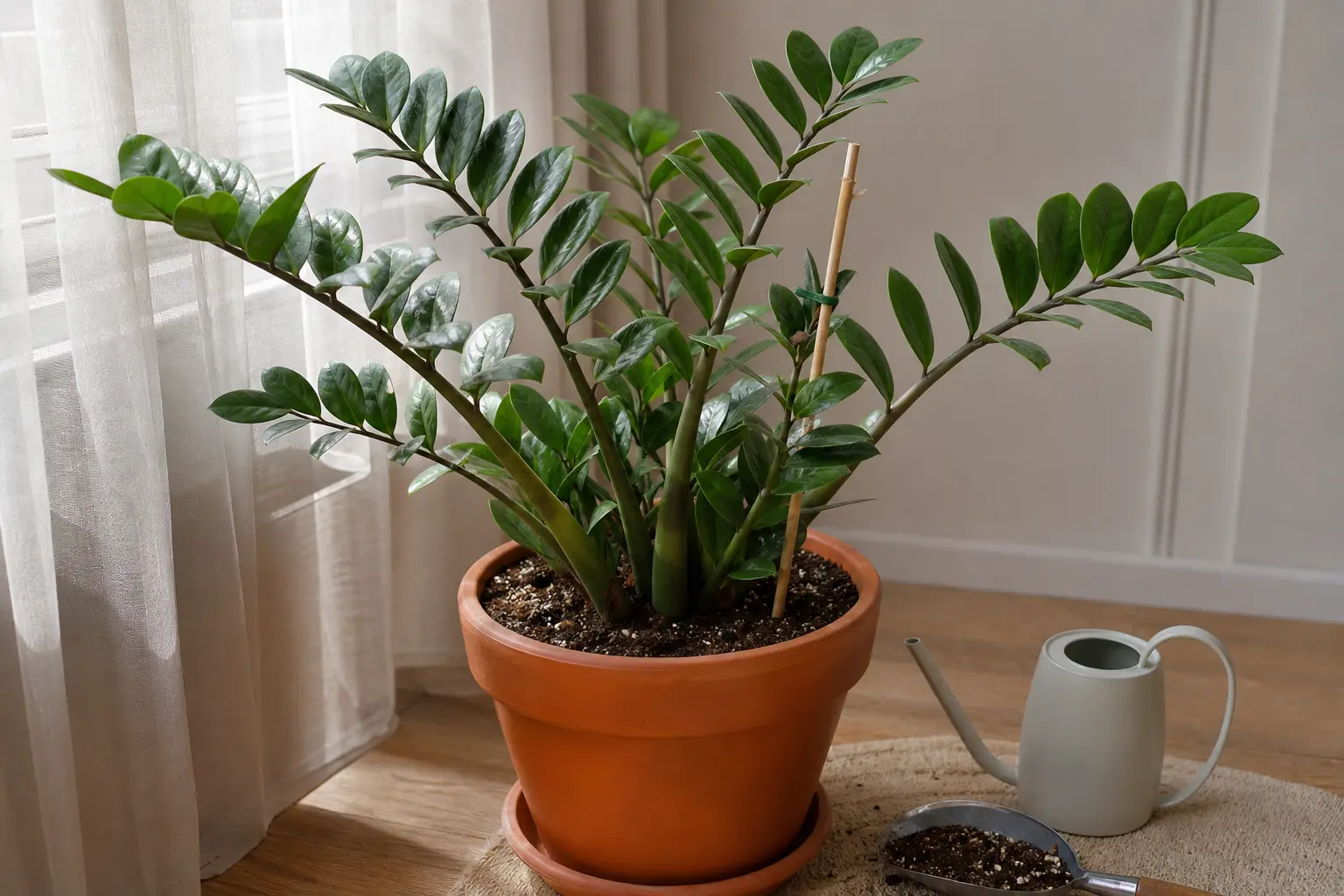
A ZZ plant (Zamioculcas zamiifolia) is valued for its sturdy, upright look, but older plants do not always grow like a tight cluster of vertical spears. Mature leaf stalks naturally spread and arch outward as their glossy leaflets become heavier.
The goal is not to force every stalk perfectly straight. Instead, determine whether the plant is making a normal, balanced shape or whether weak growth, root trouble, poor anchoring, or uneven light is causing it to flop.
First, Tell Normal Arching From a Real Problem
A healthy ZZ plant often develops a fountain-like form. Newer growth tends to emerge upright, while older, taller stalks gradually lean outward. If the stalks are firm, green, evenly spaced, and securely rooted, slight arching is normal.
Look more closely if the change is sudden or uneven. A ZZ plant needs attention when you notice:
- Stalks that have abruptly collapsed rather than slowly arched
- Yellow, soft, wrinkled, or mushy stalks
- A plant leaning strongly toward one window
- Long, thin, widely spaced growth that cannot support itself
- A pot that tips easily or a plant that wobbles in the soil
- A sour smell, persistently wet compost, or blackened roots and rhizomes during inspection
It is also useful to know that the “stems” most people refer to are technically leaf stalks. Each stalk grows from a thick underground rhizome, which stores water and helps anchor the plant. Trouble below the soil can therefore show up above it as falling or unstable growth.
Find the Cause of Leaning ZZ Plant Stems
Before adding a stake or tying the plant together, inspect the growing conditions. Support may keep a stalk off the floor, but it will not correct weak growth or a damaged root system.
Start with a simple check: feel the stalks, assess the soil moisture deep in the pot, note where the light comes from, and gently test whether the root ball feels stable. These observations usually point to the cause.
One-Sided or Stretched Growth From Light
ZZ plants tolerate lower light, but tolerance is not the same as ideal growing conditions. In a dim room, new leaf stalks may grow longer and reach toward the brightest available direction. This creates a lopsided plant, especially when it sits near a window and is never turned.
Low-light growth is often:
- Longer than older stalks
- Paler green at first
- More widely spaced
- Directed toward the light source
- Less able to remain upright as the leaflets mature
A plant leaning toward a window is not necessarily unhealthy. It is responding to light. However, moving it into brighter indirect light will encourage sturdier new growth. Existing bent stalks may not become fully straight again.
Soft, Yellowing, or Collapsing Stems From Excess Moisture
Overwatering is the most urgent cause to rule out. ZZ plants store water in their rhizomes and tolerate a dry spell far better than constantly wet soil. When the potting mix remains wet, oxygen is excluded from the roots and rhizomes, allowing rot to develop.
A moisture-related problem usually differs from natural arching because the affected stalks feel soft or weak. They may yellow from the base upward, collapse at the soil line, or pull away easily.
Check for these warning signs:
- Soil that is wet several days after watering
- A pot without a drainage hole
- Dense soil that stays cold and heavy
- Yellowing that affects multiple stalks
- Brown or black, soft rhizomes when the plant is removed from the pot
Do not water again simply because the surface looks dry. The lower half of the pot may still be wet, particularly in a large container or low-light room.
Crowded Rhizomes and a Pot That No Longer Anchors the Plant
ZZ plants grow from thick, potato-like rhizomes that gradually fill the pot. A crowded plant can become physically unstable: the root mass may push upward, the pot can bulge or crack, and heavy stalks may pull the whole plant to one side.
Root crowding does not always mean the plant is unhealthy. In fact, ZZ plants can live contentedly in a fairly snug pot. Repot only when there is a practical problem, such as:
- Rhizomes lifting above the soil
- Roots or rhizomes filling nearly all available space
- The plant repeatedly tipping over
- Water running straight through because little soil remains
- A damaged, cracked, or distorted nursery pot
- Growth that has become too large for the pot’s base
A tall plant in a lightweight plastic pot may topple even when its roots are perfectly healthy. In that case, a heavier outer cachepot or a wider, stable pot may solve the problem without disturbing the root system.
Heavy, Mature Stems That Naturally Spread Outward
Sometimes nothing is wrong. Large, healthy ZZ plants carry substantial weight at the end of each stalk. As stalks age, they may bow outward, especially around the perimeter of a dense clump.
If the stalk is firm and green, with normal leaflets and no yellowing at the base, allow it to arch. Forcing mature growth vertically can make the plant look unnaturally compressed and may crease or snap a stalk.
A healthy plant should look balanced overall, not rigid. Focus on the condition of the new growth: sturdy, upright new stalks are a better sign of success than trying to reshape every older one.
Correct the Conditions That Help a ZZ Plant Grow More Upright
Correcting conditions improves the quality of future growth. It may not reverse old bends, but it will reduce the need for staking and help the plant hold a more upright form over time.
Move It to Brighter Indirect Light and Rotate the Pot
Place the ZZ plant where it receives bright, indirect light for much of the day. A position a short distance back from a bright window is often suitable, or use a sheer curtain if direct sun reaches the leaves.
Avoid placing it in harsh, prolonged direct sun, which can scorch foliage and overheat the potting mix. A little gentle early-morning sun may be tolerated in many homes, but bright filtered light is the safer default.
Rotate the pot about a quarter turn every week or two. This prevents one side from continually reaching toward the same light source. If you move a plant from a dim area into better light, make the change gradually over several days to reduce stress.
New growth should emerge more compact and upright once light improves. Older stalks may stay angled, though they often become less noticeable as healthier growth fills in.
Let the Potting Mix Dry Before Watering Again
Water thoroughly, then wait until the mix has dried well before watering again. For a ZZ plant, this often means allowing the potting mix to dry through most or all of the root zone—not merely the top inch.
Use one or more of these checks:
- Insert a wooden chopstick or skewer deep into the pot; delay watering if it comes out damp or with soil clinging to it.
- Lift the pot after watering and again later; a noticeably lighter pot usually indicates drying.
- Feel through the drainage hole if possible.
- Use a moisture meter only as a secondary guide, since readings can be unreliable around chunky mixes and rhizomes.
Water slowly until excess drains from the bottom, then empty the saucer or cachepot. Do not leave the pot sitting in collected water.
A ZZ plant’s watering interval varies with light, temperature, pot size, and season. Rather than following a calendar, let the dryness of the mix decide.
Use a Drainage-Friendly ZZ Plant Soil Mix
The soil needs to hold enough moisture for roots to function but release excess water promptly. A dense, peat-heavy mix can work if watering is very restrained, but it is less forgiving in a dim home or a pot without strong drainage.
Choose a houseplant potting mix amended with a generous amount of aerating material, such as perlite, pumice, or fine orchid bark. The finished mix should feel loose rather than muddy and should not stay saturated after watering.
Just as important as the soil is the pot:
- Always use a container with at least one drainage hole.
- Avoid an oversized pot, which holds more wet soil than the root system can use.
- Use a stable, broad-based pot for a large plant.
- Place a nursery pot inside a decorative cover only if you remove it to water or empty any runoff.
A drainage-friendly setup makes it much easier to maintain a ZZ plant standing upright because healthy rhizomes can anchor the growth.
Avoid Overfertilizing Weak or Leaning Growth
Fertilizer cannot strengthen a plant whose roots are struggling or whose growth is stretching toward inadequate light. Adding more feed to a weak ZZ plant can contribute to salt buildup in the soil and may encourage soft, unbalanced growth.
If the plant is healthy and actively producing new leaves, a light application of a balanced houseplant fertilizer during the growing season can be reasonable. Do not fertilize a plant that is newly repotted, severely dry, waterlogged, or showing signs of root rot.
When in doubt, improve light, watering, and drainage first. ZZ plants are naturally slow-growing and do not need heavy feeding to remain healthy.
When to Stake, Prune, or Repot a Leaning ZZ Plant
Support is sometimes useful, but it should match the problem. A healthy but heavy stalk may benefit from temporary help. A soft, yellowing stalk needs removal and a root check instead.
Use Stakes Only as Temporary Support
A stake is appropriate when a healthy stalk is bending under its own weight, particularly if it is at risk of snapping. Use a slim bamboo cane, plant support ring, or small hoop placed carefully near the edge of the pot.
Tie the stalk loosely with soft plant tape, fabric ties, or another flexible material. Do not cinch it tightly. ZZ stalks expand slightly as they grow, and tight ties can leave permanent marks or restrict the tissue.
Avoid gathering every stalk into one tight bundle. This traps foliage together, creates an artificial shape, and can hide yellowing or rot at the base. Support only the few stalks that truly need it while you address the underlying cause.
Remove Damaged or Persistently Floppy Stems
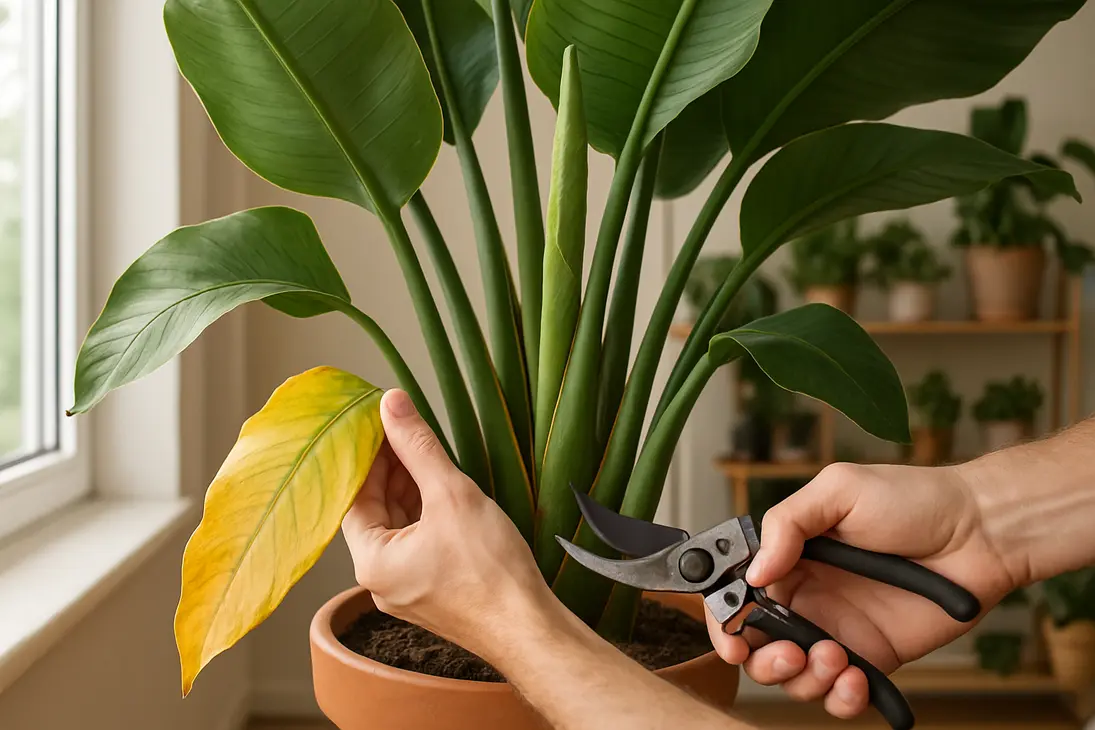
Prune leaf stalks that are yellow, soft, broken, or persistently collapsing. Use clean, sharp scissors or pruners and cut the stalk as close to the soil surface as possible without digging into nearby rhizomes.
Do not cut through a firm green stalk merely because it arches outward. Remove it only if you want to reduce the plant’s width or if it disrupts the balance of the plant.
If a stalk is soft at the base, remove it promptly. Then inspect the moisture level and consider unpotting the plant if several stalks are affected. Rot can continue below the surface even after damaged growth is removed.
Repot a Rootbound or Unstable ZZ Plant Carefully
Repot when the plant is physically too large for its container, has unstable roots, or needs inspection after overwatering. Choose a pot only modestly larger than the existing root mass, with drainage holes and a heavier or wider base if toppling is the issue.
Work gently:
- Slide the plant from the pot and loosen only soil that falls away easily.
- Inspect the rhizomes and roots. Healthy rhizomes are firm; rotten areas are soft, dark, or hollow.
- Cut away clearly rotten material with clean tools.
- Place the plant at its previous depth in fresh, airy mix.
- Fill around the root mass without compressing the soil heavily.
- Wait briefly before watering if roots or rhizomes were cut, then resume careful watering once the mix has had time to settle.
ZZ plants can be slow to resume growth after repotting. That is normal. Avoid repeatedly moving, dividing, or repotting the plant in an attempt to make it immediately upright.
Keep Rhizomes Just Below the Soil Surface
When repotting, keep the rhizomes just below the soil surface rather than burying them deeply. This helps avoid holding unnecessary moisture around them and allows you to notice upward pressure as the plant grows.
Cover them lightly enough that the plant is stable, but do not mound several inches of soil over the crown. If exposed rhizomes make the plant unstable, use a slightly deeper but still well-draining potting setup rather than packing dense soil around them.
Prevent Future Leaning and Toppling
A ZZ plant is most likely to remain upright when its care is simple and consistent:
- Give it bright, indirect light rather than a permanently dark corner.
- Turn the pot periodically so growth develops evenly.
- Water only after the mix has dried substantially.
- Use a pot with drainage and a free-draining mix.
- Choose a broad, stable container for a tall or heavy plant.
- Keep fertilizer light and avoid trying to force faster growth.
- Repot only when crowding, instability, or poor soil structure makes it necessary.
- Remove damaged stalks rather than trying to prop up rotting tissue.
A mature ZZ plant may always have a graceful outward spread. That is part of its natural habit. The best sign that your plant is thriving is firm, upright new growth from stable, healthy rhizomes.
Conclusion
To help a ZZ plant stand upright, first distinguish natural mature arching from true flopping. A plant that is firm, green, and evenly shaped may simply be carrying heavy, mature growth. Sudden collapse, yellowing, soft stalks, or a loose root ball point to a problem with moisture, drainage, light, or overcrowded rhizomes.
Improve conditions before reaching for stakes: give the plant brighter indirect light, rotate it regularly, let the potting mix dry thoroughly, and use a stable pot with good drainage. Stakes can protect a healthy leaning stalk temporarily, but healthy roots and balanced growth are what keep a ZZ plant upright in the long term.
FAQ
Why is my ZZ plant leaning to one side?
The most common reason is uneven light. ZZ plants gradually grow toward the brightest direction, so stalks nearest a window may lean outward while the shaded side remains sparse. Rotate the pot regularly and move it to brighter indirect light if the growth is long and stretched.
If the plant is loose in the soil, suddenly collapsing, or showing yellow and soft stalks, check for overwatering and root or rhizome rot instead.
Can I tie ZZ plant stems together to make them stand up?
You can loosely support one or two healthy, heavy stalks with soft ties and a stake, but avoid binding the entire plant into a tight bundle. Tying all the stalks together does not fix low light, overwatering, or root problems, and tight ties can damage the stalks.
Use support as a temporary measure while improving light, watering habits, or pot stability.
Will a ZZ plant straighten after moving it to better light?
Existing bent stalks may not fully straighten, especially if they are mature and heavy. Better light mainly improves future growth, which should emerge shorter, sturdier, and more upright.
Rotate the pot every week or two after moving it so new stalks receive light from all sides.
Should I repot a ZZ plant that is falling over?
Repot if the plant is rootbound, its pot is too light or narrow to support it, rhizomes are pushing the plant upward, or you suspect root rot. Use a stable pot with drainage that is only modestly larger than the root mass.
If the roots are healthy and the plant is simply top-heavy, placing its current nursery pot inside a heavier, wider cachepot may be enough.
You Might Also Like