Why Are My Plants Drying Out Every Day?
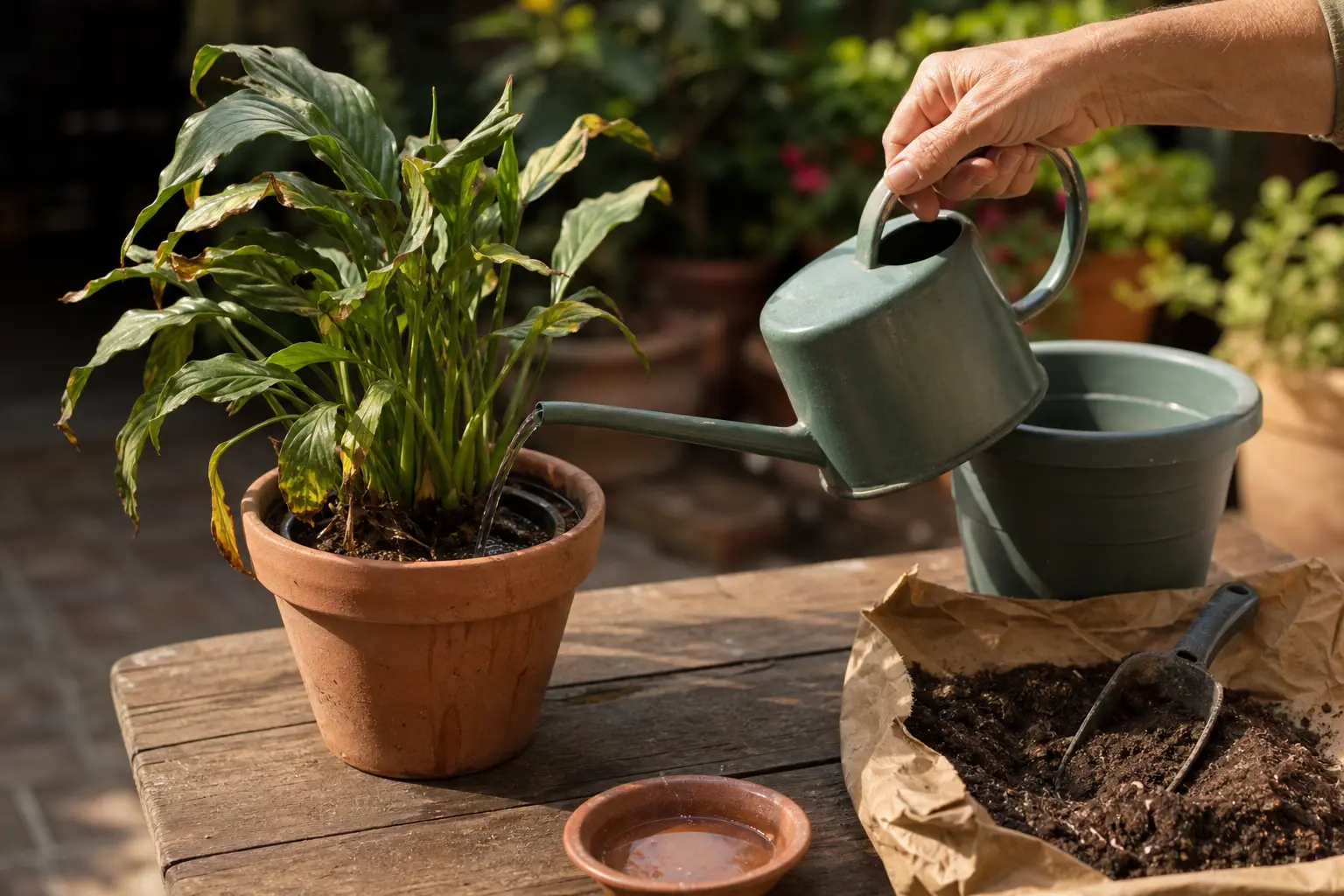
Plants that dry out daily usually cannot access enough usable water for their growing conditions. The cause may be simple underwatering, but it can also be a small pot, intense sun, wind, water-repelling potting mix, or unhealthy roots from constantly wet soil.
A wilted or crispy-looking plant does not always need more water. Overwatered plants with damaged roots can droop because they cannot absorb moisture properly. Check the soil and pot before changing your watering routine.
Check Whether the Plant Is Truly Too Dry
Before watering more often, determine whether the potting mix is dry through the root zone or only on the surface. Repeated light watering can leave deeper roots dry while the top layer stays damp.
Signs of underwatering
A genuinely underwatered plant may show several of these signs:
- The pot feels much lighter than usual.
- Soil is dry several inches below the surface.
- Leaves droop, curl, feel thin, or become crisp at the edges.
- Older leaves yellow, brown, or dry before dropping.
- The plant perks up within hours or a day after thorough watering.
- Soil pulls away from the sides of the pot.
Some plants, including peace lilies, basil, calatheas, and annual flowers, wilt quickly when dry. Others decline gradually with brown tips, slower growth, and leaf drop.
When soil has shrunk from the pot sides, water may run down the gap and out the drainage holes without wetting the root ball.
Signs of overwatering or waterlogged roots
Overwatering can also cause wilting. Roots sitting in saturated soil lack oxygen and may rot, making them unable to absorb water.
Look for these signs:
- Soil stays wet for many days after watering.
- The pot feels heavy, but leaves droop or yellow.
- Lower leaves yellow and fall first.
- Stems near the soil line are soft or dark.
- The mix smells sour or musty.
- Roots are brown or black, mushy, or foul-smelling.
- Fungus gnats are common around damp soil.
Do not keep watering a limp plant without checking the soil. Wet soil may call for better drainage, a root inspection, or fresh mix rather than another drink.
How to check soil moisture, roots, and drainage holes
Use a simple three-part check:
- Test below the surface. Push a finger, chopstick, or moisture probe into the mix. Check 1 to 2 inches down in small pots and deeper in larger ones. A wooden stick that comes out dark or damp indicates moist soil.
- Lift the pot. Learn its weight after watering and when it is ready for water. Pot weight is often more reliable than the soil surface.
- Inspect drainage. Confirm that the pot has open drainage holes and that excess water can escape. Check decorative outer pots, saucers, compacted mix, and roots blocking holes.
If watering seems correct but the plant keeps declining, slide it from the pot and inspect the roots. Healthy roots are generally firm. Soft, black, foul-smelling roots suggest rot, while dense circling roots indicate a root-bound plant.
Common Reasons Plants Dry Out So Quickly
Rapid drying is especially common in containers because they hold limited soil and lose moisture faster than garden beds.
Small pots and root-bound plants
Small pots have little moisture reserve, so a plant that was fine in cool weather may need daily watering in heat.
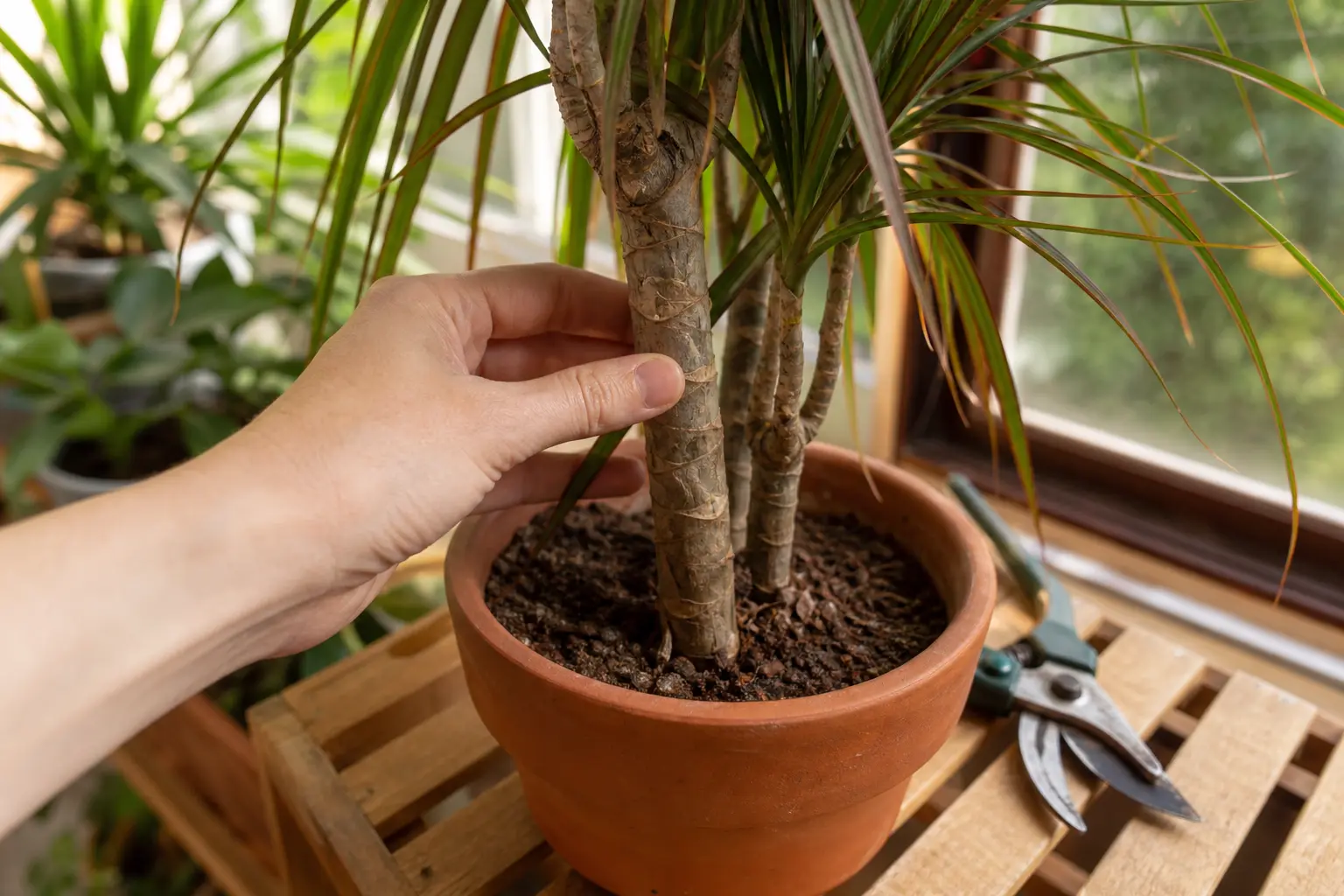
Root-bound plants dry even faster because roots occupy most of the pot, leaving little mix to hold water. Water may rush through without soaking the root ball, and roots near the pot wall can overheat.
Signs include:
- Roots growing from drainage holes
- Thick roots circling inside the pot
- Unusually rapid drying after thorough watering
- Wilting soon after watering
- A root ball that keeps the pot’s shape when removed
Bright sun, heat, wind, and low humidity
Bright light, heat, and dry air increase water loss through leaves. Afternoon sun can be particularly harsh when reflected from walls, paving, windows, or fencing.
Wind also dries leaves and potting mix rapidly. Hanging baskets, balcony planters, and patio vegetables often need more water than sheltered plants in the ground.
Indoors, heating, air conditioning, radiators, and hot windows can have similar effects. Low humidity may contribute to brown edges on sensitive houseplants, but misting rarely fixes a root-zone watering problem.
Fast-draining soil or hydrophobic potting mix
Chunky or gritty mixes are useful for succulents, orchids, and plants that dislike wet roots, but they may dry too quickly for thirsty plants in small or sunny pots.
Old potting mix can become hydrophobic, meaning it repels water after drying completely. Water may run down the pot sides while the center of the root ball stays dry. Peat-heavy mixes are especially likely to shrink and repel water.
Water hydrophobic soil slowly in stages, or bottom-water briefly so the mix has time to absorb moisture.
Container material, pot size, and exposed roots
Unglazed terracotta loses moisture through its sides and usually dries faster than glazed ceramic or plastic. Dark pots heat up in direct sun, metal pots can become very hot, and hanging baskets dry quickly because air circulates around them.
Shallow planters also hold less water than deeper containers. Cover exposed roots with fresh potting mix if appropriate, but do not bury the crown or stem base deeper than before.
Drainage problems and pots sitting in water-filled saucers
Poor drainage can make a plant appear dry because waterlogged roots cannot supply moisture to the leaves.
Do not leave most containers standing in water-filled saucers for long. Also check cachepots, which may hide water collecting beneath the nursery pot.
How to Water Plants Without Causing Root Problems
The goal is to thoroughly wet the root zone, then let the mix dry to the level appropriate for that plant before watering again.
Water deeply until excess drains from the pot
When the soil is dry enough to water, pour slowly until a little drains from the holes. If water rushes through very dry soil, pause briefly and water again.
Thorough watering moistens more of the root zone and helps flush accumulated mineral salts. Avoid frequent tiny sips, which often wet only the surface and encourage shallow roots.
For garden beds, water slowly enough for moisture to soak in rather than run off. Soil checks are more useful than following a fixed watering time.
Empty saucers and clear blocked drainage holes
Let pots drain freely and empty saucers after about 15 to 30 minutes unless a particular plant requires standing water.
If a pot drains poorly:
- Clear blocked drainage holes.
- Use a pot with actual holes.
- Replace dense, compacted potting mix.
- Raise outdoor pots slightly if holes sit flat against a patio.
- Remove pebble layers that take up root space.
Drainage holes are essential, but even a pot with holes can stay too wet in compacted soil.
Adjust watering frequency for indoor and outdoor plants
There is no universal schedule. A plant may need weekly watering in winter and daily attention during a heatwave.
| Plant type | General soil check before watering |
|---|---|
| Succulents and cacti | Let most of the mix dry |
| Many common houseplants | Water when the top portion has dried |
| Herbs, vegetables, flowering annuals | Keep evenly moist, not saturated |
| Moisture-loving plants | Do not let the root zone dry fully |
Check sunny, windy containers often. Check low-light indoor plants less frequently. Check the soil regularly, but water only when needed.
When a dry potting mix needs to be rewetted slowly
If water runs straight through a dry pot, try one of these methods:
- Add a little water, wait 10 minutes, then water slowly again.
- Set the pot in a shallow tray of water for 15 to 30 minutes, then drain it.
- Use a narrow-spout can to water gradually.
- Loosen the top inch of dry mix gently.
Do not soak the pot for hours. The aim is to rewet the root ball, not leave roots submerged.
How to Revive a Plant That Keeps Drying Out
A plant that repeatedly dries out needs both immediate rehydration and a correction to the underlying cause.
Rehydrate an underwatered plant
Move the plant out of hot direct sun and water slowly until the mix is evenly moist and excess drains out. If the mix is hydrophobic, use a slow rewetting method.
Remove fully crisp leaves, but leave limp green leaves because they may recover. Do not fertilize a severely dehydrated plant until it resumes normal growth.
Treat root rot or compacted, constantly wet soil
If the soil is wet and the plant is wilting, stop watering and inspect the roots. Trim clearly mushy, blackened, or decaying roots with clean scissors.
Repot into a clean pot with drainage holes and fresh mix suited to the plant. Choose a pot only large enough for the remaining healthy roots; an oversized pot can hold too much wet soil.
Water enough to settle the new mix, then let it dry appropriately before watering again. Recovery may be slow while the plant regrows roots.
Repot a root-bound plant into an appropriately sized container
For most houseplants, choose a pot about 1 to 2 inches wider in diameter than the old one. A much larger pot may stay wet too long.
Loosen a few circling roots before repotting and use fresh mix appropriate to the plant. A larger container will usually dry more slowly, so adjust watering accordingly.
Move the plant away from harsh heat or intense afternoon sun
Move plants away from hot glass, radiators, and air-conditioning vents. Outdoor pots may benefit from morning sun and afternoon shade during hot weather.
If containers must remain in full sun, group pots to reduce wind exposure, use larger light-colored containers, and consider temporary shade cloth during exceptional heat.
Prevent Plants From Drying Out Every Day
A sustainable routine depends on the roots, pot, conditions, and season rather than a fixed watering amount.
Use a moisture-retentive but well-draining potting mix
A good mix holds enough moisture while retaining air spaces for roots. Many houseplants and container flowers do well in quality all-purpose mix amended with perlite, bark, or compost.
Avoid dense garden soil in pots. It often compacts, drains poorly, and restricts root oxygen.
Choose the right pot size and material
Choose a pot that gives roots room without being dramatically oversized. A slightly larger container can offer a better moisture reserve for thirsty plants.
Plastic and glazed pots usually retain water longer than terracotta. Terracotta remains useful for plants that prefer drying between waterings.
Add mulch to outdoor containers and garden beds
A 1- to 2-inch layer of fine bark, leaf mold, straw, or similar mulch reduces evaporation. Keep mulch away from stems and crowns.
Mulch is especially useful for vegetables, annuals, shrubs, and large sunny containers, though it will not solve a severely root-bound plant or undersized pot.
Monitor plants more often during hot, bright, or windy weather
Check containers early in the day during heatwaves, dry spells, and windy weather. Morning watering helps plants face the hottest hours with adequate moisture.
Do not water automatically every day because it is hot. Some plants will dry daily, while others nearby may not.
Adjust care as light, temperature, and growth change
Plants use more water when actively growing, flowering, fruiting, or receiving stronger light. They use less in lower winter light and cooler temperatures.
Reassess watering whenever a plant is repotted, moved, exposed to different light, or placed in a new potting mix.
Conclusion
Plants drying out every day are usually reacting to their pot, conditions, watering method, or root health. Small root-bound containers, hot sun, wind, terracotta, and fast-draining soil can cause genuine rapid drying. Wet soil, poor drainage, and root rot can cause similar-looking wilt.
Check soil below the surface, lift the pot, and inspect drainage before watering. Water thoroughly when needed, let excess drain, and adjust the setup if the plant cannot hold moisture for a reasonable time.
FAQ
Why does my potted plant dry out faster than plants in the ground?
Pots hold a limited amount of soil and water. Their sides are exposed to warm air and sun, increasing evaporation, and they heat up faster than garden beds. Small, dark, terracotta, and hanging containers dry especially quickly.
Should I water a plant every day if the soil dries out daily?
Possibly, especially for outdoor containers, hanging baskets, vegetables, and flowering annuals in hot weather. Confirm that the root zone is dry, not only the surface. Also consider whether the plant is root-bound, undersized for its pot, exposed to too much heat or wind, or growing in overly fast-draining mix.
Can an overwatered plant look dry and wilted?
Yes. Waterlogged roots may rot or become oxygen-starved, preventing water movement to the leaves. A heavy pot, sour-smelling soil, and soft dark roots suggest overwatering rather than drought.
How do I know whether my pot has enough drainage?
A suitable pot has one or more open holes at the bottom so excess water can escape. Water should drain out after watering. Check that holes are not blocked by compacted soil, roots, or a tightly pressed saucer, and do not leave the pot standing in collected water for long.
You Might Also Like