Do Hardy Gladiolus Bulbs Need to Be Dug Up in Zone 5?
Short Answer for Zone 5 Gardeners
In zone 5, true hardy gladiolus bulbs do not always need to be dug up, but it depends on what kind of gladiolus you have.
Gardeners often say “gladiolus bulbs,” but gladiolus grow from corms, not true bulbs. That detail matters because some corms are hardy enough to overwinter, while others are not.
The practical answer:
- Hardy gladiolus types rated for zone 5 can often stay in the ground if soil drains well.
- Standard florist gladiolus, the tall summer types sold in mixed bags, are usually not reliably hardy in zone 5 and are safest if lifted.
- Even hardy varieties can fail in cold, wet soil.
- Mulch, planting depth, snow cover, and microclimate can affect survival.
If you are wondering about digging up Hardy gladiolus bulbs in zone 5, first confirm the variety. If it is truly rated hardy to zone 5 and planted in a well-drained bed, leaving it in place is reasonable. If the variety is unknown, expensive, or growing in heavy wet soil, dig it up.
Hardy Gladiolus vs. Regular Gladiolus
“Hardy gladiolus” and “regular gladiolus” are often sold side by side, but they do not perform the same in winter.
The common gladiolus most people picture is the tall, formal florist-style type with large flowers on strong spikes. These are often Grandiflora hybrids or similar summer-flowering types. In zone 5, they are commonly treated like dahlias or cannas: grown in summer, lifted in fall, stored frost-free, and replanted in spring.
Hardy gladiolus are usually smaller-flowered or species-influenced types selected for better cold tolerance. They may have looser flower spikes and a more natural look in borders. Some dwarf or nanus-type gladiolus cultivars are sold as hardy to zone 5.
The confusing part is labeling. A package may say “hardy gladiolus,” but that term is not always used consistently. One seller may mean genuinely cold-hardy; another may simply mean tough or easy to grow.
A USDA hardiness zone rating tells you the lowest winter temperatures a plant is expected to tolerate under average conditions. It does not guarantee survival in every garden. Cold, wet clay can kill corms that might survive in sandy, well-drained soil.
| Type of gladiolus | Typical winter treatment in zone 5 | Main concern |
|---|---|---|
| True hardy gladiolus rated to zone 5 | Often left in ground with drainage and mulch | Winter wet, freeze-thaw cycles |
| Regular florist gladiolus | Usually lifted and stored | Cold injury and rot |
| Unknown mixed gladiolus corms | Safer to lift | Uncertain hardiness |
| Rare or expensive cultivars | Safer to lift, or test only a few outdoors | Risk of loss |
If you bought a bag of “glads” without a cultivar name or hardiness rating, assume they are not reliably hardy in zone 5 unless the label clearly says otherwise.
Check the Variety Before Deciding
Before deciding whether to leave gladiolus in the ground, look for the exact cultivar, species, or series name. Do not rely only on the word “hardy.”
Check the package, tag, nursery listing, or receipt for:
- Cultivar name
- Species or group, such as dwarf, nanus, or species-type gladiolus
- USDA hardiness zone range
- Planting depth and overwintering instructions
- Notes such as “lift in cold climates” or “hardy with mulch”
If the label says hardy in zones 5–8, you have a reasonable case for leaving the corms in the ground. If it says zones 8–10, zones 7–10, or gives no winter hardiness information, dig them up in zone 5.
Also remember that zone 5 varies. A protected zone 5b garden with reliable snow cover may overwinter more borderline plants than a windy zone 5a garden with little snow and repeated freeze-thaw cycles.
When You Can Leave Hardy Gladiolus in the Ground
You can leave hardy gladiolus in the ground in zone 5 when the variety is truly rated for your climate and the planting conditions reduce winter rot.
The best situation looks like this:
- The variety is listed as hardy to zone 5.
- The corms are planted at the recommended depth.
- The soil drains well after rain.
- The bed is not a low spot where water collects.
- The planting is somewhat protected from winter exposure.
- Mulch is applied after the ground cools.
- The area has dependable snow cover or other insulation.
Drainage is the key factor. Gladiolus corms can tolerate cold better when dormant and relatively dry. They are much less likely to survive if they spend winter in saturated soil. Cold plus wet is harder on them than cold alone.
Raised beds, slopes, and amended borders give hardy gladiolus a better chance. Heavy clay can work if improved and not soggy, but clay in a low, wet site is risky.
Microclimate also matters. A bed near a foundation, stone wall, fence, evergreen hedge, or south-facing exposure may be a little warmer and less exposed than an open area. That small difference can help borderline corms survive.
Do not be surprised if hardy gladiolus are inconsistent in zone 5. Strong return one year and weak return after a wet, icy winter is common with marginally hardy plants.
How to Improve Winter Survival
If you want to leave hardy gladiolus in the ground, start with good conditions.
Plant at the recommended depth.
Most gladiolus corms are planted about 4 to 6 inches deep, depending on label instructions. In zone 5, planting toward the deeper end of the recommended range can help buffer temperature swings and reduce heaving. Do not plant much deeper than recommended in heavy soil, because that can slow emergence and increase rot risk.
Choose a well-drained site.
If water stands in the bed after rain, choose another spot. Raised beds, berms, and amended borders are better than low pockets. Compost can improve heavy soil, but it will not make a poorly drained site safe if it stays wet all winter.
Mulch after the ground cools.
Apply loose winter mulch after the soil has cooled and the plants are dormant. Shredded leaves, pine needles, straw, or weed-free loose mulch can moderate freeze-thaw cycles. In zone 5, about 2 to 4 inches is usually enough. Avoid dense, wet mulch that mats down and holds moisture.
Mark the planting spot.
Hardy gladiolus disappear in winter. Use a label, small stake, or garden map so you do not dig into them in spring.
Let foliage feed the corms.
After flowering, leave the leaves until they yellow naturally or frost ends the season. Cutting foliage too early can weaken next year’s growth.
Consider a trial approach.
If unsure, leave a few corms in the ground and lift the rest. This shows what works in your garden without risking the entire planting.
When It’s Safer to Dig Them Up
Digging up gladiolus corms is safer in zone 5 when there is doubt about hardiness or site conditions.
Strongly consider lifting them if:
- The variety is unknown.
- The package did not clearly say hardy to zone 5.
- They are standard florist gladiolus.
- Your soil is heavy clay or wet in winter.
- The bed is in a low spot.
- You have lost gladiolus to rot before.
- The planting is exposed to harsh wind with little snow cover.
- The corms are rare, sentimental, or expensive.
- You want the most reliable way to keep them for next year.
For many gardeners, the decision is about risk. If you planted a small inexpensive group and enjoy experimenting, leaving them in the ground is fine. If you invested in a special cultivar or want dependable flowers next year, lifting gives more control.
There is no harm in lifting hardy gladiolus if you prefer certainty. A hardy rating means they may survive outdoors; it does not mean they must be left outdoors.
Signs Your Gladiolus May Not Survive In-Ground
Your garden history is one of the best guides. If you have tried leaving gladiolus in the ground and they failed, look for patterns.
Warning signs include:
- Corms dug in spring are soft, mushy, or foul-smelling.
- The planting area stays wet after snowmelt.
- Only a few weak shoots emerge in spring.
- Corms return one year but disappear after a wet winter.
- The bed has heavy clay that freezes and thaws repeatedly.
- Plants grew poorly and had little foliage to rebuild the corm.
- You find hollow, collapsed, or moldy corms when digging.
A corm that rots in winter is usually not saved by extra mulch. Mulch insulates, but it can also hold moisture if too dense. If winter wetness is the problem, better drainage or lifting matters more.
If hardy gladiolus return but weaken each year, try moving them to a warmer, better-drained location, planting slightly deeper within the recommended range, or lifting and storing them instead.
How to Dig, Store, and Replant Gladiolus Corms
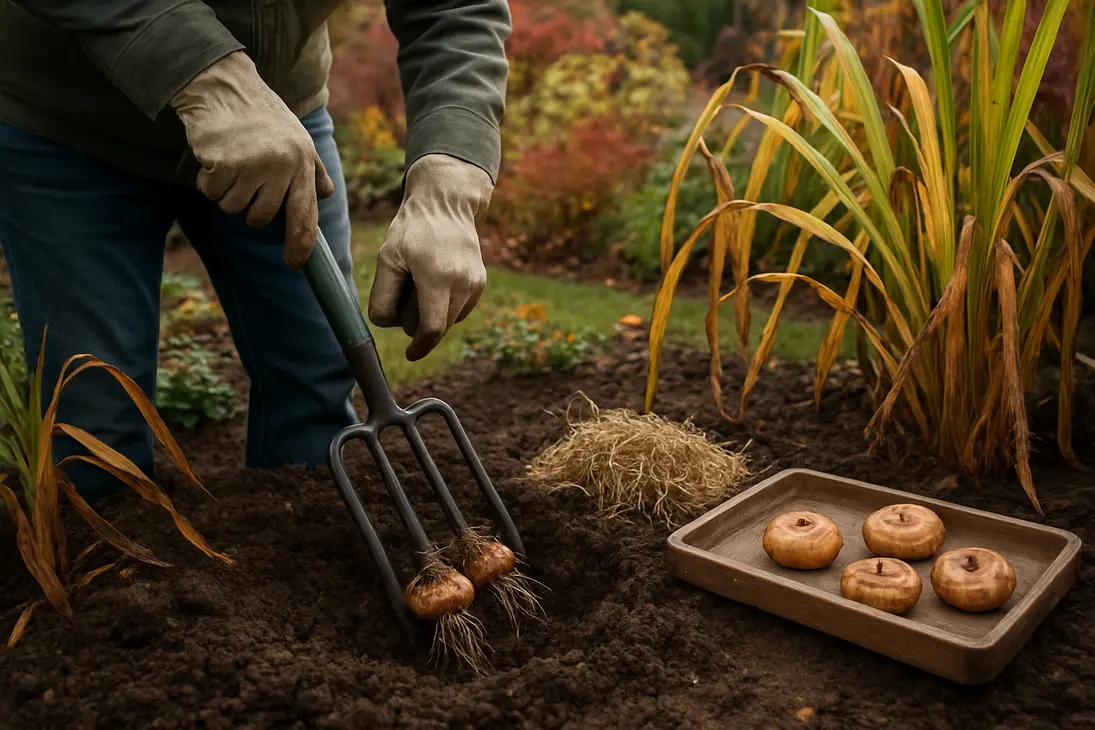
If digging up hardy gladiolus bulbs is the safest option, the process is simple. Let the corms mature, lift before the ground freezes, dry them well, and store them cool but above freezing.
A basic schedule:
-
Let the foliage remain after bloom.
Do not cut gladiolus leaves down immediately after flowering. They continue feeding the replacement corm. -
Wait until foliage yellows or frost ends growth.
In zone 5, many gardeners lift after the first light frost browns the foliage, but before the ground freezes hard. -
Dig carefully.
Use a garden fork or spade several inches away from the stem. Digging too close can slice the main corm or small cormels. -
Shake off loose soil.
Remove excess soil gently. Avoid washing unless the corms are very muddy, and dry them thoroughly if rinsed. -
Cure in a dry, airy place.
Place corms in a single layer in a warm, dry, well-ventilated spot out of harsh sun. Let them cure until the surfaces are dry and papery, often one to three weeks. -
Clean and sort.
Once dry, remove loose soil, dried roots, and any rotten or damaged corms. The old mother corm may be shriveled beneath the new corm and can usually be separated after curing. -
Store cool and dry.
Keep corms in breathable storage, away from freezing temperatures and excess humidity. -
Replant in spring.
Plant after danger of hard frost has passed and the soil has warmed.
The two biggest storage mistakes are keeping corms too wet, which causes rot, and letting them freeze.
Winter Storage Tips
Good storage is cool, dry, dark, and breathable. Gladiolus corms are dormant, but still living. Do not seal them in wet plastic or leave them where they freeze.
Suitable storage options include:
- Paper bags with ventilation holes
- Mesh bags
- Open cardboard boxes
- Trays lined with newspaper
- Dry peat, dry wood shavings, vermiculite, or another dry packing medium
If using a dry medium, keep it dry, not damp. Nestle the corms so they are separated but not packed in moisture.
A good storage place might be a frost-free basement area, attached garage, cool closet, or insulated storage room. Aim for cool and above freezing. Avoid warm rooms that encourage early sprouting and places that freeze.
Check stored corms occasionally through winter. Discard any that become soft, moldy, or foul-smelling. Slight shriveling by late winter is common, but corms should not be completely dried out and brittle.
Do not store gladiolus corms with wet leaves attached. Trim foliage after lifting, cure the corms, and store only when dry.
Replanting in Spring
Replant gladiolus in spring after danger of hard frost has passed and the soil has begun to warm. In zone 5, this is often mid to late spring, but local conditions matter more than the calendar. Cold, wet soil delays growth and increases rot risk.
Plant corms with the pointed growing tip facing up. If the shape is unclear, place the flatter root side downward.
General planting guidelines:
- Depth: about 4 to 6 inches deep, or according to the label
- Spacing: about 6 inches apart for many garden plantings
- Watering: water after planting, then keep evenly moist once growth begins
- Sun: full sun gives strongest stems and best flowering
- Support: tall florist types may need staking, especially in wind
Soaking gladiolus corms before planting is optional. If corms are very dry or slightly shriveled after storage, a short soak may help. Do not soak firm, healthy corms for long periods, and do not plant them into cold, saturated soil afterward.
For a longer bloom season, plant batches every week or two for several weeks in spring. This is especially useful for regular florist gladiolus.
Conclusion
In zone 5, true hardy gladiolus can often be left in the ground if they are planted in well-drained soil, set at the proper depth, protected with winter mulch, and grown in a favorable microclimate. They do not automatically need to be dug up every fall.
Standard florist gladiolus are different. Most are not reliably hardy in zone 5 and are safest when lifted, cured, stored cool and dry, and replanted in spring.
If you know the variety is hardy to zone 5 and the bed drains well, leaving it in place is reasonable. If the variety is uncertain, the soil is wet, or the corms matter to you, digging them up is the safer choice.
FAQ
Do all gladiolus bulbs have to be dug up every fall in zone 5?
No. True hardy gladiolus varieties rated for zone 5 may survive winter in the ground, especially in well-drained soil with mulch. Regular florist gladiolus are usually not reliably hardy in zone 5 and should be dug up if you want to save them.
If you are not sure which type you have, treat them as tender and lift them in fall.
What happens if I leave regular gladiolus in the ground over winter?
They may die from freezing, rot in wet soil, or fail to emerge in spring. In a mild winter or protected spot, a few may survive, but it is not dependable in zone 5.
If you want to experiment, leave a few in the ground and store the rest.
Can I replant gladiolus corms next spring after storing them?
Yes. Gladiolus corms can be lifted in fall, cured, stored over winter, and replanted in spring. Keep them cool, dry, and above freezing. Check them occasionally and discard any that become soft or moldy.
Replant after frost danger has passed and the soil has warmed.
How deep should I plant gladiolus in zone 5?
Most gladiolus corms are planted about 4 to 6 inches deep, depending on corm size, soil type, and variety instructions. In zone 5, planting toward the deeper end of the recommended range can help with stability and winter protection for hardy types.
In heavy clay, avoid planting too deep or in wet soil, because that can increase rot. For overwintering hardy gladiolus, good drainage is just as important as depth.
You Might Also Like