How Can Farmers Grow Vines Successfully in Paraguay?
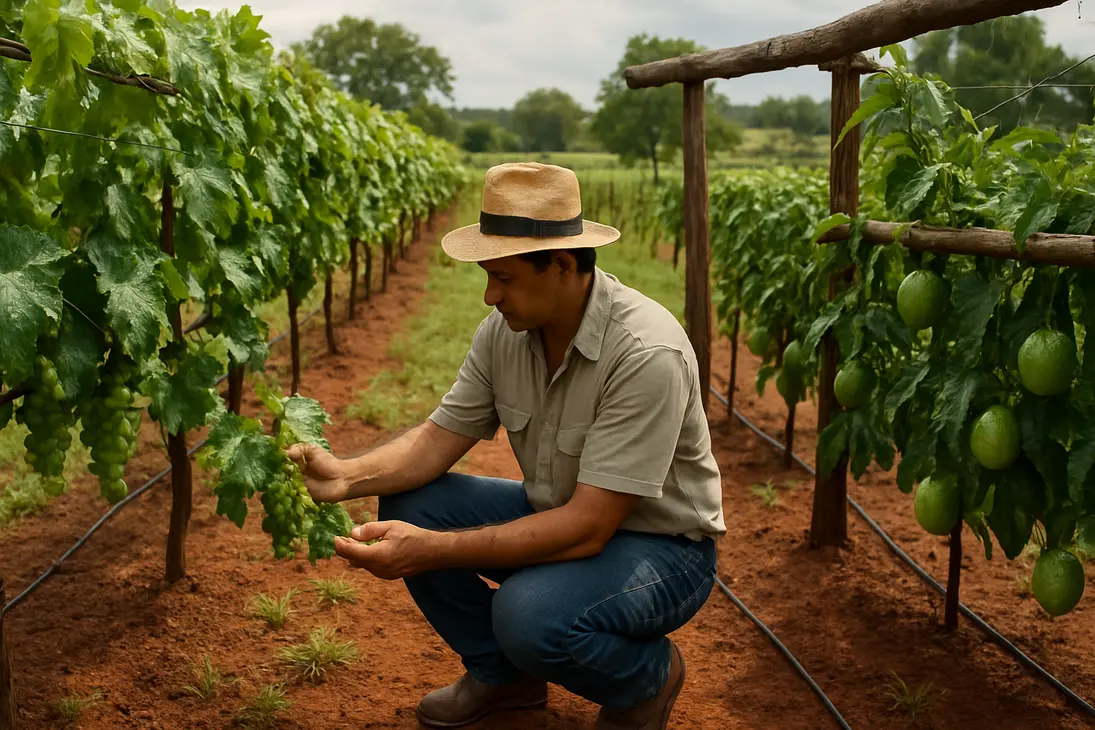
Farmers can succeed with growing vines in Paraguay by designing around climate. Paraguay is warm, often humid, and has short or weak winters for temperate fruit vines. Grapes are possible, but variety choice, pruning, dormancy management, disease prevention, and harvest timing matter more than in cooler regions.
For grapevines, success depends on low-chill, heat-tolerant cultivars, open canopies, a managed rest period, and careful disease control. Tropical vines such as passion fruit, chayote, dragon fruit, cucumbers, gourds, and Malabar spinach often fit the climate more naturally, though they still need strong trellising, balanced nutrition, pollination, and monitoring.
Paraguay’s Climate Challenge for Vine Crops
Paraguay’s climate encourages strong vegetative growth, but vines must also flower, set fruit, ripen, mature canes, and recover. Warmth and rainfall can produce large canopies while increasing disease, weak dormancy, fruit splitting, and uneven harvests.
Why Dormancy Matters for Grapevines
Temperate grapevines normally rest during winter after leaf fall, then break buds evenly in spring. In Paraguay, winters may be too warm or short for reliable dormancy, causing:
- uneven budbreak
- weak or delayed shoots
- fewer fruitful buds
- irregular flowering
- uneven ripening
Farmers often need to encourage a short rest period through pruning timing, water control, nutrition management, and sometimes defoliation. The goal is a clear cycle: growth, rest, budbreak, fruiting, and recovery.
Heat, Humidity, and Fungal Disease Pressure
Warm, humid air favors mildew, rot, anthracnose, and other leaf and fruit diseases. Dense canopies hold moisture after rain or dew, while heavy rain near harvest can split berries, dilute flavor, and increase rot.
Farmers should ask not only whether a vine can grow, but whether it can flower, ripen, and be harvested cleanly. Resistant varieties, open trellises, good spacing, and prompt harvesting are essential.
Regional Differences Within Paraguay
Paraguay is not uniform. Eastern and southeastern areas have better rainfall but higher humidity and disease pressure. Southern areas may have slightly cooler winters, though chill is still limited. The Chaco is hotter and drier in some periods, with greater irrigation demand and possible water-quality concerns.
A slightly elevated, well-drained field with good airflow is often better than a rich lowland that stays wet. Avoid standing water, poor air movement, and shade from nearby trees.
Choosing Vine Types and Varieties That Fit Paraguay
Variety choice is the first major filter. Farmers should prioritize vines that tolerate heat, need little winter chill, and resist disease. Famous cool-climate varieties may grow leaves in Paraguay but fail to produce consistent, marketable fruit.
Low-Chill and Heat-Tolerant Grape Varieties
For grapes, farmers should investigate cultivars known for low chill requirement, warm-climate performance, and disease tolerance. Useful categories include:
- Vitis labrusca and labrusca hybrids, such as Isabella-type or Niagara-type grapes
- Muscadine grapes, where planting material is available and markets accept the fruit
- Tropical-adapted table grapes, selected for low-chill areas
- Disease-tolerant wine hybrids, if the goal is processing
Be cautious with premium temperate cultivars such as Cabernet Sauvignon or Chardonnay. They may grow vigorously but still struggle with dormancy, disease, ripening, or fruit quality.
Trial several cultivars before planting a large block. Compare budbreak, disease, berry splitting, harvest timing, flavor, sugar-acid balance, and buyer acceptance.
Rootstocks for Soil, Heat, and Disease Resistance
Rootstock choice can improve grapevine survival and balance where soils create drought, nematode, fertility, heat, or drainage stress. It cannot fix a poor site or unsuitable cultivar.
When selecting rootstocks, consider drainage, soil pH, nematode pressure, drought tolerance, vigor control, and compatibility. In fertile, humid sites, overly vigorous rootstocks can worsen shading and disease. In drier areas, drought tolerance may matter more. Local nursery and field experience are important because performance is site-specific.
Tropical Vines That Are Easier in Paraguay
Many farmers may find tropical or subtropical vines more dependable than grapes because they match Paraguay’s warmth and do not rely on cold dormancy.
| Vine crop | Main advantage | Key need |
|---|---|---|
| Passion fruit | Fast growth and warm-climate fit | Strong trellis, pollination, disease control |
| Chayote | Vigorous production | Large support, regular harvest |
| Dragon fruit | Heat tolerance and niche value | Posts, drainage, sunburn management |
| Cucumbers and gourds | Quick seasonal crops | Irrigation, pollination, mildew control |
| Malabar spinach | Heat-tolerant leafy crop | Frequent picking |
| Sweet potato | Excellent warm-climate crop | Soil preparation and harvest timing |
These crops still have risks. Passion fruit can suffer from viruses, root problems, and poor set. Chayote can overwhelm weak supports. Cucurbits often face mildew and insects. Still, they generally fit Paraguay’s climate better than many temperate grapes.
Managing Dormancy, Pruning, and the Production Calendar
Grapevines in Paraguay often need active calendar management because farmers cannot rely on a cold winter to reset the vineyard. Pruning, nutrition, irrigation, and canopy control should guide vines through growth, rest, budbreak, flowering, fruiting, and recovery.
Creating a Short Rest Period
After harvest, vines need healthy leaves long enough to rebuild reserves, but they should not be pushed into endless soft growth. Too much nitrogen or irrigation after harvest can delay cane maturity and weaken the next crop.
A managed rest period may include:
- reducing nitrogen after the main growth phase
- limiting irrigation where rainfall is enough
- allowing canes to mature before pruning
- controlling weeds without damaging roots
- keeping leaves healthy enough for reserve storage
Water stress should be moderate. Severe stress weakens vines, while excess moisture encourages rank growth and disease.
Pruning to Encourage Uniform Budbreak
Pruning is one of the main tools for grape production in low-chill climates. In Paraguay, it is often done in winter or late winter, depending on region, variety, and desired harvest window.
Pruning too early may push shoots before conditions are favorable. Pruning too late may move harvest into hotter or wetter weather. Each farm should refine timing by tracking budbreak, flowering, disease, and harvest quality.
Pruning must also match the cultivar’s fruiting habit. Some grapes produce well on short spurs; others need longer canes.
Using Defoliation or Dormancy-Breaking Methods Carefully
Manual defoliation can help mark the end of a growth cycle, but it should not be done while canes are immature or vines are weak. Removing leaves too early reduces reserves and can hurt the next crop.
Chemical dormancy-breaking agents are used in some warm grape regions, but they involve safety, legal, and crop-risk issues. Use them only where registered, with trained applicators, protective equipment, and local technical guidance. Small growers should first focus on cultivar choice, pruning timing, irrigation control, and balanced nutrition.
Avoiding Overcropping in a Long Warm Season
Paraguay’s long warm season can tempt growers to carry too much fruit or repeated crops. Overcropping weakens vines, delays ripening, and increases disease.
Warning signs include small berries, delayed ripening, pale leaves, weak cane maturity, fruit rot, and poor bud fertility the next season. Young grapevines may need cluster thinning. Passion fruit and chayote need regular harvest and removal of tangled, aging growth.
Setting Up the Vineyard or Trellis System
A vine planting in Paraguay should be designed for airflow, drainage, sunlight, and easy access. In humid climates, the trellis is part of disease management, not just support.
Site Selection and Drainage
Choose full sun, good drainage, and steady air movement. Avoid shaded edges, valley bottoms, and areas where water stands after rain. Grapevines are especially sensitive to wet roots.
Before planting, check drainage after heavy rain, soil depth, compaction, irrigation access, wind direction, labor access, and nearby tree competition. Very fertile soil is not always an advantage because excess vigor means more pruning, shade, and disease pressure.
Trellis Design for Sunlight and Airflow
Trellis design depends on the crop. Grapes may use vertical shoot positioning, high cordon, divided canopy systems, or other structures suited to cultivar vigor. Passion fruit often performs well on strong T-trellises or overhead systems. Chayote and gourds need very sturdy support.
A good trellis should keep foliage and fruit off the ground, separate shoots for airflow, allow good coverage if sprays or biological controls are used, and make pruning and harvest practical. Crowding is a common mistake: a productive trellis is full but still open enough for workers to see and reach fruit.
Irrigation Without Waterlogging
Even in rainy areas, irrigation helps during establishment, dry spells, flowering, and fruit filling. The key is control. Vines need steady moisture, not saturated soil.
Drip irrigation is usually better than overhead watering because it keeps foliage drier. Irrigation should account for rainfall, soil type, vine age, and crop stage. Young vines need regular water until established. Mature grapevines often need less frequent irrigation, while passion fruit and cucurbits are more sensitive to moisture swings.
Soil Fertility and Mulching
Vines need balanced nutrition. Too little fertility limits growth and fruit size; too much nitrogen creates leaves instead of fruit.
Where possible, use soil testing. Nitrogen should support growth without excessive canopy density. Potassium is important for fruit development, calcium and magnesium balance affect vine health, and micronutrient problems may occur in depleted or high-pH soils.
Mulch helps conserve moisture and suppress weeds, but do not pile it against trunks or stems. In humid areas, wet mulch around the base can encourage rot and pests.
Common Problems When Growing Vines in Paraguay
Most vine failures come from combined stresses: unsuitable variety, excessive vigor, poor pruning, weak airflow, and disease pressure. Early correction is easier than rescuing a neglected planting.
Too Much Leaf Growth and Not Enough Fruit
Warm, fertile sites often produce vines that look healthy but fruit poorly. Common causes include too much nitrogen, excessive irrigation, shade, insufficient pruning, immature vines, unsuitable variety, or overly vigorous rootstock.
Reduce nitrogen, improve sunlight, prune correctly, and keep vines from sprawling. In grapes, shoot positioning and selective leaf removal around clusters can improve fruit quality. In passion fruit and chayote, renew old growth and keep the framework accessible.
Poor Pollination or Fruit Set
Poor fruit set may come from rain during flowering, very high temperatures, lack of pollinators, nutrient imbalance, water stress, or weak vines.
For insect-pollinated crops such as passion fruit and cucurbits, avoid insecticides during flowering when bees and other pollinators are active. Flowering plants nearby can help support beneficial insects. Hand pollination may work in small passion fruit plantings but is labor-intensive at scale.
In grapes, poor set may be linked to variety, excessive vigor, boron or zinc deficiency, rain during bloom, or weak reserves. Diagnose before adding fertilizer blindly.
Mildew, Rot, and Other Humidity-Related Diseases
Disease prevention is easier than rescue. Once rot develops inside a dense canopy, control is difficult.
Practical steps include:
- choosing resistant or tolerant varieties
- spacing plants properly
- pruning for airflow
- removing diseased material
- controlling weeds under the trellis
- avoiding overhead irrigation
- checking vines after rain
- harvesting promptly when fruit is mature
Farmers using fungicides should follow local regulations, labels, pre-harvest intervals, and resistance-management guidance. Repeating the same product class can reduce effectiveness.
Vines Competing for Light and Airflow
Vines compete strongly. If planted too close or allowed to climb over one another, they shade fruiting wood, reduce flowering, slow drying, and increase pests.
Spacing should match crop vigor, soil fertility, rootstock, trellis type, and equipment needs. Passion fruit and chayote need more space than many beginners expect. In vigorous grape sites, wider spacing or divided canopies may be better than tight planting.
A simple rule: if workers cannot see into the canopy or reach fruit easily, the vines are too dense.
Pruning Mistakes That Reduce Yield
Pruning errors can remove fruiting wood or leave too much weak growth. Different vines fruit differently, so one pruning style does not fit all.
Common mistakes include pruning grapes without knowing whether the variety needs spur or cane pruning, cutting too severely before vines are established, leaving too many buds on weak vines, pruning during disease spread without sanitation, letting young vines carry heavy crops, and treating passion fruit, chayote, and grapes the same way.
For tropical vines, pruning is usually about renewing old growth, managing size, removing disease, and keeping the trellis usable.
Conclusion
Vines can be grown successfully in Paraguay when farmers adapt to the climate. Grapevines need low-chill, heat-tolerant varieties, suitable rootstocks, careful pruning, open canopies, and a managed rest period because natural winter dormancy may be weak.
For many farms, tropical vines such as passion fruit, chayote, dragon fruit, cucurbits, and Malabar spinach may be easier than temperate grapes. Whatever the crop, the essentials are full sun, drainage, strong trellising, balanced nutrition, controlled irrigation, and airflow after rain.
The key is to manage vines for fruit, not just leaf growth.
FAQ
Can grapevines grow in Paraguay?
Yes. Grapevines can grow in Paraguay, but low-chill, heat-tolerant, disease-resistant cultivars are safer than many cool-climate grapes. The main challenges are weak dormancy, humidity, fungal disease, and rain near flowering or harvest.
How do farmers handle grapevine dormancy in Paraguay’s warm climate?
They encourage a short rest period by allowing canes to mature after harvest, reducing excess nitrogen, managing irrigation, and pruning during the cooler dry period. Defoliation or dormancy-breaking products require caution, legal approval, and technical guidance.
What is the best time to prune vines in Paraguay?
Grapevines are usually pruned in winter or late winter, depending on region, variety, and target harvest window. Tropical vines such as passion fruit and chayote are pruned mainly to remove old, tangled, diseased, or unproductive growth.
Which vines are easiest to grow in Paraguay?
Tropical and subtropical vines are generally easier than temperate grapes. Passion fruit, chayote, dragon fruit, cucumbers, gourds, Malabar spinach, and sweet potato fit warm conditions well, though they still need trellising, fertility, water management, pollination, and pest control.
You Might Also Like