What Temperature and Humidity Do Indoor Ivy Plants Need?
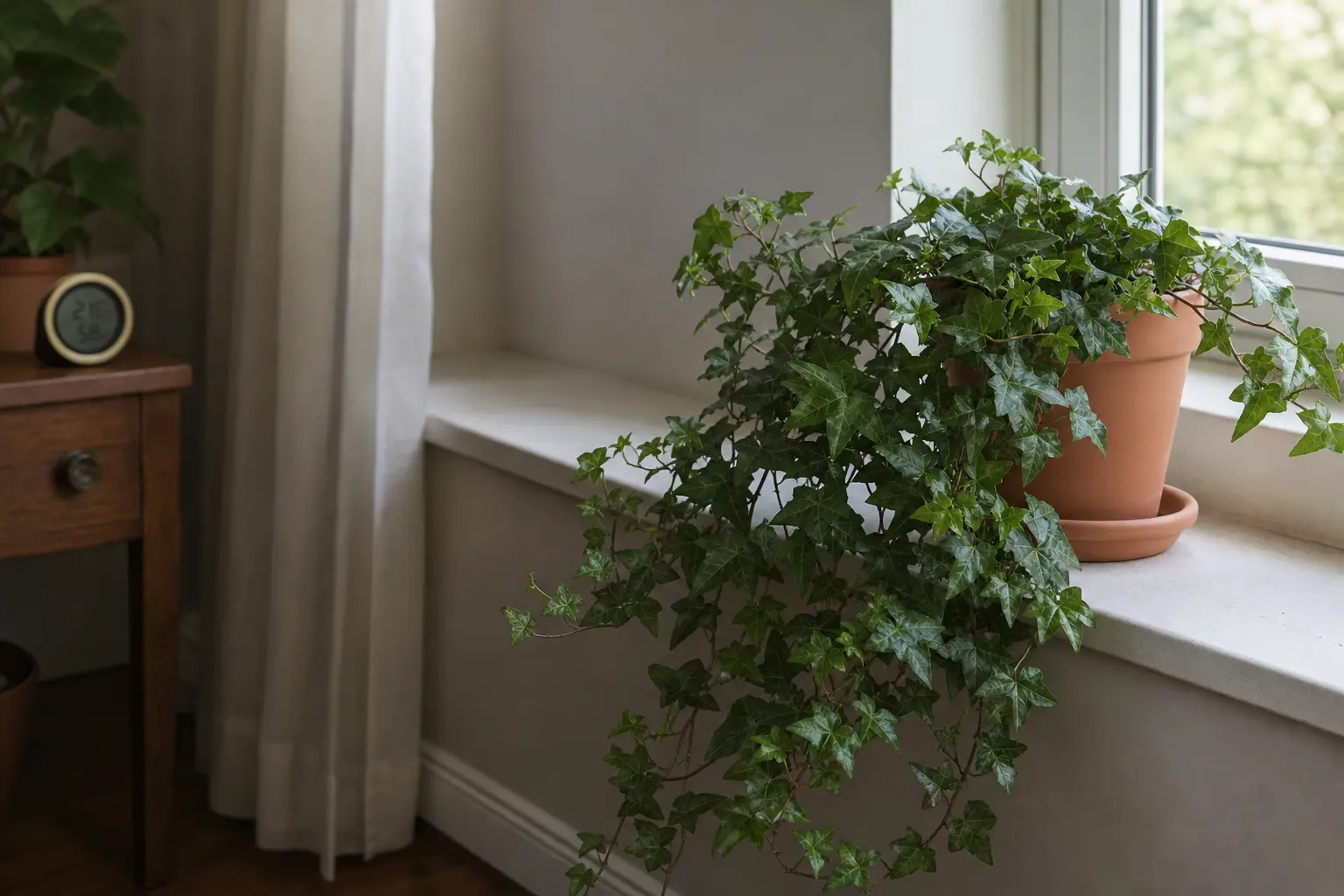
Indoor ivy grows best in conditions that are a little cooler and more humid than the average heated living room. English ivy (Hedera helix) and many of the trailing ivies sold as houseplants prefer moderate temperatures, gentle air movement, and humidity that does not stay persistently low.
For most homes, aim for daytime temperatures around 60–75°F (16–24°C), slightly cooler nights, and relative humidity of about 40–60%. Just as important as hitting an exact number is avoiding sudden swings: a plant that is repeatedly exposed to hot radiator air, cold drafts, or dry air-conditioning often struggles even when its average conditions seem reasonable.
Ideal Temperature Range for Indoor Ivy
Best daytime temperatures
Most indoor ivy plants are comfortable at normal, moderately cool room temperatures. A daytime range of 60–75°F (16–24°C) suits English ivy particularly well. Temperatures toward the cooler part of that range often encourage compact, healthy growth and help keep the foliage looking fresh.
Ivy can live in a room that occasionally reaches the upper 70s°F, but prolonged warmth is less ideal—especially if the air is dry. In a hot room, leaves lose moisture faster, soil dries unevenly, and spider mites become more likely. Variegated ivies may also become less vigorous if they are stressed by heat or low light.
Stable temperatures matter because ivy does not adjust well to repeated environmental shocks. Moving a plant between a warm living room and a chilly enclosed porch, for example, can lead to leaf drop even if neither location is extreme on its own.
Cooler nighttime conditions
A modest nighttime drop is beneficial for indoor ivy. Temperatures of roughly 50–65°F (10–18°C) at night are generally suitable, provided the plant is not sitting in a cold draft or against freezing glass.
Cooler nights resemble the conditions ivy experiences outdoors in temperate climates. They can also slow excessive moisture loss from foliage and reduce the strain caused by warm, dry central heating.
That does not mean an ivy plant needs to be kept in a cold room. A typical home that stays near 65°F overnight is perfectly acceptable. The goal is simply to avoid constantly warm conditions, particularly rooms that remain above 75°F day and night.
Temperature extremes to avoid
Indoor ivy is more tolerant of cool conditions than many tropical houseplants, but it is not immune to cold damage. Avoid exposing it to:
- Temperatures below about 45–50°F (7–10°C) for extended periods
- Frost, freezing windows, and unheated rooms in winter
- Hot air from radiators, fireplaces, space heaters, or forced-air vents
- Sustained temperatures above 80°F (27°C), especially in dry air
- Rapid shifts caused by open winter windows, exterior doors, or strong air-conditioning
Brief exposure to cool conditions may not harm an established ivy, but cold damage is more likely when the potting mix is wet. Roots in cold, saturated soil cannot function well, and leaves may darken, soften, or fall.
If you keep ivy near a window for bright light, check the temperature at leaf level rather than relying on the thermostat across the room. The glass can be much colder on winter nights and much hotter in direct summer sun.
Humidity Levels That Keep Ivy Healthy
The target humidity range for indoor ivy
Indoor ivy generally does well at 40–60% relative humidity. This is moderately humid rather than tropical. Many homes naturally fall within that range during spring and summer, but central heating can push indoor humidity well below it in winter.
At around 40–60%, ivy is less likely to develop dry brown edges, crispy tips, or dull-looking foliage. It also loses water from its leaves at a more manageable rate, making watering easier to judge.
Ivy can tolerate humidity above 60%, but very humid air is not automatically better. If humidity remains high while air is stagnant, foliage may stay wet too long and fungal problems become more likely. Good airflow is the balance: the plant benefits from humid air, not from being enclosed in a damp, still corner.
Symptoms of low humidity
Low humidity often appears first on the oldest or most exposed leaves. Common signs include:
- Brown, dry leaf tips or margins
- Crisp patches, especially on variegated leaves
- Leaves curling inward or feeling papery
- Faster-than-usual soil drying
- Increased spider mite activity, sometimes with fine webbing
- Leaf drop after the heating system starts running regularly
These symptoms can resemble underwatering, but the distinction matters. An ivy in very dry air may develop brown edges even when its roots are receiving enough water. Watering more heavily to compensate can leave the soil too wet and create a separate root problem.
Before changing your watering routine, check whether the plant is near a heat source, whether the room humidity has fallen, and whether the leaf undersides show signs of pests.
Risks of overly damp air and poor airflow
Humidity becomes a problem when it is paired with wet foliage, poor ventilation, or consistently soggy soil. An ivy plant tucked into a closed bathroom or packed tightly among other plants may have high humidity but still decline.
Watch for:
- Yellowing leaves that stay soft rather than dry
- Dark spots or blotches on foliage
- Musty-smelling potting mix
- Mold on the soil surface
- Persistently wet leaves
- Stems becoming soft near the soil line
High humidity alone does not cause root rot; overwatering and poor drainage are the more direct causes. However, damp, stagnant conditions slow evaporation and make it easier to keep soil wet for too long.
If your home is already humid, do not add a humidifier simply because ivy is described as liking humidity. Focus first on bright indirect light, a well-draining potting mix, appropriate watering, and enough space around the plant for air to circulate.
How to Maintain the Right Indoor Conditions
Where to place ivy indoors
The best location for indoor ivy is usually a bright area with indirect light and relatively even conditions. An east-facing window is often a good choice, as it provides gentle morning light without the intense heat of afternoon sun. A few feet back from a brighter south- or west-facing window can also work, particularly if a sheer curtain softens direct rays.
Choose a location that is:
- Bright but not exposed to hot midday sun through glass
- Away from radiators and heating registers
- Protected from cold winter drafts
- Not directly beneath an air-conditioning vent
- Open enough for gentle air circulation
A cool, bright room is often better for ivy than a dim, warm one. If the only available spot is warm, give the plant brighter indirect light, monitor moisture carefully, and consider modest humidity support during the driest months.
Rotate the pot every week or two so all sides receive similar light. This will not change the temperature or humidity, but it helps prevent one side from becoming sparse and stressed.
Using humidifiers, pebble trays, and grouping plants
A humidifier is the most reliable way to raise humidity in a dry room. Use one when indoor humidity routinely falls below about 35–40%, especially if your ivy shows dry leaf edges or spider mites despite appropriate watering. A small hygrometer near the plant is more useful than guessing based on how dry the room feels.
Use a humidifier carefully. Raise humidity gradually, keep the unit clean, and avoid making the growing area constantly damp. Moderate humidity with airflow is better than a wet, enclosed microclimate.
Other approaches can help on a smaller scale:
- Group plants together: Nearby plants slightly increase humidity around their leaves through normal transpiration.
- Use a pebble tray: Set the pot above, not in, water. As water evaporates, it may provide a small local benefit, though it will not substantially humidify a large dry room.
- Move plants seasonally: Relocating ivy away from a radiator or furnace vent can have more impact than adding a tray.
Avoid standing the pot directly in water. Ivy roots need oxygen, and constantly wet roots can lead to yellow leaves and root decline.
Keeping ivy away from heaters, vents, drafts, and cold windows
The area immediately around heating and cooling equipment is usually harsher than the rest of the room. A thermostat may read 68°F, while leaves beside a radiator are repeatedly exposed to hot, dry blasts. Similarly, air-conditioning can create a cold, dehydrating stream that damages foliage over time.
Keep ivy at least several feet from:
- Heat registers and radiators
- Portable heaters and fireplaces
- Frequently opened exterior doors
- Air-conditioning units and ceiling vents
- Single-pane or poorly insulated windows in winter
If a window is the best source of light, pull the plant slightly back from the glass at night during cold weather. Do not allow foliage to press against the windowpane. A curtain can reduce both cold exposure in winter and heat buildup in summer, as long as it does not block all usable light.
Adjusting Care When Conditions Change
Winter care in dry, heated homes
Winter is often the hardest season for indoor ivy. Heating lowers relative humidity, windows become colder, light levels drop, and soil dries at a different rate than it did in summer.
Place the plant in its brightest suitable location, but shield it from cold glass and heater airflow. Check humidity if leaf edges begin browning or curling. If the room is very dry, a humidifier is more effective than frequent misting.
Watering should usually be more cautious in winter. Even though dry air can make the top of the potting mix feel dry, lower light and cooler conditions mean the roots may use water more slowly. Water thoroughly when the top portion of the mix has dried, then let excess water drain away. Do not keep the pot constantly moist in an attempt to offset dry air.
Summer heat and air-conditioning concerns
Summer brings two opposite challenges: overheated rooms and cold, dry air-conditioning. An ivy near a sunny west-facing window may overheat quickly, while one directly under an air-conditioning vent may develop dry or curled leaves.
In warm weather, move ivy out of harsh afternoon sun and check the potting mix more often. Water may be needed more frequently, but only after checking the soil rather than following a fixed schedule. A plant in bright, warm conditions will use more water than one in a shaded, air-conditioned room.
If your home stays warm, improving airflow and maintaining moderate humidity can reduce stress. Avoid enclosing ivy in a decorative cachepot that traps water or placing it in a hot, stagnant corner.
When humidity issues are actually watering or pest problems
Brown leaves do not always mean low humidity. Ivy can show similar symptoms from underwatering, overwatering, salt buildup, poor roots, too much sun, or pests.
Use the pattern of symptoms to narrow it down:
| Symptom | More likely cause | What to check |
|---|---|---|
| Crisp brown edges and dry soil | Dry air, underwatering, heat | Soil moisture, heater proximity, room humidity |
| Yellow leaves and wet soil | Overwatering or poor drainage | Drainage holes, pot weight, root condition |
| Fine webbing and stippled leaves | Spider mites, often encouraged by dry air | Leaf undersides and stems |
| Bleached or scorched patches | Too much direct sun or heat | Window exposure and afternoon sun |
| Dark soft spots | Cold damage, leaf wetness, or disease | Drafts, cold glass, watering habits |
Spider mites are especially common on stressed ivy in warm, dry rooms. Increase humidity modestly, rinse or wipe foliage as appropriate, isolate heavily affected plants, and inspect regularly. Do not assume a humidifier alone will solve an active infestation.
Likewise, do not respond to every brown edge by watering more. Check the soil several inches down, ensure the pot drains freely, and look for root stress before changing your routine.
Conclusion
For healthy indoor ivy, maintain moderate temperatures of about 60–75°F during the day, allow somewhat cooler nights when possible, and keep humidity near 40–60%. Protect the plant from hot dry air, cold drafts, freezing window glass, and sudden temperature changes.
A bright location with steady conditions matters more than chasing perfect numbers. If your ivy has brown edges, curling leaves, or leaf drop, consider the whole environment—light, airflow, watering, pests, temperature, and humidity—before making a major adjustment.
FAQ
What is the lowest temperature an indoor ivy plant can tolerate?
Most indoor ivy can tolerate short periods near 45–50°F (7–10°C), but it should not be kept that cold for long. Avoid frost, freezing temperatures, and contact with cold window glass. Wet soil makes cool conditions riskier because cold, waterlogged roots are prone to damage.
Do indoor ivy plants need a humidifier?
Not always. Ivy can grow well without a humidifier when household humidity stays around 40–60%. A humidifier is useful in dry, heated homes where humidity remains below roughly 35–40% and the plant develops dry edges, curling leaves, or spider mite problems.
Can I mist ivy to increase humidity?
Misting provides only a brief increase in humidity and usually does not change the room environment enough to solve chronic dryness. It can also leave foliage wet, particularly in cool or poorly ventilated rooms. A humidifier, plant grouping, or moving the plant away from heat sources is generally more effective.
Why are my ivy’s leaf edges turning brown indoors?
Brown leaf edges are commonly caused by dry air, inconsistent watering, heat from vents or radiators, excessive sun, or spider mites. Check the soil before watering, inspect leaves for fine webbing or speckling, and make sure the plant is not exposed to hot, dry airflow or cold drafts.
You Might Also Like