How to Remove Dust From Indoor Plant Leaves in Winter
Winter is a good time to give houseplant leaves a little extra attention. With windows closed, heating systems running, and less fresh air moving through the home, dust can settle quickly on foliage. At the same time, shorter days already limit the light available to indoor plants.
A dusty leaf cannot use light as efficiently as a clean one. Dust may also make it harder to notice early signs of problems such as spider mites, scale insects, yellowing, or fungal spots. You do not need special sprays or polishing products to remove dust from plant leaves, though. For most houseplants, a soft cloth, clean water, and a gentle approach are enough.
The best method depends on the plant’s leaf surface. Smooth rubber plant leaves can be wiped. A sturdy pothos can often be rinsed in the shower. Fuzzy African violet leaves need a dry brush instead. Cleaning gently matters more than making foliage look unusually glossy.
Why Winter Leaf Cleaning Matters
Houseplants receive less natural light in winter, especially when they are placed farther from windows or behind curtains. Even a thin film of dust can further reduce the light reaching the leaf surface. Because leaves use light to make sugars through photosynthesis, keeping them reasonably clean helps plants make the most of limited winter daylight.
Indoor air can also be dustier during the heating season. Forced-air heating may circulate household dust, pet hair, lint, and fine particles. Closed windows reduce ventilation, while holiday decorations, fireplaces, and more time spent indoors can add to the buildup.
Leaf cleaning has a practical inspection benefit as well. When you handle a plant regularly, you are more likely to spot:
- Fine webbing from spider mites, which often thrive in dry winter air
- Sticky residue that can indicate aphids, scale, or mealybugs
- Brown leaf edges caused by dry air, inconsistent watering, or salt buildup
- Yellowing lower leaves, which may signal normal aging or a watering issue
- Hidden pests along stems, leaf joints, and the undersides of leaves
Dusting is not a cure for poor light, overwatering, or pest infestations. It is simply a useful part of winter plant care that keeps foliage functional and makes other problems easier to catch early.
Choose the Right Cleaning Method for Your Plant
The safest way to remove dust from plant leaves depends on leaf size, surface texture, and how firmly the foliage is attached. A broad, leathery leaf can tolerate a damp wipe, while a tiny fern frond may tear under the same treatment.
Use clean water whenever possible. If your tap water leaves white mineral marks on glasses or faucets, filtered, distilled, or rainwater may leave less residue on foliage.
| Plant leaf type | Best cleaning approach | Examples |
|---|---|---|
| Large, smooth, firm leaves | Wipe with a damp soft cloth | Rubber plant, monstera, philodendron, peace lily |
| Sturdy plants with many leaves | Rinse with lukewarm water | Pothos, spider plant, dracaena, palm |
| Fuzzy, velvety, or heavily textured leaves | Use a dry soft brush | African violet, gloxinia, some begonias |
| Small, delicate, densely packed foliage | Brush or lightly rinse with care | Ferns, fittonia, small peperomias |
Wipe Smooth, Broad Leaves With a Damp Cloth
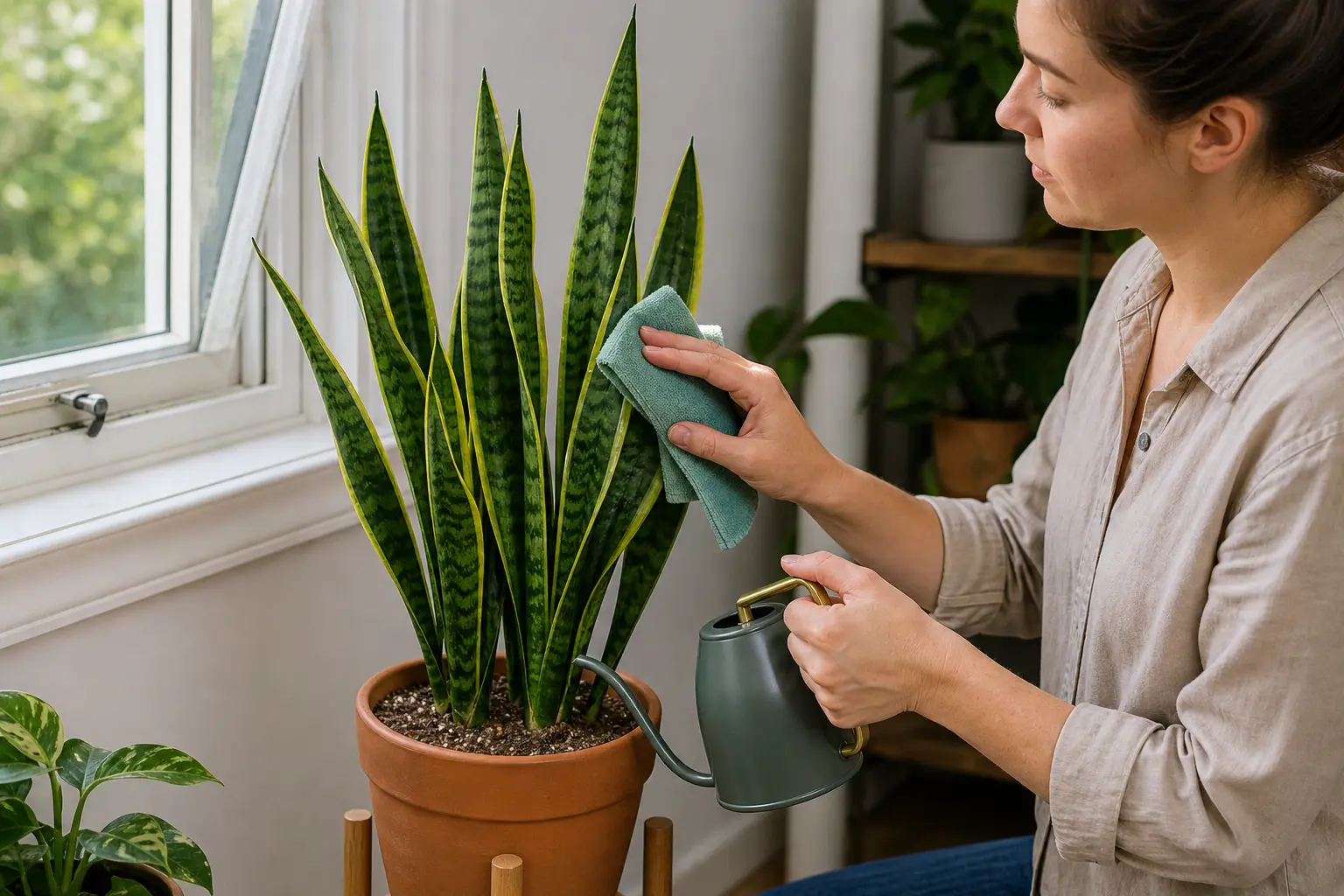
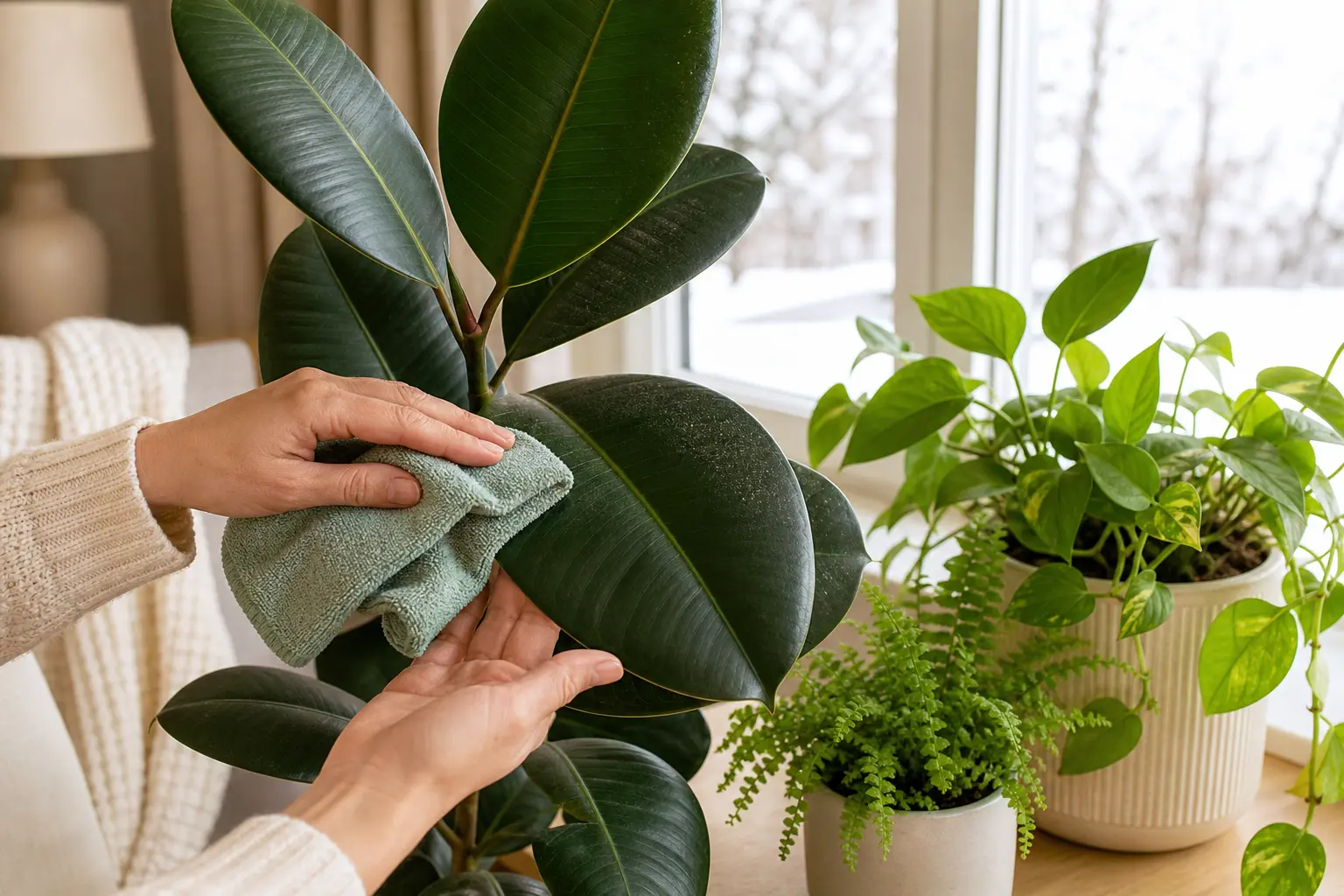
A soft microfiber cloth, clean cotton cloth, or non-abrasive sponge works well for smooth leaves. Moisten it with lukewarm water, then wring it out thoroughly. The cloth should be damp rather than dripping.
Support each leaf from underneath with one hand and wipe from the stem outward toward the tip with the other. This reduces the risk of bending, creasing, or snapping the leaf. For very large leaves, wipe in small sections rather than pressing hard across the whole surface.
This method is especially useful for plants such as:
- Rubber plants
- Monsteras
- Philodendrons
- Fiddle-leaf figs
- Peace lilies
- ZZ plants
- Large-leaved dracaenas
If the cloth becomes visibly dirty, rinse it before moving to the next leaf. Otherwise, you may spread dust back onto the foliage.
Rinse Sturdy Plants With Lukewarm Water
A gentle rinse is convenient for plants with many leaves or awkward foliage that would take a long time to wipe individually. Place the plant in a bathtub, shower, deep sink, or basin and use a gentle stream of lukewarm water.
Avoid strong spray pressure. High pressure can flatten foliage, wash soil from the pot, or damage new growth. Aim the water over and under the leaves, letting it carry dust away rather than blasting the plant clean.
Pothos, spider plants, palms, many dracaenas, and mature philodendrons usually respond well to a gentle rinse. Do not assume every plant is suitable for showering, however. Plants with fuzzy leaves, plants prone to crown rot, and plants in heavy decorative containers may be better cleaned by hand.
In winter, the key is temperature and drainage. Do not use icy water from an outdoor tap or very hot water from the shower. After rinsing, allow the pot to drain fully before returning it to a saucer or cachepot.
Use a Soft Brush for Fuzzy or Textured Leaves
Fuzzy leaves should generally stay dry. Their tiny hairs can hold moisture, and rubbing them with a wet cloth may damage the surface or leave marks. Use a soft, dry paintbrush, makeup brush reserved for plants, or a small artist’s brush instead.
Brush gently from the base of the leaf toward the tip. Use light strokes and avoid pressing down. If dust is lodged in creases, veins, or textured surfaces, a soft brush is usually more effective than trying to scrub it away.
This approach suits African violets particularly well, along with velvety begonias and other plants with hairy or delicate leaves. A soft toothbrush can work on tougher textured foliage, but use it only with an extremely light touch. Stiff bristles can scratch leaves.
Clean Small or Delicate Plants Carefully
Small plants can be damaged more easily than large, established specimens. Tiny leaves, thin stems, and compact growth make wiping impractical, so use a method that matches the plant.
For delicate plants, start with a soft brush, a handheld air blower, or gentle puffs of air. Avoid blowing with your mouth, as moisture from your breath can leave droplets on foliage. A small soft brush is usually the most controlled option.
If a gentle rinse is necessary, cover the soil surface with your hand or a piece of mesh, tip the plant slightly, and use a very light flow of lukewarm water. Let excess water drain completely. Do not leave a small plant sitting in a bowl of water afterward just because it has been cleaned.
Step-by-Step: Safely Clean Dust From Plant Leaves
Choose a mild part of the day for leaf cleaning, ideally when you can leave the plant somewhere warm and bright—but out of direct, harsh sun—while it dries. Winter sunlight through glass can still be intense, especially on wet leaves.
Before starting, gather a clean cloth, a bowl of lukewarm water, a soft brush if needed, and a towel for catching drips.
- Inspect the plant for pests, sticky residue, leaf damage, and dry soil.
- Select the appropriate method: wipe, rinse, or brush.
- Support leaves while cleaning them.
- Clean both the upper and lower leaf surfaces where practical.
- Remove fallen leaves and debris from the soil surface.
- Let the plant drain and dry before returning it to its usual location.
There is no need to scrub until every leaf looks polished. Your goal is to remove the visible layer of dust without bruising or tearing the plant.
Check the Soil and Protect It From Excess Water
Before rinsing a houseplant, check whether the potting mix is already wet. Winter growth is often slower, so many plants need water less often than they do in spring and summer. A thorough shower can accidentally become an unnecessary watering if the soil is already saturated.
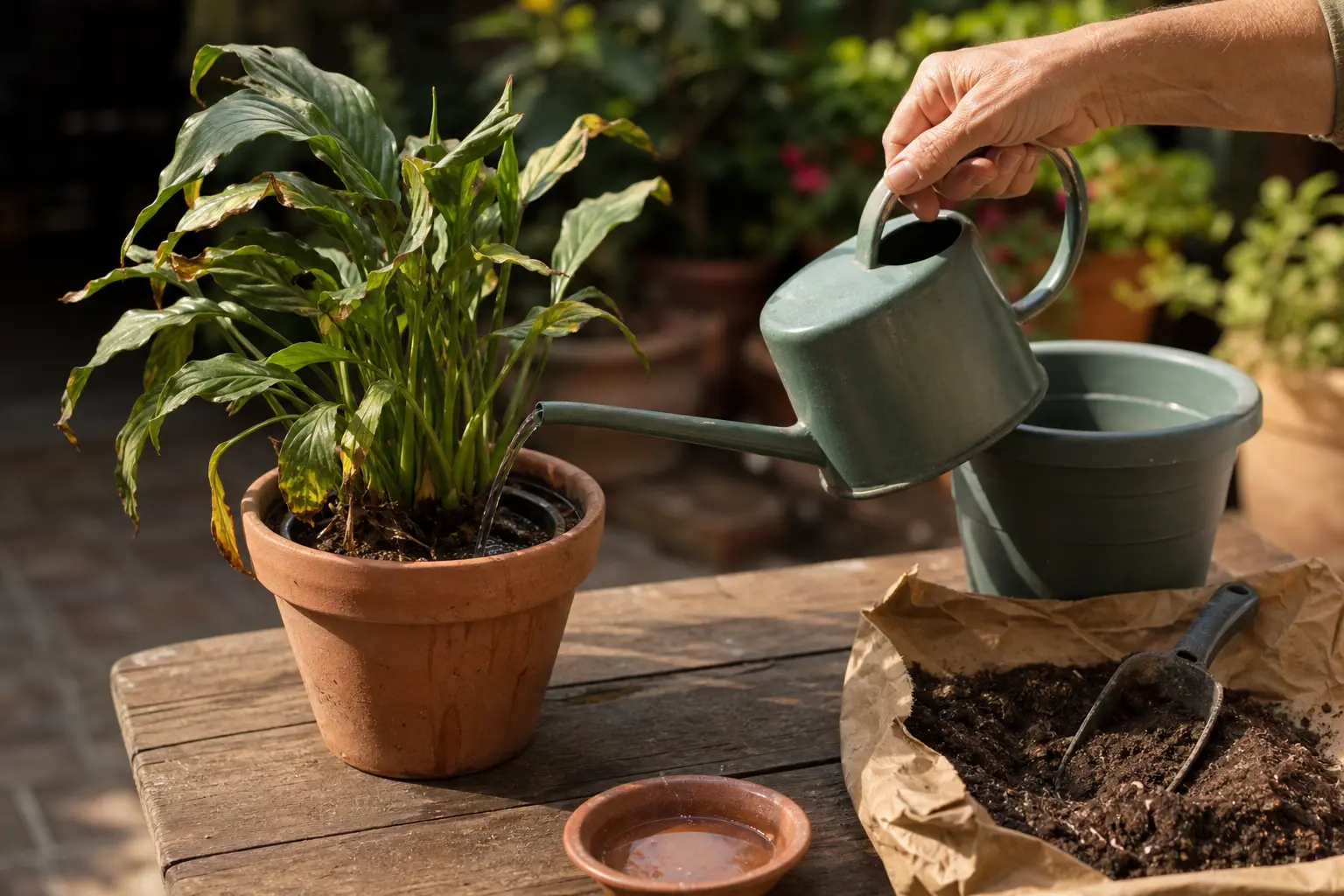
For plants that need rinsing but have wet soil, protect the potting mix. You can place a piece of paper towel, a coffee filter, or breathable mesh over the soil surface while holding it in place with your hand. Tip the pot slightly while rinsing the leaves so less water runs directly into the container.
Do not seal the soil with plastic for long periods or tightly wrap stems. The aim is simply to reduce excess water entering the pot during a quick rinse.
If the pot has no drainage hole, avoid showering the entire plant. Wipe or brush the leaves instead. Water that collects at the bottom of a decorative pot can keep roots too wet and increase the chance of root problems.
Clean Both Sides of Each Leaf
The upper surface is where dust is most obvious, but the undersides matter too. Many pests hide beneath leaves, particularly along the midrib and where the leaf joins the stem. A quick check while cleaning can reveal problems before they spread.
For broad leaves, hold the leaf gently from underneath. Wipe the top first, then turn your cloth over or rinse it before cleaning the underside. Work from the base toward the tip rather than rubbing back and forth aggressively.
You do not need to force access to every underside on a crowded plant. If the foliage is dense, separate stems gently and clean what you can reach without bending them. A light rinse may be more practical for a full pothos or palm than trying to wipe every individual leaflet.
If you see sticky spots, cottony white clusters, webbing, scale-like bumps, or stippled pale patches, pause the routine cleaning. Those signs may indicate pests, and the plant may need isolation and targeted treatment rather than a simple dusting.
Let the Plant Dry Away From Cold Drafts
After rinsing, let the plant drain until water no longer runs freely from the pot. Empty any saucer or outer container that fills with runoff. Standing water around roots is especially risky in winter, when evaporation is slower.
Place the plant somewhere warm with good air circulation while foliage dries. Keep it away from cold windows, open doors, air-conditioning vents, and heating vents. A warm room is fine; placing wet leaves directly in the path of hot, dry air is not.
Do not return a dripping plant to a cold windowsill. Wet foliage combined with a chilly pane can stress leaves and may contribute to spotting on sensitive plants. Once the leaves are dry, move the plant back to its normal position.
What to Avoid When Cleaning Indoor Plant Leaves
A clean leaf should look natural, not artificially shiny. Many popular home remedies and commercial products create more problems than they solve.
Avoid these common mistakes:
- Leaf shine sprays: These can leave a coating on foliage, attract more dust, and make it harder to assess the leaf’s natural condition. Some products may also cause spotting on sensitive plants.
- Oils, mayonnaise, milk, or other food products: These can leave residue, smell unpleasant as they spoil, and encourage dust to cling to leaves. They are not necessary for healthy-looking foliage.
- Harsh soaps or household cleaners: Dish detergent, window cleaner, disinfectant wipes, and furniture polish can damage leaf surfaces. Do not use them for ordinary dust.
- Cold water: Cold tap water can shock tropical houseplants, particularly when indoor temperatures are already low. Use lukewarm water instead.
- Scrubbing: A leaf’s surface is living tissue. Hard rubbing can bruise it, remove natural protective coatings, or tear thin foliage.
- Overwatering during rinsing: A shower should clean leaves, not saturate the root ball every week.
- Cleaning in strong direct sun: Wet leaves in intense sunlight may develop spots or scorch, particularly near a south- or west-facing window.
For ordinary dust, plain water is usually the safest choice. If a plant has sticky residue from pests, treat the pest issue separately and follow the directions for a product specifically labeled for use on houseplants.
How Often to Dust Houseplant Leaves in Winter
Most houseplants do not need a weekly deep clean. A practical winter schedule is to inspect leaves every one to two weeks and clean them when dust is visible or when the leaf surface looks dull.
How often you need to remove dust from plant leaves depends on your home. You may need to clean more often if you have:
- Forced-air heating
- Pets that shed
- A fireplace or wood stove
- Nearby construction or frequent open-and-close traffic at doors
- Plants near kitchen areas where airborne grease may settle
- Large, smooth leaves that show dust quickly
Use this general schedule as a starting point:
| Situation | Winter cleaning frequency |
|---|---|
| Low-dust home, small collection of plants | Inspect every two to three weeks; clean as needed |
| Typical heated home | Inspect every one to two weeks; wipe visible dust monthly or as needed |
| Pet hair, forced-air heat, fireplace, or high dust | Inspect weekly; clean when buildup is noticeable |
| Fuzzy-leaved plants | Brush lightly only when dust is visible |
| Plants being checked for pests | Inspect undersides weekly and clean gently as appropriate |
Large-leaved plants often benefit from a damp wipe every few weeks because dust is easy to see and can cover a significant leaf area. Small-leaved plants may need less frequent attention unless they are near a dusty vent or shelf.
Try to make leaf cleaning part of another winter routine, such as rotating plants for even light, checking soil moisture, or inspecting for pests. Regular light maintenance is easier on both you and the plant than waiting until every leaf has a thick gray coating.
Conclusion
To remove dust from plant leaves in winter, use the gentlest method that suits the plant: a damp cloth for broad, smooth leaves; a lukewarm rinse for sturdy plants; and a soft dry brush for fuzzy or textured foliage. Support leaves as you clean, keep excess water out of already-wet soil, and let plants dry away from cold drafts.
Clean leaves will not replace good light, appropriate watering, or stable temperatures. They can, however, help houseplants use the limited winter light available and give you a clearer view of their overall health.
FAQ
Can I use milk, mayonnaise, or oil to shine plant leaves?
It is best not to. Milk, mayonnaise, cooking oils, and similar home remedies can leave residue that attracts dust and makes leaves look greasy rather than naturally healthy. Food-based products may also spoil or create odor issues indoors.
A plant does not need shiny leaves to be healthy. For smooth foliage, wipe with a clean damp cloth. This removes dust without coating the leaf.
Is it safe to shower houseplants during winter?
Yes, many sturdy houseplants can be showered in winter if you use lukewarm water, a gentle spray, and allow the plant to drain fully afterward. Keep the plant away from cold drafts and chilly windows until the foliage is dry.
Avoid showering plants with fuzzy leaves, plants that are already sitting in wet soil, or plants in containers without drainage holes. In those cases, wiping or brushing is safer.
Should I use soap and water to clean dusty leaves?
For ordinary dust, plain lukewarm water is usually enough. Soap is unnecessary and can leave residue or irritate leaf surfaces, especially if too much is used or not rinsed off thoroughly.
Soap may be used in some pest-control approaches, but that is different from routine cleaning. If pests are present, use a product intended for houseplants and follow its label instructions rather than using household cleaners.
How do I clean dust from fuzzy leaves without damaging them?
Use a soft, dry brush. A small paintbrush, makeup brush kept for plant care, or soft artist’s brush can lift dust from fuzzy leaves without wetting or rubbing them.
Brush gently from the leaf base toward the tip. Do not scrub, use oily products, or wipe fuzzy leaves with a wet cloth. If the dust is heavy, repeat with several light passes rather than pressing harder.
You Might Also Like