How to Care for Cast Iron and Snake Plants in Low Light
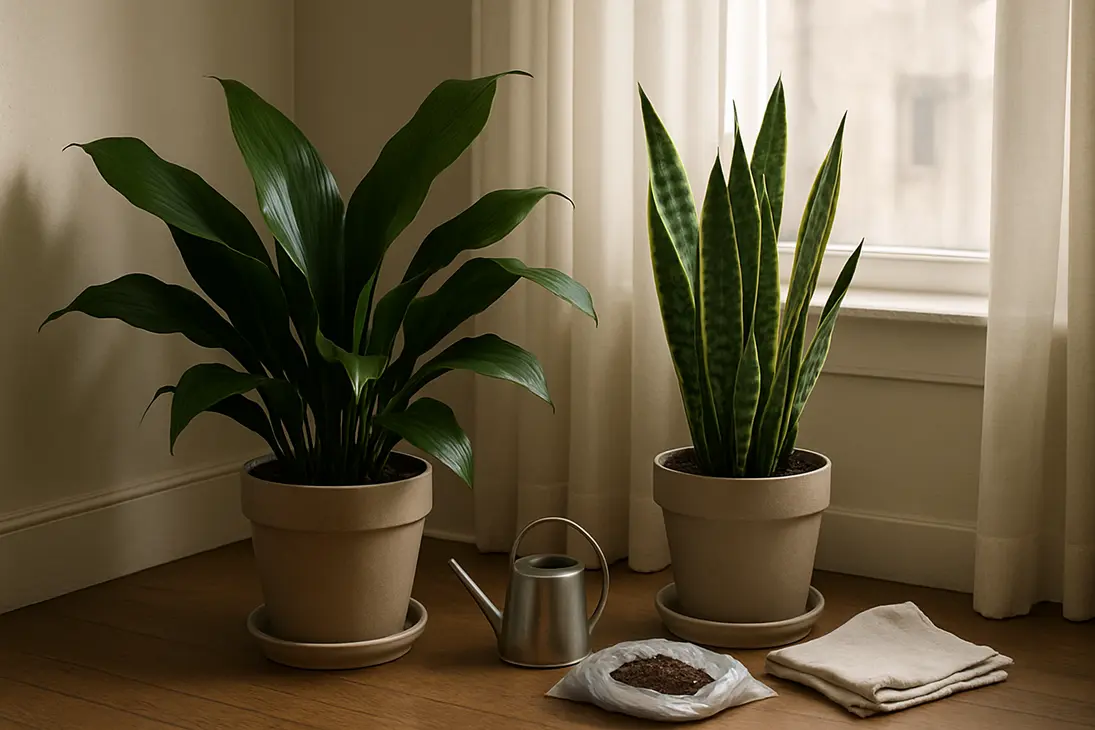
Cast iron plants and snake plants are among the best houseplants for rooms without much sun. They suit apartments, offices, shaded bedrooms, and corners where many plants struggle. Still, low-light tolerant does not mean no-care.
Both handle dim conditions, but they differ. Cast iron plants are slower, leafier, and more shade tolerant. Snake plants are tough and drought-resistant, but usually keep better color and shape with bright, indirect light.
The key rule: in low light, plants use water slowly. These plants are more likely to suffer from wet soil than from delayed watering.
Can Cast Iron and Snake Plants Really Grow in Low Light?
Yes, if “low light” still means some usable light. A room should be bright enough to read in during the day without a lamp, or it should have a grow light. A windowless bathroom, dark basement, or interior office with no light is not low light; it is no light.
In dim rooms, both plants may stay attractive for a long time, but growth will be slow. They will not recover quickly from stress, produce many new leaves, or tolerate constantly wet soil. For faster growth, fuller plants, or easier propagation, provide brighter indirect light.
Cast Iron Plant vs. Snake Plant: Low-Light Strengths
Cast iron plant, or Aspidistra elatior, is one of the most forgiving houseplants for dim interiors, irregular watering, and average home conditions. Its broad upright leaves grow slowly from the soil.
Snake plant, often sold as Dracaena trifasciata or by its older name Sansevieria, also tolerates neglect. Its thick leaves store water, helping it handle dry spells. However, it is not a true deep-shade plant.
| Plant | Low-light tolerance | Best growth indoors | Main risk in low light |
|---|---|---|---|
| Cast iron plant | Very high | Low to medium indirect light | Overwatering |
| Snake plant | High | Medium to bright indirect light | Root rot |
Choose cast iron plant for consistently dim rooms. Choose snake plant for low to moderate light where it still gets some brighter exposure near a window.
Signs the Light Is Too Low
Low-light stress appears slowly. Watch for:
- No new leaves during the growing season
- Leaves leaning strongly toward a window
- Snake plant variegation fading
- Thin, weak, floppy, or stretched leaves
- Soil staying wet for many days
- Older leaves yellowing without a watering change
Slow growth alone is not always a problem, especially for cast iron plants. It becomes concerning when paired with wet soil, weak leaves, or loss of color.
Best Placement and Light Conditions Indoors
The best placement is the brightest spot available without harsh, hot direct sun. Even low-light plants benefit from reflected daylight and a clear view of the sky. Indoor light changes with window direction, curtains, buildings, trees, and season, so observe the room at different times.
Good Spots for Cast Iron Plants
Cast iron plants work well where light is steady but not intense, such as:
- North-facing rooms with open windows
- Hallways with ambient daylight
- Offices or bedrooms with indirect light
- Several feet from bright east, south, or west windows
- Shaded living rooms where the plant can still “see” a window
They can sit farther from a window than snake plants, but not in a completely dark corner. If the area looks dim even at midday, move the plant closer to light or use a grow light.
Cast iron plants can scorch if moved suddenly from shade into strong sun. Increase light gradually.
Good Spots for Snake Plants
Snake plants tolerate low light, but they usually look best in brighter indirect light. Better light encourages firmer upright leaves and stronger markings.
Good placements include:
- Near north-facing windows
- Near east-facing windows with gentle morning sun
- A few feet back from south- or west-facing windows
- Bright rooms without direct afternoon sun
- Corners that receive some brighter exposure during the day
Variegated snake plants, including yellow-edged types, need as much bright indirect light as practical because their leaves have less green tissue for photosynthesis.
Light to Avoid
Avoid both extremes:
- Long periods of hot direct sun
- Leaves touching hot window glass
- Strong south- or west-facing windowsills
- Completely dark rooms
- Sudden moves from deep shade to direct sun
Morning sun is usually gentler than afternoon sun. If leaves develop bleached patches, dry brown spots, or feel hot, move the plant back.
Watering, Soil, and Pots
Watering causes most low-light problems. Less light means slower water use. Soil that dries in five days near a bright window may stay damp for two weeks in a shaded room.
Do not water by the calendar. Check the soil and adjust to the plant, pot, season, and room.
How Often to Water in Low Light
Water only after the soil has dried significantly.
For cast iron plants, let the top several inches dry before watering again. They prefer soil that moves from lightly moist to nearly dry, not soil that stays wet.
For snake plants, let the mix dry almost completely. Their thick leaves store moisture, so they handle dryness much better than frequent watering. In low light, watering may be needed only every few weeks, and even less in winter.
Before watering:
- Push a finger several inches into the mix.
- Lift the pot if possible; dry pots feel lighter.
- Check drainage holes for dampness.
- When unsure, wait, especially with snake plants.
When you water, water thoroughly until excess runs from the drainage holes. Let the pot drain fully. Avoid frequent small sips, which can keep the upper soil damp while lower roots remain dry.
Best Soil Mix
Both plants need a well-draining indoor mix. Standard houseplant soil can work if it does not stay wet too long. If it remains damp for more than a week or two in low light, improve drainage.
Useful amendments include:
- Perlite
- Pumice
- Coarse orchid bark
- Cactus or succulent mix for snake plants
Snake plants especially benefit from a cactus-style mix or regular potting mix with extra perlite or pumice. Avoid garden soil indoors because it compacts, drains poorly in pots, and may introduce pests.
Cast iron plants can handle slightly more moisture-retentive soil than snake plants, but the mix should still feel airy, not muddy.
Pot and Drainage Tips
Use pots with drainage holes. Decorative cachepots are fine only if water cannot collect around the inner pot.
Good habits:
- Choose a pot only slightly larger than the root ball.
- Avoid oversized pots.
- Empty saucers after watering.
- Do not use gravel instead of drainage holes.
- Repot only when rootbound or when soil has broken down.
Oversized pots are risky in low light because extra soil stays wet longer than the roots can use it.
Temperature, Humidity, Feeding, and Routine Maintenance
These plants do not need greenhouse conditions. Average indoor temperatures, basic care, and occasional maintenance are enough.
Temperature and Humidity
Normal household temperatures are usually suitable. Avoid sharp temperature swings and stressful locations such as:
- Drafty winter windows
- Frequently opened exterior doors
- Heating or air-conditioning vents
- Radiators or heaters
Both plants handle average household humidity. They do not need misting, and misting does little to raise humidity for long. Low light, high humidity, and wet soil together can increase rot risk.
Brown tips are not always a humidity issue. Inconsistent watering, mineral buildup, root stress, old damage, or drafts are often involved.
Fertilizing in Low Light
Fertilizer should support growth, not force it. In low light, plants use nutrients slowly, so heavy feeding can cause salt buildup and root stress.
Feed lightly in spring and summer only if the plant is actively growing. Use a balanced houseplant fertilizer at reduced strength. Avoid fertilizing in fall and winter unless the plant is under strong grow lights and still producing new growth.
Do not fertilize a plant that is recently repotted, sitting in wet soil, stressed by pests, or not receiving enough light to grow. White crust on soil or the pot rim may indicate salt buildup; flush the soil if drainage is good, or repot if the mix is old and compacted.
Cleaning and Pruning
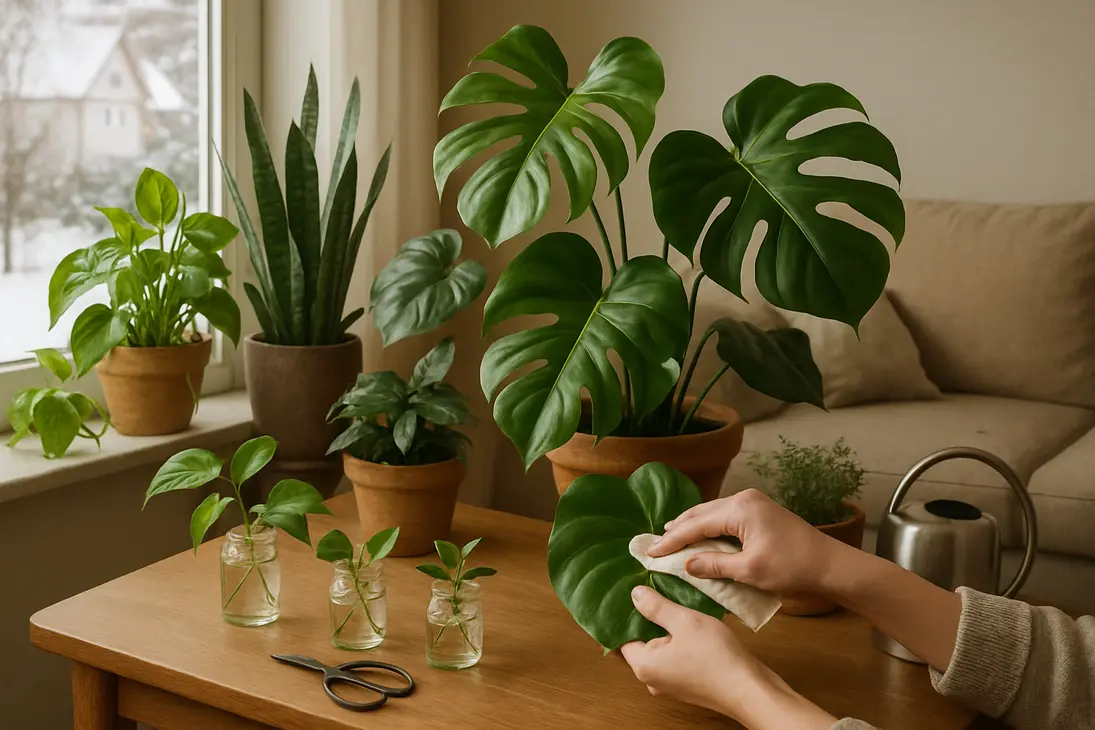
Dust matters in low light because every bit of light helps. Wipe leaves with a damp soft cloth every few weeks or whenever they look dusty. Avoid leaf-shine products.
Pruning is simple:
- Remove yellow, dead, or badly damaged cast iron leaves at the base.
- Cut badly damaged snake plant leaves at soil level.
- Trim only brown tips if the rest of the leaf is healthy.
- Use clean scissors or pruners.
- Rotate pots occasionally.
Do not remove too many leaves at once. In low light, replacement growth may be slow.
Common Problems, Pests, and Fixes
Most problems come from low light combined with too much water. Start by checking soil moisture, drainage, and light before treating symptoms.
Yellow Leaves
Yellow leaves often mean overwatering or poor drainage. One older yellow leaf on a cast iron plant is usually not alarming. Several yellowing leaves, soft bases, or damp soil are more serious.
What to do:
- Check soil moisture several inches down.
- Confirm the pot has drainage holes.
- Empty standing water.
- Pause watering until the soil dries.
- Inspect roots if rot is suspected.
Healthy roots are firm and light-colored to tan. Rotten roots are dark, mushy, or foul-smelling. Trim rotten roots with clean tools and repot into fresh, well-draining mix.
For snake plants, yellowing at the base is a warning sign that roots or the crown may be too wet.
Brown Tips or Edges
Brown tips can come from inconsistent watering, dry air, fertilizer salts, old damage, cold drafts, heat vents, or root stress. For cast iron plants, brown edges may appear after drought followed by heavy watering or from leaves rubbing walls or furniture. For snake plants, brown tips may remain from past stress even after care improves.
Helpful fixes:
- Water consistently, but only when soil is dry enough.
- Keep plants away from vents and cold glass.
- Flush or replace salty soil.
- Use room-temperature water.
- Trim damaged tips along the natural leaf shape.
Brown tissue will not turn green again. Focus on preventing new damage.
Soft, Mushy Leaves
Soft, mushy leaves usually signal overwatering, root rot, or cold damage. In low light, this can become serious quickly.
For snake plants, mushiness often starts near the soil line. A leaf may collapse or pull away easily. For cast iron plants, leaf bases may soften and multiple leaves may yellow.
Act quickly:
- Stop watering.
- Remove the plant from its pot.
- Inspect roots and the plant base.
- Cut away rotten roots and mushy leaves.
- Repot into fresh, dry, well-draining mix.
- Move to brighter indirect light during recovery.
If a snake plant has firm leaf sections above a rotted base, you may be able to propagate them, though variegated types may not reproduce the same pattern from leaf cuttings.
Common Pests
Cast iron and snake plants are not especially pest-prone, but they can get spider mites, mealybugs, and scale, especially when dusty or stressed.
Watch for:
- Fine webbing
- White cottony clusters
- Sticky residue
- Small brown bumps
- Pale speckling or distorted growth
Isolate affected plants. Wipe leaves thoroughly, including undersides and leaf bases. Insecticidal soap or neem oil may help, but repeat applications are usually needed. Follow the label and avoid treating plants in direct sun or heat stress.
Scale often needs manual removal. Mealybugs on snake plants may hide between tight leaves.
Conclusion
Cast iron and snake plants are strong choices for low-light homes, but they still need usable light, careful watering, and basic maintenance. Cast iron plants are usually better for consistently dim rooms, while snake plants look and grow better with brighter indirect light.
Remember: low light means slower drying soil. Use drainage, avoid oversized pots, and let the soil dry appropriately before watering. Keep leaves clean, protect plants from temperature extremes, and fertilize lightly only during active growth.
With those habits, both plants can stay healthy where many other houseplants struggle.
FAQ
Can cast iron plants and snake plants survive in a windowless room?
Only for a limited time without artificial light. A windowless room needs a grow light for long-term health. Cast iron plants may tolerate very dim conditions longer than snake plants, but both need light for photosynthesis.
Use a grow light on a consistent daytime schedule and water cautiously because soil will dry slowly.
How often should I water cast iron and snake plants in low light?
Water based on soil dryness, not a fixed schedule. For cast iron plants, wait until the top several inches dry. For snake plants, wait until the mix is almost completely dry.
In low light, this may mean every two to four weeks or less, especially in winter. Always check first.
Do snake plants need more sunlight than cast iron plants?
Generally, yes. Snake plants tolerate low light, but they grow stronger and keep better color in medium to bright indirect light. Cast iron plants are better for consistently dim indoor spaces.
If a snake plant becomes floppy, loses variegation, or stops growing completely, move it closer to a window or add a grow light.
Why are my low-light plants growing so slowly?
Slow growth is normal in low light because the plant has less energy for new leaves and roots. Cast iron plants are naturally slow growers, and snake plants may pause for long periods indoors.
If the plant is firm, evenly colored, and pest-free, slow growth may be fine. If slow growth comes with yellow leaves, wet soil, leaning, or weak new growth, improve the light and adjust watering.
You Might Also Like