How Can You Tell If a Honey Mesquite Seedling Is Over-Fertilized?
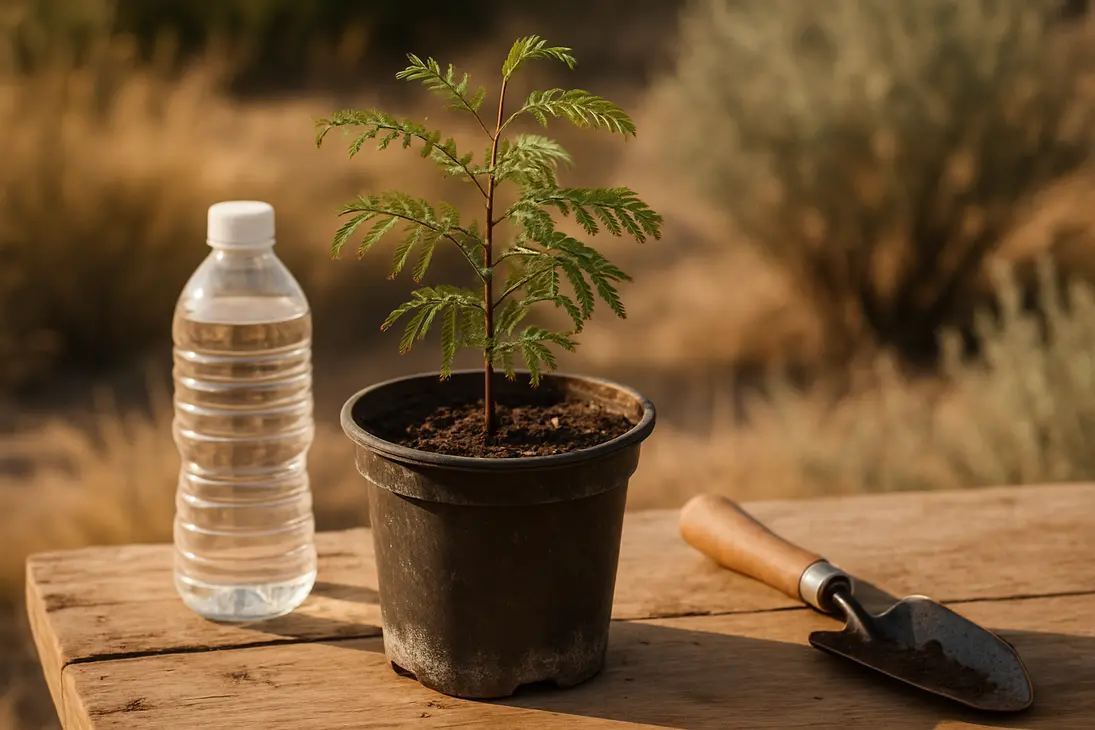
You can suspect over-fertilization in a honey mesquite seedling when symptoms appear soon after feeding: browned leaf tips, crispy edges, yellowing, curling, sudden wilting despite moist soil, or stalled new growth. In pots, a whitish crust on the soil surface, pot rim, or drainage holes also suggests soluble salt buildup.
Honey mesquite is adapted to dry, lean, often alkaline soils. Slow seedling growth does not automatically mean the plant needs fertilizer. Young seedlings, especially in containers, are often harmed more by too much fertilizer than by too little.
The key is to look at timing, pattern, and soil conditions. One yellow leaf is not proof of fertilizer burn. But if the seedling looked fine before feeding and then quickly develops leaf burn, wilting, or root decline, over-fertilization becomes likely.
How Soon Over-Fertilization Signs Appear
Over-fertilization signs can appear quickly, but symptoms may not all show at once. Some damage comes from an immediate salt effect around the roots. Other symptoms appear later as injured roots fail to support the foliage.
| Time after fertilizing | What you may notice | What it often means |
|---|---|---|
| Within hours to a few days | Wilting, dull leaves, sudden droop, soil still moist | Roots are struggling to take up water because the soil solution is too concentrated |
| Several days later | Leaf tip burn, brown margins, curling, yellowing | Salt or nutrient injury is becoming visible in the leaves |
| One to two weeks later | Stalled growth, leaf drop, weak new shoots, root decline | Root damage has reduced the seedling’s ability to recover and grow |
The timeline matters because drought, transplant shock, heat stress, root rot, and fertilizer burn can all cause wilting or yellowing. Symptoms that begin soon after a strong feeding, repeated feeding, or fertilizer applied to dry soil should put fertilizer burn high on the list.
Immediate signs: hours to a few days after feeding
The earliest sign is often wilting even though the soil is damp. With over-fertilization, roots may be surrounded by a concentrated solution of dissolved salts. Water is present, but the plant has trouble absorbing it.
In a honey mesquite seedling, this may look like:
- Limp, folded, or dull gray-green leaves
- Drooping after a recent fertilizer application
- Little improvement after watering
- Worse wilting in warm afternoon conditions despite moist soil
Immediate wilting does not prove fertilizer burn by itself. A seedling moved into full sun or sitting in soggy, airless soil can also wilt. But if symptoms began soon after fertilizing, especially in a small or poorly drained pot, over-fertilization is a realistic explanation.
Delayed signs: several days to two weeks later
Some symptoms take longer because root injury shows up in the leaves later. This is when you may see brown tips, scorched margins, yellowing, curling, or leaf drop.
A seedling may seem to survive the initial stress, then pause growth or shed leaflets days later. Watch the newest growth closely. If old leaves are damaged but new leaves emerge clean and green, the seedling may be recovering. If new growth is pale, distorted, burned, or weak, the root zone may still be too salty or the roots may still be impaired.
Early Above-Ground Signs on Honey Mesquite Seedlings
Honey mesquite foliage is fine-textured, so early symptoms can be subtle. Instead of one large scorched leaf, you may notice many small leaflets drying at the tips, losing color, folding, or dropping.
Compare the plant with its own recent condition. Did it look stable before feeding? Did symptoms begin soon afterward? Are the problems strongest on tips and edges? Those details help separate fertilizer burn from normal adjustment or slow seedling growth.
Leaf tip burn and browning edges
Leaf tip burn is one of the clearest above-ground signs of possible over-fertilization. On honey mesquite, it may appear as tiny browned leaflet tips, dry margins, or crisp foliage.
Tips and edges often show damage first because they are farthest along the plant’s water transport pathway. Once tissue turns dry brown and crispy, it will not turn green again.
Look for these patterns:
- Brown tips on many leaflets after feeding
- Crispy edges rather than only soft yellowing
- Burn on both newer and older leaves
- Damage that worsens as the soil dries slightly
- Leaf burn paired with crusty soil or frequent fertilizer use
Leaf burn can also come from hot sun, dry wind, or water stress. The fertilizer-burn clue is that it appears after feeding or salt buildup, often while the potting mix is still moist.
Yellowing, curling, or dropping leaves
Yellowing is less specific than brown tips, but it still matters. Too much fertilizer can injure roots, unbalance nutrient uptake, or make water absorption difficult.
You may see:
- Leaflets turning pale yellow before dropping
- Leaves curling inward or folding
- Sudden shedding after fertilizer application
- Older leaves dropping while the growing tip stalls
- Yellowing combined with brown tips or edges
Do not assume every yellow seedling needs more fertilizer. Yellowing can also mean root stress, poor drainage, high salts, transplant shock, or overly wet soil. For honey mesquite seedlings, yellowing after repeated feeding usually means “check the soil and roots,” not “feed again.”
Wilting even when the soil is moist
Wilting in moist soil is a major warning sign because it means the roots are not functioning normally. After fertilizing, salts in the root zone may make water uptake difficult even though the pot is damp.
Before watering again, check moisture and drainage. If the mix is wet and the seedling is wilted, adding more water without drainage can create a second problem: low oxygen around already-stressed roots.
Ask:
- Does the pot have open drainage holes?
- Does water pass through the mix?
- Was fertilizer applied to dry soil?
- Has fertilizer been used more than once recently?
- Is the seedling in a small pot where salts concentrate quickly?
A seedling may perk up after careful flushing if roots are still healthy enough. If roots are badly burned or the soil stays soggy, wilting may continue.
Stalled or weak new growth
Honey mesquite seedlings may grow slowly, so slow growth alone is not proof of trouble. But a clear stall after fertilizing is useful evidence.
Stalled growth from over-fertilization may look like:
- No new leaves after active growth
- New shoots that start but fail to expand
- Smaller or paler leaflets
- A dry or inactive growing tip
- A seedling that stays alive but does not gain size
Damaged roots cannot support vigorous new growth. The best recovery sign is not that burned leaves improve; they usually will not. The best sign is new, normal-looking growth after the soil has been corrected.
Root and Soil Clues That Point to Fertilizer Burn
Above-ground symptoms are easier to see, but over-fertilization is a root-zone problem. Fertilizer salts build up, roots are stressed or burned, and leaves show the result.
If symptoms are worsening, check the soil and roots gently. Rough handling can set back a young honey mesquite seedling, especially if roots are already stressed.
White crust or salt buildup on the soil surface
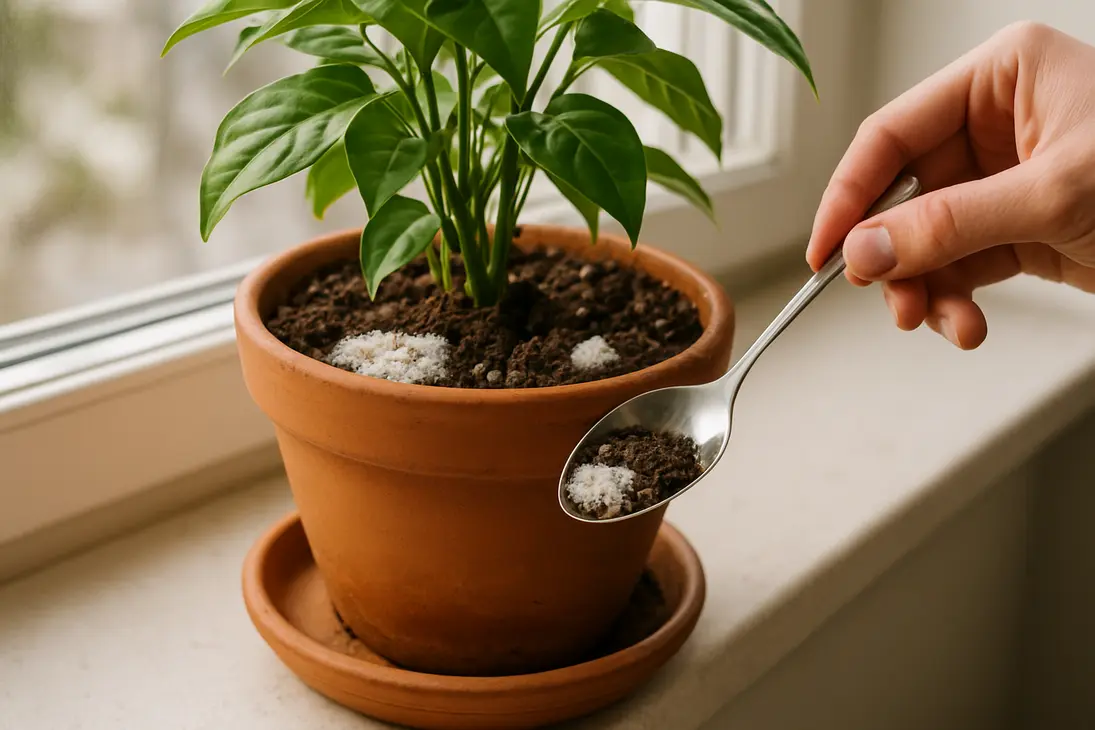
A white or pale crust on the soil surface, pot rim, or drainage holes is a strong clue that soluble minerals have accumulated. This may come from fertilizer, hard irrigation water, or both.
Salt buildup is more common when:
- The seedling is in a container
- Water is applied in small sips instead of deeply
- Drainage is poor
- Fertilizer has been used repeatedly
- Slow-release fertilizer and liquid fertilizer were both used
- Irrigation water is mineral-heavy
Visible crust plus leaf tip burn is a stronger over-fertilization clue than either symptom alone. Do not scrape crust into the soil. If you remove it, lift it away carefully, then correct watering and drainage.
Dark, damaged, or shortened roots
Healthy young mesquite roots should be firm, with active light-colored tips when growing well. Fertilizer-burned roots may be dark, shriveled, shortened, or dead at the tips.
If you slip the root ball from the pot, look for:
- Dark or blackened fine roots
- Dry, stubby, or burned root tips
- A sour smell from wet soil
- Roots avoiding parts of the mix
- Fertilizer granules touching tender roots
A seedling with a few yellow leaves but firm roots may recover easily. A seedling with limp leaves and damaged roots needs slower, more careful rescue. Avoid washing all soil off the roots unless the medium is badly contaminated.
Soil that stays “hot” after repeated feeding
“Hot” soil means the root zone contains more available fertilizer salts than the seedling can tolerate. This can happen when slow-release pellets, liquid feeds, composted manures, and mineral-rich water overlap.
Signs the soil remains the problem include:
- Symptoms continue after feeding stops
- White crust returns quickly
- The seedling improves briefly after watering, then declines
- New growth emerges burned or distorted
- Fertilizer granules remain in the root zone
Honey mesquite does not need rich, constantly fed seed-starting conditions. A lean, well-drained medium is usually safer than a fertile mix that stays wet and salty.
What to Do If You Suspect Over-Fertilization
If you suspect over-fertilization, act calmly. The goal is to reduce salt stress, protect remaining roots, and wait for healthy new growth. Do not stack on more fertilizer, stimulants, pruning, or repeated repotting.
Stop fertilizing immediately
Stop feeding right away. Do not apply more fertilizer to “green it up,” and avoid products that contain nutrients unless you are sure they will not add to the salt load.
Be cautious with:
- Liquid fertilizers
- Slow-release granules
- Fertilizer spikes
- Compost teas or nutrient-rich drenches
- Manure-based amendments
- “Starter” products that contain fertilizer
Read labels. Some root, transplant, or soil-health products still contain nitrogen, phosphorus, potassium, or micronutrients.
Flush excess salts carefully
If the seedling is in a pot with good drainage, flushing can help move excess salts out of the root zone. Use plain water, apply it slowly, and let it run through the drainage holes. Discard the runoff.
Flushing works best when:
- The container drains freely
- The mix does not collapse into mud
- The seedling is not already saturated
- Runoff can leave the pot completely
If the mix is soggy and airless, heavy flushing may worsen root stress. Improve drainage first or consider repotting into a better medium. After flushing, let the soil return to appropriate moisture; honey mesquite seedlings need oxygen as well as water.
Repot or replace soil if damage is severe
If symptoms are severe, salts are visible, drainage is poor, or fertilizer granules are mixed heavily through the medium, repotting may be safer than repeated flushing.
When repotting:
- Choose a container with drainage holes.
- Use a lean, well-drained potting mix.
- Remove loose, salty, or fertilizer-heavy soil gently.
- Avoid tearing healthy roots.
- Do not add fresh fertilizer.
- Water with plain water and let excess drain.
If slow-release pellets are visible, remove what you can without destroying the root ball. For in-ground seedlings, deep watering may leach salts if drainage is good, unless fertilizer was placed directly in the planting hole.
Avoid pruning too aggressively during recovery
Do not cut off every damaged part immediately. Partly green leaves may still help the seedling rebuild energy.
Remove only:
- Fully dead, crispy leaves that detach easily
- Blackened or dead stem tips
- Diseased-looking tissue
- Fallen leaves decaying in the pot
Leave functional green growth. Once new healthy growth is established, you can tidy the plant more confidently.
Preventing Over-Fertilization in Honey Mesquite Seedlings
Prevention is easier than rescue. Honey mesquite is not a heavy-feeding ornamental shrub or fast annual crop. Seedlings need reasonable care, but they do not need rich soil or frequent feeding.
A safe rule is: feed only if growth and conditions justify it, and use less than you would for a hungry garden crop.
Use diluted fertilizer, if any
If you fertilize, use a diluted application rather than a full-strength routine meant for vegetables, lawns, or container annuals. Apply only to moist soil, never a dry root ball.
Many seedlings need no fertilizer at first if the potting mix already contains nutrients. If the mix includes slow-release fertilizer, avoid adding liquid fertilizer on top of it.
Good prevention habits include:
- Start with a lean, well-drained medium.
- Avoid manure-heavy mixes for seedlings.
- Do not fertilize a stressed, wilted, or newly transplanted seedling.
- Water deeply enough for excess minerals to leave the pot.
- Empty saucers after watering.
- Reduce or stop feeding during cool, dark, or dormant periods.
Fertilizer should match active growth, not a fixed calendar.
Let seedling growth guide feeding
A honey mesquite seedling with normal green leaflets, firm stems, and gradual root growth does not need to be pushed. Fast top growth is not always helpful if the root system is still small.
Before feeding, ask:
- Is the seedling actively producing new growth?
- Is it in strong enough light to use nutrients?
- Are roots established?
- Is the soil draining well?
- Are there signs of salt buildup or leaf tip burn?
- Does the potting mix already contain fertilizer?
If any answer raises concern, wait. Under-fertilizing honey mesquite is usually easier to correct than burned roots.
Apply mycorrhizae safely to an already-growing plant
Mycorrhizae can be part of healthy soil biology, and mesquite species can form beneficial root associations. But mycorrhizae are not an emergency antidote to fertilizer burn.
If using a mycorrhizal product on an already-growing seedling, the main issue is contact with living roots. Low-stress options include:
- Applying it according to the label during careful repotting
- Placing it near the root ball when shifting containers
- Watering in a product designed for drench use
- Avoiding strong fertilizer at the same time
Do not dig aggressively around a small seedling just to add mycorrhizae. First provide low salts, good drainage, appropriate moisture, and time.
Do not confuse soil biology products with fertilizer
Mycorrhizae, microbial inoculants, compost extracts, seaweed products, and “root boosters” are not all the same. Some contain little nutrient value. Others include fertilizer ingredients.
Before using any product during recovery, check:
- Does the label list nitrogen, phosphorus, or potassium?
- Does it contain micronutrients?
- Is it safe for seedlings?
- Does it require direct root contact?
- Does it recommend combining with fertilizer?
When in doubt, do less. Plain water, drainage correction, and time are often safer than adding another product.
Conclusion
Honey mesquite seedlings can show over-fertilization symptoms quickly, especially wilting, leaf burn, yellowing, and stalled growth. Because they are adapted to low-nutrient conditions, it is safer to under-fertilize than overfeed.
The most convincing signs are a combination of timing and pattern: symptoms begin after feeding, leaves show tip or edge burn, the seedling wilts while soil is moist, and the potting mix shows salt buildup or poor drainage. Stop fertilizing, flush only if drainage allows, repot if the soil is badly contaminated, and judge recovery by clean new growth rather than damaged old leaves.
FAQ
What is the first sign of over-fertilization in honey mesquite?
The first sign is often wilting or drooping soon after feeding, even when the soil is still moist. Leaf tip burn and browning edges may follow over the next several days. White crust on the soil or drainage holes also supports the suspicion of excess salts.
Can a honey mesquite seedling recover from fertilizer burn?
Yes, if enough roots are still alive and the salt stress is corrected. Stop fertilizing, flush only if the pot drains well, or repot into a leaner mix if the soil is badly contaminated. Recovery is shown by new healthy growth, not old burned leaves turning green.
How long does it take for fertilizer burn symptoms to show?
Symptoms can appear within hours to a few days if the fertilizer concentration is high, especially as wilting in moist soil. Leaf burn, yellowing, curling, leaf drop, and stalled growth may appear several days to two weeks later.
Are mycorrhizae helpful after over-fertilizing a seedling?
Mycorrhizae may support root health in suitable conditions, but they are not a quick fix for fertilizer burn. First reduce excess salts and restore good drainage. If you use a mycorrhizal product, follow the label and avoid combining it with more fertilizer during recovery.
You Might Also Like