Why Is My Variegated Spider Plant Turning All Green?
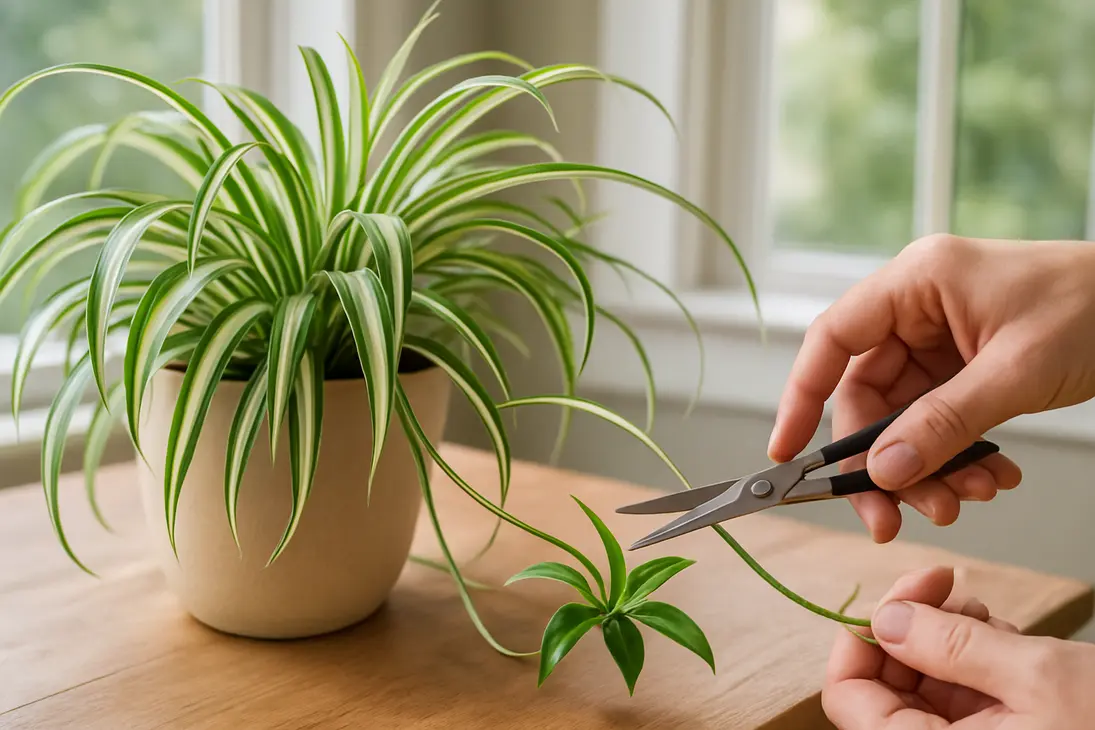
A variegated spider plant turning green is usually not a sign that the plant is dying. Most often, it is a normal form of spider plant color variation: the plant is producing growth with more chlorophyll, reverting toward the plain green form, or sending out an all-green plantlet from a genetic sport.
The key distinction is this: true all-green growth is different from faded, yellowing, scorched, or brown-tipped foliage. Care conditions can affect how bold the stripes look, but they usually do not create stable white or cream striping where the plant’s genetics are no longer producing it.
If you want to keep your spider plant striped, remove fully green offshoots and propagate from clearly variegated pups.
Why a Striped Spider Plant Can Produce All-Green Growth
Variegated spider plants are forms of Chlorophytum comosum with leaves striped in green and white or cream. Some have a pale center stripe, while others have pale margins. Occasionally, a variegated plant will produce a runner, pup, or crown that is entirely green.
This happens because variegation is not always perfectly stable. A spider plant can produce green growth when its growing point favors tissue with normal chlorophyll production. Since green tissue photosynthesizes more efficiently, it can also become the stronger, faster-growing part of the plant.
Variegation Is a Mutation, Not a Fixed Guarantee
The plain green spider plant is the more basic form. Variegated spider plants exist because of mutations that affect chlorophyll distribution in the leaves. Their stripes are passed along through divisions and plantlets, but not with absolute certainty.
A runner may produce a pup that looks like the parent, or it may produce one that is greener than expected. A clump may also develop one fully green crown while the rest of the plant remains striped.
This is often called reversion, though gardeners use the term loosely. It may mean:
- A variegated plant produces plain green growth.
- One section of the plant loses its variegated pattern.
- A plantlet forms as an all-green “sport,” or natural variation.
Once a section is genuinely all green, it usually behaves as a separate growth line from the striped part of the plant.
Green Growth Has More Chlorophyll and Can Grow Faster
The green parts of a spider plant leaf contain chlorophyll, which allows the plant to photosynthesize. The white or cream portions contain little to no chlorophyll. They are attractive, but they contribute less to energy production.
Because of this, all-green growth often has an advantage. It may grow faster, root more strongly, and produce more plant mass than heavily variegated sections. If an all-green crown develops in the same pot as a variegated crown, it may gradually dominate the clump.
This does not mean green spider plants are always “better.” It simply means they are less limited by pale tissue. A variegated spider plant can still be vigorous and easy to grow, but it has slightly less photosynthetic surface than an all-green plant of the same size.
All-Green Pups May Not Regain Stripes
If a spider plant baby is completely green from the start, do not count on it becoming striped later. Young leaves can change slightly as they mature, and faint striping may become more visible in better light, but a fully green pup usually stays green.
Look closely at the newest leaves. If there is no pale center stripe, no pale margin, and no consistent variegated pattern, that plantlet is probably all green genetically. Brighter light may make the green healthier and richer, but it is unlikely to produce stable white stripes.
A pup with faint striping is different. If a pattern is present, it may become more attractive as the plant matures.
Is the Color Change Caused by Care Conditions?
Care conditions can influence how a variegated spider plant looks, but they are not usually the root cause of a truly all-green pup or crown. Light, stress, watering, and general health can make foliage brighter, duller, paler, or damaged. They do not normally restore stable variegation to tissue that has reverted to green.
| What you see | Most likely cause | Can care fix it? |
|---|---|---|
| A whole pup or crown grows solid green | Reversion or genetic sport | Usually no, except by pruning/selection |
| Stripes are present but look dull | Low light, dust, age, stress | Often improves with better care |
| White areas look tan, crispy, or bleached | Too much direct sun or heat | Damage will not heal, but new growth can improve |
| Leaf tips turn brown | Water quality, salts, low humidity, uneven watering | Often manageable |
| Older leaves turn yellow | Age, overwatering, root stress, underwatering, nutrition | Depends on cause |
Low Light Can Make Variegation Less Noticeable
Spider plants tolerate lower indoor light better than many houseplants, but variegated types look best in bright, indirect light. In dim conditions, the plant may survive, but growth is often softer, slower, and less colorful.
Low light can make spider plant color variation harder to see because:
- New leaves may be longer, thinner, and less crisp.
- The green portions may look darker or duller.
- The contrast between green and cream may be weaker.
- The plant may produce fewer runners and pups.
However, low light does not usually cause a clearly striped plant to permanently transform into a stable all-green plant overnight. If one entire pup or crown is solid green while the rest is striped, genetics are more likely than lighting.
Place a variegated spider plant near an east-facing window, a bright north-facing window, or a few feet back from a stronger south or west exposure. If it is far from a window, move it closer gradually and watch the new growth.
Too Much Direct Sun Can Bleach or Scorch Leaves
More light is not always better. Spider plants can handle some gentle morning sun, but harsh direct sun, especially through hot glass, can bleach or scorch the leaves.
Sun stress looks different from reversion. Instead of neat all-green leaves, you may see:
- Pale, washed-out foliage
- Tan or brown scorched patches
- Crispy white areas
- Dry leaf edges
- Leaves that wilt or arch weakly in heat
The white portions of variegated leaves are more vulnerable because they lack chlorophyll. A plain green spider plant may tolerate a brighter spot better than a heavily variegated one.
If the plant looks bleached rather than reverted, move it out of harsh sun. Damaged leaves will not turn green again, but new leaves should grow in cleaner and stronger.
Water, Humidity, and Brown Tips Are Separate Issues
Brown tips are common on spider plants, but they are not the same as turning all green. A spider plant can have brown tips and still keep its variegation. It can also revert to green while otherwise being healthy.
Brown tips are often linked to:
- Minerals or additives in tap water
- Salt buildup from fertilizer
- Inconsistent watering
- Very dry indoor air
- Root stress from compacted or old potting mix
- Sitting in water
If brown tips bother you, try rainwater, distilled water, or filtered water for a while. Also flush the pot occasionally by watering thoroughly and letting excess drain away. Do not leave the pot sitting in runoff.
Humidity can also matter, especially in winter-heated rooms. Misting rarely solves chronic dry air by itself. Grouping plants, using a pebble tray, or moving the plant away from heaters and vents is usually more helpful.
What to Do When Your Spider Plant Reverts to Green
What you should do depends on your goal. If you like the all-green growth, you can keep it. Green spider plants are attractive, classic, and often vigorous. But if you want to maintain a strongly variegated plant, remove fully green sections before they take over.
Remove All-Green Offshoots If You Want a Variegated Plant
If a runner produces an all-green baby, cut off that baby or remove the whole runner. If part of the mother plant has become an all-green crown, consider dividing it out.
A practical approach:
- Inspect the plant in good light. Look for leaves that are completely green from base to tip.
- Check whether the green leaves come from one crown. Spider plants often grow as clumps with multiple crowns in one pot.
- Remove fully green pups from runners. Use clean scissors and cut the baby off close to the runner.
- Remove or divide all-green crowns. If the green section is rooted in the pot, separate it during repotting or divide the root ball.
- Keep monitoring new growth. Remove future solid green runners early.
Do not remove leaves just because they have wider green bands than usual. Many variegated spider plants naturally vary from leaf to leaf. Focus on growth that is entirely green and clearly separate from the variegated pattern.
If the plant is small, avoid pruning too aggressively. It still needs enough foliage to recover.
Keep Variegated Plantlets for Propagation
If you want more striped spider plants, propagate from striped pups rather than green ones. Choose plantlets that show the pattern you want to keep: a clear center stripe, pale margins, or strong contrast depending on the cultivar.
You can root spider plant babies in water or directly in potting mix. Both methods work. Soil propagation reduces transplant shock because the roots form in the medium where they will continue growing. Water propagation lets you watch root development, but water roots can be more delicate when moved to soil.
For best results:
- Choose a pup with several small leaves and visible root nubs.
- Keep it attached to the runner while it roots, if convenient.
- Pin it onto moist potting mix with a bent paper clip or small stone.
- Cut it free once it resists a gentle tug.
- Keep the mix lightly moist, not soggy.
If rooting in water, keep only the base of the plantlet submerged, not the whole crown. Move it to potting mix once roots are a manageable length.
Propagation is also insurance. If the mother plant keeps producing green growth, a few strongly variegated pups allow you to restart the plant with the look you prefer.
When to Leave the Green Growth Alone
There is no rule that says you must cut off green spider plant growth. If you like it, leave it. A mixed pot with both green and variegated crowns can look full and lively.
Leaving green growth makes sense when:
- You enjoy the contrast between green and striped foliage.
- The plant is weak and needs more leaves to recover.
- You are not trying to preserve a specific cultivar appearance.
- The green pup is vigorous and you want an easy plant to share.
- The variegated portion is not being crowded out.
The trade-off is that green sections may grow faster. Over time, the plant may look mostly green unless you selectively prune. If that does not bother you, there is no plant-health reason to remove it.
Common Spider Plant Color Problems That Are Not Reversion
Not every spider plant color change is reversion. Before cutting off growth, make sure you are not dealing with a care problem.
True reversion usually shows up as healthy, normal-looking leaves that are solid green. Care problems more often involve damage, discoloration, softness, crisping, or uneven fading.
Brown Leaf Tips
Brown tips are not a sign that your spider plant is reverting. They are usually a stress symptom at the ends of otherwise normal leaves.
Common causes include tap water minerals or additives, fertilizer salts, underwatering, dry air, and inconsistent moisture. Spider plants have fleshy roots that store water, but they still dislike repeated swings from bone dry to soaked.
To reduce brown tips:
- Water when the top inch or so of potting mix feels dry.
- Use a pot with drainage holes.
- Empty saucers after watering.
- Try rainwater, distilled water, or filtered water if your tap water is hard.
- Fertilize lightly.
- Trim brown tips with clean scissors if their appearance bothers you.
When trimming, follow the natural angle of the leaf tip so the cut looks less obvious. Avoid cutting into healthy green tissue more than necessary.
Pale or Washed-Out Leaves
Pale leaves can be mistaken for “losing color,” but they are different from all-green reversion. A washed-out spider plant may be getting too much direct sun, too much heat, or insufficient nutrients.
Sun-bleached foliage often looks faded overall, with the white portions turning papery or tan. This is especially common when a plant grown in softer indoor light is suddenly placed in direct afternoon sun.
Move the plant to bright indirect light and wait for new leaves. Existing bleached leaves will not fully recover, but they can remain if they still have green tissue and are not badly damaged.
If light is appropriate but the plant looks weak, check the root zone. Old, compacted potting mix can stay wet too long or repel water when dry. Repotting into a fresh, well-draining houseplant mix may help if the plant has been in the same pot for years.
Yellowing Leaves
Yellow leaves are not the same as reversion. Reverted leaves are green and healthy-looking; yellowing leaves are losing function.
A few older yellow leaves at the base are normal. Spider plants constantly replace old foliage. But widespread yellowing can point to:
- Overwatering
- Poor drainage
- Root rot
- Severe underwatering
- Low light
- Sudden temperature stress
- Nutrient depletion in old potting mix
Check the soil before reacting. If the mix is wet and heavy, let it dry somewhat and make sure the pot drains freely. If the plant smells sour, collapses at the crown, or has mushy roots, root rot may be involved. If the mix is dry and pulling away from the pot edges, water thoroughly until moisture runs from the drainage holes.
Yellow leaves will not turn green again. Remove them once they are mostly yellow or brown, and focus on correcting the cause.
Conclusion
A variegated spider plant turning all green is usually a natural expression of spider plant color variation, not a sign that the plant is failing. The most common explanations are reversion, an all-green genetic sport, or a section of the plant favoring chlorophyll-rich tissue.
Care affects how bright and healthy the foliage looks, but it usually does not restore stable striping to a fully green pup or crown. If you want to preserve the variegated look, remove all-green offshoots and propagate from plantlets that clearly show stripes. If you like the green growth, you can keep it—just know it may grow faster than the variegated part.
FAQ
Can an all-green spider plant turn variegated again?
Usually, no. If the plantlet or crown is truly all green, it will generally stay green. Better light may improve vigor and make faint existing striping more visible, but it usually will not create a stable white stripe where none exists.
If you want a variegated plant, propagate from a pup that already shows clear variegation.
Should I cut off green spider plant babies?
Cut them off if your goal is to keep the mother plant variegated or to propagate more striped plants. All-green babies may grow faster and can distract from the look you want.
You can also pot them separately. Green spider plants are healthy, attractive plants in their own right, and they are often vigorous growers.
Why are my spider plant’s white stripes fading?
Fading stripes are often related to light or general plant stress. Low light can make the contrast less noticeable, while too much direct sun can bleach or scorch the pale parts of the leaves.
Move the plant to bright, indirect light and watch the new growth. If new leaves have clear stripes, the plant has not reverted. If new leaves or pups are completely green, that is more likely genetic reversion.
Are green spider plants healthier than variegated ones?
Not necessarily healthier, but they often grow faster because they have more chlorophyll. More chlorophyll means more photosynthetic capacity, so an all-green spider plant may be more vigorous under the same conditions.
Variegated spider plants can still be very healthy and long-lived. They simply need enough bright, indirect light to support leaves that contain less green tissue.
You Might Also Like