How Do You Revive an Overwatered Foxtail Fern?
Reviving an overwatered foxtail fern starts with doing less, not more: stop watering, remove standing water, check drainage, move the plant into bright indirect light, and inspect the roots if the soil has stayed wet too long. If root rot has started, trim dead roots and repot into a fast-draining mix.
Foxtail fern, often sold as Asparagus densiflorus ‘Meyeri’, is not a true fern. It has fleshy, water-storing roots and tubers, so it can handle short dry spells better than many delicate ferns. But those same roots suffer when they sit in soggy, airless soil.
The goal is to restore oxygen around the roots and then water according to soil moisture rather than habit.
Confirm It’s Overwatered Before You Treat It
Yellowing fronds, browning tips, and shedding can come from several causes, so confirm the problem before repotting or cutting heavily. A foxtail fern that is too wet may look limp and tired, but a plant that is too dry, overheated, newly moved, or adjusting to seasonal light changes can also drop needles.
Check the whole situation: soil moisture, drainage, recent watering, light, temperature, and how quickly the decline happened.
Common signs of an overwatered foxtail fern
An overwatered foxtail fern usually shows several symptoms at once, not just one yellow stem.
Look for:
- Soil that stays wet for many days
- Yellowing fronds, especially lower or inner growth
- Soft, limp, or collapsing stems
- Dull, mushy browning rather than crisp browning
- A sour, swampy, or rotten smell
- Fungus gnats around constantly damp soil
- Sudden shedding of needle-like leaves
- Mold, algae, or green crust on the soil surface
- A heavy pot long after watering
One yellow frond does not automatically mean overwatering. Older stems naturally decline over time. Overwatering is more likely when wet soil and plant decline happen together.
How to check soil moisture correctly
Do not judge by the surface alone. Potting mix can look dry on top while staying wet around the roots, especially in deep pots, decorative cachepots, or dense soil.
Use one or more checks:
- Finger test: Push your finger 1–2 inches into the soil. If it feels cool, damp, or sticks to your skin, wait.
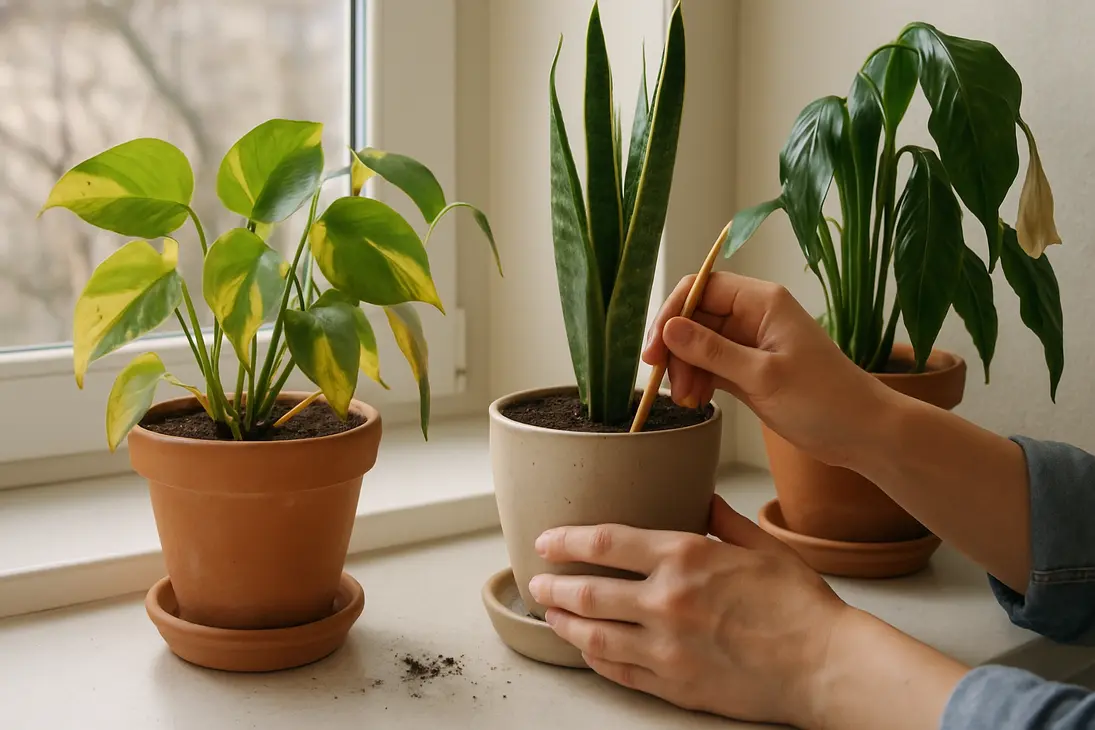
- Wooden skewer test: Insert a bamboo skewer or chopstick deep into the pot. Damp soil will cling to it or darken the wood.
- Lift the pot: A wet pot feels heavier. As the mix dries, it becomes lighter.
- Check the drainage area: Water in a saucer, cachepot, or reservoir can keep lower roots wet.
- Use a moisture meter cautiously: Treat the reading as one clue, not the final answer.
The key is to stop watering by calendar. Water when the soil has dried enough, not because a set number of days has passed.
When yellowing, browning, or shedding may mean something else
Before assuming root rot, compare the symptoms.
| Symptom | More likely cause | What to check |
|---|---|---|
| Yellow fronds with wet soil | Overwatering or poor drainage | Soil moisture, saucer water, root smell |
| Crispy brown tips with very dry soil | Underwatering or low humidity | Soil pulling from pot edges, light pot weight |
| Bleached or scorched patches | Too much direct sun | Recent move to hot window or afternoon sun |
| Sparse, weak, pale growth | Too little light | Deep shade, dark room, distance from window |
| A few old stems yellowing | Normal aging | New growth still healthy and firm |
| Sudden shedding after purchase or move | Transition stress | Change in light, temperature, or watering |
| Browning on one exposed side | Heat, cold draft, or sunburn | Heater, AC vent, hot glass, outdoor exposure |
Foxtail ferns prefer evenly managed moisture, but they are not bog plants. If the soil is dry all the way through and the fronds are crispy, the rescue plan is different from root rot treatment.
Stop the Damage: Immediate Steps to Save the Plant
Once you suspect overwatering, stop adding more water and help the pot dry at a reasonable pace. Do not fertilize, mist heavily, or “check” the plant by watering a little more. A stressed root system needs oxygen more than extra attention.
Stop watering on a schedule
If you have been watering every few days or once a week automatically, pause. Foxtail ferns do not need water on the same interval in every season or room.
Water use changes with light, pot size, soil type, temperature, root health, and season. A foxtail fern outdoors in bright indirect light may dry much faster than one indoors in a cool room. Plastic pots often stay wet longer than terracotta. A root-damaged plant also uses less water, so damp soil can linger.
For now, do not water again until the upper layer has dried and the lower mix is no longer soggy.
Empty saucers and check drainage holes
Standing water quickly makes overwatering worse. Empty the saucer, tray, or decorative cachepot immediately. If the nursery pot is sitting inside a pot without drainage, remove it and let it drain freely.
Check that drainage holes are open. Roots, compacted soil, fabric, or stones can block them. If the pot has no drainage hole, repotting is strongly recommended. Gravel at the bottom of a sealed container does not fix drainage; it creates a wet zone where roots can still suffocate.
Good emergency steps include:
- Remove the inner pot from any tight outer pot.
- Tip out all standing water.
- Place the plant where air can move around the pot.
- Do not let the base sit in runoff.
Move it out of harsh sun or deep shade
Place a stressed foxtail fern in bright, indirect light. This gives it enough energy to recover without adding heat stress.
Avoid harsh direct sun, especially hot afternoon sun through glass or full outdoor exposure. Also avoid deep shade, which slows drying and weakens recovery.
Indoors, try an east-facing window or a few feet back from a bright south- or west-facing window. Outdoors, choose bright shade, filtered light, or gentle morning sun with afternoon protection.
Inspect Roots and Repot if Root Rot Is Likely
Not every overwatered foxtail fern needs repotting. If the soil is only mildly too wet, the pot drains well, and the stems are still firm, you may be able to correct the issue by letting the mix dry partially and changing your watering routine.
Repot when root rot is likely or the current setup is clearly wrong.
When to remove the plant from the pot
Remove the plant and inspect the roots if:
- The soil smells sour or rotten
- The pot has no drainage
- The plant wilts while the soil is wet
- Fronds yellow quickly across the plant
- The mix stays wet for a week or more indoors
- The soil is dense, muddy, or compacted
- Fungus gnats persist and the soil never dries
- The base of stems feels soft or unstable
Unnecessary repotting can add stress, but if roots are rotting, waiting usually causes more damage.
What healthy vs. rotting roots look like
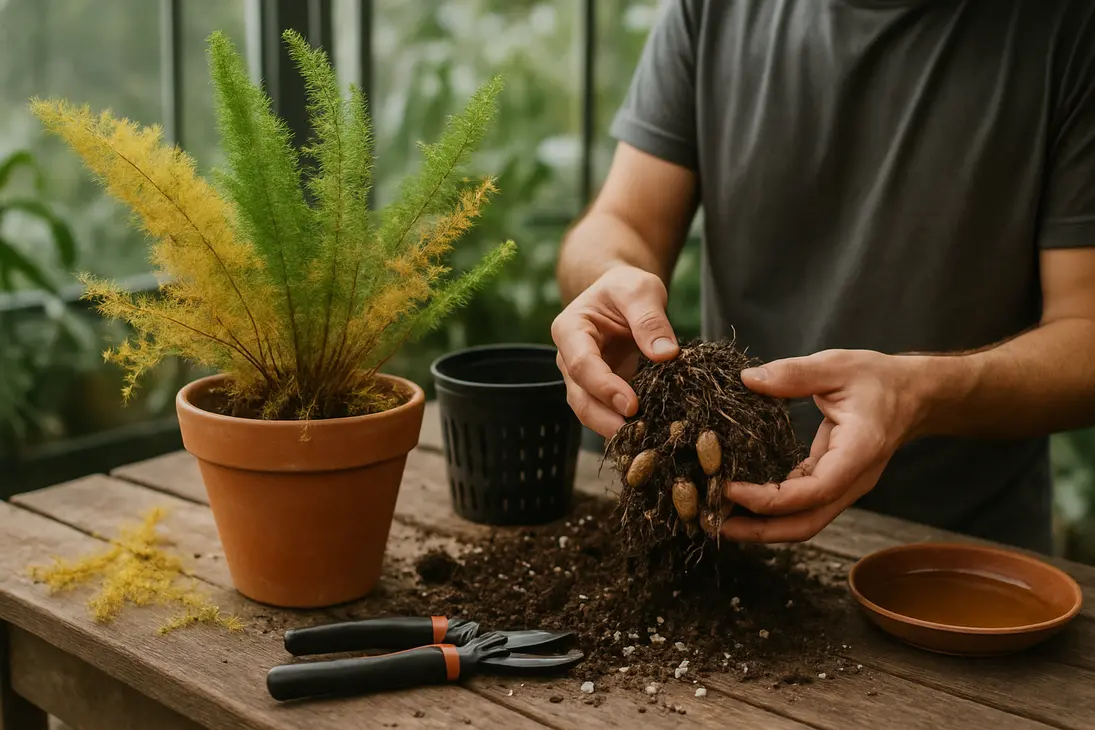
Foxtail ferns have fleshy tubers or nodules. These are normal water-storage structures, not pests or disease. Healthy tubers feel firm, not mushy.
| Root condition | Appearance and feel | What it means |
|---|---|---|
| Healthy roots | White, cream, tan, or light brown; firm; flexible | Keep them |
| Healthy tubers | Plump, firm, pale to tan | Normal water storage |
| Dry/dead roots | Brittle, hollow, papery | Trim if clearly dead |
| Rotting roots | Dark brown or black; mushy; slimy; may smell bad | Remove damaged tissue |
| Rotting tubers | Soft, collapsing, foul-smelling | Remove if completely rotten |
A foxtail fern can survive losing some roots, but it needs enough firm root tissue to rebuild. If nearly everything is mushy and the crown is soft, recovery is uncertain.
How to prune damaged roots and dead fronds
Work gently and preserve as much healthy root mass as possible.
- Slide the plant from the pot.
- Loosen wet soil with your fingers.
- Rinse only if the soil is muddy or roots are hard to see.
- Use clean, sharp scissors or pruners.
- Cut away roots that are black, mushy, slimy, or foul-smelling.
- Keep firm roots and firm tubers, even if tan.
- Remove fully yellow, brown, or collapsed fronds at the base.
- Leave mostly green, firm fronds in place.
Clean blades before and after pruning, especially when dealing with rot. Green tissue helps the plant make energy while roots regrow.
Best soil mix for a recovering foxtail fern
Use a mix that holds some moisture but drains freely. Foxtail ferns do not want cactus-level dryness, but they should not sit in heavy, waterlogged soil.
A practical recovery mix can include:
- High-quality indoor potting mix as the base
- Perlite or pumice for aeration
- Fine orchid bark or pine bark fines for structure
- A small amount of compost only if the mix stays airy
A simple blend is roughly two parts potting mix to one part perlite or pumice, with a handful of fine bark if available. The exact recipe matters less than the result: water should move through easily, and the mix should not collapse into a dense, wet mass.
Choose a pot with drainage holes. If the plant lost roots, avoid moving it into a much larger pot. Extra unused soil stays wet longer.
Rebuild a Healthier Watering Routine
After reviving an overwatered foxtail fern, water based on dryness, not the calendar. The plant likes consistent moisture, but “consistent” does not mean constantly wet.
The goal is simple: water thoroughly, let excess drain, then wait until the top part of the mix dries before watering again.
How dry the soil should be before watering again
For most potted foxtail ferns, wait until the top 1–2 inches of soil feel dry before watering. In a deeper pot, use a skewer if unsure. The lower root zone should be lightly moist, not saturated.
After a root rot scare, stay slightly on the drier side for a while, but do not let the entire pot become dust-dry for long. A recovering plant has fewer working roots and may struggle with extreme swings.
Use these cues:
- Water soon: Top 1–2 inches dry, pot lighter, fronds still firm.
- Wait: Soil cool and damp below the surface, pot still heavy.
- Check roots/drainage: Soil remains wet for many days, plant wilts anyway.
- Rehydrate carefully: Soil has pulled from pot edges and fronds are crispy.
Outdoors in warm weather, watering may be frequent. Indoors in winter, it may be much less often.
How to water thoroughly without waterlogging the pot
When it is time to water, water deeply rather than giving tiny daily sips. Small splashes can keep the surface damp while moisture remains uneven below.
A good method:
- Take the plant to a sink, tub, or outdoor area.
- Water evenly over the soil surface.
- Continue until water runs from the drainage holes.
- Let the pot drain completely.
- Return it to its saucer or cachepot only after runoff stops.
- Empty any collected water after a few minutes.
The problem is not thorough watering. The problem is watering again before the soil has had a chance to breathe.
Pot and drainage tips to prevent another setback
The right container makes watering easier.
Good options:
- A nursery pot with drainage holes inside a decorative pot
- Terracotta if you tend to overwater
- Plastic for hot, dry environments, as long as drainage is excellent
- A pot only slightly larger than the root ball
Avoid:
- Pots with no drainage
- Oversized pots after root loss
- Dense decorative topdressings that trap moisture
- Pebbles used as a false “drainage layer”
- Letting roots sit in saucer runoff
If you love a decorative pot without a hole, use it as a cachepot only. Keep the plant in a draining inner pot, remove it to water, let it drain, and place it back.
Create the Right Recovery Environment
Once the roots are protected, recovery mostly requires patience. A foxtail fern may continue to shed damaged growth even after you correct the problem. Yellow fronds usually do not turn green again, but healthy roots can push new growth once conditions stabilize.
Best light for a stressed foxtail fern
Bright indirect light is the safest recovery light. The plant needs enough brightness to photosynthesize and regrow, but not so much heat that it loses water faster than damaged roots can replace it.
Good locations include:
- Near an east-facing window
- Bright filtered light under a patio cover
- Morning sun with afternoon shade
- A few feet back from a strong south- or west-facing window
- Behind sheer curtains if sun is intense
If the plant was in deep shade, move it brighter gradually. If it was scorched, remove it from direct afternoon sun immediately.
Why recovery may take weeks
Root recovery is slow compared with leaf decline. A foxtail fern can yellow quickly when roots are stressed, but it may take weeks to show clear improvement and longer to look full again.
Recovery depends on how much healthy root tissue remains, whether the crown is still firm, season and light levels, how well the new mix drains, corrected watering, and stored energy in the tubers.
Damaged fronds will not repair themselves. Progress often looks like slower shedding, firm remaining fronds, soil that dries more normally, and eventually new shoots.
Mistakes to avoid while it bounces back
A recovering foxtail fern needs stable, moderate care. Avoid trying to compensate with extra products or constant changes.
Common mistakes include:
- Fertilizing immediately: Wait until stable new growth appears.
- Watering “just a little” every day: This can restart the problem.
- Moving it repeatedly: Frequent changes add stress.
- Putting it in hot sun to dry faster: This can scorch and dehydrate it.
- Keeping it in stagnant, damp air: Poor airflow encourages fungal issues.
- Cutting everything back too soon: Remove dead growth, but keep green fronds.
- Repotting into a huge pot: Extra soil holds extra water.
- Assuming all shedding means failure: Some delayed leaf drop is normal.
Moderate humidity is helpful, but misting does not cure root rot. Good airflow matters more than keeping foliage wet.
Conclusion
Reviving an overwatered foxtail fern comes down to a clear sequence: stop watering, remove standing water, make sure the pot drains, move the plant into bright indirect light, and check the roots if the soil has stayed wet or smells bad. Trim only dead, mushy roots and fully damaged fronds, then repot into an airy, well-draining mix if root rot is likely.
After that, rebuild the routine slowly. Water thoroughly only when the top 1–2 inches of soil have dried, and always let excess water drain away. Foxtail ferns like moisture, but they recover best when their roots have both water and oxygen.
FAQ
Can an overwatered foxtail fern recover?
Yes, an overwatered foxtail fern can recover if enough of the roots and crown are still firm and healthy. Recovery is much more likely when you catch the problem before severe root rot spreads.
If roots are mostly firm and the soil was only too wet briefly, correcting drainage and watering may be enough. If roots are black, mushy, and foul-smelling, repotting and pruning are usually necessary. A plant with a soft, rotting crown is much harder to save.
Should I cut off yellow or brown foxtail fern fronds?
Yes. Cut off fully yellow, brown, crispy, or collapsed fronds at the base. They will not turn green again, and removing them improves airflow and appearance.
Leave fronds that are still mostly green and firm. Even imperfect green growth helps the plant produce energy while it rebuilds roots.
How often should I water a foxtail fern after overwatering?
Do not follow a fixed schedule right after overwatering. Water when the top 1–2 inches of soil feel dry and the pot no longer feels heavy with moisture.
Depending on conditions, that might be every few days outdoors in warm weather or much less often indoors in cool, low-light conditions. Always check the soil first and empty saucer water afterward.
What soil is best for preventing root rot in foxtail ferns?
The best soil is a well-draining potting mix that still holds light, even moisture. A practical mix is indoor potting soil amended with perlite, pumice, and/or fine bark to create more air space.
Avoid dense soil that stays wet for long periods. Also avoid pots without drainage holes, oversized containers, and setups that let the pot sit in water.
Sources
- Reddit discussion on checking soil before watering a foxtail fern: https://www.reddit.com/r/plants/comments/1hv3prz/help_foxtail_fern_is_looking_sickly
You Might Also Like