Why Are My Gardenia Leaves Turning Yellow in Houston?
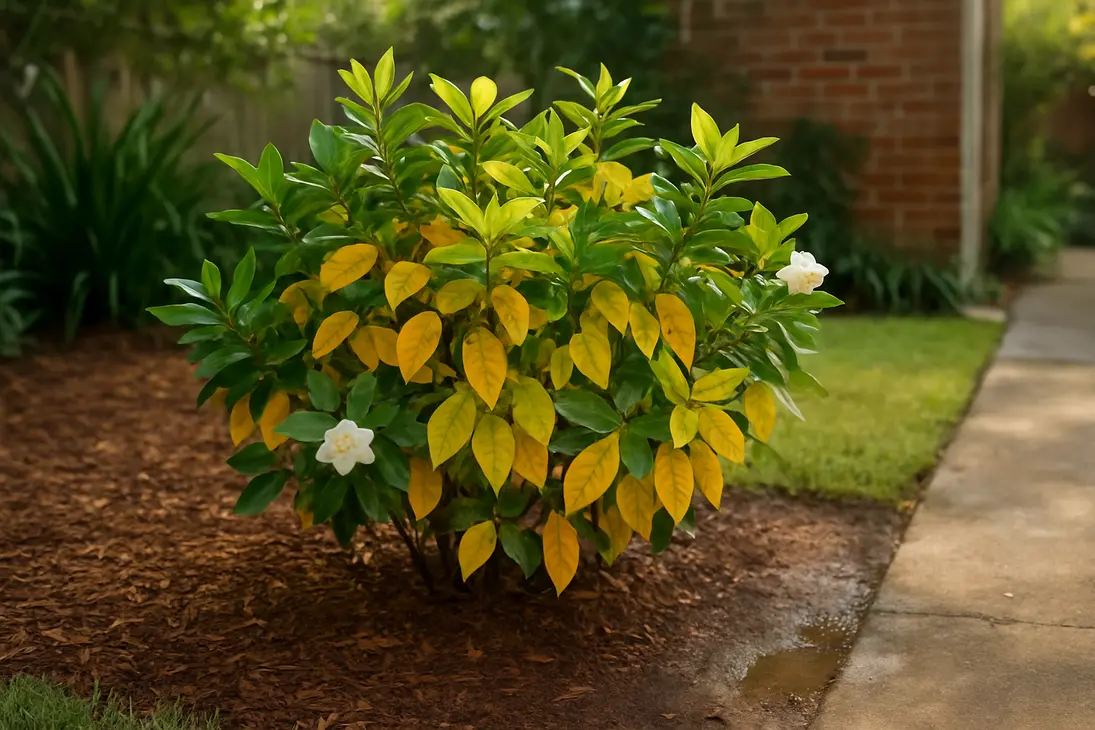
Yellowing gardenia leaves in Houston usually point to stress from soil, water, weather, or roots. Gardenias prefer acidic, well-drained soil, consistent moisture, and bright light without harsh afternoon heat. Houston’s clay soil, heavy rain, humidity, reflected heat, and summer dry spells can make those conditions difficult.
Before you fertilize or water more, look at which leaves are yellowing and what the pattern looks like. That often tells you whether the issue is normal aging, poor drainage, high soil pH, nutrient deficiency, heat stress, pests, or transplant shock.
Diagnose the Pattern of Yellowing First
Not all yellow leaves mean the same thing. A few old yellow leaves inside the shrub are very different from pale new growth with green veins.
| What you see | Most likely issue | Check first |
|---|---|---|
| Older inner leaves yellowing | Normal aging, mild nitrogen shortage | New growth health |
| New leaves yellow with green veins | Iron chlorosis, high pH | Soil pH, drainage |
| Yellow leaves with brown tips or drop | Water stress, root stress, salt burn | Soil moisture |
| Sudden yellowing after storms or heat | Weather shock, saturated roots, heat stress | Rainfall, sun exposure |
Older Leaves Turning Yellow
If the oldest inner leaves turn yellow and drop while the rest of the plant looks green and firm, the gardenia may simply be shedding old foliage. This often happens after blooming, during seasonal changes, or when new growth shades older leaves.
Worry more if older leaves yellow rapidly across the whole shrub, especially if growth is thin, weak, or slow. That may indicate soggy roots, nitrogen shortage, or broader root stress.
New Growth Yellowing With Green Veins
New leaves that turn yellow while veins stay green usually indicate chlorosis, often from poor iron availability. Gardenias need acidic soil to use iron efficiently. If soil pH is too high, iron may be present but unavailable.
This is common near concrete, slabs, sidewalks, driveways, alkaline fill soil, or areas watered with alkaline irrigation water. Do not assume the plant just needs more fertilizer. General-purpose fertilizer may not correct pH and can add salts.
Yellow Leaves With Brown Tips or Dropping
Yellow leaves with brown tips, crispy edges, or sudden drop usually signal water stress. Both too much and too little water can look similar above ground.
Check the soil. Wet, sticky, sour-smelling, compacted soil points to overwatering or poor drainage. Dry soil several inches down, afternoon wilting, and crispy edges point to drought or heat stress.
Sudden Yellowing After Weather Changes
Houston weather can swing quickly. Gardenias may yellow after heavy rain, a heat wave, or a cold snap following warm growth.
Heavy rain can saturate clay and deprive roots of oxygen. Intense heat can scorch leaves and dry the upper root zone. If yellowing follows extreme weather, avoid making several changes at once. Start by checking soil moisture, drainage, and new growth.
Common Causes of Yellow Gardenia Leaves
In Houston, the most common causes are waterlogged soil, soil that is not acidic enough, nutrient problems, heat, root restriction, transplant shock, pests, and disease.
Overwatering or Poor Drainage
Overwatering is one of the most common causes, especially in heavy clay. The issue may not be frequent watering; the soil may simply stay wet too long after rain.
Gardenias need moisture but not saturated roots. Poor drainage limits oxygen, damages roots, and causes yellow leaves, leaf drop, weak growth, and brown tips.
Signs include:
- Soil stays wet for days
- Water puddles near the plant
- Leaves yellow while soil is damp
- The shrub sits in a low spot
- Mulch is piled against stems
- The planting hole traps water in clay
This is common in compacted builder-grade soil or when gardenias are planted too deeply.
Soil That Is Not Acidic Enough
Gardenias prefer acidic soil. When pH is too high, they struggle to absorb iron and other nutrients, causing yellow new leaves with green veins.
Houston-area beds may be affected by clay, alkaline fill, irrigation water, and nearby concrete. A soil test is the best way to know what is happening. Without testing, make changes slowly instead of applying large amounts of acidifying products.
Iron or Nitrogen Deficiency
Iron deficiency usually affects new growth first, creating yellow leaves with green veins. Nitrogen deficiency more often affects older leaves, which turn evenly pale yellow before dropping.
The cause matters. Iron problems are often tied to pH or root stress. Nitrogen shortage may follow heavy rain, depleted soil, or lack of appropriate fertilizer. Avoid high-nitrogen lawn fertilizer near gardenias; it can cause soft growth, salt stress, and leaf burn.
Heat Stress, Sunburn, or Dry Soil
Gardenias need bright light, but Houston afternoon sun can be intense. Full western exposure, brick walls, concrete, and driveways can create heat stress.
Symptoms include:
- Yellowing with brown, dry edges
- Afternoon drooping
- Bud drop
- Crispy patches on exposed leaves
- Thinning on the hottest side
Newly planted gardenias are especially vulnerable because their roots are limited. Morning sun with afternoon shade is usually better than all-day sun in Southeast Texas.
Root Stress From Pots, Compaction, or Transplanting
Roots control leaf health. Yellowing can follow transplanting, compaction, circling roots, deep planting, poor container drainage, or mulch piled against stems.
Potted gardenias may yellow when roots fill the container and water either runs through too fast or stays trapped in a dense root ball. In the ground, compacted soil limits air and water movement. If the shrub was recently planted, some yellowing may be transplant shock.
Pests or Disease Stress
Pests may not cause every yellow leaf, but they can weaken gardenias. Check leaf undersides, stems, and new growth for:
- Whiteflies
- Aphids
- Scale insects
- Spider mites
- Mealybugs
Look for sticky residue, black sooty mold, webbing, bumps on stems, tiny moving specks, or distorted growth. Disease is more likely when foliage stays wet, air circulation is poor, or roots remain soggy.
How to Fix Yellowing Gardenia Leaves
The right fix depends on the cause. Do not fertilize, acidify, prune hard, and water heavily all at once. Gardenias recover best from steady corrections.
Check Soil Moisture Before Watering
Before watering, check 2 to 4 inches into the soil near the root zone.
- Wet and sticky: wait.
- Lightly moist: do not water yet.
- Dry several inches down: water deeply.
For containers, make sure drainage holes are open. A heavy pot may still be wet inside; a very light pot is usually dry.
Avoid shallow daily watering. Deep, less frequent watering is usually better, adjusted for heat and rainfall.
Improve Drainage Around the Roots
If the shrub sits in a soggy area, drainage must improve before fertilizer will help.
Helpful steps include:
- Pull mulch away from stems
- Loosen compacted surface soil gently
- Redirect roof runoff or irrigation overspray
- Add organic matter over time
- Raise the bed if the site stays wet
- Move a severely struggling plant during a suitable season
Do not dig aggressively through established roots. In clay soil, avoid digging a deep hole and filling it with soft potting mix, which can create a water-holding basin.
For potted gardenias, use a mix that drains well but still holds some moisture. Do not let the pot sit in a saucer of water.
Acidify the Soil Safely
If new leaves are yellow with green veins, high pH may be involved. A soil test is the safest first step.
Use fertilizers and amendments intended for acid-loving plants. Elemental sulfur can lower pH gradually, but it should be applied according to label directions and soil test recommendations.
Organic mulches such as pine bark, pine needles, leaf mold, and composted materials help improve root conditions over time. Avoid harsh home remedies or sudden acid treatments, which can burn roots.
Use the Right Fertilizer for Gardenias
Use fertilizer labeled for acid-loving plants, such as gardenias, azaleas, or camellias. Apply only when the plant is actively growing and the soil is moist—not bone dry or waterlogged.
More fertilizer is not better. Overfertilizing can cause salt buildup, brown tips, leaf drop, and weak growth. If iron chlorosis is severe, a plant-labeled iron product may help temporarily, but it does not replace correcting pH, drainage, or root stress.
Remove Damaged Leaves Only When Needed
You can remove fully yellow, brown, or diseased leaves if they come off easily. This improves appearance but does not fix the cause.
Do not strip every partly yellow leaf. Green tissue still photosynthesizes and supports recovery. Prune dead twigs back to live wood, but avoid hard pruning during extreme heat or severe stress. Major pruning is best after flowering.
Treat Pests Without Spraying in Direct Sun
If pests are present, start gently. A strong water spray can dislodge aphids, whiteflies, and mites. For heavier infestations, insecticidal soap or horticultural oil may help if labeled for the pest and plant.
Do not spray oils or soaps in direct sun or extreme heat. In Houston, sprays can burn foliage when applied at the wrong time. Treat early or late in the day and follow the label.
Gardenia Care Tips for Houston Gardens
Houston gardeners must manage both excess water and drought. Gardenias do best when roots stay cool, moist, acidic, and well-aerated.
Best Light Exposure in Houston
Gardenias usually perform best with morning sun and afternoon shade or bright filtered light. They need enough light to bloom, but intense afternoon sun can scorch leaves and dry the soil quickly.
Good locations include east-facing beds, high shifting shade, protection from western sun, and areas away from reflected heat. Too much shade reduces flowering; too much sun causes yellowing, brown edges, and bud drop.
Watering During Heat, Rain, and Drought
Gardenias like consistent moisture, not constant wetness. During heavy rain, turn off irrigation and let soil drain. If yellowing follows storms, do not assume the plant needs more water.
During dry summer weather, water deeply when the root zone begins to dry. First-year plants need closer attention because roots are still limited. Containers dry faster than in-ground shrubs but can also become waterlogged if the mix is dense.
Mulching to Protect Roots and Soil Acidity
Mulch helps moderate soil temperature, conserve moisture, reduce weeds, and protect shallow roots. Use 2 to 3 inches of organic mulch such as pine bark, pine needles, shredded leaves, or composted bark.
Keep mulch a few inches away from stems. Mulch piled against the trunk traps moisture and can encourage rot. As mulch breaks down, it also improves soil structure, which is especially helpful in clay.
When to Fertilize Gardenias in Southeast Texas
Fertilize when gardenias are actively growing, usually in spring and lightly in early summer if needed. Avoid heavy feeding during peak heat, drought stress, or late-season growth.
| Season | Gardenia care focus |
|---|---|
| Late winter to early spring | Refresh mulch, inspect for pests |
| Spring | Fertilize if healthy and actively growing |
| After bloom | Prune lightly if needed |
| Summer | Manage water and heat stress |
| Fall | Maintain mulch, reduce feeding |
| Winter | Water only as needed |
If the plant is badly yellowing, fix moisture and drainage first. Fertilizer alone rarely helps damaged roots.
When Yellow Leaves Are Normal
Some yellow leaves are normal. Gardenias naturally shed older foliage after blooming, during seasonal changes, or when new growth shades interior leaves.
Normal yellowing usually means:
- Mostly older inner leaves
- New growth stays green
- Stems are firm
- Yellowing does not spread quickly
- Buds and leaves are not collapsing
Worry when yellowing affects new growth, spreads across the plant, appears with wilting in wet soil, includes brown tips and leaf drop, or comes with pests, drainage trouble, or heat scorch.
The most common mistake is watering more whenever leaves turn yellow. If soggy soil is the problem, extra water makes decline worse.
Conclusion
Yellow gardenia leaves in Houston are usually linked to water, drainage, soil acidity, nutrient availability, root stress, pests, or weather extremes. Start by identifying the pattern: old or new leaves, green veins or not, wet or dry soil, and recent weather changes.
Most gardenias recover with steady care: check soil before watering, improve drainage, maintain acidic conditions, use fertilizer for acid-loving plants, mulch correctly, and protect the shrub from harsh afternoon heat. A few yellow leaves are normal; a clear pattern means it is time to investigate.
FAQ
Should I cut yellow leaves off my gardenia?
You can remove fully yellow or brown leaves if they come off easily or look unsightly. Do not strip the plant heavily, because partly green leaves still make energy.
Removing leaves will not solve problems caused by water, pH, drainage, or root stress.
Are yellow gardenia leaves caused by too much water or not enough water?
They can be caused by either. Check the soil before deciding.
Wet, sticky, slow-draining soil points to overwatering or poor drainage. Dry soil several inches down with crispy, wilted, or scorched leaves points to drought or heat stress.
How do I make soil more acidic for gardenias?
Start with a soil test if possible. Use fertilizer labeled for acid-loving plants and mulch with pine bark, pine needles, shredded leaves, or similar organic materials.
Elemental sulfur can lower pH gradually, but follow label directions and soil test guidance. Avoid harsh quick fixes that can damage roots.
Can a gardenia recover after its leaves turn yellow?
Yes, if the cause is corrected before severe root damage occurs. Existing yellow leaves may not turn green again, but new healthy growth is a good sign.
Recovery is slower when soggy roots, compacted soil, or transplant shock are involved. Keep care consistent and avoid overfertilizing while the plant recovers.
You Might Also Like