Can You Improve Terrarium Soil With Veggie Scraps?
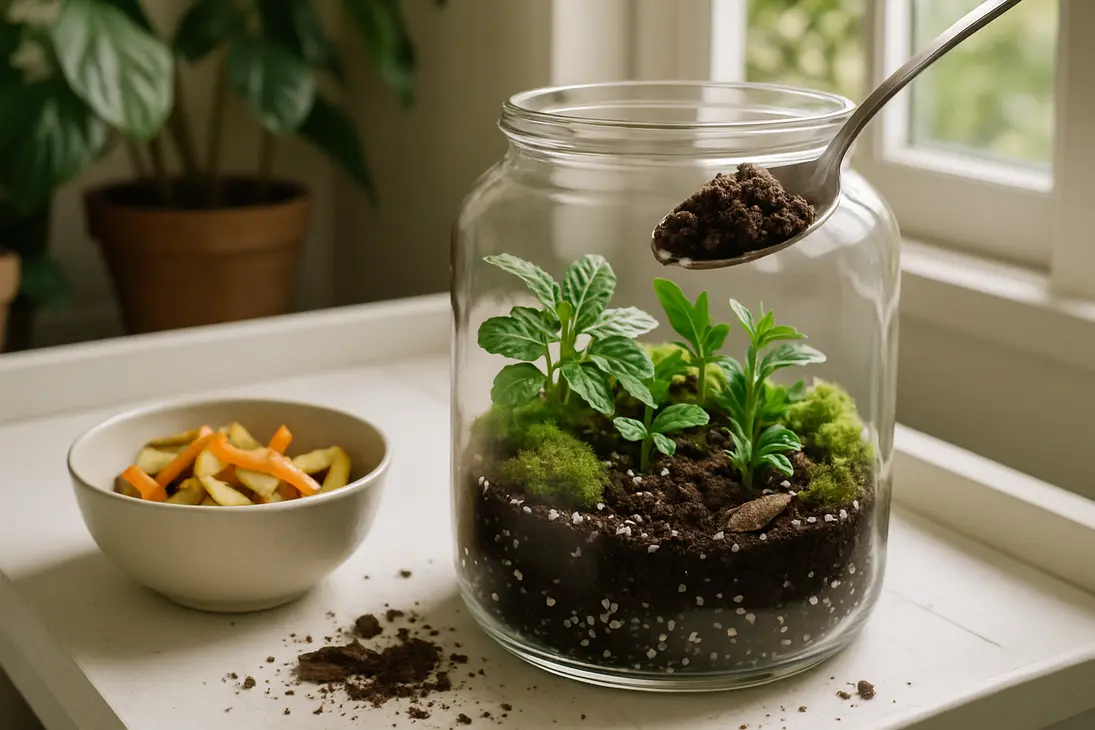
Yes, but not by dropping raw scraps into the jar.
Raw vegetable scraps usually should not be added directly to terrarium soil, especially in a closed terrarium. A terrarium is small, humid, and low-airflow, so fresh food waste often rots before it becomes useful soil.
What can work is fully finished compost or vermicompost made from vegetable scraps. Once scraps have decomposed into dark, crumbly, earthy-smelling material, they can improve a terrarium substrate when used sparingly.
The difference matters. A compost pile, worm bin, or garden bed has airflow, drainage, volume, and decomposers. A glass jar has little room for error. Too much fresh organic matter can cause mold, sour smells, fungus gnats, soggy soil, and stressed roots.
Should You Put Veggie Scraps in Terrarium Soil?
In most cases, no. Do not put raw veggie scraps directly into terrarium soil. Closed terrariums are especially risky because moisture stays trapped and oxygen is limited.
Vegetable scraps can still be part of the process: compost them first, let them mature fully, then use a small amount of the finished compost in the soil mix.
| Material | Good for terrariums? | Why |
|---|---|---|
| Raw peels, lettuce ends, cucumber skins | Usually no | Rot before becoming useful soil |
| Partly decomposed scraps | No | Still unstable and likely to smell or mold |
| Finished compost | Yes, sparingly | Adds stable organic matter |
| Finished worm castings | Yes, sparingly | Gentle, fine-textured, biologically active |
A terrarium does not need to be fed like a compost trench. It needs a stable growing medium suited to the plants inside.
The potential benefits
Properly finished compost can add organic matter, support microbial life, improve moisture retention, and provide mild slow-release nutrients.
These benefits are most useful in tropical terrariums with ferns, mosses, fittonia, peperomia, selaginella, and similar humidity-loving plants. Compost can help create a more natural soil structure and support tiny soil organisms that break down dead roots and leaf debris.
However, compost should be a minor ingredient. In closed terrariums, too much organic matter can hold excess moisture and make the soil too rich or wet.
The main risks
Raw scraps create more risks than benefits.
A buried piece of vegetable peel can quickly become a moldy, wet pocket. It may smell sour, swampy, rotten, or fermented. Fresh scraps can also attract fungus gnats and other pests, especially when soil stays damp.
Many vegetable scraps are mostly water. As they break down, they release moisture into an already humid system. They also create active decomposition near roots, which can alter oxygen levels and nutrient availability in a tiny space.
In an outdoor bed, these changes are diluted. In a jar, they are concentrated.
Raw Scraps vs. Finished Compost: What Works Best?
Burying kitchen scraps can work outdoors under the right conditions. Garden soil has more volume, better gas exchange, drainage, and a larger decomposer community.
A terrarium is different. It has limited soil, limited airflow, and little margin for correction. What works in a vegetable bed can become a rotting lump in glass.
Why fresh veggie scraps break down poorly in terrariums
Fresh scraps break down poorly because terrariums are confined.
They have limited airflow, so buried wet material may become low in oxygen. They also have small soil volume, so even a teaspoon of scraps can be a major addition. High humidity encourages mold, and most decorative terrariums lack the full outdoor decomposer network of worms, insects, fungi, bacteria, and soil animals.
The biggest concern is anaerobic rot, where wet organic matter decomposes without enough oxygen. This often smells bad and can harm roots.
For outdoor gardening, burying scraps may be “sometimes.” For a closed glass terrarium, it is usually “don’t.”
Why finished compost is safer
Finished compost is safer because the unstable breakdown has already happened.
Good finished compost should be dark, crumbly, and earthy-smelling. You should not recognize the original carrot peel, lettuce leaf, or apple core. It should not smell sour, rotten, alcoholic, or ammonia-like.
Mature compost is less attractive to pests than fresh scraps and more stable around roots. It also mixes evenly through a substrate, avoiding buried pockets of decomposing food.
What about burying scraps under the soil?
Burying scraps under terrarium soil is not recommended. A buried scrap is still releasing moisture, feeding microbes, and using oxygen.
The only possible exception is a large bioactive terrarium with an established cleanup crew such as springtails and isopods, good aeration, and careful monitoring. Even then, additions should be tiny, plant-based, and removed if they mold or smell.
For most houseplant terrariums, compost first and add later.
How to Use Veggie-Scrap Compost in Terrarium Soil
The goal is not to make terrarium soil extremely rich. The goal is to keep it stable, airy, lightly organic, and appropriate for the plants inside.
Start with the right terrarium type
Closed terrariums need the most caution. They recycle moisture, so excess compost can keep the substrate too wet. Use very small amounts and prioritize structure, drainage, and stability.
Open terrariums are more forgiving because moisture can evaporate. A little finished compost may work for tropical plants if the mix still drains well.
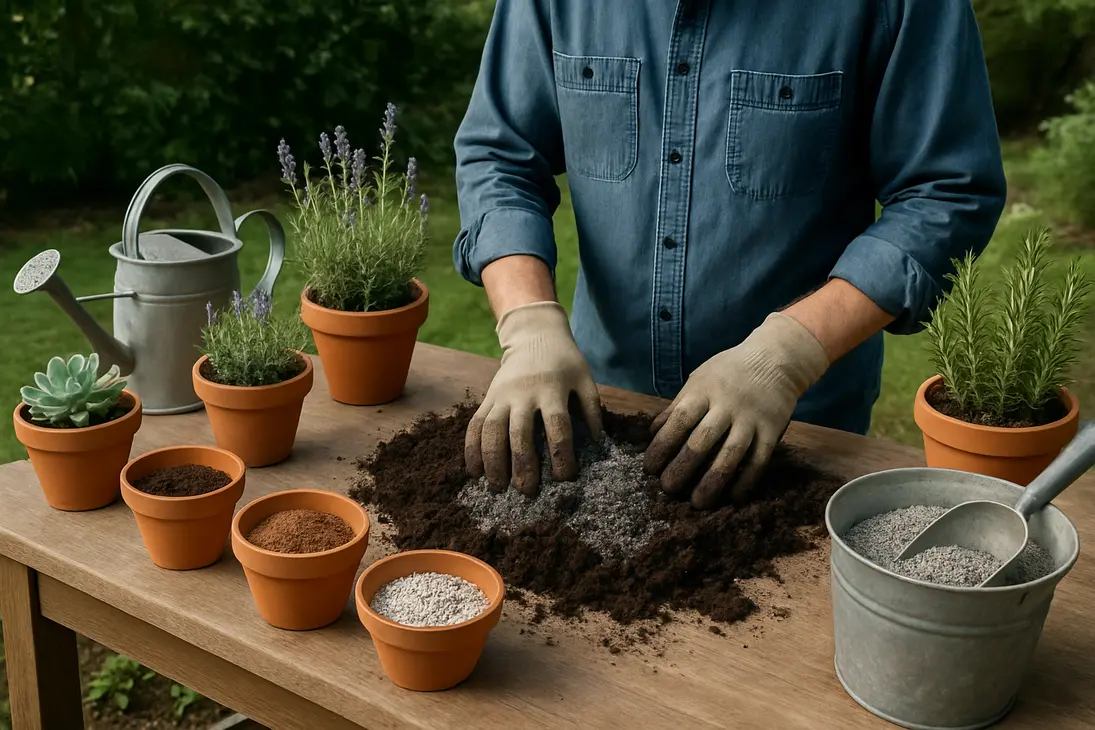
Succulent and cactus terrariums need a different approach. These plants generally dislike rich, moisture-holding soil. Use a gritty, fast-draining substrate with coarse sand, pumice, perlite, fine gravel, or cactus mix. If compost is used at all, it should be minimal.
Mix a small amount into the substrate
Use only fully finished compost. It should smell like forest soil, not food waste.
For most tropical terrariums, compost should be a supporting ingredient, not the base.
| Terrarium planting | Better substrate direction | Compost role |
|---|---|---|
| Closed tropical jar | Coir or fine potting mix, bark, perlite, charcoal | Very small amount |
| Open tropical terrarium | Potting mix or coir, bark, perlite | Small supporting ingredient |
| Bioactive tropical setup | Airy mix with bark, coir, charcoal, leaf litter | Light use only |
| Succulent planter | Gritty mineral mix | Little to none |
A simple closed tropical mix might include coco coir, fine orchid bark, perlite, and a pinch of finished compost or worm castings. Horticultural charcoal is often used in terrariums, but it cannot fix overwatering or rotting scraps.
Avoid thick compost layers on the surface of closed terrariums. Damp, rich surfaces invite mold and fungus gnats.
Balance moisture and drainage
Moisture management matters more than feeding.
Terrarium soil should be moist, not swampy. In a closed terrarium, some condensation is normal, but the glass should not be constantly dripping.
A pebble or LECA drainage layer can provide a small reservoir, but it does not fix overwatering and does not make raw scraps safe. If water pools in the bottom and the soil is saturated, the terrarium needs less water, more ventilation, or a better substrate.
After adding compost, watch for one or two weeks. If the glass stays fogged all day, the soil smells sour, or mold spreads quickly, the mix is too wet or too rich.
Which Veggie Scraps Are Best to Compost First?
The best scraps for terrarium soil are the ones that fully disappear into finished compost before they reach the glass. The goal is not to choose scraps to bury in the terrarium; it is to choose scraps that compost cleanly.
Better scraps for composting
Good vegetable-scrap compost can start with:
- Leafy greens
- Vegetable peels
- Carrot tops and celery ends
- Squash, cucumber, and pepper trimmings
- Fruit and vegetable scraps in moderation
- Coffee grounds in small amounts
- Clean, finely crushed eggshells if useful
Chop larger scraps before composting so they break down evenly. Use fruit scraps moderately because they can become wet, acidic-smelling, or attractive to fruit flies. Coffee grounds are nitrogen-rich but can compact when used heavily. Eggshells break down slowly and are not necessary for most terrariums.
Scraps to avoid in terrarium soil
Avoid adding these to terrarium soil, and be cautious with them in compost meant for indoor containers:
- Onion- and garlic-heavy scraps
- Oily or cooked foods
- Salty leftovers
- Meat
- Dairy
- Greasy foods
- Moldy food scraps
- Large chunks that have not broken down
Oily, salty, cooked, meat, and dairy scraps are more likely to cause odor and pest issues. Moldy food can introduce a heavy fungal load. Onion and garlic scraps may smell unpleasant in small indoor systems.
Never add recognizable food chunks to a terrarium and call them compost. If you can still identify the scrap, it is not finished.
Balance “greens” and “browns” while composting
Vegetable scraps are nitrogen-rich “greens.” They are wet and quick to rot if piled alone. Mix them with carbon-rich “browns” such as:
- Shredded dry leaves
- Shredded plain paper
- Torn cardboard
- Dry plant stems
- Coconut coir
- Woody garden debris, if composted long enough
Too many greens create slimy, smelly compost. Enough browns improve structure, airflow, and odor control.
This matters because poor compost makes poor terrarium soil. If compost smells bad in the bin, it will not improve inside glass. Let it mature until it smells clean and earthy.
Common Problems After Adding Organic Matter
If you already added scraps or compost and something seems wrong, act early. Terrariums recover more easily from small corrections than from full soil collapse.
Mold on the soil
A little white fungal growth can appear in humid terrariums, especially on new wood, leaf litter, or organic soil. Small amounts are not always disastrous.
Mold spreading over food scraps, plant crowns, or the whole soil surface is a warning sign. Remove raw scraps immediately with tweezers or a spoon, and take out affected soil if needed.
Ventilate the terrarium temporarily by leaving the lid open for a few hours, or longer if the soil is very wet. Keep it out of direct sun while venting because glass can overheat quickly.
In bioactive terrariums, springtails can help consume mold, but they are not a license to overfeed the system with scraps.
Fungus gnats or pests
Fungus gnats are common in wet, organic soil. If they appear after adding organic matter, stop adding compost or scraps and remove visible decomposing material.
In an open terrarium, let the top layer dry slightly between waterings if the plants can tolerate it. For future builds, use sterile, pasteurized, or well-finished ingredients. Backyard soil and unfinished compost can bring eggs, larvae, and other hitchhikers.
In closed terrariums, a severe gnat problem may require removing the plants, rinsing the roots gently, discarding the soil, and rebuilding with a better-draining mix.
Yellowing plants or weak growth
Yellowing leaves do not automatically mean the terrarium needs more nutrients.
Weak growth may come from:
- Overwatering
- Poor light
- Too much direct sun or heat
- Compacted soil
- Root rot
- Nutrient imbalance
- Plants unsuited to the terrarium type
- Normal adjustment after planting
Adding scraps can make these problems worse. A fern yellowing in soggy soil does not need decomposing vegetable waste; it needs better moisture balance and healthier roots.
Check the basics first: plant choice, light, airflow, substrate texture, and watering. Only consider compost after the growing conditions are right.
Bad smells
Bad smells are one of the clearest signs of trouble.
A healthy terrarium may smell like damp soil or forest floor. It should not smell rotten, sour, fermented, sulfurous, or like old vegetables.
Bad smells usually mean anaerobic decomposition. To fix it:
- Open the terrarium.
- Remove raw or rotting organic material.
- Take out black, slimy, or smelly soil.
- Let the container air out.
- Rebuild with a lighter substrate if needed.
- Water less next time.
If the smell is strong and the soil is saturated throughout, replacing the soil is usually better than trying to save it with charcoal or extra amendments.
Conclusion
Veggie scraps can improve terrarium soil only after they become stable, finished compost. Raw scraps are usually harmful in a small glass environment, especially in closed terrariums with high humidity and limited airflow.
Compost vegetable scraps outside the terrarium first. Wait until the material is dark, crumbly, and earthy-smelling. Then mix a small amount into an airy substrate suited to your plants.
A terrarium thrives on balance, not abundance. A little finished compost can support soil life and gentle nutrition. Fresh scraps, large chunks, and overly rich mixes usually lead to mold, gnats, odor, and root stress.
FAQ
Can I put vegetable scraps directly into a closed terrarium?
Usually no. Closed terrariums are too humid and low-airflow for raw scraps. They are likely to rot, mold, smell bad, or attract pests before becoming useful soil.
Use finished compost or vermicompost instead, and only in small amounts.
Is compost made from veggie scraps good for terrariums?
Yes, if it is fully finished, fine-textured, earthy-smelling, and used as part of a balanced substrate. It should not be the main ingredient in most terrarium mixes.
Avoid compost with recognizable food pieces or sour, rotten, or ammonia-like smells.
Can I use backyard soil mixed with veggie scraps in a terrarium?
It is risky. Backyard soil may contain pests, weed seeds, pathogens, pesticide residues, or other contaminants. Mixing it with raw veggie scraps increases the chance of rot, mold, and pests.
Use a controlled terrarium substrate instead, then add a small amount of finished compost if appropriate.
How much compost should I add to terrarium soil?
Use only a small portion of the mix. Terrarium soil should remain airy, well-draining, and suited to the plants.
Closed terrariums need the least compost. Open tropical terrariums can tolerate a little more. Succulent and cactus terrariums should have little to no compost because they need a drier, grittier mix.
You Might Also Like