What Are Vanilla Orchids? Fascinating Facts About the Plant Behind Vanilla
Vanilla is so common in kitchens that it is easy to forget it comes from an orchid.
The plant behind real vanilla is not a bean plant, shrub, or tree. It is a tropical climbing vine with short-lived flowers, demanding growing conditions, and pods that must be pollinated, harvested, cured, and aged before they smell like the vanilla used in baking.
What Is a Vanilla Orchid?
A Vanilla orchid is a plant in the genus Vanilla, a group of mostly tropical orchids that often grow as climbing vines. The most important commercial species is Vanilla planifolia, the source of most familiar culinary vanilla.
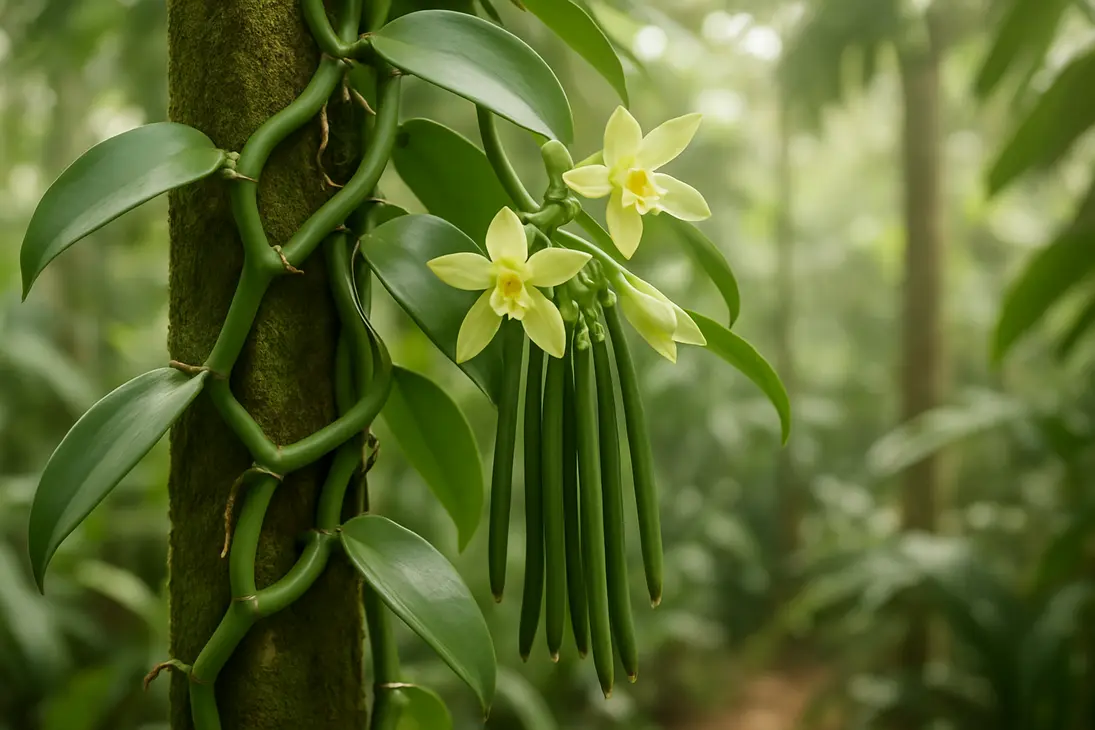
If a flower is successfully pollinated, it forms a long green pod. After months on the vine and careful curing, that pod becomes the dark, fragrant “vanilla bean” used for extract, paste, and whole-bean cooking.
Vanilla Orchids Belong to the Orchid Family
Vanilla orchids are true orchids in the family Orchidaceae, making them relatives of Phalaenopsis, Cattleya, Dendrobium, and other ornamental orchids.
Their flowers have typical orchid structures, including a column and a modified petal called the lip. However, Vanilla orchid flowers are much shorter-lived than many decorative orchids. They may be attractive, but they are brief.
They Grow as Climbing Vines, Not Typical Potted Orchids
Unlike compact houseplant orchids, Vanilla orchids naturally climb. They produce long, fleshy green stems that scramble up trees or supports in warm, humid forests.
Aerial roots help the vine cling and absorb moisture. In cultivation, growers train vines on trees, posts, trellises, or shade-house supports, often looping them at reachable height so flowers can be hand-pollinated.
As houseplants, Vanilla orchids still need support. A small plant may look manageable, but a healthy vine can become large, heavy, and difficult to treat like a windowsill orchid.
Vanilla Beans Are Seed Pods, Not Beans
“Vanilla bean” is a culinary term, not a botanical one. Vanilla beans are orchid seed capsules, not beans like kidney beans, soybeans, or green beans.
After pollination, the flower’s ovary lengthens into a green pod filled with tiny seeds and aromatic compounds. When you split a cured vanilla pod and scrape out the dark paste, you are seeing those seeds and the fragrant material around them.
Fresh pods do not smell strongly like vanilla. The familiar aroma develops during curing, which turns green pods into dark, flexible, intensely scented vanilla beans.
Where Vanilla Orchids Come From and Where They Grow Today
Vanilla orchids are tropical plants with a history shaped by climate, trade, pollination, and labor. Their story begins in the Americas, but today vanilla is cultivated in several warm regions.
Native Roots in Mexico and Central America
Vanilla planifolia is native to Mexico and parts of Central America. Long before vanilla became a global flavor, Indigenous peoples of the region used it, and it later became associated with cacao drinks and European trade.
For many years, vanilla was difficult to grow commercially outside its native range. The vines could grow and flower elsewhere, but without effective pollination, they produced few pods. Hand-pollination made large-scale production possible in other tropical regions.
Major Growing Regions: Madagascar, Tahiti, Indonesia, Mexico, and Hawaii
Madagascar is one of the best-known vanilla-producing regions and is strongly associated with Bourbon vanilla, usually from Vanilla planifolia. Here, “Bourbon” does not mean whiskey; it refers historically to islands in the Indian Ocean region, especially Réunion, formerly Île Bourbon.
Tahiti is associated with Vanilla tahitensis, known for a more floral, fruity fragrance. Indonesia grows significant amounts of vanilla, mostly V. planifolia. Mexico remains important because of vanilla’s native roots and cultural history. Hawaii produces smaller amounts, often as a specialty crop.
Why Climate Matters for Vanilla Orchids
Vanilla orchids need tropical or near-tropical conditions: warmth, humidity, filtered light, good drainage, and protection from cold. Frost can severely damage or kill the vines.
Too much direct sun can scorch leaves and stems, while too little light may produce leafy growth without flowers. Constant wetness with poor airflow can encourage rot, but drought stress weakens the vine.
This helps explain why real vanilla is expensive. It cannot simply be grown anywhere and harvested by machine. It needs the right climate, careful training, frequent attention, hand-pollination in most regions, and slow curing.
The Vanilla Orchid’s Unusual Flowers, Pollination, and Pods
The life of a vanilla pod begins with a flower that may last less than a day. That short window is one of the most remarkable Vanilla Orchid facts and a major reason real vanilla requires so much labor.
Each Flower Opens for Only a Short Time
Vanilla orchid flowers usually open in the morning and fade later the same day. If a flower is not pollinated during that narrow window, it withers and drops without forming a pod.
The flowers are typically pale greenish-yellow, cream, or yellow. They are attractive, though not as showy as many ornamental orchids. Their value lies in what they can become: a vanilla pod.
A mature vine may produce clusters of buds, but not all flowers open at once. During flowering season, growers must check vines daily.
Natural Pollination Is Rare Outside Its Native Range
In vanilla’s native range, certain insects can pollinate the flowers, though growers still do not rely heavily on natural pollination. Outside that range, the right pollinators are usually absent or ineffective.
Vanilla flowers are also structurally tricky. A small barrier separates the pollen from the receptive stigma, so pollen must be moved into the right position. Without that step, the flower fades.
This is why a homegrown Vanilla orchid may flower without producing pods. Flowering is only the first step; pollination must happen quickly and correctly.
Hand-Pollination Makes Commercial Vanilla Possible
Most commercial vanilla depends on hand-pollination. Workers use a small tool, such as a sliver of bamboo, to lift part of the flower and press the pollen against the stigma.
Each flower must be handled individually. Every pod may begin as one flower pollinated by hand, which explains much of vanilla’s cost.
Home growers can try hand-pollination if their vine flowers, but timing is critical. The flower should be fresh, usually early in the day. Once it wilts, the chance has likely passed.
Vanilla Pods Take Months to Mature and Cure
After successful pollination, the pod slowly lengthens and matures over many months. Growers harvest pods before they split, often when the tip begins to yellow.
At harvest, pods are green and not yet strongly aromatic. Curing creates the familiar scent and flavor. Methods vary, but curing usually includes:
- Killing or blanching: Stops growth and begins enzymatic changes.
- Sweating: Warm, humid conditions develop aroma.
- Drying: Moisture is reduced gradually.
- Conditioning: Pods rest for weeks or months to deepen flavor.
Good curing requires skill. Drying too quickly can make pods brittle or dull; drying too slowly can invite mold. This long process is another reason vanilla is valuable.
Types of Vanilla Orchids and How Their Flavors Differ
Not all vanilla tastes the same. Species, climate, harvest timing, curing, and storage all affect the final aroma. Real vanilla can be creamy, floral, fruity, smoky, woody, spicy, or resinous.
Vanilla planifolia: The Classic Bourbon-Style Vanilla
Vanilla planifolia is the dominant species in world vanilla production and the source of most classic vanilla extract.
When grown in Madagascar and nearby Indian Ocean regions, it is often sold as Bourbon vanilla. Its flavor is commonly described as rich, creamy, sweet, and full-bodied. It works well in cakes, cookies, custards, ice cream, whipped cream, and pastry creams.
For home gardeners buying a “vanilla orchid,” Vanilla planifolia is the species they are most likely to find.
Vanilla tahitensis: Floral and Fruity Tahitian Vanilla
Vanilla tahitensis is associated with Tahitian vanilla. It is usually more floral and fruity than V. planifolia, with notes that may suggest cherry, anise, prune, or perfume depending on the batch.
Its pods are often plumper and have a different aromatic balance from Bourbon-style vanilla. Tahitian vanilla is popular in creams, fruit desserts, beverages, and infusions where fragrance matters as much as deep sweetness.
For cooks, the key point is simple: it is real vanilla, but it does not smell or taste exactly like Madagascar-style vanilla.
Vanilla pompona: Less Common, Bold, and Aromatic
Vanilla pompona is less common commercially but valued in some regions. It can produce large pods with a bold aroma often described as sweet, floral, strong, or somewhat resinous.
Because it is not as widely produced as V. planifolia, it is less familiar to many cooks. It may appear in specialty vanilla products or among orchid collectors, but it is not usually the standard beginner “vanilla bean orchid.”
Why “Vanilla” Is More Complex Than Its Bland Reputation
In everyday language, “vanilla” often means plain or boring. The real spice is anything but.
Whole cured vanilla contains many aromatic compounds, not just vanillin. Depending on species and curing, a pod may smell creamy, woody, smoky, floral, fruity, balsamic, or spicy.
Vanilla’s “plain” reputation likely comes from its role as a familiar base flavor. It blends with sugar, dairy, chocolate, coffee, fruit, and baked goods so well that people sometimes overlook its complexity.
Growing a Vanilla Orchid at Home
You can grow a Vanilla orchid at home if you can provide warmth, humidity, bright filtered light, and room for a climbing vine. Producing your own vanilla beans is much harder.
Think of the plant first as a tropical orchid vine. Any pods are a bonus.
Light, Humidity, Warmth, and Support Requirements
Vanilla orchids prefer bright, indirect light. Outdoors in suitable climates, they do well under light shade, such as trees or shade cloth. Indoors, a bright filtered window or warm greenhouse is better than a dim room.
They also need warmth, humidity, airflow, and a sturdy support. A practical setup includes:
- A chunky, well-drained orchid mix or loose, airy medium.
- A moss pole, trellis, stake, or other sturdy support.
- Bright filtered light, not harsh midday sun.
- Regular watering without waterlogging.
- Higher humidity, especially indoors.
- Good airflow to reduce rot and fungal problems.
The vine may root along its support if humidity is high. Avoid dense, soggy potting mixes, which can rot the fleshy stems and roots.
Why Homegrown Vanilla Beans Are Difficult to Produce
The first challenge is maturity. Vanilla vines often need to become large before flowering, and a small cutting may take years to reach that stage.
Even if the plant flowers, the bloom lasts only a short time. You must notice it, pollinate it early enough, and do so correctly. If pollination succeeds, the pod still needs months to mature.
Curing is another challenge. A fresh pod is not ready-to-use vanilla. It must be dried and conditioned carefully to develop aroma. For most indoor growers, the plant is rewarding as a vine, but homemade vanilla beans are not guaranteed.
Tips for Buying a Real Vanilla Orchid Plant
People often search for a “Madagascar vanilla bean plant” or “real vanilla orchid,” but the wording can be misleading. Madagascar vanilla usually means Vanilla planifolia grown and cured in Madagascar, not a separate houseplant species.
When buying, look for:
- A botanical name, ideally Vanilla planifolia.
- Firm green stems on a healthy cutting or rooted plant.
- Clear care instructions.
- No promise of quick beans from a tiny plant.
- Listings that identify the living plant, not just show vanilla pods.
Some plants use “vanilla” in their common name because of scent or marketing. If you want the true spice plant, the genus should be Vanilla.
Conclusion
The Vanilla orchid is a tropical climbing orchid with brief flowers, difficult pollination, and pods that need months of growth and careful curing before they become fragrant vanilla beans.
Its story connects Mexico and Central America with Madagascar, Tahiti, Indonesia, Hawaii, and other tropical regions. Its main cultivated species, including Vanilla planifolia, Vanilla tahitensis, and Vanilla pompona, offer flavors that can be creamy, floral, fruity, bold, and complex.
For gardeners, Vanilla orchids are fascinating but demanding. They need warmth, humidity, support, patience, and usually hand-pollination to produce pods. Whether you grow one or simply cook with real vanilla, the plant behind the flavor deserves more credit than the word “plain” suggests.
FAQ
Do All Vanilla Orchids Produce Vanilla Beans?
No. The genus Vanilla includes many species, but commercial vanilla mainly comes from a few, especially Vanilla planifolia, Vanilla tahitensis, and sometimes Vanilla pompona.
Even the right species will not produce pods unless the plant is mature, healthy, flowering, and successfully pollinated.
Can You Grow a Madagascar Vanilla Orchid at Home?
Yes, if you mean Vanilla planifolia, the species commonly grown in Madagascar for vanilla production. It can grow at home with warmth, humidity, bright filtered light, and support.
Producing beans is much harder. The vine must mature, flower, be hand-pollinated at the right time, and carry pods for months.
Is Vanilla Orchid the Same as Vanilla Extract?
No. The Vanilla orchid is the living plant. Vanilla extract is made by extracting flavor from cured vanilla pods, usually with alcohol and water.
The path is long: flower, pollination, green pod, mature pod, cured bean, then extract. Artificial vanilla flavoring may not come from orchids at all.
Are Vanilla Allergies Common?
True vanilla allergy appears uncommon, but reactions can happen. Some people may react to vanilla itself, alcohol, additives, fragrances, or other ingredients in vanilla-flavored products.
Anyone with swelling, hives, breathing symptoms, or repeated reactions after exposure should speak with a qualified medical professional.
You Might Also Like