Why Did My Snake Plant Die in Low Light With Hardly Any Water?
Snake plants tolerate low light and infrequent watering, but they do not thrive indefinitely in either condition. When one dies despite hardly being watered, the most common cause is roots that stayed wet too long because of dense soil, poor drainage, cold conditions, or water trapped in a decorative outer pot.
Low light contributes because the plant uses water slowly. Even occasional watering can become too much in a dim room. Less often, severe drought, cold damage, or pests are responsible.
Before replacing it, check whether any part is still alive.
Start by Checking Whether the Snake Plant Is Actually Dead
Snake plants can look badly damaged while retaining a viable rhizome—the thick underground stem that produces roots and leaves. A few dead leaves do not mean the whole plant is gone.
Check the leaves, crown, and roots
Start at the crown, where the leaves emerge from the soil. A living crown should feel firm. A dead or rotting crown is often soft, dark, wet-looking, or hollow.
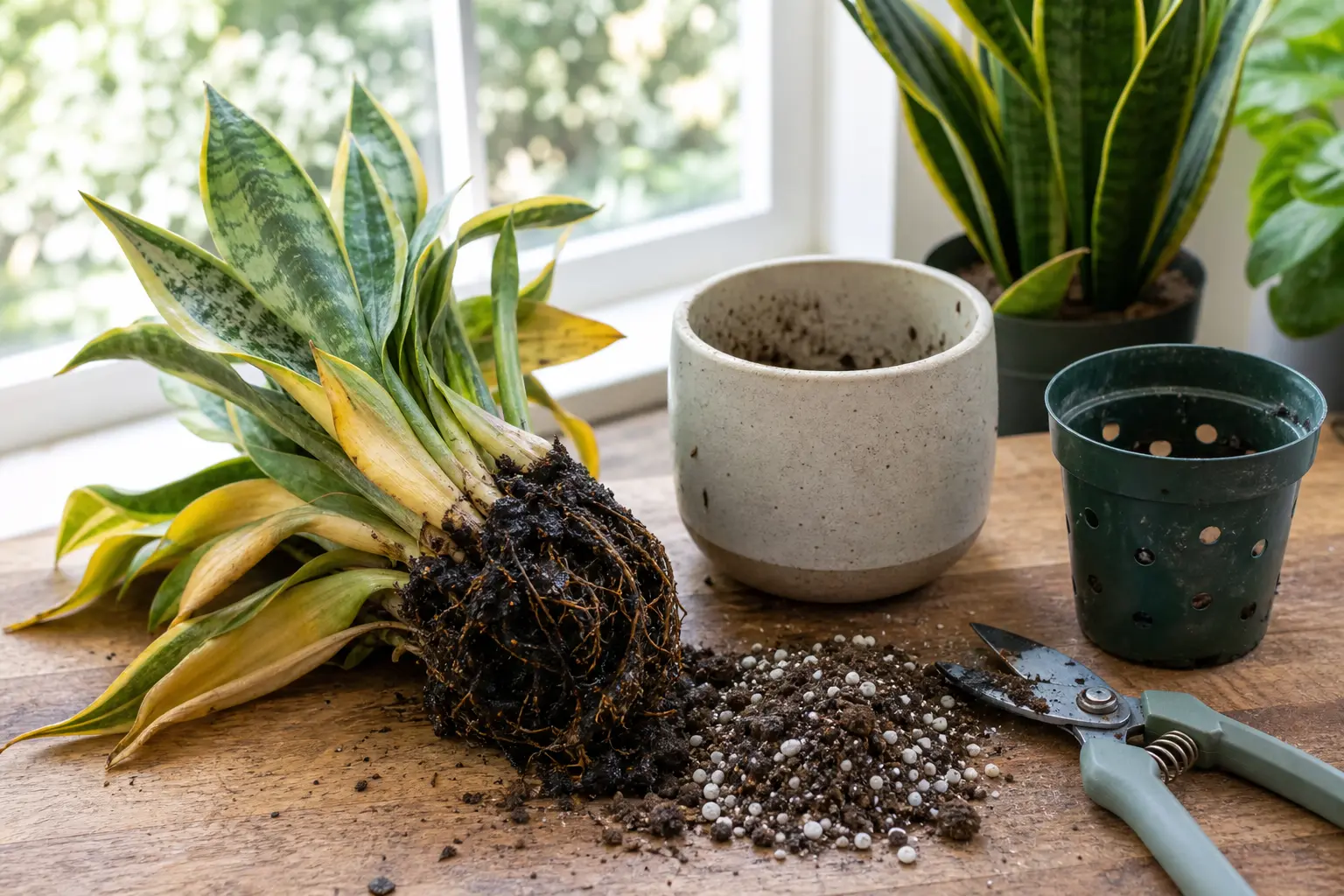
Remove the plant from its pot and inspect the roots. Healthy roots are firm and usually pale tan, orange-tan, or white. Warning signs include:
- Black, brown, slimy, or easily detached roots
- A sour, swampy, or rotten smell
- A soft or discolored rhizome
- Leaf bases that collapse when pressed
- Soil that remains wet deep in the pot after weeks without watering
Look for firm green tissue or healthy rhizomes
Even if the leaves have failed, look below the soil for a firm rhizome with healthy roots. Solid pale or greenish tissue without a rotten smell may be salvageable.
A firm green leaf base can sometimes be propagated, but a healthy rhizome section with roots and a growing point is the better rescue candidate. Leaf cuttings are slow and may not preserve the variegation of a variegated cultivar.
Know when to discard the plant
Discard the plant if every rhizome is soft, blackened, hollow, or foul-smelling and no firm roots or green tissue remain. Do not reuse the old soil, especially if rot or pests may have been involved.
Wash the pot thoroughly before reusing it.
The Most Likely Reasons a Snake Plant Died
Snake plants store moisture in thick leaves and rhizomes, helping them survive dry periods. That same trait makes them vulnerable to wet, airless soil.
Overwatering or soil that stayed wet too long
Overwatering does not necessarily mean watering every few days. In a dark, cool room, one thorough watering can keep soil wet for a long time. When roots cannot dry or access oxygen, they begin to die.
Watering “once a month” may be reasonable in a warm, bright location with porous soil, but excessive in a dim room during winter. Water based on conditions, not a calendar.
Root rot caused by a pot without drainage or dense soil
A pot without a drainage hole is a high-risk setup. Water can collect at the bottom, keeping roots wet even when the surface appears dry.
Dense, peat-heavy mixes and oversized pots create similar problems. Extra unused soil around a small root ball holds moisture longer. Use a pot only slightly larger than the root system.
Too little light over a long period
Snake plants survive lower light than many houseplants, but they still need enough light to make energy and use water efficiently. A very dim corner or windowless room is not an ideal permanent location.
In prolonged low light, growth may stop and leaves may lose color. Low light alone rarely causes a sudden mushy collapse, but it often creates conditions that allow rot to develop.
Underwatering, especially in hot or dry conditions
Severe dehydration can also kill a snake plant, especially near heating vents, air-conditioning, intense sun, or in a very small pot.
An underwatered plant usually becomes wrinkled or folded before it dies. Leaves may curl inward, feel thin, and develop crisp brown tips. If it was bone-dry for months and roots are brittle, recovery may be limited.
Cold drafts, temperature stress, or sudden location changes
Snake plants can suffer cold damage from a leaf touching a cold window, winter drafts near an exterior door, or chilled air from a vent. Damage may appear as soft, water-soaked patches.
A sudden move from a bright, warm shop to a cold, dark home can also reduce the plant’s ability to cope with wet soil or transplant stress.
Pests or disease that weakened an already stressed plant
Pests are not the usual reason a snake plant suddenly dies, but mealybugs, spider mites, and scale can weaken it over time. Check leaf joints, undersides, and leaf bases.
Fungal or bacterial problems may follow injury, cold damage, or root rot. If soft brown spots are spreading, isolate the plant, remove affected tissue with clean tools, and avoid wetting the leaves.
Diagnose the Cause From the Symptoms
Symptoms overlap, so assess the soil, roots, and growing conditions together.
| What you see | Most likely cause | What to check next |
|---|---|---|
| Yellow, soft leaves that fall over | Excess moisture or rot | Soil moisture, drainage, roots |
| Soft black base and bad smell | Advanced root or crown rot | Rhizome for firm tissue |
| Wrinkled, curled leaves | Underwatering or root loss | Is soil dry, or are roots rotten? |
| Pale, weak growth in a dark room | Long-term insufficient light | Distance from window and daily light |
| Brown spotting, webbing, sticky residue | Pests or disease | Leaf undersides and nearby plants |
Yellow, soft, or collapsing leaves
One yellow outer leaf may simply be aging. But yellow leaves that feel soft, bend easily, or collapse at the base usually point to excess moisture.
Do not add fertilizer. It will not repair damaged roots and can stress a plant that cannot take up water properly. Check the roots first.
Mushy roots, a rotten smell, or a soft base
These are strong signs of rot. Healthy roots feel solid, not slick or hollow. A soft base suggests rot has reached the crown or rhizome.
If only a small area is affected, trimming and repotting may save it. If the entire rhizome is mushy, recovery is unlikely.
Wrinkled, curling, or dry brown leaves
Wrinkled leaves can mean underwatering, but they can also occur when rotten roots cannot absorb water from wet soil.
Check before watering. If the mix is dry throughout and roots are firm, water thoroughly and let excess drain. If the soil is wet and roots are compromised, more water will worsen the problem.
Pale, stretched, or slowly declining growth in low light
Snake plants grow slowly indoors, so a lack of new leaves is not automatically concerning. However, unusually narrow, pale, floppy, or light-seeking leaves suggest inadequate light.
Move the plant gradually closer to a bright window with indirect light. Avoid sudden exposure to harsh direct afternoon sun.
Brown spots, webbing, or other signs of pests
Fine webbing can indicate spider mites. Cottony white clumps suggest mealybugs, while hard brown bumps may be scale. Sticky residue can accompany sap-feeding pests.
Isolate the plant, wipe away visible pests with a damp cloth, and inspect it weekly. Also correct poor light or watering conditions that may have weakened it.
Can a Dying Snake Plant Be Saved?
A snake plant can recover if it still has firm roots, a sound rhizome, or healthy leaf tissue. The priority is to identify rot, remove damaged material, and give surviving tissue a chance to recover.
Remove the plant and inspect the roots
Take the plant from its pot and remove enough old soil to inspect the roots and rhizome. Use clean scissors or pruners, disinfecting them between cuts if you are removing rot.
Separate healthy sections from damaged ones where possible. A firm rhizome may be worth saving even if several leaves are beyond repair.
Cut away black, mushy, or rotten roots and leaves
Remove soft roots, blackened rhizome tissue, and leaves collapsing at the base. Cut back until the remaining tissue is firm and clean-looking.
Do not leave partly rotten tissue behind. If you removed a substantial amount of rhizome, let cut surfaces dry for a day or two in a warm, shaded place before repotting.
Repot in a fast-draining mix and a pot with drainage
Use a pot with at least one drainage hole, only slightly larger than the remaining root system.
A cactus or succulent mix amended with perlite, pumice, or coarse bark can improve airflow and drying. Do not add rocks to the bottom as a substitute for drainage; they do not prevent water from collecting in the pot.
Wait before watering after repotting
After cutting rotten roots or rhizomes, wait several days before watering. If rot was extensive, waiting about a week is often safer.
Then water thoroughly and let all excess drain away. Empty any saucer or cachepot, and do not water again until the mix has dried deeply.
Move it to brighter indirect light
Place the recovering plant in bright indirect light and keep it warm and stable. Better light helps it produce energy and dry soil at a healthier pace, but avoid intense direct sun while it is weakened.
Recovery can take weeks or months. Look for firm surviving leaves and rhizomes rather than expecting immediate new growth.
Propagate healthy leaves or rhizomes if the main plant is beyond saving
If the main crown is rotting but firm leaves remain, healthy leaf cuttings may be propagated. Let cut ends dry before placing them upright in lightly moist, fast-draining propagation mix.
Healthy rhizome divisions with roots and a growing point offer the best chance of preserving the original plant. Variegated snake plant leaf cuttings may produce plain green new plants.
How to Prevent Another Snake Plant From Dying
Treat a snake plant as drought-tolerant rather than water-loving, while still providing enough light for healthy growth.
Water based on dry soil, not a fixed calendar
Push a finger or wooden chopstick several inches into the pot. Water only when the mix is dry deep in the container, not just at the surface.
Drying may take a couple of weeks in a bright, warm setting or many weeks in a dark, cool room. Winter, large pots, and humid conditions slow drying further.
Use a drainage hole and gritty, fast-draining potting mix
A drainage hole is essential for reliable care. If you prefer a decorative pot without one, use it as a cachepot: keep the plant in a nursery pot with holes, remove it to water, and let it drain fully before returning it.
Use a porous mix that does not compact into a heavy, wet mass.
Give the plant bright indirect light when possible
Snake plants tolerate moderate and lower light, but brighter indirect light produces stronger growth and makes watering less risky. A windowless room generally requires a suitable grow light for long-term health.
Keep it away from cold windows, vents, and drafts
Keep the plant away from freezing windows, air-conditioning blasts, heating vents, and exterior doors. If it must remain in a cooler room, water less often because soil will dry more slowly.
Check the roots and soil before watering a struggling plant
When a snake plant looks wrinkled, yellow, or limp, do not water automatically. First ask:
- Is the soil dry throughout or wet below the surface?
- Does the pot have a drainage hole?
- Are the leaf bases firm or soft?
- Is the plant in a very dim or cold location?
- Are pests visible?
This check helps prevent the most damaging mistake: watering a plant whose roots have already begun to rot.
Conclusion
When a snake plant dies in low light with hardly any water, the cause is often wet roots rather than neglect alone. Poor drainage, dense soil, cold conditions, and low light can work together so that even one watering lingers long enough to cause rot.
Check the crown and roots before giving up. Firm rhizomes or healthy leaf tissue may still be saved. For the next plant, use a drainage pot, airy soil, brighter indirect light when possible, and water only after the mix has dried deeply.
FAQ
How can I tell if my snake plant died from overwatering?
Overwatering is likely if leaves turned yellow and soft, collapsed at the base, or developed a wet, translucent appearance. Check the roots to confirm: black, mushy, slimy roots and a sour smell are typical signs of rot.
Infrequent watering can still be overwatering when soil is dense, drainage is poor, light is low, or the room is cool.
How often should I water a snake plant?
There is no reliable fixed schedule. Water when the potting mix has dried deeply, then allow excess water to drain completely. In bright, warm conditions this may happen more often; in low light or winter, it may take several weeks.
Can a snake plant survive in a room with no natural light?
Not indefinitely without supplemental light. Snake plants tolerate low natural light, but a room with no window light generally needs a grow light for long-term health. In very low light, the plant will use water slowly.
Will a snake plant grow back after root rot?
It can if firm rhizome, healthy roots, or intact growing points remain. Remove all rotten tissue, repot the healthy portion in fast-draining mix, and avoid watering immediately after trimming roots.
If the entire rhizome is soft and rotten, the original plant will not regrow. A firm, healthy leaf section may still be propagated.
You Might Also Like