Why Is My Air Plant Browning in the Center?
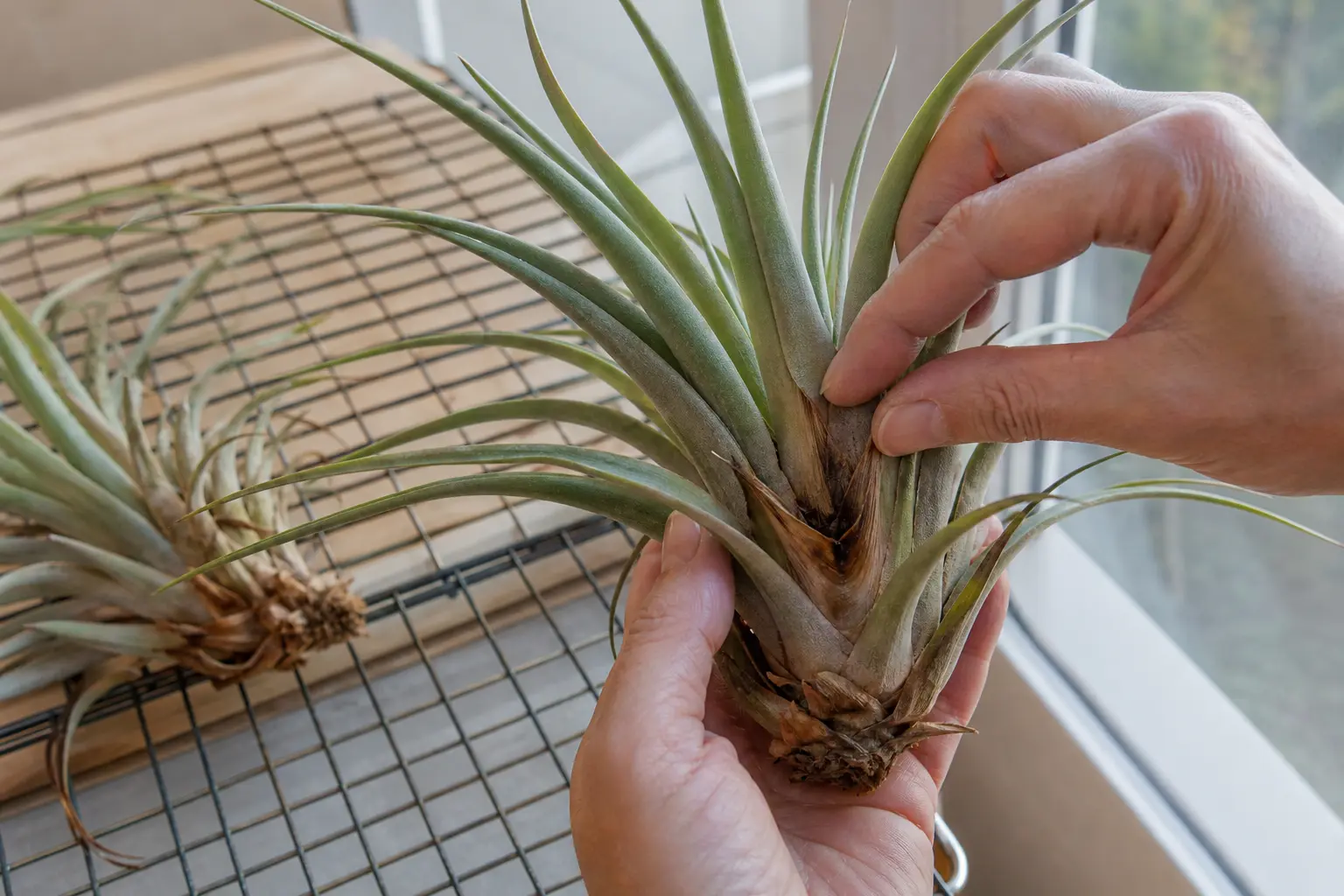
An air plant browning in the center needs attention because the center, or crown, is where new leaves emerge. Browning can indicate crown rot, but it may also be a harmless spent flower spike, a dry older leaf base, or dehydration affecting new growth.
The right response depends on what the brown tissue looks and feels like. Dry, papery tissue is usually less concerning than dark, soft, wet-looking tissue deep in the crown.
Identify Whether the Center Browning Is Rot, Aging, or a Drying Bloom
Inspect the plant in bright light before changing its care. Gently spread the leaves enough to see the crown, without forcing tightly packed leaves apart. Check for softness, discoloration at leaf bases, and signs that the plant has recently flowered.
Signs of crown rot
Crown rot usually begins where water remains trapped between the newest leaves. It is most common when the plant stays wet too long in cool, dim, or poorly ventilated conditions.
Warning signs include:
- Brown, dark gray, or black discoloration low in the crown
- Soft, wet, translucent, or mushy leaf bases
- A sour or decaying smell
- Inner leaves that loosen or pull out easily
- Browning that spreads outward from the center
- A hollow or collapsed feel after central leaves die
Gently tug one central leaf. If it slips out with a dark, soft base, the growing point has likely rotted. Do not keep pulling leaves to investigate, as this can damage healthy tissue.
Normal browning of older inner leaves or a spent bloom
Not every brown area in the middle is rot. Older leaf sheaths can dry at the base and become hidden by newer leaves. A dry, papery brown sheath is often normal if the rest of the plant remains firm.
A fading flower spike is another common cause of center browning. Air plants often flower from the center, and the colorful bracts or spike naturally turn tan or brown after blooming.
A drying bloom is usually:
- Crisp or papery, not slimy
- Clearly separate from the leaf crown
- Brown mainly on the spike or bracts
- Accompanied by firm, healthy leaves
You can leave a dry flower spike until it loosens naturally or trim it with clean scissors. Avoid cutting deeply into the crown.
Symptoms that point to underwatering instead
Underwatering usually causes dry symptoms across the plant rather than a wet-looking brown center. This is especially likely if the plant is soaked only once a month in a heated or air-conditioned home.
Look for:
- Leaves curling inward lengthwise
- Dry, crisp tips or edges
- Thin, stiff, or brittle leaves
- Loss of flexibility
- Persistent curling after watering
Some silvery air plants naturally curl more than smooth green varieties. The useful clue is increased curling combined with dry texture and browning at the tips or margins.
Why an Air Plant Can Rot Even With Good Airflow
Airflow helps, but it does not guarantee that the crown dries. A plant can look dry outside while moisture remains deep between its inner leaves. It can also receive plenty of air yet become dehydrated if watering is too infrequent.
Water left between tightly packed center leaves
Water easily collects in the cupped centers of many Tillandsias, especially broad-leaved green types with tightly packed leaf bases.
After soaking or rinsing, droplets may remain hidden in the crown. If the plant goes directly back into a holder, terrarium, shell, or narrow mount, the water may not drain. Repeated wetness can weaken new central tissue and lead to rot.
Shake the plant firmly but carefully after watering. If needed, blot visible pooled water from the crown with the corner of a paper towel.
Drying time matters more than airflow alone
An air plant should dry fully within several hours after watering. If the center remains cool and damp into the evening or overnight, adjust the drying method or location.
Drying slows when air is humid, temperatures are cool, light is weak, or the plant sits in a dense display. A fan across the room may not help a plant inside a decorative vessel with limited circulation.
Cool temperatures, low light, and enclosed displays
Low light slows growth and water use, while cool temperatures reduce evaporation. Together, they can turn a normally safe soak into a prolonged wet period.
Problems are more likely when an air plant is:
- Kept in a closed terrarium or glass globe
- Displayed in a shell, cup, or holder that covers its base
- Watered late in the day and left wet overnight
- Positioned in a dim, cool room
- Kept against cold window glass in winter
Open displays are safer than enclosed ones. If you use a glass container, remove the plant for watering and drying rather than keeping it enclosed full-time.
Mineral-heavy or softened water buildup
Water quality rarely causes sudden crown rot, but it can stress leaves over time. Mineral-heavy water may leave deposits, and household-softened water can contain added sodium that is not ideal for air plants.
If tap water leaves a white film, consider rainwater, filtered water, or unsoftened tap water. Never let the plant sit in old, cloudy, or stagnant water.
Adjust the Watering Routine for Your Conditions
A once-monthly soaking schedule is often too sparse for indoor air plants, especially smooth-leaved green Tillandsias in warm, dry rooms. The goal is regular hydration followed by prompt, complete drying.
Increase watering if the plant is only soaked once a month
Many air plants need water more often than a monthly soak. Frequency depends on species, light, temperature, humidity, and whether the plant is mounted.
| Conditions | Starting approach |
|---|---|
| Warm, bright room with dry household air | Soak or rinse about weekly |
| Average indoor conditions with bright indirect light | Water roughly every 7–10 days |
| Cool, dim room or humid setting | Water less heavily and ensure fast drying |
| Thick, silver type | Usually needs less water |
| Smooth, green-leaved type | Usually benefits from more frequent hydration |
Use these as starting points rather than strict rules. A tightly curled, dry plant may need more frequent watering, while a plant that stays plump and dries quickly may do well on a weekly routine.
Use shorter soaks or thorough rinses when crown rot is a concern
If the crown has early discoloration but still feels firm, avoid prolonged soaking while you improve drying conditions. A shorter soak or thorough rinse can hydrate the leaves without repeatedly flooding the center.
For suspected crown trouble:
- Rinse the plant thoroughly with room-temperature water.
- Let excess water drain from the leaf bases.
- Shake it upside down several times.
- Place it crown-down in a bright, warm location until fully dry.
Do not rely on heavy misting as the main watering method. It may not hydrate the plant adequately while still keeping the crown damp.
Shake out the plant and dry it upside down
After watering, hold the plant upside down and shake out trapped droplets. Let it dry upside down for the first part of the drying period so gravity pulls water away from the crown.
Do not immediately return it to a cup, wire holder, or container that traps moisture at the base. If it is attached to a mount, tilt the mount so water drains away from the crown.
Choose a brighter, warmer drying location
Dry the plant in bright indirect light, at a comfortably warm temperature, with open air around it. A gentle fan can help in a cool or humid home.
Avoid placing it directly in the blast of a heater, air conditioner, or hot vent, which can dry leaf tips excessively. Water in the morning when possible so the plant has the day to dry.
What to Do When the Center Is Already Brown
When the crown is brown, determine whether living tissue remains. A small dry patch on a bloom or leaf base may be cosmetic; a soft, spreading brown center is more serious because Tillandsias grow from one central point.
Remove loose, dead leaves without pulling on healthy tissue
Remove only leaves that are fully dry, loose, and clearly dead. If a leaf resists, leave it alone. Pulling can tear healthy tissue.
Use clean, sharp scissors to trim a dry flower spike or crisp leaf tip. Do not carve into discolored center tissue to remove rot; cutting rarely reverses advanced crown decay and can further injure the growing point.
Check whether the center leaves pull out easily
Gently test one central leaf. If it remains firmly anchored and surrounding tissue is dry and solid, viable growth may remain. Improve drying conditions and watch for new leaves over the following weeks.
If the center leaf pulls free with a dark, mushy base, the central growing point is likely gone. Remove loose decayed material, keep the plant dry briefly, and inspect the remaining base rather than repeatedly soaking it.
When to stop watering temporarily
Pause watering if the center is wet, soft, darkening, or foul-smelling. More moisture will not rehydrate rotten tissue and may allow decay to spread.
Place the plant upside down in bright, indirect light with good circulation and let it dry completely. Then reassess:
- Firm tissue remains and discoloration has stopped: Resume light watering and careful drying.
- The center continues collapsing or smells decayed: Recovery is unlikely.
- Only a dry bloom or papery leaf base is brown: Return to normal watering.
Do not leave a healthy air plant dry for an extended time out of fear of rot. This short pause is only for an actively wet, suspect crown.
How to watch for pups after flowering or decline
Air plants commonly produce offsets, called pups, after flowering. A mature mother plant may make pups near its base even as it gradually declines, which can be mistaken for disease.
Check around the lower leaves for small, firm rosettes with fresh green or silvery growth. Continue caring for the mother plant if it remains sound because it supports the pups while they establish.
If the mother plant has severe crown rot, decay can threaten pups near the attachment point. Keep the area dry, provide bright indirect light, and avoid separating pups while they are very small.
Prevent Center Browning Going Forward
The most reliable routine is balanced: water regularly enough to prevent dehydration, then ensure that the crown dries promptly.
Keep these habits in place:
- Provide bright, indirect light.
- Water according to the plant’s condition and your home’s climate, not a fixed monthly schedule.
- Use a rinse or soak that hydrates the plant, then drain it thoroughly.
- Shake out the crown and dry the plant upside down.
- Avoid closed containers and water-holding displays.
- Use non-softened water when possible.
- Feed lightly during active growth with fertilizer intended for bromeliads or air plants, following label directions.
Check the plant at each watering. Firm leaf bases, a clean crown, and gradual new growth are better indicators of success than any calendar.
Conclusion
An air plant browning in the center may be drying after flowering, responding to too little water, or developing crown rot. Texture is the key clue: dry and papery tissue usually indicates aging or a spent bloom, while dark, soft, loose, or foul-smelling tissue suggests rot.
If you have been soaking only once a month, more regular hydration may help. At the same time, prevent rot by draining and drying the plant upside down in a bright, warm, open location after watering. A firm center can often stabilize with better conditions; a mushy center that pulls apart easily is much harder to save.
FAQ
Can I save an air plant if the center is brown?
Possibly, if the brown area is dry and the center leaves remain firmly attached. Remove only loose dead material, improve light and drying conditions, and water carefully once the plant is fully dry.
If the center is mushy, smells unpleasant, and the inner leaves pull out easily, the growing point has likely rotted. The main plant may not recover, but check near the base for healthy pups.
Should I soak an air plant once a month or more often?
For many indoor air plants, once a month is not enough. A weekly soak or thorough rinse is a more realistic starting point in bright, warm, dry household conditions. Cooler or more humid homes may require less frequent watering.
Adjust based on the species and the plant’s response. Tight curling, dry tips, and stiff leaves often indicate the plant needs water more often. Always make sure it dries fully afterward.
Why are the inner leaves brown while the outer leaves are still green?
Outer leaves can remain green while crown rot begins because the problem starts at the youngest, most protected leaf bases. Check whether the inner leaves are soft or loose.
If the brown material is dry and associated with an old flower spike or papery leaf sheath, it may be normal aging. Healthy inner growth should feel solid and remain attached.
Can tap water cause an air plant’s center to turn brown?
Tap water is not usually the direct cause of center rot. Rot is more often caused by water trapped in the crown too long. However, mineral-heavy water can leave deposits, and softened water may contain added sodium that is unsuitable for regular use.
If your water leaves residue, try rainwater, filtered water, or unsoftened tap water. Prioritize thorough drainage and fast drying after every watering.
You Might Also Like