What Is the Best Environmentally Friendly Pest Spray for Plants?
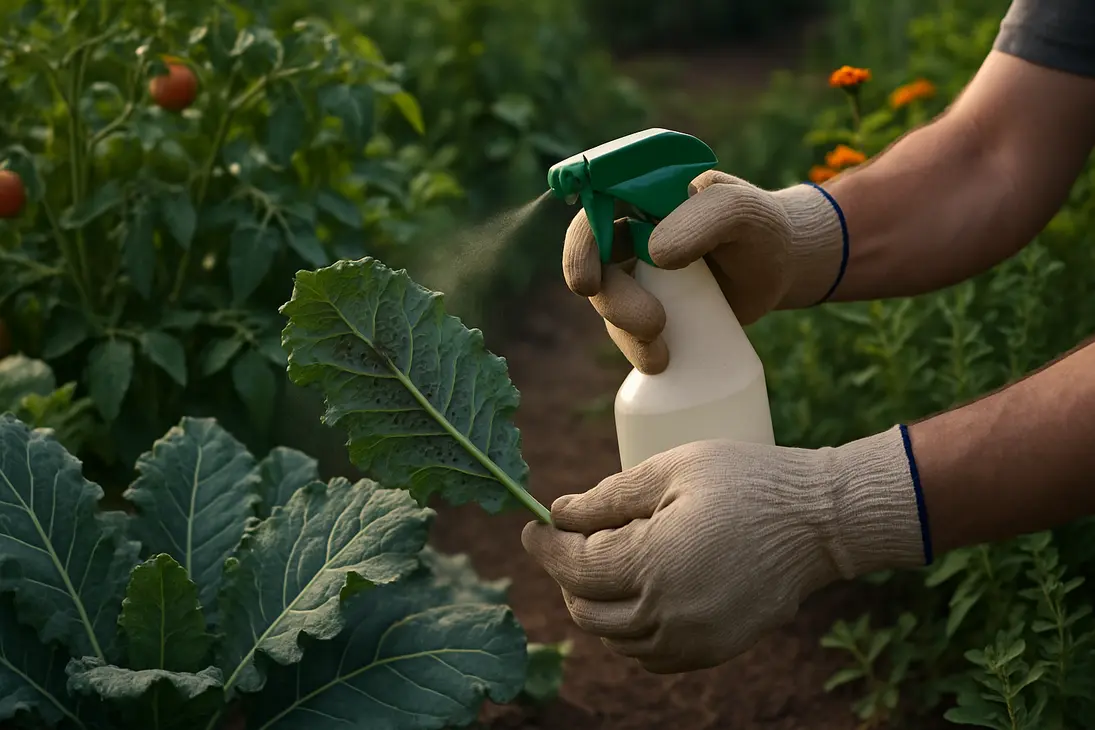
The best environmentally friendly pest spray is usually the least-toxic option that targets the pest you actually have. For aphids, whiteflies, spider mites, mealybugs, and other soft-bodied insects, a ready-to-use or properly diluted insecticidal soap is often the best starting point. It works on contact, leaves little residual activity, and can be used carefully on many edible and ornamental plants.
That does not make it the right answer for every problem. Caterpillars, beetles, scale insects, fungal diseases, mosquitoes, and animals such as rabbits require different approaches. A peppermint or pepper spray may discourage some visitors for a short time, for example, but it is not a dependable treatment for an established aphid infestation.
The environmentally friendliest approach is not routine spraying. It is identifying the pest, treating only affected plants or areas, and combining a targeted spray with practical prevention.
Choose a Spray Based on the Pest and Where You Are Treating
A spray that is sensible around a patio perimeter may be inappropriate on lettuce leaves you plan to harvest tomorrow. Likewise, a product that controls tiny aphids may do very little against chewing caterpillars or beetles.
Before buying or mixing anything, decide whether you are trying to kill pests currently feeding on a plant, repel pests from an area, or prevent a recurring problem through physical and cultural controls.
Identify the Pest Before You Spray
Look closely at the plant before treating it. Check new growth, stems, buds, leaf undersides, and the soil surface. The pest, the type of damage, and the plant’s condition determine whether spraying is useful.
Common clues include:
| What you see | Likely issue | Lower-impact first response |
|---|---|---|
| Clusters of pear-shaped insects; curled new leaves; sticky residue | Aphids | Insecticidal soap, a firm water spray, or horticultural oil where suitable |
| Fine webbing; stippled, faded leaves | Spider mites | Water rinse, insecticidal soap, or horticultural oil with thorough coverage |
| White, cottony clusters on stems or leaf joints | Mealybugs | Hand removal on small plants, followed by insecticidal soap or a labeled oil |
| Small white insects flying up when foliage is disturbed | Whiteflies | Insecticidal soap or horticultural oil; improve airflow and inspect regularly |
| Holes, chewed edges, or leaf skeletonizing | Caterpillars, beetles, slugs, or other chewing pests | Hand-pick where practical; use a pest-specific product only after identification |
| Leaves distorted without visible insects | Possible disease, herbicide injury, heat stress, or nutrient issue | Do not spray until the cause is clearer |
Aphids and spider mites often hide beneath leaves, so a quick glance at the tops of plants can miss the real infestation. Gardeners also commonly assume all leaf damage is caused by insects. Drought stress, root problems, disease, and sun scorch will not improve with a pesticide spray.
Decide Whether You Need a Repellent, Contact Treatment, or Preventative Barrier
These categories are often confused.
- Contact treatments kill or suppress pests that are present when the spray reaches them. Insecticidal soaps and many horticultural oils work this way. They require direct, thorough coverage.
- Repellents aim to make an area or plant less attractive. Pepper- and peppermint-based formulas may offer short-lived deterrence, but they rarely eliminate an active insect population.
- Preventative barriers are usually non-spray measures: row covers, collars around seedlings, copper barriers for slugs, netting, traps, or exclusion fencing. These are frequently more reliable than repeatedly spraying “just in case.”
A perimeter spray around a doorway, patio, or outdoor bin is not a substitute for treating pests on foliage. Conversely, spraying an edible plant with a strongly scented repellent is not necessarily useful when a physical barrier would protect it better.
Consider Edible Plants, Ornamentals, and Indoor Plants Separately
For vegetable gardens and herbs, choose products specifically labeled for edible crops and follow the label’s harvest interval, if one is listed. Wash produce before eating, but do not treat washing as a replacement for following directions.
For ornamental plants, you may have more product options, but the plant can still be damaged by an unsuitable spray. Flowering ornamentals also support pollinators, so avoid broad or unnecessary applications.
For indoor plants, the safest approach is often isolation, hand removal, rinsing foliage, and a targeted soap or oil product labeled for houseplants. Avoid spraying near aquariums, food-preparation areas, children’s toys, or poorly ventilated rooms. Also protect furniture, floors, and fabrics from oily residue.
Lower-Impact Spray Options for Common Plant Pests
“Natural” does not automatically mean harmless. Botanical extracts, essential oils, soaps, and homemade mixtures can irritate skin, harm beneficial insects, burn foliage, or pose risks to pets if misused. The best option has a clear purpose, a label or reliable use instructions, and the lowest practical impact on everything else in the garden.
Insecticidal Soaps for Soft-Bodied Pests Such as Aphids and Spider Mites
Insecticidal soap is often the most practical environmentally friendly pest spray for soft-bodied pests. It can control aphids, young whiteflies, spider mites, mealybugs, and similar insects by disrupting their outer protective surfaces.
Its advantages are straightforward:
- It works quickly when it directly contacts the pest.
- It has little lasting residue once dry.
- It is less likely than broad-spectrum insecticides to continue affecting insects that arrive later.
- It can be used on many garden and houseplants when the label permits it.
Its limitation is equally important: it does not work well if it misses the pest. Spray leaf undersides, stem joints, curled leaves, and dense growth where insects shelter. Eggs and protected pests may survive, so repeat treatment is commonly necessary.
Use a commercial insecticidal soap rather than substituting dishwashing liquid. Household detergents and degreasers can strip leaf coatings and cause burning, especially on tender foliage.
Horticultural Oils and Neem-Based Products
Horticultural oils, sometimes sold as mineral, paraffinic, or plant-based oils, work mainly by coating and smothering certain pests and eggs. They can be useful for aphids, mites, whiteflies, scale, and some overwintering pests, depending on the product label.
Oils can be especially helpful when pests are hard to dislodge or when scale insects are attached to stems. However, oil sprays can injure plants if applied too heavily, during hot weather, to drought-stressed plants, or to species known to be oil-sensitive.
Neem-based products need more careful comparison because “neem” can describe different formulations. Some are primarily oil-based contact products; others contain an active ingredient intended to disrupt feeding or development. Read the label to understand what the product controls, where it can be used, and whether it may affect beneficial insects.
Neither horticultural oil nor neem should be treated as harmless simply because it is plant-derived or commonly used in organic gardening. Keep sprays off open flowers, avoid treating active pollinator areas, and use only the amount needed.
Botanical and Homemade Repellents, Including Pepper or Peppermint Formulas
Pepper, garlic, and peppermint sprays are popular homemade repellents. They may temporarily discourage certain insects or animals from feeding, but results are variable. Rain, irrigation, sunlight, and new plant growth can quickly reduce their effect.
These formulas are better viewed as short-term deterrents than as dependable pest control. They are unlikely to solve a heavy aphid, whitefly, or spider mite problem because they may not kill enough pests or reach hidden stages.
Homemade products also bring practical risks:
- Concentrations vary from batch to batch.
- Essential oils do not mix evenly with water unless properly formulated.
- Strong pepper or oil mixtures can burn leaves.
- Ingredients that irritate insects can also irritate your eyes, skin, lungs, and a pet’s nose or paws.
- A homemade spray has no crop label or tested harvest guidance.
If you decide to experiment, use the mildest formulation possible, label the bottle clearly, keep it away from children and pets, and test it on a small area first. Do not assume a food ingredient is automatically safe to spray repeatedly on edible leaves.
When a Targeted Product Is Better Than a Broad-Spectrum Spray
A broad-spectrum insecticide may kill visible pests, but it can also kill lady beetles, lacewings, predatory mites, parasitic wasps, and other organisms that naturally limit outbreaks.
A targeted product is better when you know what you are treating. For example:
- Use insecticidal soap for exposed aphids rather than spraying an entire garden with a general insect killer.
- Hand-pick hornworms or caterpillars from a few tomato plants rather than treating every plant.
- Use a pest-specific biological treatment only when its label matches the pest and crop.
- Use traps, barriers, or netting when the issue is flying adults, birds, mammals, or crawling pests rather than leaf-feeding insects.
The goal is not to find one spray for every problem. It is to disrupt the pest while preserving as much of the garden ecosystem as possible.
Apply Pest Sprays Without Damaging Plants or Beneficial Insects
Even a lower-impact product can cause trouble when applied at the wrong strength, at the wrong time, or over too large an area. Read the entire label for commercial products, including the crops listed, mixing instructions, protective equipment, temperature cautions, and reapplication limits.
Patch-Test New or Homemade Sprays First
Before treating a whole plant, spray one small, inconspicuous section. Wait at least a day or two and look for spotting, browning, curling, wilting, or unusual leaf drop.
Patch-testing matters most on:
- Seedlings and newly transplanted plants
- Ferns, palms, succulents, and other sensitive houseplants
- Plants already stressed by drought, heat, cold, or disease
- Fuzzy-leaved or blue-green foliage
- Homemade mixtures with oils, soap, pepper, or essential oils
If the test area shows damage, rinse it with clean water if practical and do not continue using that spray on the plant.
Spray Leaf Undersides and Other Pest Hiding Places
Good coverage is more important than drenching the plant. Aim the nozzle upward to reach leaf undersides. Separate dense stems gently and inspect folded leaves, branch crotches, buds, and the base of the plant.
For contact sprays, apply enough to wet the pest-infested surfaces without causing excessive runoff. If you only coat the upper leaf surface, aphids, mites, and whiteflies beneath the foliage may remain untouched.
A small hand sprayer is often more precise than a hose-end sprayer for treating a few affected plants. It reduces drift and helps you avoid spraying nearby flowers.
Avoid Spraying Open Flowers and Active Pollinators
Do not spray bees, butterflies, hoverflies, lady beetles, or other beneficial insects directly. Avoid treating open blooms, even with soap, oil, neem, or plant-based products.
If treatment is necessary on a flowering plant, remove heavily infested buds or stems where practical, target foliage only, and spray in the evening after pollinator activity has declined. Evening application can reduce immediate pollinator exposure, but it does not make a product risk-free. Always follow the product’s pollinator warnings.
Use the Right Timing, Concentration, and Weather Conditions
Spray in calm weather so droplets stay on the intended plant. Avoid windy conditions, which carry spray onto flowers, water features, neighboring gardens, and yourself.
Also avoid spraying when:
- Plants are heat-stressed or wilted from dry soil.
- Strong sun or high temperatures could increase leaf burn.
- Rain or overhead irrigation is imminent.
- Temperatures are near freezing.
- You cannot keep children and pets away until the spray has dried, as directed.
Never make a commercial product stronger in the hope of faster control. More concentrated does not mean more effective, and it increases the chance of plant injury and unnecessary environmental exposure.
Reapply Realistically and Combine Sprays With Prevention
Many gardeners are disappointed when a natural spray appears to work for a day or two and pests return. That is normal for contact treatments and repellents. Eggs may hatch after spraying, pests may move in from nearby plants, and rain can wash residues away.
A lower-impact spray works best as part of regular monitoring rather than a one-time cure.
Reapply After Rain and According to Product Directions
Follow the label for reapplication timing and maximum number of applications. Do not create your own aggressive schedule for commercial products.
Contact sprays may need to be repeated because they affect only pests hit during application. Repellents may need reapplication after rain, overhead watering, or rapid new growth. However, frequent spraying can still stress plants and disrupt beneficial insects, so inspect first rather than spraying automatically.
For homemade repellents, reapply only when there is a clear reason to do so—such as after heavy rain or renewed feeding damage—and stop if foliage shows injury.
Monitor Plants and Treat Early Infestations
A few aphids on a strong, established plant may not require spraying at all. Look for natural predators, rinse the pests away with water, or prune a badly infested shoot.
Treat earlier when you see:
- Rapidly increasing pest numbers
- Curled or distorted new growth
- Fine mite webbing
- Sticky honeydew attracting ants or causing sooty mold
- Repeated feeding damage on seedlings and young plants
Early spot treatment uses less product and is usually more effective than waiting until an infestation covers the whole plant.
Reduce Pest Pressure With Non-Spray Methods
Sprays are only one tool. Combine them with methods that make plants less vulnerable and pests easier to control:
- Water plants consistently to reduce drought stress.
- Avoid excessive nitrogen fertilizer, which can produce soft growth attractive to aphids.
- Space plants for airflow and remove badly infested or diseased foliage.
- Inspect new plants before bringing them indoors or adding them to the garden.
- Rinse aphids and mites from sturdy plants with a stream of water.
- Hand-pick large caterpillars, beetles, slugs, and egg clusters.
- Use row covers or insect netting before pest outbreaks begin.
- Encourage beneficial insects with diverse, unsprayed flowering plants nearby, while avoiding sprays on those blooms.
Conclusion
The best environmentally friendly pest spray is not a single universal product. For common soft-bodied pests, insecticidal soap is often the most useful first choice because it is targeted, short-lived, and effective when it contacts the pest. Horticultural oils and appropriately labeled neem products can also be useful in the right situation.
Pepper, peppermint, and other homemade sprays may offer brief repellency, but they should not be treated as guaranteed, harmless, or equivalent to a properly matched pest treatment.
Identify the pest, use the narrowest effective option, patch-test first, protect pollinators, and treat only where needed. Pair that approach with watering, sanitation, hand removal, barriers, and regular inspection for pest control that is kinder to the wider garden.
FAQ
Are environmentally friendly pest sprays safe for vegetable gardens?
They can be, but safety depends on the specific product, crop, application method, and label directions. Choose a spray labeled for edible plants, follow any harvest interval, apply only as directed, and wash harvested produce before eating.
“Natural” and homemade do not automatically mean safe for vegetables. Strong soaps, oils, pepper extracts, and essential oils can damage foliage or leave unwanted residue. When in doubt, use a labeled product and treat only the affected plants.
How often should I reapply a natural pest spray?
Reapply according to the product label. Contact sprays such as insecticidal soaps may need repeat applications because they only affect pests directly reached by the spray. Repellents may need reapplication after heavy rain, overhead watering, or new growth.
Do not spray on a fixed schedule without checking plants first. Inspect for live pests and fresh damage, then treat only if needed.
Will homemade pepper or peppermint sprays kill plant pests?
Usually, they are more likely to repel or discourage pests than reliably kill an established infestation. Results vary widely with the pest, concentration, weather, and plant surface.
Pepper and peppermint formulas can also burn leaves, irritate skin and eyes, and affect insects you did not intend to disturb. Patch-test a small section of the plant and avoid spraying flowers or active pollinator areas.
Can I spray plants preventatively if I do not see pests yet?
Routine preventative spraying is rarely the most environmentally friendly choice. It can expose beneficial insects unnecessarily and may stress plants without solving a real problem.
Use prevention methods first: inspect plants regularly, keep them properly watered, remove infested growth promptly, use row covers or netting where appropriate, and quarantine new houseplants. Spray when you have identified a pest or a well-established recurring issue that requires treatment.
You Might Also Like