Why Is My Potted Plant Soil Turning White?
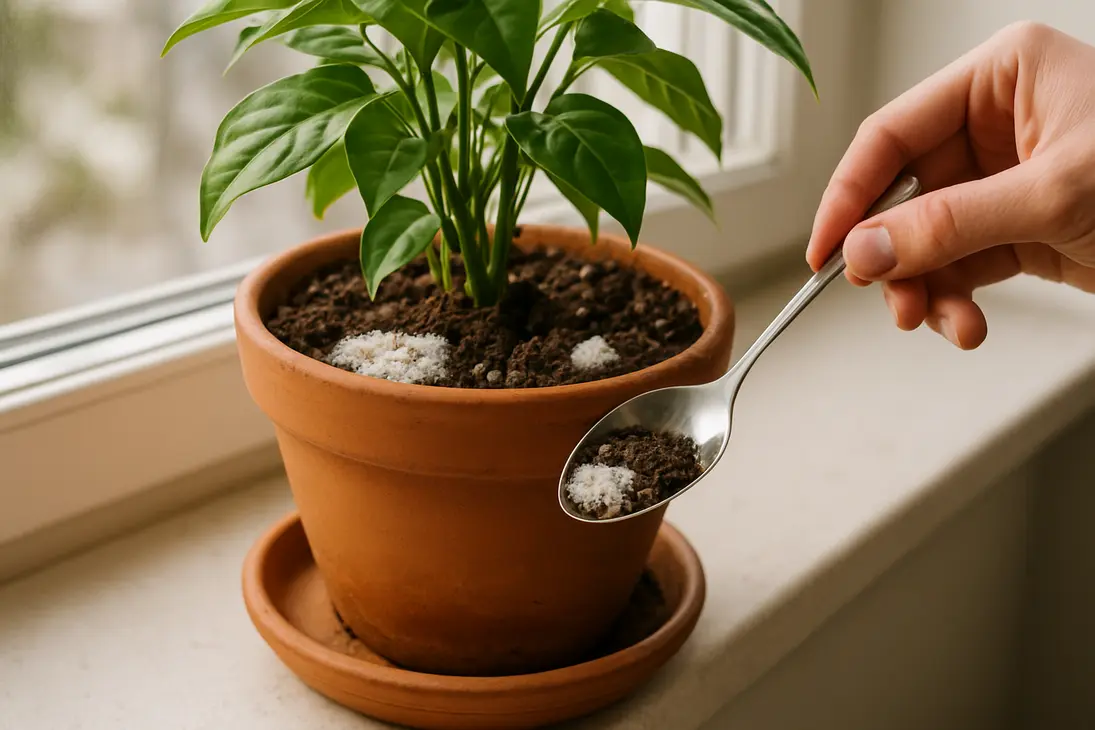
White soil in potted plants usually comes from one of two causes: fuzzy fungal growth on damp potting mix or a dry crust of fertilizer salts and minerals left behind as water evaporates. Neither automatically means the plant is dying, but both signal that something about watering, drainage, fertilizer, or water quality may need adjustment.
Texture and moisture are the quickest clues. Soft, cottony material is usually mold; dry, gritty residue is usually mineral buildup.
Identify Whether It Is Mold or Mineral Buildup
Look closely before treating the problem. Mold is soft and linked to persistent moisture, while mineral residue is dry, hard, and often most visible after the soil dries.
White, Fuzzy, or Cottony Growth: Mold or Fungal Mycelium
White mold or fungal mycelium looks like fine fuzz, webbing, cotton, or soft threads across the soil surface. It may grow around decaying leaves, bark, or compost particles.
This growth usually feeds on organic material in the potting mix rather than a healthy plant. A small patch is not generally harmful, but it often means the soil surface is staying damp too long or airflow is poor.
Mold is more likely when:
- Soil remains wet for many days after watering.
- The plant is in a dim, cool, or poorly ventilated area.
- Dead leaves or other debris sit on the soil.
- The pot has poor drainage or no drainage holes.
- The mix is old, dense, or rich in organic material.
White fuzz combined with yellowing, wilting in wet soil, a sour smell, or fungus gnats may point to a more serious drainage or root-health problem.
Dry, Chalky, or Crystalline White Crust: Salt and Mineral Deposits
A dry, chalky, gritty, or crystalline coating is usually mineral or fertilizer salt buildup. It may form a thin film on the soil, a hard crust near the pot edge, or pale residue around drainage holes.
Tap water contains dissolved minerals, especially in hard-water areas, and fertilizers contain soluble salts. As water evaporates, some of those materials remain and concentrate near the soil surface.
Buildup is especially common when plants are fertilized too often or watered lightly and frequently without enough water draining through the pot.
| What you see | Most likely cause | Typical conditions |
|---|---|---|
| Soft, fuzzy, web-like white growth | Mold or fungal mycelium | Damp soil, low airflow, decaying debris |
| Dry, hard, powdery, or crystalline crust | Fertilizer salts or water minerals | Hard water, overfertilizing, limited drainage |
| White ring around pot rim | Mineral deposits | Water evaporating from porous pots |
| Pale bits mixed throughout new potting mix | Perlite or another mix ingredient | Normal and harmless |
White Residue on the Pot Rim, Drainage Holes, or Soil Surface
White staining on terracotta is commonly mineral residue, not mold. Because terracotta is porous, moisture moves through the pot wall and evaporates, leaving minerals behind. Deposits can also form around drainage holes and on saucers.
A white rim alone is rarely serious. Wipe it with a damp cloth, then review watering and fertilizer practices if it returns quickly.
Also make sure the material is not perlite, a common white amendment that improves aeration. Perlite appears as separate, irregular particles throughout the potting mix. It is harmless and needs no treatment.
When White Soil Is a Sign the Plant May Be Stressed
White material is more concerning when paired with signs of root trouble, including:
- Yellowing or dropping leaves
- Wilting while soil is wet
- Slow growth during the growing season
- Brown leaf tips or margins
- Sour-smelling soil
- Soil that stays wet unusually long
- Soft or blackened stems near the soil line
- Fungus gnats around constantly damp soil
The white material may not cause these symptoms directly, but it can reveal the same underlying issue: excess moisture, compaction, poor drainage, or excess salts.
Common Causes of White Soil in Potted Plants
The cause determines the solution. Salt crust will return if overfertilizing continues, while mold will return if the soil never dries appropriately.
Fertilizer Salts Building Up in the Potting Mix
Fertilizers contain salts in forms plants can absorb. Problems occur when fertilizer is applied too often, mixed too strongly, or used when a plant is growing slowly and needs few nutrients.
Excess salts can collect near the soil surface and, in severe cases, dehydrate fine roots. Brown leaf edges, weak growth, or decline despite regular feeding can be signs of salt stress.
Small pots, self-watering containers, low-light conditions, and frequent liquid feeding can all make buildup more likely.
Minerals in Tap Water
Hard tap water contains dissolved minerals, often calcium and magnesium. Over time, these can leave white residue on soil, pots, trays, humidifiers, and nearby surfaces.
Hard water is not necessarily harmful to every plant, but it can cause recurring crust and may be less suitable for plants sensitive to mineral-heavy water. If residue appears despite light fertilizing, your watering water may be the main source.
Soil Staying Too Wet From Overwatering or Poor Drainage
Overwatering means roots remain wet too long, not simply that too much water was used at once. Roots need air spaces in the potting mix. When those spaces remain filled with water, root health suffers and fungi can thrive.
Common causes include:
- Pots without drainage holes
- Nursery pots left sitting in runoff
- Pots much larger than the root ball
- Dense or compacted mix
- Low light or cool temperatures
- Watering on a schedule instead of checking soil moisture
A plant in saturated soil usually needs more airflow around its roots, not more water.
Organic Potting Mix Ingredients and Naturally Occurring Fungal Growth
Most potting mixes contain bark, compost, peat, coir, or wood fiber. Fungal spores are common and can colonize these materials under damp conditions.
This does not mean the potting mix is defective or dangerous. Mild fungal growth is often part of normal decomposition, though it is a useful reminder to remove dead leaves and avoid keeping the surface constantly wet.
Dense Garden Soil or an Old, Compacted Potting Mix
Garden soil is usually too dense for containers. It can compact, hold excess water, and leave too little oxygen around roots. Old potting mix may develop similar problems as fine particles accumulate and organic ingredients break down.
If a pot that once dried normally now stays wet much longer, the mix may need replacing rather than just more cautious watering.
What to Do When the Soil Has White Fuzz or Crust
Remove visible material, but address the growing conditions that allowed it to form.
Remove the Affected Surface Layer
For minor mold or crust, use a clean spoon to remove the top 1 to 2 inches of potting mix without disturbing shallow roots. Discard it and replace it with fresh, appropriate mix.
Also remove dead leaves, flowers, mulch, or other debris from the surface. This is a good first step for mild problems, but it will not fix deeply waterlogged or heavily salted soil.
Check Drainage and Let the Potting Mix Dry Appropriately
Make sure the pot has an open drainage hole. If it sits inside a decorative cachepot, remove the inner pot to water it and let it drain completely before putting it back.
Water according to the plant’s needs:
- Succulents and cacti need the mix to dry much more thoroughly.
- Many tropical foliage plants prefer some moisture but not constant wetness.
- Moisture-loving plants still need oxygen around their roots.
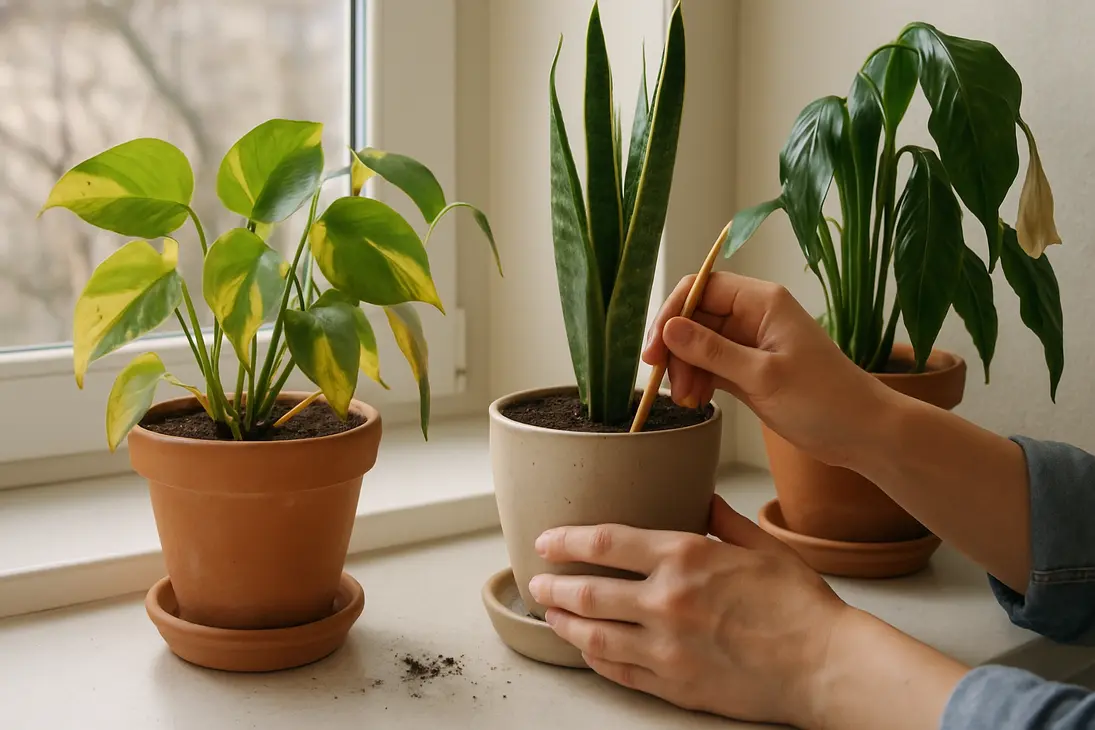
Check moisture with a finger, wooden skewer, or the weight of the pot. A dry surface does not always mean the root zone is dry.
Flush Excess Salts From the Container When Needed
If the residue is clearly mineral crust, the pot drains freely, and the soil is not already waterlogged, flushing can remove salts.
- Put the pot in a sink, tub, or outdoor area where water can drain freely.
- Water slowly and evenly over the soil.
- Let water flow from the drainage holes.
- Repeat once or twice, allowing plenty of water to pass through the mix.
- Let the pot drain completely and empty any saucer or cachepot.
Use room-temperature water. Filtered, rainwater, or distilled water may help if hard water is contributing to recurring buildup.
Do not flush pots without drainage holes or plants already sitting in saturated, sour-smelling soil. In those cases, repotting is usually safer.
Replace the Potting Mix if Buildup or Mold Keeps Returning
Repot when the mix is old, dense, slow-draining, heavily crusted, or sour-smelling. Use a fresh mix suited to the plant and avoid packing it tightly around the roots.
For a healthy plant with otherwise good drainage, replacing the upper layer and correcting care may be enough. Full repotting is most useful when there is compaction, root stress, or persistent recurrence.
Avoid Using Vinegar or Fungicide Unless the Cause Is Confirmed
Vinegar is not a reliable treatment for white soil. It can alter the mix’s acidity and damage roots. Fungicide is also rarely needed for a small patch of surface mold because it does not solve saturated soil, poor airflow, or debris.
If growth spreads rapidly onto stems, smells foul, appears in unusual colors, or occurs with severe decline, isolate the plant and seek help from a local garden center, extension service, or experienced houseplant professional.
Prevent White Buildup and Recurring Mold
A few routine practices prevent most white soil problems.
Use a Pot With Drainage Holes and a Well-Draining Potting Mix
Most container plants need drainage holes so excess water and dissolved salts can leave the pot. Use a light potting mix rather than garden soil. It should retain moisture while still keeping air spaces around roots.
Water According to Soil Dryness Rather Than a Fixed Schedule
Water use changes with light, temperature, season, humidity, pot size, and growth rate. A schedule can remind you to check plants, but should not dictate watering.
Water when the mix has dried to the level appropriate for that plant, then moisten the root zone evenly and allow excess to drain. Empty collected runoff afterward.
Fertilize at the Right Strength and Avoid Overfeeding
Follow the fertilizer label and reduce or pause feeding when growth is slow, such as in winter or low light. More fertilizer will not make a struggling plant recover faster and can worsen salt buildup.
If you fertilize regularly, occasional flushing can help in pots with good drainage. Use less fertilizer for small, newly repotted, dormant, or stressed plants.
Reduce Mineral Deposits From Hard Water
If hard-water residue repeatedly forms, try rainwater, filtered water, or distilled water for the most affected plants. Specialty water is not necessary for every plant, but changing the water source can reduce deposits and brown leaf tips in sensitive plants.
Keep the Soil Surface From Remaining Constantly Wet
Remove debris, avoid heavily mulching indoor pots, and do not mist the soil surface. Decorative stones, moss, and dense top dressings can slow evaporation and make moisture harder to judge, especially in low light.
When to Repot or Seek Help for the Plant
White soil is often cosmetic, but persistent moisture and salt problems can eventually damage roots.
Signs the Roots May Be Rotting
Root rot is most likely when a plant declines while the soil remains wet. Warning signs include:
- Limp, yellowing, or dropping leaves
- Soft stems near the base
- Sour or rotten odor
- Dark, soft roots that pull apart easily
- Muddy, compacted, saturated potting mix
Healthy roots are usually firm. Color varies by plant, so texture matters more than color.
When Persistent White Growth May Need Further Diagnosis
A little white mycelium is common. Get further advice if it returns despite correcting moisture, spreads onto living stems, has a foul odor, or occurs with pests and rapid decline.
Also investigate growth that is yellow, orange, pink, or black rather than white, as it may not be ordinary mold or mineral residue.
How to Repot a Plant With Old or Waterlogged Soil
If the mix is waterlogged or compacted:
- Remove the plant and gently loosen soggy soil from the roots.
- Trim only roots that are clearly blackened, mushy, hollow, or dead, using clean scissors.
- Use a clean pot with drainage holes, preferably only slightly larger if roots were removed.
- Add fresh potting mix suited to the plant.
- Replant at the same depth without compressing the mix heavily.
- Water lightly to settle the mix, then let it dry to the proper level before watering again.
Avoid heavy fertilizer until the plant resumes growth.
Conclusion
White soil in potted plants is usually manageable. Soft white fuzz commonly indicates a damp surface and fungal growth, while dry white crust usually comes from minerals in water or fertilizer.
Identify the texture, remove the affected surface layer, and check drainage and watering habits. If the problem keeps returning, reduce fertilizer, consider water quality, and replace old or compacted potting mix.
FAQ
Is white mold on potting soil harmful to plants?
Small amounts of white mold or fungal mycelium are usually not directly harmful to healthy plants. It feeds on organic material, but it often means the soil is staying too wet. Remove the growth and improve watering, drainage, and airflow.
Can I scrape white crust off the soil?
Yes. Remove the crust and the upper layer of affected soil. This improves appearance and removes some salts, but deposits will return unless you reduce fertilizer, improve drainage, or address hard water.
Should I flush a potted plant with distilled water?
You can flush a freely draining pot with distilled water if hard water or fertilizer salts are recurring problems. Do not flush a waterlogged plant, a pot without drainage holes, or a plant showing likely root rot; repotting may be safer.
Why does white residue keep coming back after watering?
Recurring residue means dissolved minerals are being left behind as water evaporates. Hard tap water, frequent fertilizer use, accumulated salts, and watering practices that do not allow drainage can all contribute.
You Might Also Like