What Houseplant Problems Are Easy to Overlook?
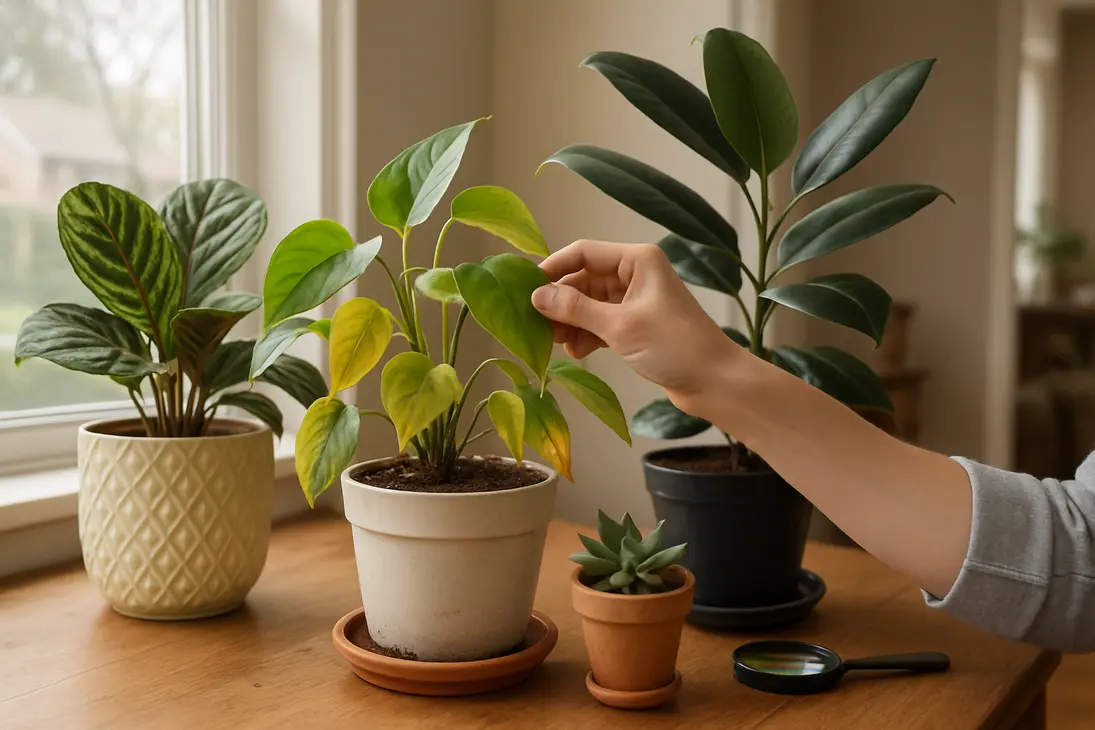
Many overlooked houseplant problems look like simple watering issues. Drooping, yellowing, crispy edges, and leaf drop can all make you reach for the watering can, but the real cause may be light, roots, pests, soil, drafts, humidity, or recent change.
Houseplants live in small, controlled environments: a pot, limited soil, indoor light, indoor air, and your care routine. Because symptoms overlap, the best response is to pause before acting. Check the plant, pot, soil, light, and what changed recently. Careful diagnosis usually saves more plants than a quick fix.
Common Houseplant Problems That Are Easy to Overlook
Start With the Symptoms, Not Just the Watering Can
Yellowing, wilting, browning, and leaf drop are symptoms, not diagnoses. A plant may also have more than one problem at once: low light can make soil stay wet longer, which then stresses roots.
Before watering, fertilizing, repotting, pruning, or moving a plant, ask: What does the whole plant look like, and what changed before the symptom appeared?
Wilting Doesn’t Always Mean “Water Me”
A thirsty plant wilts when the soil is dry and the pot feels light. But overwatered plants can wilt too. Soggy, oxygen-poor soil damages roots, and damaged roots cannot take up water well.
Other causes of wilting include heat, cold drafts, root damage after repotting, pests, or hydrophobic soil that sheds water around the root ball. Always check the soil before responding.
Yellow Leaves Can Point to Several Issues
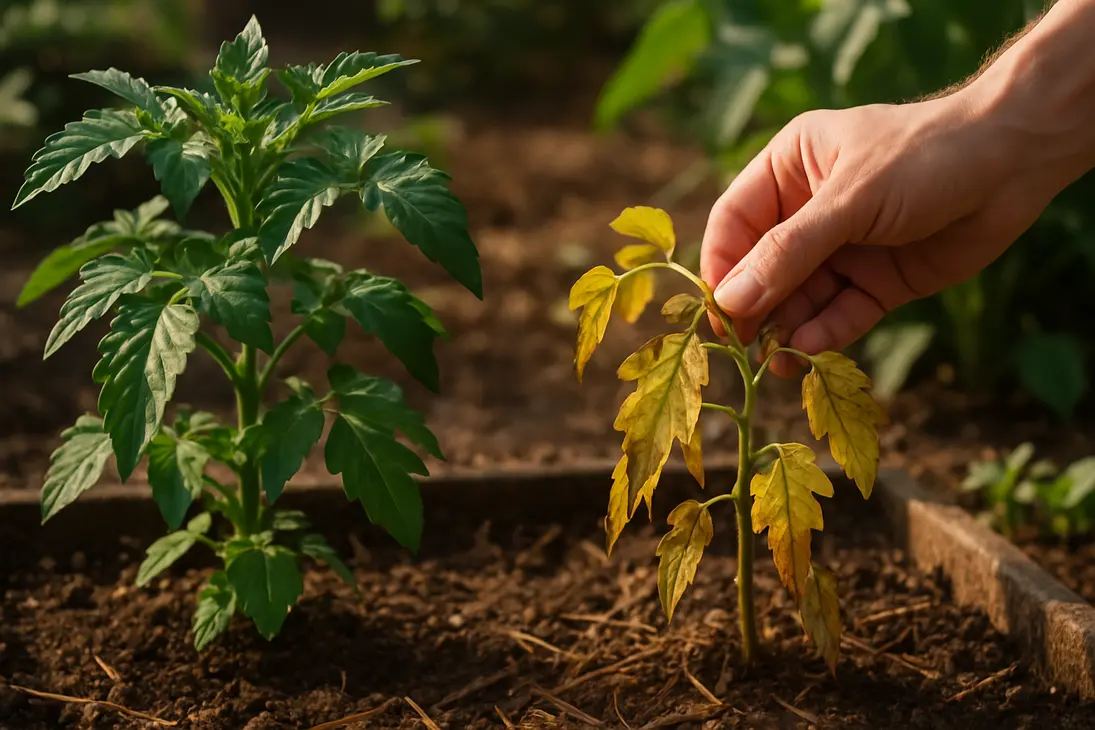
One yellow lower leaf is often normal aging. Multiple yellowing leaves need investigation.
Common causes include:
- Soil staying wet too long
- Soil drying too completely
- Low light
- Old, depleted potting mix
- Rootbound roots
- Pests
- Sudden temperature or light changes
Patterns help. Lower leaves yellowing first may suggest age, low light, or root stress. Pale new growth can point to nutrient or light issues. Yellowing with webbing, sticky residue, or speckling suggests pests.
Brown Tips, Crispy Edges, and Spots Mean Different Things
“Brown leaves” is too vague. The type of browning matters.
| Symptom | Common overlooked causes |
|---|---|
| Brown tips | Dry air, minerals, irregular watering, fertilizer excess |
| Crispy edges | Low humidity, underwatering, heat, sun scorch |
| Bleached patches | Direct sun damage |
| Dark, soft spots | Wet soil, disease, cold damage |
| Brown spots with yellow halos | Possible fungal or bacterial spotting |
Old brown tissue will not turn green again. Focus on stopping new damage.
Leaf Drop Can Be Stress, Not Failure
Ficus, citrus, schefflera, and many tropical plants may drop leaves after a move, draft, light change, or missed watering. If stems are firm and new buds appear, the plant may be adjusting. If leaf drop continues, the stressor is probably still present.
Light Problems That Masquerade as Watering Problems
Light controls how fast plants use water. The same plant may dry in days near bright indirect light but take two weeks in a dim corner. If you water both on the same schedule, one may thrive while the other develops root trouble.
Too Little Light: Leggy Growth and Slow Decline
Low light usually causes slow decline, not sudden death. Signs include:
- Long gaps between leaves
- Small new leaves
- Leaning toward a window
- Slow growth
- Variegation fading greener
- Soil staying wet for many days
A plant in low light is easier to overwater because it uses less moisture. Move it closer to a window gradually, or use a grow light if natural light is limited.
Too Much Sun: Scorch, Faded Leaves, and Dry Patches
Many houseplants like bright indirect light but scorch in direct afternoon sun. Sun damage may look like pale, tan, or crispy patches, often on the window-facing side.
Scorched leaves will not recover, but new leaves can grow normally once the plant is moved out of harsh sun. Be especially careful when moving plants outdoors or into brighter spring light.
Seasonal Light Changes Indoors
Indoor light changes throughout the year. A safe winter windowsill may become too hot in summer, while a room that seems bright may be too dim for growth in fall.
Watering should change too. Many plants need less water in winter because growth slows. Instead of following a calendar, watch how fast the pot dries and how actively the plant is growing.
Soil, Drainage, and Root Issues People Miss
Roots are hidden, so soil and root problems are easy to miss. Leaves show the symptoms, but the cause is often below the surface.
Dense or Old Potting Mix
Potting mix breaks down over time. As it compacts, it holds more water and less air, which stresses roots.
Warning signs include:
- Water pooling on the surface
- Soil staying wet too long
- Sour smell
- Fungus gnats
- Weak growth
- Roots circling the pot
Succulents, cacti, hoyas, and many aroids often need chunkier mixes than standard potting soil.
Pots Without Proper Drainage
Decorative pots without drainage holes are risky. A pebble layer does not fix the problem; it creates a hidden reservoir of trapped water.
A safer setup is a nursery pot with drainage holes placed inside a decorative cachepot. After watering, let the plant drain fully and empty standing water.
Rootbound Plants and Hidden Root Rot
Rootbound plants and root rot can both cause poor water uptake, but they require different responses.
A rootbound plant may dry very quickly, wilt often, or show roots circling the pot. Root rot is more likely when soil stays wet and roots are brown, black, mushy, hollow, or foul-smelling. Healthy roots are usually firm and light-colored, though color varies.
If you suspect root trouble, slide the plant gently from the pot and inspect without tearing the root ball apart.
When Repotting Helps—and When It Adds Stress
Repotting helps with compacted soil, severe crowding, poor drainage, unsuitable mix, or early root rot. It is not a cure for every yellow leaf or temporary droop.
A stressed plant can decline if its roots are disturbed unnecessarily. When repotting, choose a pot only slightly larger than the root ball. Oversized pots hold extra wet soil and can create new problems.
Indoor Conditions That Quietly Stress Houseplants
Even with decent watering and light, indoor conditions can cause slow, subtle stress.
Low Humidity and Dry Indoor Air
Many tropical plants tolerate average indoor humidity, but dry air can cause brown tips, crispy edges, curled leaves, or new leaves that fail to unfurl.
Calatheas, marantas, ferns, anthuriums, and some philodendrons are often affected. Pebble trays and occasional misting have limited impact. Grouping plants, using a humidifier, and keeping plants away from vents are more effective.
Cold Drafts and Heat Sources
Plants near winter windows, exterior doors, fireplaces, or heating vents may suddenly decline. Cold can cause blackened patches, drooping, or leaf drop. Heat can dry leaves and soil quickly.
Check the plant’s location at different times of day. A windowsill may be warm at noon and cold at night.
Poor Airflow Around Crowded Plants
Crowding can raise humidity, but stagnant air encourages pests and leaf spotting. Leaves that stay damp or press together are more vulnerable.
Good airflow does not mean a cold draft. It means enough space for leaves to dry and for you to inspect the plant.
Sudden Moves and Environmental Shock
Moving from a nursery to your home, between rooms, or outdoors can trigger yellowing, wilting, or leaf drop. This does not always mean you did something wrong. Give the plant stable conditions before making more changes.
Pests, Nutrients, and Water Quality Problems
Some problems develop slowly and are easy to miss until symptoms become obvious.
Early Signs of Common Houseplant Pests
Pests hide under leaves, along stems, at joints, and near new growth. Watch for:
- Fine webbing
- Sticky residue
- White cottony clusters
- Brown bumps
- Silvery streaks or black specks
- Fungus gnats around damp soil
- Speckled or distorted leaves
Isolate affected plants when possible. Early treatment is much easier than dealing with a spread-out infestation.
Too Much or Too Little Fertilizer
Nutrient problems can mimic other issues. A hungry plant may produce pale, small, slow growth, especially in old mix. Too much fertilizer can burn roots, brown leaf tips, leave crust on soil, or weaken growth.
Most houseplants need fertilizer mainly during active growth. Do not use fertilizer as emergency medicine for a stressed, overwatered, or newly repotted plant.
Salt Buildup and Hard Water Marks
Minerals from tap water and fertilizer can accumulate in potting mix. White crust may appear on soil, pot rims, or drainage holes. Sensitive plants may develop brown tips.
Occasional thorough watering can flush buildup if the pot drains well. If the mix is old and crusted, repotting may help more.
Chlorine, Fluoride, and Sensitive Plants
Spider plants, dracaenas, calatheas, and some palms may react to certain minerals or chemicals in tap water. Still, not every brown tip is a water-quality issue. Check humidity, watering, fertilizer, and roots first. If everything else seems right, try rainwater, distilled water, or filtered water and judge by new growth.
Common Houseplant Care Misconceptions
Many problems come from well-meaning but oversimplified rules.
All Houseplants Do Not Have the Same Needs
A cactus, fern, orchid, pothos, and calathea should not be watered or potted the same way. “Water once a week” works only by luck.
Look at the plant’s growth habit. Thick, succulent leaves store water. Thin leaves often dry faster. Desert plants and understory tropical plants usually need different light, soil, and watering.
Bigger Pots Are Not Always Better
A large pot holds extra soil that roots cannot use quickly, increasing the risk of chronic overwatering. Move up gradually, usually one pot size at a time. The pot should fit the current root system, not the future plant you imagine.
A Fixed Watering Schedule Can Backfire
Plants do not dry on a calendar. Light, temperature, humidity, pot size, soil type, and season all affect moisture.
Use a checking schedule instead. Check once or twice a week, but water only plants that need it. Use your finger, pot weight, a wooden skewer, or a moisture meter as guides.
New Leaves Matter More Than Old Damage
Old damage stays. Brown tips, scorched patches, and yellow leaves will not turn green again.
Judge recovery by new growth. Are new leaves cleaner, firmer, larger, or better colored? Is the plant holding leaves longer? Is the soil drying at a healthier pace? Those signs matter more than old cosmetic damage.
How to Diagnose a Houseplant Problem Step by Step
Use a calm process before making major changes.
Check the Whole Plant, Not One Leaf
One damaged leaf may be age or physical injury. A pattern across the plant matters more.
Ask:
- Are old leaves, new leaves, or both affected?
- Is damage on one side?
- Are stems firm or soft?
- Is new growth normal or distorted?
- Is decline fast or slow?
A single yellow lower leaf is very different from widespread yellowing and collapse.
Inspect the Soil Before Watering
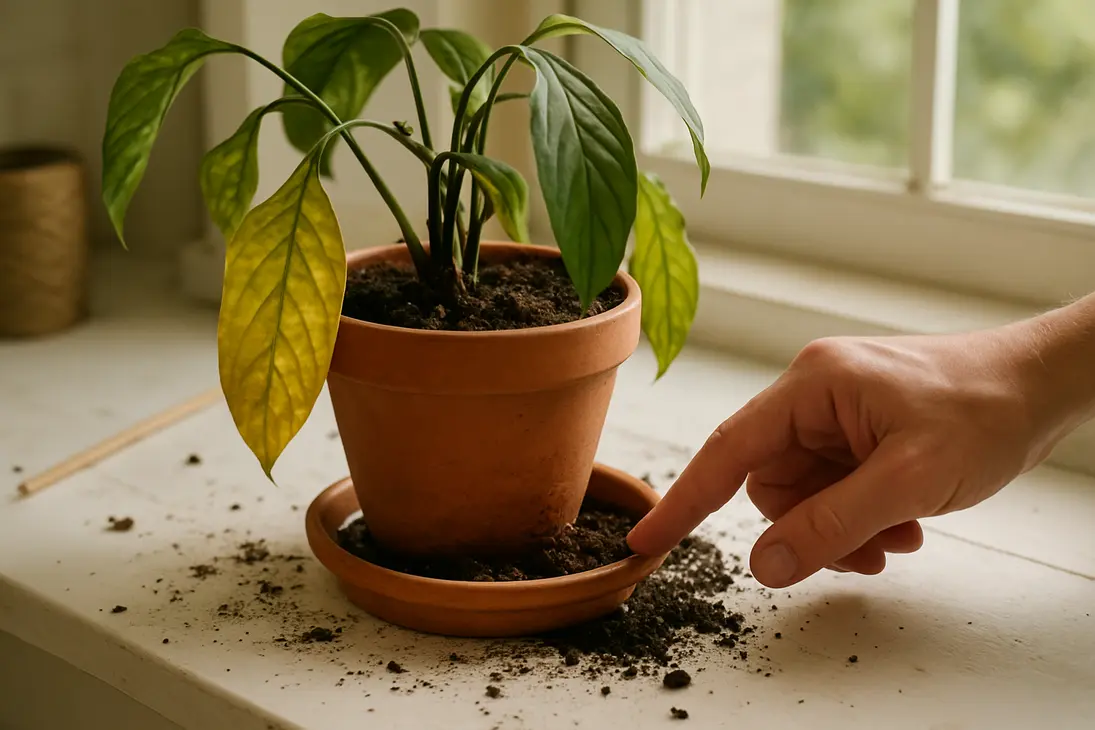
Do not water just because leaves droop. Check the soil.
Look for:
- Dry topsoil but wet lower soil
- An unusually heavy or light pot
- Sour smell
- Poor drainage
- Soil pulling from pot edges
- Fungus gnats
Wet soil plus wilting suggests root or oxygen problems. Bone-dry soil that has pulled away from the pot needs slow, thorough rehydration.
Look Under Leaves and Along Stems
Use good light to inspect leaf undersides, new growth, stem joints, petiole bases, soil surface, pot rims, and nearby plants. A magnifying glass helps with mites and thrips. Sticky residue, webbing, cottony patches, bumps, or moving specks are warning signs.
Review What Changed Recently
Think back over the past few weeks. Did you move, repot, fertilize, change watering, turn on heat or air conditioning, bring home a new plant, shift light exposure, let the plant dry out, or leave it sitting in water?
Recent changes often explain symptoms that otherwise look mysterious.
Conclusion
The easiest houseplant problems to overlook are the ones that imitate watering trouble: poor light, compacted soil, hidden root damage, dry air, drafts, pests, fertilizer mistakes, mineral buildup, and plant-specific needs.
Before adding more water, check the soil, light, roots, leaves, pests, and recent changes. Most plants do not need dramatic rescue. They need suitable care, stable conditions, and time to respond.
FAQ
What is the most overlooked houseplant problem?
Low light is one of the most overlooked problems because it often looks like watering trouble. Plants in low light grow slowly, use less water, become leggy, and may yellow or drop leaves.
How do I know if my plant is overwatered or has another issue?
Check the soil and roots. Overwatered plants often have wet soil, a heavy pot, yellow leaves, wilting despite damp soil, fungus gnats, or soft roots. If soil is dry and the pot feels light, underwatering is more likely.
Why are my houseplant leaves turning brown at the tips?
Brown tips can come from dry air, inconsistent watering, mineral buildup, excess fertilizer, root stress, or tap-water sensitivity. The tips will not turn green again, so judge improvement by new growth.
Should I remove damaged leaves from my houseplant?
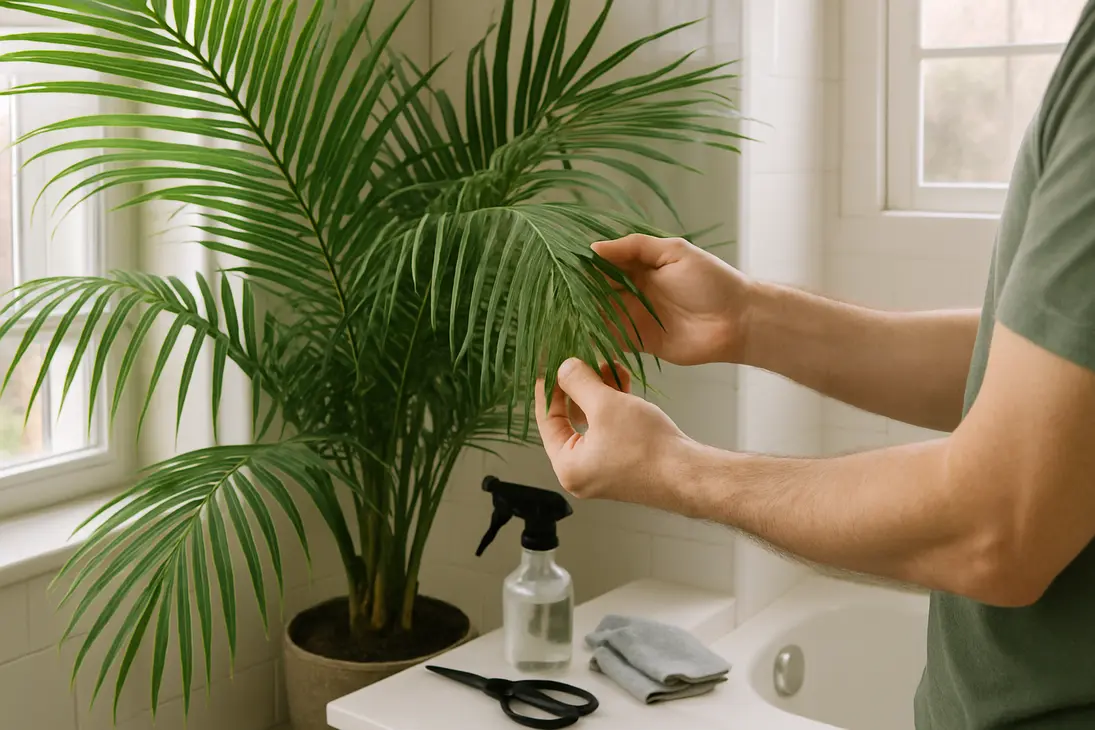
Remove fully yellow, brown, dead, or badly damaged leaves with clean scissors or pruners. If a leaf is mostly green, leave it so it can keep photosynthesizing. Avoid stripping too many leaves from a stressed plant at once.
You Might Also Like