Is It Safe to Grow Vegetables in a Cedar Box?
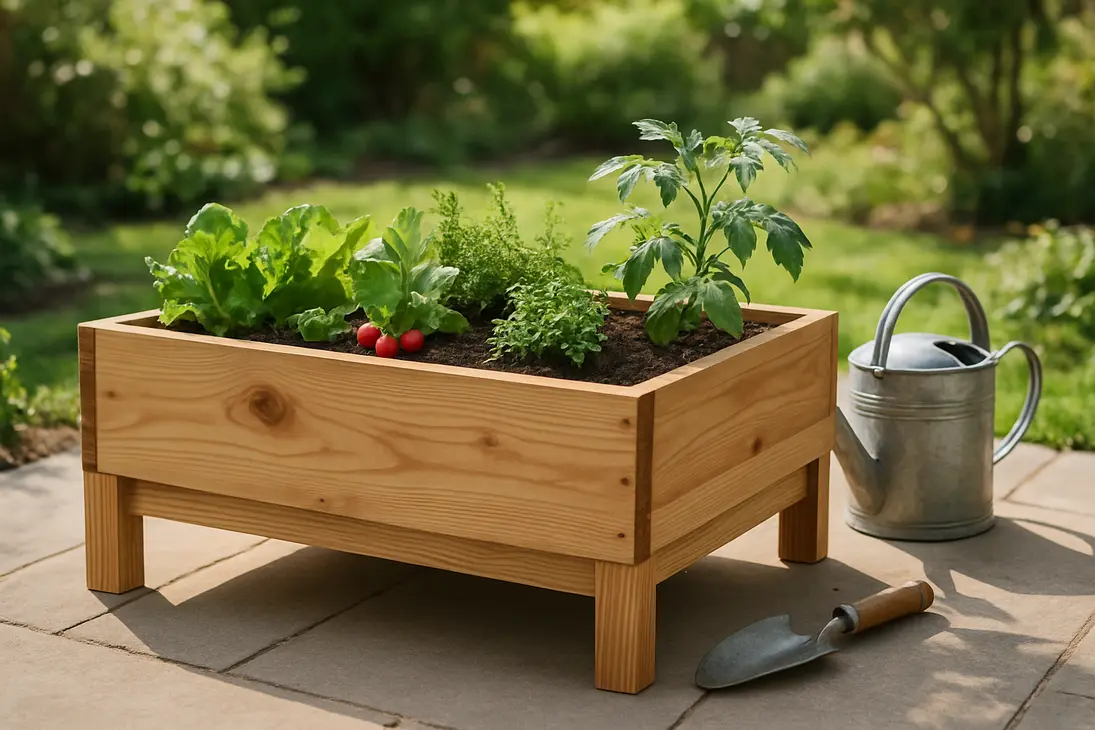
Yes, growing vegetables in a cedar box is generally safe when the cedar is untreated and the box is filled with clean, suitable growing mix. Cedar is popular for vegetable planters because it lasts outdoors longer than many softwoods without needing chemical preservatives.
The key distinction is this: natural cedar compounds are not the same as chemical wood treatments. Cedar contains natural oils and aromatic compounds that help resist rot and insects. That is different from pressure-treated lumber, unknown salvaged wood, or boards coated with stains and sealers not intended for contact with food-growing soil.
A cedar box will not fix poor soil, bad drainage, or overcrowding, but as a planter material, untreated cedar is a practical choice for herbs, greens, tomatoes, peppers, radishes, beans, and many other vegetables.
Is Untreated Cedar Safe for Growing Vegetables?
Untreated cedar is generally considered safe for vegetable planters. It is not chemically preserved, and its natural rot resistance means gardeners can often use it without applying stains, paints, or preservatives to the inside of the box.
Still, “cedar” can refer to different woods, and not every cedar board has the same history. A new, clearly labeled, untreated cedar planter is much safer than a mystery box made from reclaimed lumber.
Why cedar is popular for vegetable boxes
Cedar is popular because wood in contact with moist soil eventually decays. Pine, fir, and many other softwoods can break down quickly, especially in rainy climates or when planters stay damp through winter.
Cedar offers several advantages:
- It can last several seasons without chemical treatment.
- It is lighter and easier to work with than many hardwoods.
- It has a natural appearance for patios, balconies, and gardens.
- It works for raised beds, deck planters, and container gardens.
Cedar is not indestructible. Soil, moisture, fungi, and freeze-thaw cycles will eventually wear it down. But compared with many untreated woods, cedar gives a longer usable life with fewer safety trade-offs.
Natural rot resistance and what it means for edibles
Cedar’s rot resistance comes from compounds in the wood itself. These are part of the tree’s natural defense system, not added pesticides or industrial preservatives.
For vegetable gardening, the main safety concerns are usually contaminated soil or chemically treated materials, not ordinary untreated cedar boards. Some gardeners worry that cedar’s aroma means it will “poison” vegetables, but scent alone does not make vegetables unsafe. A cedar box is also different from mixing fresh cedar sawdust or chips into soil. Use cedar as the container and a proper potting mix inside.
When cedar could be a concern
Cedar becomes questionable when you do not know what has happened to the wood. Be cautious if the box or boards are:
- Reclaimed from an old deck, fence, dock, shed, or industrial site
- Painted, stained, or sealed with an unknown product
- Pressure-treated or labeled “treated for ground contact”
- Dark, oily, tar-like, or strongly chemical-smelling
- Old lumber possibly exposed to lead paint, fuel, pesticides, or other contaminants
Also avoid mixing cedar shavings, sawdust, or mulch heavily into the growing mix. Fresh wood products can temporarily tie up nitrogen as they decompose, and some aromatic materials may interfere with seed germination.
If your cedar box is new, untreated, and made for gardening, it is a good candidate for vegetables. If it has an unknown past, use it for ornamentals or skip it.
Untreated vs. Treated, Stained, or Sealed Cedar
The safest cedar boxes for edible gardening are made from untreated cedar with no questionable interior coating. You can extend a planter’s life with good design, drainage, and optional exterior finishing, but anything touching the soil deserves caution.
Best choice: untreated cedar
For most home gardeners, the best choice is simple: use untreated cedar and fill it with clean potting mix or raised bed mix.
Untreated cedar is especially sensible for:
- Salad greens and herbs harvested often
- Root crops such as radishes, carrots, and beets
- Balcony or patio planters
- Small kitchen garden boxes
- Raised beds where children or pets may be nearby
If buying a ready-made planter, look for wording such as “untreated cedar” or “natural cedar.” If a product says only “wood planter” or “cedar finish,” it may be another wood stained to look like cedar. When in doubt, ask what the box is made from and whether the inside has been treated.
Use caution with stains, paints, and sealers
A stain, paint, or sealer is not automatically unsafe, but choose carefully. The main issue is the inside surface that touches damp soil.
A lower-risk approach is:
- Leave the inside untreated.
- Apply finish only to the outside.
- Let any finish cure fully before filling the planter.
- Choose products labeled for outdoor planter or garden use.
- Avoid products with warnings against soil contact, food contact, or use around edible plants.
Avoid improvising with motor oil, creosote, unknown deck stains, roofing tar, or old paint. These are poor choices near vegetables.
Avoid unknown or chemically treated wood
Pressure-treated wood is designed to resist decay through added preservatives. Modern pressure-treated lumber differs from older formulations, but if you want the lowest-risk vegetable planter, untreated cedar is the cleaner choice.
Be especially cautious with older treated wood. Some older pressure-treated lumber contained arsenic-based preservatives, and old painted wood may contain lead. You cannot reliably identify these risks just by looking.
Avoid using the following for vegetable boxes:
| Material | Why it is a concern for vegetables |
|---|---|
| Old deck or fence boards | May be pressure-treated, stained, or contaminated |
| Painted salvaged wood | Possible lead paint or unknown coatings |
| Railroad ties or utility poles | Often treated with heavy-duty preservatives |
| Pallets of unknown origin | May have chemical exposure during use |
| “Ground-contact” treated lumber | Made for durability, not necessarily ideal beside edible soil |
| Wood with oily or chemical odor | Unknown treatment or contamination |
If you already have a treated or unknown box, consider using it for flowers or ornamentals. For vegetables, start with clean materials.
Should You Line a Cedar Vegetable Box?
You do not have to line a cedar vegetable box for it to be safe. Untreated cedar can be used directly against soil. Lining is mainly for extending planter life, reducing soil loss through gaps, and limiting constant moisture against the wood.
The key is to line thoughtfully. A bad liner can trap water, block drainage, or create a soggy root zone.
Benefits of lining the inside
A liner can:
- Slow direct soil contact with the wood
- Reduce soil washing out between boards
- Help potting mix stay in place
- Make the box easier to empty later
- Extend the useful life of the planter
Lining is most useful for thin-walled cedar boxes, balcony planters, or decorative boxes. For a thick cedar raised bed sitting on soil, it is optional.
A liner is not a substitute for safe wood. If the wood is questionable, lining does not automatically make it safe, especially if the liner tears or shifts.
Safer liner options to consider
For vegetable planters, choose liners that are durable, suitable for garden use, and able to drain. Common options include:
- Landscape fabric: Holds soil in place while allowing water through.
- Heavy-duty food-safe plastic sheeting: Reduces moisture contact with wood, but must have drainage holes.
- Pond liner or planter liner: Useful for decorative boxes if drainage is added.
- Burlap: Breathable and natural, but breaks down quickly.
- Hardware cloth at the bottom: Helps discourage burrowing animals, though it is not a moisture liner.
If using plastic, avoid sealing the planter into a watertight tub. Leave the bottom open or cut generous drainage holes that match the planter’s drainage openings.
Drainage mistakes to avoid
Drainage problems are more likely to harm vegetables than untreated cedar. Poor drainage can cause root rot, fungus gnats, sour-smelling soil, and weak plants.
Avoid these mistakes:
- Lining with plastic and forgetting drainage holes
- Blocking bottom holes with liner
- Setting the box flat where holes cannot drain
- Adding a deep gravel layer instead of fixing drainage
- Using dense garden soil that compacts
- Letting the planter sit in a saucer full of water
If the box is on a deck or balcony, raise it slightly on feet or spacers so water can escape. If it sits on soil, make sure the bottom is open or well-drained.
Soil, Drainage, and Plant Health in Cedar Boxes
Once the material is safe, success depends mostly on growing conditions. Many container problems come from heavy soil, poor drainage, overcrowding, or choosing crops for a box that is too shallow.
Use potting mix, not heavy garden soil
For cedar planter boxes, use quality potting mix or raised bed mix rather than ordinary garden soil.
Garden soil can work in the ground because natural drainage, earthworms, roots, and microbes help maintain structure. In a box, it often becomes dense and compacted. It may drain poorly, dry into hard clumps, or suffocate roots.
A good container mix should be:
- Loose and crumbly
- Moisture-retentive but not waterlogged
- Quick to drain after rain
- Free of debris or contamination
- Suitable for vegetables
For deeper raised beds, many gardeners use raised bed mix. For smaller cedar boxes, high-quality potting mix is usually better because it drains well and is easy for roots to penetrate.
Compost can improve mixes, but do not fill the entire planter with unfinished compost, manure, wood chips, or yard waste.
Make sure excess water can escape
Vegetables like consistent moisture, but they do not like stagnant water. Cedar boxes need enough drainage holes for water to leave after rain or irrigation.
Before planting, water the filled planter thoroughly. Water should begin draining from the bottom within a reasonable time. If the surface stays soupy or water pools, fix the drainage before planting.
For good drainage:
- Drill several holes in enclosed bottoms.
- Keep holes clear of liners.
- Elevate the planter slightly on hard surfaces.
- Use potting mix instead of compact soil.
- Water deeply, then let the top inch or so begin to dry before watering again for most crops.
Do not rely on gravel as the main drainage solution. Gravel reduces root space and does not fix a sealed planter. Water still needs a way out.
Match vegetables to the box depth
A cedar box can grow many vegetables, but depth matters. Shallow boxes suit greens and herbs. Fruiting crops and root crops need more room.
| Box depth | Good choices | Notes |
|---|---|---|
| 6–8 inches | Lettuce, arugula, spinach, green onions, herbs, radishes | Best for quick, shallow-rooted crops |
| 10–12 inches | Bush beans, Swiss chard, kale, beets, small carrots | Versatile depth for beginners |
| 14–18 inches | Peppers, determinate tomatoes, cucumbers with support | Needs steady watering and feeding |
| 18+ inches | Larger tomatoes, eggplant, squash, potatoes | Use compact varieties when possible |
Width matters too. More soil volume gives roots a buffer against heat, drought, and nutrient swings.
Easy vegetables to start with
If this is your first cedar vegetable box, start with crops that give quick feedback and do not need perfect conditions.
Good beginner choices include:
- Leaf lettuce
- Radishes
- Bush beans
- Green onions
- Swiss chard
- Kale
- Parsley
- Basil
- Cilantro in cool weather
- Cherry tomatoes in a deep box
- Compact peppers
Avoid planting too many large crops in one box. One tomato can dominate a small planter. Overcrowding reduces airflow and increases competition for water, nutrients, and light.
Seed packets and plant tags usually include spacing recommendations. In containers, you can sometimes plant slightly closer than in the ground, but crowding still weakens plants.
Cedar Boxes vs. Metal or Other Planter Materials
Cedar is not the only suitable material for vegetable planters. Galvanized metal beds, plastic tubs, fabric grow bags, and composite planters can also work. The best choice depends on climate, budget, space, and how permanent you want the garden to be.
Cedar vs. galvanized metal beds
Galvanized metal beds are durable, tidy, and often easy to assemble. Many gardeners use them successfully for vegetables. Compared with cedar, they have different trade-offs.
| Feature | Cedar box | Galvanized metal bed |
|---|---|---|
| Heat | Wood insulates roots | Can heat up more in strong sun |
| Durability | Good, but eventually decays | Often long-lasting if coating remains intact |
| Appearance | Natural, warm look | Clean, modern or farm-style look |
| Weight | Moderate | Usually light before filling |
| Safety focus | Avoid treated/stained wood | Avoid damaged or questionable coatings |
| Comfort | Edges are usually less sharp | Edges should be capped or finished |
In hot climates, metal planters can warm soil quickly. That may help in spring but stress plants in summer. Cedar tends to buffer temperature changes better.
Cedar vs. plastic containers
Plastic containers are affordable, lightweight, and widely available. They can work well for renters and balcony gardeners. The main issue is choosing appropriate plastic and avoiding containers that previously held chemicals.
For vegetables, use new or known-clean containers. Food-grade buckets, nursery pots, and planters made for gardening are better choices than random storage bins or reused containers from unknown products.
Compared with cedar, plastic:
- Does not rot
- Is usually lighter
- May become brittle in sun
- Can overheat depending on color and thickness
- Can hold water too well if drainage holes are missing
Cedar costs more upfront but often looks better and handles outdoor conditions gracefully.
Which material is best for beginners?
For beginners who want a safe, attractive, forgiving planter, untreated cedar is one of the best choices. It is sturdy, naturally rot-resistant, and simple to use without interior chemical treatments.
Choose plastic if you need a low-cost, lightweight setup. Choose galvanized metal if you want a durable raised bed and can manage heat and sharp edges. Choose fabric grow bags if drainage is your biggest concern and you do not mind watering more often.
The material matters, but clean soil, drainage, sunlight, spacing, and watering habits usually make a bigger difference to your harvest.
Conclusion
Untreated cedar is a safe and practical choice for growing vegetables when you use clean materials and sensible container-gardening practices. Its natural rot resistance helps it last outdoors without relying on chemical preservatives.
The safest setup is straightforward: use a new or clearly untreated cedar box, avoid unknown salvaged or chemically treated wood, keep questionable coatings away from the soil, and fill the planter with good potting mix or raised bed mix. Add drainage, match crops to the box depth, and avoid overcrowding.
If you already have an untreated cedar planter, you can grow vegetables in it with confidence. The bigger risks are usually poor drainage, contaminated soil, or finishes and treatments that were never meant to touch edible garden soil.
FAQ
Can cedar chemicals leach into vegetables?
Untreated cedar contains natural compounds that help the wood resist decay, but these are not the same as added pressure-treatment chemicals. In a typical cedar vegetable box, the wood forms the container wall while vegetables grow in potting mix. There is no good reason to assume that an untreated cedar box will make vegetables unsafe to eat.
Avoid mixing large amounts of fresh cedar sawdust, shavings, or chips into the soil, because fresh wood products can affect nitrogen availability and seedling growth. Also avoid cedar boards that have been treated, stained, painted, or salvaged from unknown uses.
Do I need to seal a cedar planter before growing food?
No, you do not need to seal a cedar planter before growing food. Untreated cedar can be used as-is.
If you want to slow weathering, finish only the outside with an appropriate outdoor product, follow the label, and let it cure fully. The inside, where damp soil sits, is best left untreated unless you are using a liner or a product clearly suitable for that purpose.
A breathable liner such as landscape fabric can reduce soil contact without trapping water. If you use plastic, make sure drainage holes remain open.
How long will an untreated cedar vegetable box last?
An untreated cedar vegetable box often lasts several years, but its lifespan depends on wood thickness, climate, drainage, and how wet the planter stays. Thin cedar boxes may show wear after a few seasons. Thicker cedar raised beds can last much longer if they drain well.
To help cedar last longer:
- Keep the planter slightly elevated on hard surfaces.
- Make sure water drains freely.
- Avoid letting wet leaves and soil pile against the outside.
- Empty and dry small boxes during the off-season if practical.
- Use a liner if you want to reduce direct soil contact.
Cedar often weathers to gray outdoors. That color change is normal and does not mean the box is unsafe.
What vegetables grow well in cedar boxes?
Many vegetables grow well in cedar boxes as long as the box is deep enough and gets adequate sun. Good choices include lettuce, spinach, arugula, radishes, green onions, kale, Swiss chard, bush beans, herbs, compact peppers, and cherry tomatoes.
For shallow boxes, focus on greens, herbs, and radishes. For deeper boxes, try peppers, tomatoes, cucumbers with a trellis, carrots, beets, and beans. Large crops such as squash, full-size tomatoes, and potatoes need more soil volume and more consistent watering.
For a first cedar vegetable box, a simple mix of lettuce, radishes, green onions, and parsley is easier than crowding several large fruiting plants into one container.
You Might Also Like