Can You Grow Spider Plants on Wood?
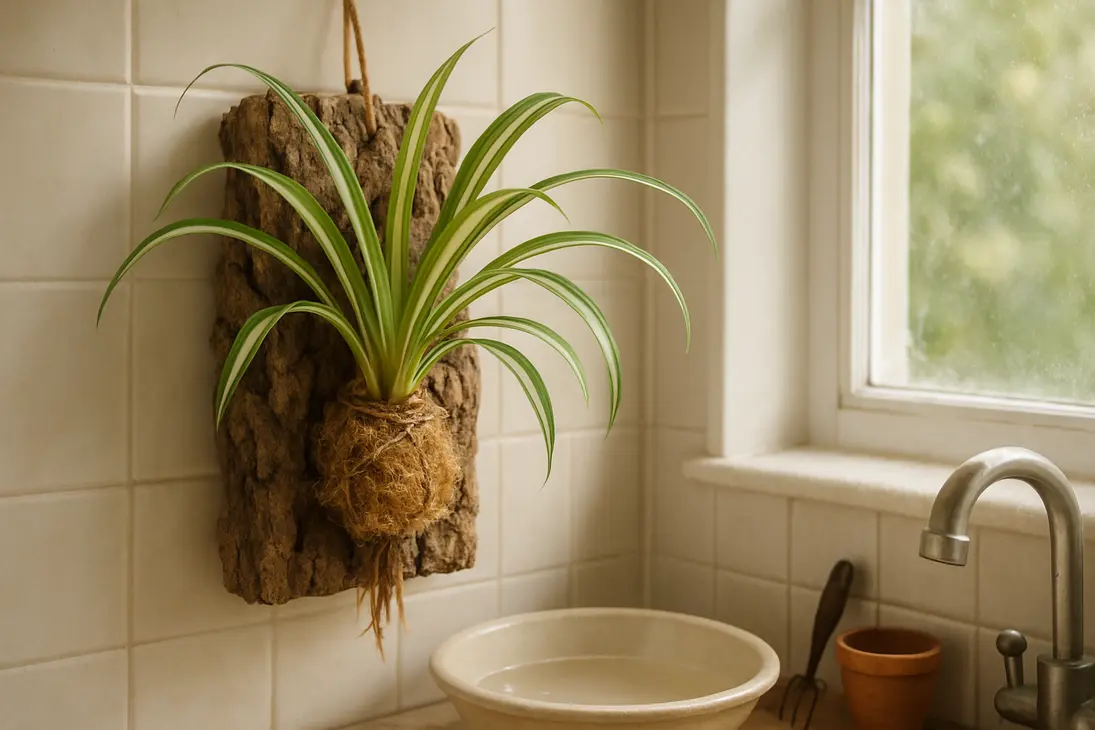
Yes, you can grow spider plants on wood, but not on bare wood alone. Spider plants are adaptable houseplants, but they are not true epiphytes like some orchids, bromeliads, or staghorn ferns. Their roots are meant to grow into a moisture-holding medium, not stay exposed on bark.
Treat this as a mounted display project. The wood provides structure and appearance, while sphagnum moss, coco fiber, or a small pocket of loose potting mix provides the root environment. With moisture, drainage, airflow, and support, a spider plant can look attractive on cork bark, a wood plaque, a branch, or driftwood. Without a root medium, it will usually dry out and decline.
Can Spider Plants Grow Mounted on Wood?
Spider plants can be mounted on wood if their roots are wrapped in a breathable, moisture-retentive material. They need secure attachment, consistent moisture around the roots, and drainage that keeps the crown from staying wet.
A mounted spider plant has much less moisture reserve than a potted one, so it usually needs more frequent watering and may grow more slowly.
What “Mounted on Wood” Means for a Spider Plant
For a spider plant, “mounted on wood” means the roots are held against wood inside a small bundle of damp sphagnum moss, coco coir, or loose mix. Twine, fishing line, mesh, plant tape, or soft wire keeps the bundle in place.
The plant is not feeding from or rooting into the wood in a meaningful way. The wood is mainly the display base; the moss or mix keeps the roots alive.
A good mount usually has:
- A small spider plant or rooted baby
- Moist moss against cork or wood
- Roots spread gently over the moss
- More moss tucked around the roots, not over the crown
- Soft ties holding the bundle securely
- A vertical or angled position for drainage
Why Spider Plants Usually Do Better With Some Soil or Moss
Spider plants have thick, fleshy roots that store water and nutrients. Those roots make them forgiving in pots, but they are not adapted to repeated exposure on dry bark.
On bare wood, roots dry quickly. Repeated hard drying can cause limp foliage, crispy tips, root dieback, and stalled growth. Moss or another medium holds moisture, cushions roots, and keeps new roots in contact with damp material while still allowing airflow.
Long-fiber sphagnum moss is the most common choice because it holds water while staying airy if loosely packed. Coco fiber, fine orchid bark, or a small amount of chunky houseplant mix can also work.
When Mounting Works Best: Display vs. Long-Term Growth
Mounting works best when you accept the trade-off: it looks beautiful and saves space, but it is higher-maintenance than a pot.
It works best for:
- Small spider plant babies
- Temporary displays
- Bright bathrooms or kitchens
- Plant walls with easy watering access
- Growers who enjoy frequent care
It works poorly for large mature plants, very dry homes, hot windowsills, long vacations, or anyone who wants low-maintenance watering. A mounted spider plant can live long-term, but a pot is easier for maximum growth and baby production.
Choosing the Right Wood and Root Support
Choose sturdy, untreated wood that can get wet repeatedly without quickly rotting, swelling, molding heavily, or releasing harmful substances. Texture helps: moss grips cork bark, hardwood, and grapevine better than a smooth board.
Best Wood Types for Mounting
Good options include cork bark, untreated hardwood plaques, grapevine wood, mopani or other aquarium-safe wood, and clean weathered branches. Cork bark is especially easy because it is lightweight, textured, and rot-resistant.
If collecting wood outdoors, use hard, dry pieces that are not crumbling. Scrub off soil and debris, then dry thoroughly. If you are unsure about pests, chemicals, sap, or decay, use purchased cork bark or untreated hardwood instead.
Materials to Use Around the Roots
The root-support material matters more than the wood. It should hold moisture without becoming compacted or soggy.
Good choices include:
- Long-fiber sphagnum moss: Moisture-retentive and easy to wrap.
- Coco coir or coco fiber: Useful, though it can dry firmly if neglected.
- Fine orchid bark mixed with moss: Adds structure and airflow.
- Chunky houseplant mix: Helpful in small amounts, but messier.
- Biodegradable mesh or plant netting: Helps contain the root pocket.
Pack the medium loosely. Dense wet moss can suffocate roots and rot the crown.
For ties, use cotton string, jute twine, raffia, fishing line, stretchy plant tape, or plastic-coated plant wire used gently. Do not cinch anything tightly around the crown or leaf bases.
Wood to Avoid
Avoid wood that may contain chemicals, swell, rot, or contaminate the root zone.
Do not use:
- Pressure-treated lumber
- Painted, stained, or chemically sealed wood near roots
- Plywood or particleboard
- Fresh resinous wood with sticky sap
- Rotten, punky, or moldy wood
- Saltwater driftwood unless thoroughly cleaned and leached
- Wood exposed to pesticides, road runoff, or pet waste
Cedar and other aromatic woods can be risky in direct contact with damp roots. If used decoratively, keep the roots buffered with moss.
How to Mount a Spider Plant on Wood
Mounting is straightforward, but most failures come from using a plant that is too large, burying the crown, or letting the root bundle dry out before the plant adapts.
Start With a Small Plant or Plantlet
A spider plant baby is the best candidate. Mature plants are heavier, thirstier, and harder to secure.
Choose a plantlet with healthy leaves, visible roots or root nubs, a firm base, no pests, and no mushy tissue. If the baby has no roots, root it first in water or a small pot. A rooted plantlet establishes much more reliably.
You can also use a small potted spider plant. Remove loose soil gently, but do not tear healthy roots trying to make them perfectly clean.
Secure the Roots Without Burying the Crown
Soak long-fiber sphagnum moss, then squeeze it until damp, not dripping. If using coco or bark mix, moisten it evenly.
Steps:
- Place a thin pad of moss on the wood.
- Spread the roots gently over the moss.
- Add more moss around the roots, leaving the crown exposed.
- Wrap the moss and wood with twine, line, tape, or mesh.
- Check that the leaf base is open to air.
- Water thoroughly and let the mount drain before hanging.
The crown is the key danger point. Spider plants like moisture at the roots, not wet moss packed around the leaf bases.
Position the Plant for Drainage and Airflow
A vertical or angled mount is better than a flat horizontal one because excess water can drain away. Place it in bright indirect light, such as near an east window, in a bright bathroom, or on a kitchen wall with good airflow.
Do not press a wet mount flat against a wall. Moisture trapped behind it can damage paint, encourage mold, and keep the root zone too wet. Use a hook, spacer, or hanging system that allows air behind the wood.
Let It Establish Before Moving or Fertilizing
After mounting, keep conditions steady for a few weeks. Provide bright indirect light, keep the moss lightly moist, and skip fertilizer at first.
Some older leaves may bend or develop brown tips after mounting. Watch the center growth instead. If new leaves emerge firm and healthy, the plant is adapting.
Care for a Spider Plant Growing on Wood
Mounted spider plant care is similar to potted care, but the root zone is smaller, dries faster, and has less nutrient buffer.
Watering: More Frequent Than a Pot
A mounted spider plant usually needs water more often than one in soil. Check the moss rather than following a strict schedule. Water when it is nearly dry but not bone-dry and crispy.
Common methods:
- Soak: Place the root bundle in a bowl or sink for 10–20 minutes, then drain.
- Rinse: Run water through the moss until evenly wet.
- Mist between waterings: Helpful for humidity, but not a substitute for soaking.
In many homes, watering may be needed every 2–4 days in warm weather and once or twice weekly in cooler months. Dry heat, sun, and small moss pockets increase watering needs. Do not leave the mount sitting in water.
Light: Bright, Indirect Light Is Best
Spider plants prefer bright, indirect light. Mounted plants especially need good light because a smaller root system is supporting the foliage.
Good locations include an east-facing window, a spot a few feet from a bright south or west window, a moderate grow light, or a bright bathroom or kitchen.
Avoid harsh direct sun. It can scorch leaves and dry moss too quickly. In low light, growth slows and the moss may stay wet longer, increasing rot risk.
Fertilizer: Use Light Feeding Only
Mounted spider plants need light feeding because salts can build up quickly in a small root pocket. Use a balanced houseplant fertilizer diluted weaker than the normal potted-plant rate. Feeding once a month in spring and summer is usually enough. Skip fertilizer in winter if growth slows.
Too much fertilizer can cause brown tips, crusty residue on moss, damaged roots, or sudden leaf edge browning. Flush the moss with plain water occasionally and let it drain well.
Water Quality: Tap Water Is Usually Fine
Most spider plants tolerate tap water. However, hard water, high dissolved salts, or heavy fertilizer can contribute to brown tips.
If browning persists, try one change at a time: let tap water sit overnight, use filtered water if available, flush the moss more thoroughly, reduce fertilizer, or trim dry tips without cutting into green tissue.
Do not blame water automatically. Dry roots, low humidity, sun stress, and fertilizer buildup are also common causes.
Common Problems With Mounted Spider Plants
Mounted spider plants are less forgiving than potted ones because the roots have less protection.
Roots Drying Too Quickly
This is the most common problem. The plant may become limp, pale, or crispy if the root pocket repeatedly dries too hard.
Fixes include:
- Increase the moss pocket size.
- Use long-fiber sphagnum instead of a thin coco layer.
- Move away from direct sun, heaters, or vents.
- Soak instead of misting.
- Move to a more humid room.
If roots are dry, brittle, or hollow, the plant may need to be restarted in a pot.
Brown Leaf Tips or Crispy Leaves
Brown tips are common on spider plants and even more likely on mounted ones. Causes include inconsistent watering, low humidity, direct sun, fertilizer buildup, hard water, or root stress after mounting.
Trim brown tips with clean scissors if desired, shaping the cut to match the leaf. If whole leaves turn crispy, the plant is likely too dry or too hot. If leaves yellow and soften at the base, the crown or moss may be staying too wet.
Overfertilizing Mounted Plants
A mounted root pocket cannot dilute fertilizer the way a pot of soil can. Overfeeding can burn roots quickly, especially if the moss dries after feeding.
If you suspect overfertilizing, rinse the root bundle thoroughly, let it drain, skip fertilizer for several weeks, remove badly damaged leaves, and resume only with very diluted fertilizer during active growth.
More fertilizer will not help a struggling mount establish faster. Stable moisture and healthy roots matter more.
Spider Mites and Pest Prevention
Spider plants can attract spider mites and other common houseplant pests, especially in dry indoor air. Check for fine webbing, speckled foliage, dusty leaf undersides, sticky residue, or distorted new growth.
Keep leaves clean, avoid hot dry placements, and inspect new plants before placing them nearby. If pests appear, isolate the plant and rinse foliage well. Houseplant-safe insecticidal soap can help, but follow the label and test a small area first.
When to Unmount and Repot
Unmounting is sometimes the best choice. Repot if the plant wilts within a day of watering, the roots are dead or mushy, the crown is rotting, the plant is too heavy for the mount, you cannot keep up with watering, growth has stopped, or the moss smells sour.
Cut away ties gently, remove old moss without tearing healthy roots, and pot the plant in a small container with drainage and a light houseplant mix. Keep it evenly moist while it recovers, not soggy.
Conclusion
Spider plants can grow on wood if you give their roots a proper medium. They are not true epiphytes and should not be mounted on bare bark with exposed roots. Use a small plant or rooted baby, wrap the roots in sphagnum moss, coco fiber, or loose mix, keep the crown uncovered, and water more often than you would a potted plant.
For long-term, low-maintenance growth, a pot is easier. For a decorative display and hands-on care, a mounted spider plant can be healthy, unusual, and striking.
FAQ
Can a spider plant grow directly on bare wood?
Not reliably. It may survive briefly, but it usually will not thrive long-term. Spider plants need moss, coco fiber, or another moisture-holding medium around their roots. Bare wood dries too quickly.
Is it better to mount a spider plant baby or a mature plant?
A spider plant baby is better. Plantlets are lighter, easier to secure, and adapt more readily to a small root pocket. Root the baby first for best results.
How often should I water a spider plant mounted on wood?
Water when the moss is nearly dry. In many homes, that may be every 2–4 days, depending on humidity, light, temperature, airflow, and moss volume. A thorough soak or rinse is better than misting alone.
Can mounted spider plants still produce babies?
Yes, a healthy mounted spider plant can produce runners and babies. However, it may produce fewer than a vigorous potted plant because the root zone is smaller and dries faster. If baby production is your main goal, use a pot.
You Might Also Like