How to Create a False Bottom Terrarium
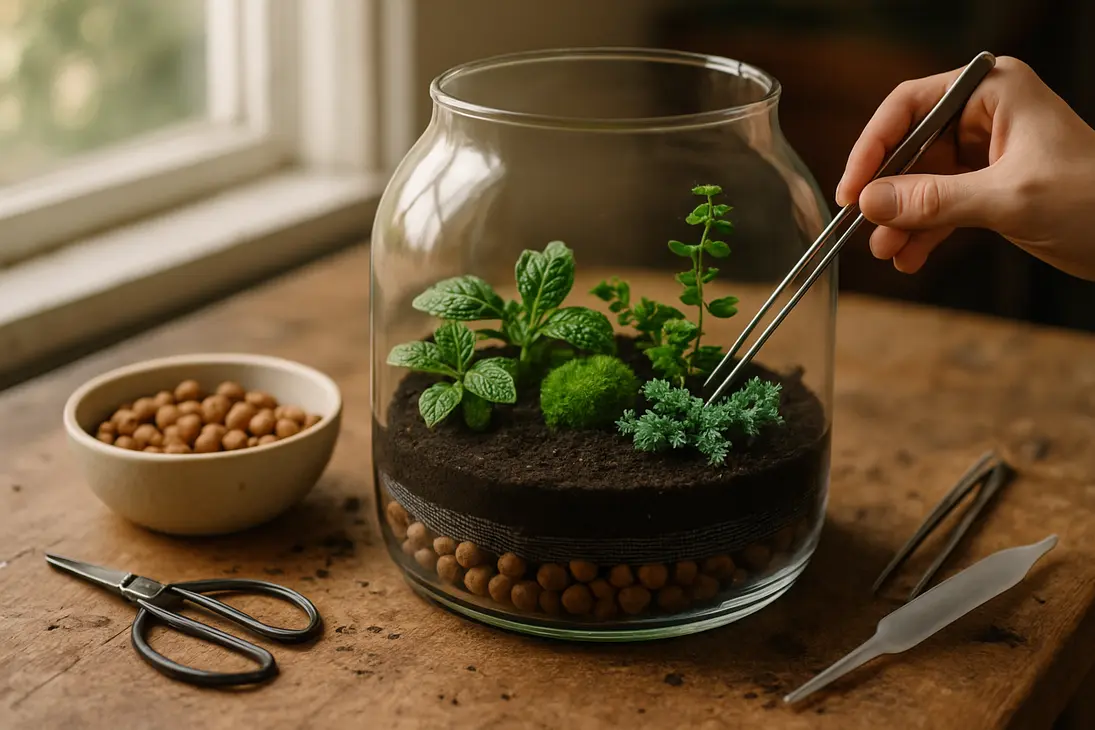
A false bottom terrarium has a hidden drainage space beneath the planting substrate. In a container with no drainage hole, that space gives extra water somewhere to collect instead of sitting directly around plant roots.
It is not a cure for overwatering, and it does not make a terrarium maintenance-free. But when it is sized correctly, separated from the soil, and paired with careful watering, a false bottom can make a closed or semi-closed terrarium more forgiving.
What a False Bottom Does in a Terrarium
A false bottom is a drainage reservoir at the base of a terrarium. It sits below the substrate and is separated from it by mesh, screen, or fabric. Excess water drains into this lower layer while roots stay in the planting mix above.
The goal is to keep the substrate moist, not waterlogged. A little water in the reservoir is usually fine, but it should not rise high enough to touch the soil. If the substrate sits in water, the false bottom becomes a soggy water source instead of protection.
False Bottom vs. Basic Gravel Layer
A basic gravel layer is often just stones under soil. A false bottom is more intentional: it creates a defined drainage space and includes a barrier to keep soil from washing down.
| Feature | Basic Gravel Layer | False Bottom Terrarium |
|---|---|---|
| Main purpose | Decorative separation | Drainage reservoir below substrate |
| Barrier layer | Often missing | Essential |
| Best use | Small or decorative builds | Closed terrariums, humid tropical builds, vivariums |
| Main risk | Soil settles into gravel | Reservoir overfilled or too deep |
Gravel does not “drain” a sealed container. It only changes where extra water sits. Without a proper barrier, soil eventually falls into the gravel and the bottom layer can become muddy.
When a False Bottom Is Helpful
A false bottom is useful when:
- The terrarium is closed or mostly closed.
- The container has no drainage hole.
- You are growing moisture-loving tropical plants.
- The container has enough vertical space.
- You want a small buffer against accidental overwatering.
- You need a reservoir for a vivarium or bioactive setup.
It is especially helpful for plants such as fittonia, small ferns, creeping fig, selaginella, mosses, and miniature tropical foliage plants that like humidity but dislike stale, saturated soil.
When You May Not Need One
You may not need a false bottom if:
- The terrarium is open and planted with succulents or cacti.
- The container is very shallow.
- You are using a tiny jar where root space is limited.
- You are confident with very light watering.
- The plants prefer drier air and fast-drying substrate.
A false bottom is not automatically better. In open desert-style terrariums, it can trap water where dry-climate plants do not want it. For succulents and cacti, an open dish with a gritty mix and careful watering is usually more appropriate.
Materials for a False Bottom Setup
A good false bottom has three basic parts:
- A drainage reservoir
- A barrier layer
- Substrate above the barrier
Charcoal is optional. The substrate itself matters just as much as the drainage layer.
Drainage Layer Options: LECA, Gravel, Egg Crate, or Mesh Platforms
Several materials can work. Choose based on container size, appearance, and how much water capacity you need.
| Material | Best for | Pros | Watch-outs |
|---|---|---|---|
| LECA clay balls | Most jars and display terrariums | Lightweight, clean, good air gaps | Can roll while planting |
| Aquarium gravel | Small to medium terrariums | Easy to find, decorative | Heavy; can clog if barrier fails |
| Lava rock | Naturalistic builds | Porous, attractive, stable | Dusty; rinse well |
| Egg crate light diffuser | Larger vivariums | Creates a true open reservoir | Needs support, mesh, and careful cutting |
| Plastic mesh platforms | Larger custom builds | Lightweight and durable | Use safe materials if animals are involved |
For most beginner false bottom terrariums, LECA is the easiest option. It is light, simple to rinse, and leaves plenty of space for water to collect.
Barrier Layer: Screen, Mesh, or Landscape Fabric
The barrier layer keeps substrate from falling into the reservoir. Good options include:
- Fiberglass window screen
- Fine plastic mesh
- Aquarium-safe mesh
- Weed-free landscape fabric
- Nylon mesh
Cut the barrier large enough to cover the drainage layer and reach slightly up the sides of the container. If it is too small, soil will slip around the edges.
Avoid metal screen unless you know it will not rust. A constantly damp terrarium can stain or weaken unsuitable metal.
Charcoal and Substrate: Where They Fit
Activated horticultural charcoal is usually added above the barrier and below the main substrate, or mixed lightly into the substrate. Use it in a thin amount, not as a thick layer.
Charcoal may help adsorb some odors and impurities, but it will not fix overwatering, rot, or poor plant choices.
For the substrate, use a mix that holds moisture while allowing air around roots. A tropical terrarium mix may include coco coir, fine orchid bark, sphagnum moss, pumice, perlite, or a modest amount of worm castings or compost.
Avoid heavy garden soil. It compacts easily, can bring in pests, and often becomes muddy in a closed container.
Materials to Avoid, Including Vermiculite as a Drainage Base
Avoid these as the main false bottom material:
- Vermiculite: Holds water instead of creating open drainage space.
- Sand: Compacts and can block water movement.
- Unwashed outdoor stones: May carry soil, pests, or contaminants.
- Dyed decorative gravel: Coatings may fade or break down.
- Organic mulch or wood chips: Decompose and collapse over time.
- Potting soil as the bottom layer: Defeats the purpose of a reservoir.
Vermiculite can be useful in seed starting and potting mixes, but it is not a good false bottom material because it wicks and holds too much moisture.
How to Build a False Bottom Terrarium Step by Step
Before you start, plan the layer depths. A common beginner mistake is making the drainage layer so tall that there is not enough room left for substrate, plants, and growth.
A good layer order is:
- Container
- Drainage reservoir
- Mesh or screen barrier
- Optional thin charcoal layer
- Terrarium substrate
- Plants, moss, hardscape, and finishing touches
Step 1: Choose and Clean the Container
Choose a clear glass container with enough height for the drainage layer, substrate, and plants. Closed jars, apothecary jars, glass canisters, fish bowls, and tall vases can all work.
Wash the container with warm water, remove labels, rinse thoroughly, and dry the inside. If you use soap, rinse very well so residue does not remain.
Step 2: Add the Drainage Reservoir
Add LECA, rinsed aquarium gravel, lava rock, or another suitable drainage material to the bottom.
As a rough starting point:
- Tiny jars: about ¼ to ½ inch
- Small terrariums: about ½ to 1 inch
- Medium terrariums: about 1 to 2 inches
- Large vivarium-style builds: 2 inches or more, depending on design
Level the drainage material gently. If using egg crate in a larger build, cut it to fit the base, support it above the glass bottom, and cover it securely with mesh.
Step 3: Fit the Mesh or Screen Barrier
Cut the mesh slightly larger than the container’s inner footprint so it overlaps the sides like a shallow cup. Place it over the drainage layer and press the edges against the glass.
For narrow-necked bottles, roll the mesh, insert it through the opening, then unroll it with chopsticks, tweezers, or long forceps. Take your time: a poorly fitted barrier is one of the most common reasons a false bottom fails.
Step 4: Add Charcoal if Using It
Add a thin layer of activated horticultural charcoal, or sprinkle a small amount over the mesh. A dusting to ¼ inch is enough for most small and medium terrariums.
If the charcoal is dusty, rinse it first and let it drain. This step is optional; a terrarium can still work without charcoal if the substrate is appropriate and watering is controlled.
Step 5: Add Terrarium Substrate
Add substrate above the mesh and charcoal. Most small tropical terrarium plants need more root space than beginners expect.
Aim for:
- 1 to 2 inches of substrate in mini terrariums
- 2 to 3 inches in small and medium jars
- 3 to 5 inches in larger builds or where plants have deeper roots
You can slope the substrate for a more natural look. Lightly firm it, but do not pack it hard. If the mix becomes dense when pressed, it is probably too heavy for a long-term terrarium.
Step 6: Plant and Finish the Terrarium
Choose small plants that enjoy humidity and moderate moisture. Good closed-terrarium options include:
- Fittonia
- Button ferns
- Pilea glauca
- Peperomia prostrata
- Selaginella
- Small creeping fig
- Mosses
- Miniature tropical begonias, if the container has enough airflow and space
Plant gently. Remove excess dense nursery mix from roots, tuck the plant into the substrate, and water lightly to settle it in.
Finish with moss, small stones, cork bark, or leaf litter if desired. Keep decorative materials from burying plant crowns, which can rot quickly in a closed terrarium.
How Deep Should the False Bottom Be?
The false bottom should be deep enough to hold a small amount of excess water, but not so deep that it steals root space.
Bigger is not always better. A very deep reservoir in a short jar can leave only a thin soil layer, forcing roots too close to standing water.
Small Jars and Mini Terrariums
For small jars, keep the false bottom modest. Usually ¼ to ¾ inch is enough.
In tiny containers, plant choice and watering precision matter more than reservoir size. If the jar is only a few inches tall, prioritize substrate depth.
Medium and Large Terrariums
For medium terrariums, 1 to 2 inches is usually practical. For large vivariums, the reservoir can be deeper, especially if there is a way to siphon or drain water.
Think in proportions rather than fixed rules. In many display terrariums, the false bottom should take up roughly 10–20% of the usable height.
What to Do if the False Bottom Is Too Big
If you have already built the terrarium and the false bottom is too tall, you have three options:
- Rebuild it now. Best if plants are newly added and easy to remove.
- Remove some drainage material. Use a spoon, tweezers, or narrow scoop if the opening allows it.
- Adapt the planting. Use very small plants, mosses, and shallow-rooted species, then water extremely lightly.
If the water level is already near the substrate, rebuilding is usually safest. Roots sitting above standing water are much more likely to rot.
Watering and Maintaining the False Bottom
A false bottom does not mean you should pour in water until the reservoir fills. In a closed terrarium, most water stays inside and cycles through evaporation and condensation, so watering mistakes can linger.
Keeping Water Below the Substrate
The water level should stay below the mesh and substrate. A little water visible in the bottom is usually fine, but it should not touch the soil layer.
After watering, check from the side:
- Is there water in the reservoir?
- Is the water touching the mesh?
- Is the substrate dark and saturated all the way down?
- Are the plant crowns wet?
If water rises into the substrate, remove some. The drainage layer is meant to separate water from roots, not soak the soil from below.
Avoiding Overwatering in Closed Terrariums
Closed terrariums need far less water than most people expect.
After planting, water lightly and watch the glass for a few days. Some condensation is normal, especially in the morning or after lights warm the container. Heavy condensation all day, dripping glass, sour smells, or mushy leaves suggest too much moisture.
Respond to what you see:
- Dry substrate and no condensation: add a small amount of water.
- Light morning condensation that clears later: usually fine.
- Constant fog and wet leaves: open the lid for a while.
- Water pooled up to the substrate: remove water.
The reservoir is a backup, not permission to overwater.
Managing Algae in the False Bottom
Algae can grow when light, water, and nutrients are present. A small amount of green film is common and not automatically a problem.
To limit algae:
- Keep the terrarium out of direct sun.
- Avoid overfertilizing.
- Remove decaying leaves promptly.
- Use an opaque decorative band around the lower reservoir if algae bothers you visually.
- Reduce standing water if the reservoir is constantly full.
Algae becomes more concerning if it comes with bad smells, cloudy water, dying plants, or muddy substrate.
Removing Excess Water if Needed
If the false bottom is overfilled, remove water rather than waiting for it to fix itself.
You can use a turkey baster, aquarium airline tubing as a siphon, a syringe, a pipette for small jars, or paper towels pressed into the reservoir area if accessible.
Some large builds include a hidden access tube that reaches the false bottom, allowing water to be siphoned without disturbing plants.
Troubleshooting Common False Bottom Problems
Most false bottom problems come from too much water, too little substrate, no proper barrier, unsuitable plants, or decaying organic matter.
Plants Turning Mushy or Dying
Mushy leaves and collapsing stems usually point to excess moisture, poor airflow, or plants that do not suit a closed terrarium.
Check whether the water is touching the substrate, the soil is saturated, leaves are pressed against wet glass, crowns are buried too deeply, or dry-loving plants are being grown in a humid setup.
Remove dead tissue promptly. If roots are brown, slimy, and smell bad, the plant may not recover.
Soil Mixing Into the Drainage Layer
This happens when the barrier is missing, too coarse, torn, or cut too small.
Signs include brown water, sinking substrate, muddy material between stones, and less visible air space. If minor, the terrarium may continue to function. If the reservoir is filling with mud, rebuild with finer mesh that overlaps the sides.
Standing Water Touching the Substrate
This defeats the purpose of the false bottom. The substrate will wick water upward and keep roots saturated.
Remove water until there is visible air space between the waterline and the substrate barrier. If that is impossible because the drainage layer is too shallow or clogged with soil, rebuild the lower layers.
Algae Growth in the Reservoir
A little algae is mostly cosmetic. Heavy algae often means too much light or too many nutrients reaching the reservoir.
Reduce light, avoid direct sun, and remove excess water. If plants are healthy and the terrarium smells normal, do not panic. If algae appears with rot, cloudiness, or sour odors, treat it as a moisture and decay problem.
Bad Smells or Mold
A healthy terrarium should smell earthy, not sour, rotten, or swampy.
Bad smells can come from rotting roots, buried dead leaves, stagnant water touching organic matter, too much compost, or poor airflow after overwatering.
Remove decaying material, open the terrarium temporarily, and reduce moisture. Small patches of mold may appear in new terrariums, but persistent mold usually means too much decomposing matter or not enough balance in the system.
Conclusion
A false bottom terrarium gives excess water a place to collect below the substrate, helping protect roots from soggy conditions. The key is building it with the right proportions: a modest drainage reservoir, a well-fitted barrier, and enough substrate for healthy root growth.
Do not rely on the false bottom to solve overwatering. Keep the water level below the soil, watch condensation, remove excess water when needed, and choose plants that enjoy humid terrarium conditions.
FAQ
Do all terrariums need a false bottom?
No. A false bottom is helpful in many closed tropical terrariums, but it is not required for every setup. Very small jars, open succulent bowls, cactus displays, and carefully watered containers may not need one.
If your plants prefer dry conditions, a false bottom can do more harm than good.
Can I use gravel for a false bottom?
Yes, gravel can be used as the drainage layer if it is clean and paired with a proper mesh barrier. Aquarium gravel or small rinsed stones are common choices.
Gravel alone is not enough. Without a barrier, soil will settle into it and the bottom layer can become muddy.
Is vermiculite good for a terrarium false bottom?
No. Vermiculite is not a good false bottom material because it holds water rather than creating open drainage space. As a base layer, it can keep moisture too close to the substrate and roots.
Use LECA, rinsed gravel, lava rock, egg crate, or another stable drainage structure instead.
How much water should be in the false bottom?
There can be a small amount of water in the reservoir, but it should stay below the substrate and barrier layer. If water is touching the soil, remove some.
In closed terrariums, add water sparingly. Light condensation that comes and goes is usually fine; constant fog, dripping glass, mushy plants, or water rising into the substrate means the terrarium is too wet.
Sources
- Reddit r/terrariums discussion on oversized false bottoms: https://www.reddit.com/r/terrariums/comments/ex0gh3/how_can_i_fix_a_terrarium_thats_false_bottom_is
- Reddit r/terrariums wiki on false bottoms and drainage layers: https://www.reddit.com/r/terrariums/wiki/index/resources/falsebottoms
You Might Also Like