What Soil Is Best for Growing Jacaranda mimosifolia From Seed?
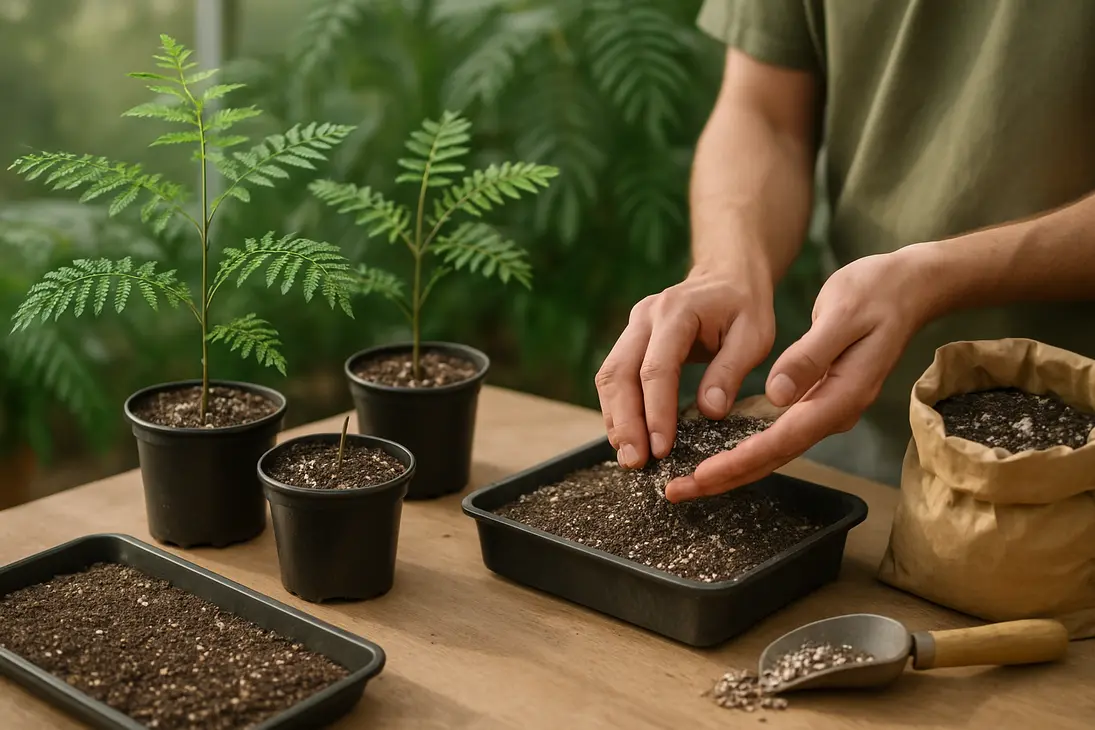
The best soil for Jacaranda mimosifolia from seed is light, loose, sterile, and very well drained. Use a seed-starting mix that holds gentle moisture without becoming soggy. Once seedlings are larger, move them into a free-draining potting mix or plant outdoors in sandy loam, loam, or improved soil that drains quickly after watering or rain.
Jacaranda is adaptable once established, but seedlings are vulnerable to compacted soil, wet clay, damping-off, and root rot. Aim for moisture around the seed, oxygen around the roots, and no standing water.
Best Soil Conditions for Jacaranda mimosifolia
Jacaranda mimosifolia grows in several soil types in warm climates, but it performs best when roots have air, moderate moisture, and room to spread. Mature trees may tolerate imperfect soil if drainage is good; seedlings need a lighter, more controlled medium.
Well-draining soil is the priority
Drainage is the main soil requirement. Avoid any seed tray, pot, or planting site where water pools or the soil stays saturated.
Good drainage means water moves through the soil while some moisture remains. It does not mean dry sand. Jacaranda roots need both water and air, and wet, compacted soil reduces oxygen.
Signs of poor drainage include:
- Water pooling on the surface.
- Sour or stagnant-smelling soil.
- Yellowing leaves while the mix is wet.
- Seedlings collapsing at the base.
- Pots that remain heavy for days.
For seed starting, drainage matters even more because young roots fail quickly in soggy soil.
Sandy loam or loamy soil works best
For outdoor planting, sandy loam or loam is usually best. These soils drain well while still holding enough moisture and nutrients for steady growth.
| Soil type | Suitability | Main concern |
|---|---|---|
| Sandy loam | Excellent | May dry quickly |
| Loam | Very good | Can compact |
| Pure sand | Usable | Low nutrients |
| Clay loam | Possible | Needs drainage |
| Heavy clay | Poor | Waterlogging |
| Boggy soil | Not suitable | Root rot risk |
If your garden soil is sandy or loamy, loosen the planting area and add modest compost if needed. If it is heavy clay, improve drainage across a broad area rather than only amending the planting hole.
Avoid compacted clay and waterlogged ground
Compacted clay is risky for jacaranda, especially young plants. It drains slowly, holds little air, and can restrict roots.
Do not dig a hole in clay, fill it with potting mix, and plant into it. This can create a “bathtub” effect where water collects in the amended hole but cannot drain into the surrounding clay.
If you have clay soil:
- Plant on a slight mound or raised area.
- Improve a broad area, not just the hole.
- Avoid low spots where rainwater collects.
- Keep traffic away from the root zone.
- Choose another site if soil stays wet for days.
Jacaranda prefers soil that dries between wet periods, not ground that remains constantly damp.
Ideal soil pH: slightly acidic to neutral
Jacaranda mimosifolia generally prefers slightly acidic to neutral soil, roughly pH 6.0 to 7.0. Established trees may tolerate somewhat outside that range if drainage is good.
For seeds, pH is usually less important than using a clean, free-draining mix. Most commercial seed-starting mixes are already adjusted for broad plant use. Do not add lime, sulfur, or other pH amendments unless you have tested the soil.
Soil Mix for Starting Jacaranda Seeds
Jacaranda seedlings need a lighter medium than mature trees. Their first roots are fine, shallow, and sensitive to excess moisture. A good seed mix should be clean, airy, and able to hold light moisture without becoming dense.
Use a sterile, free-draining seed-starting mix
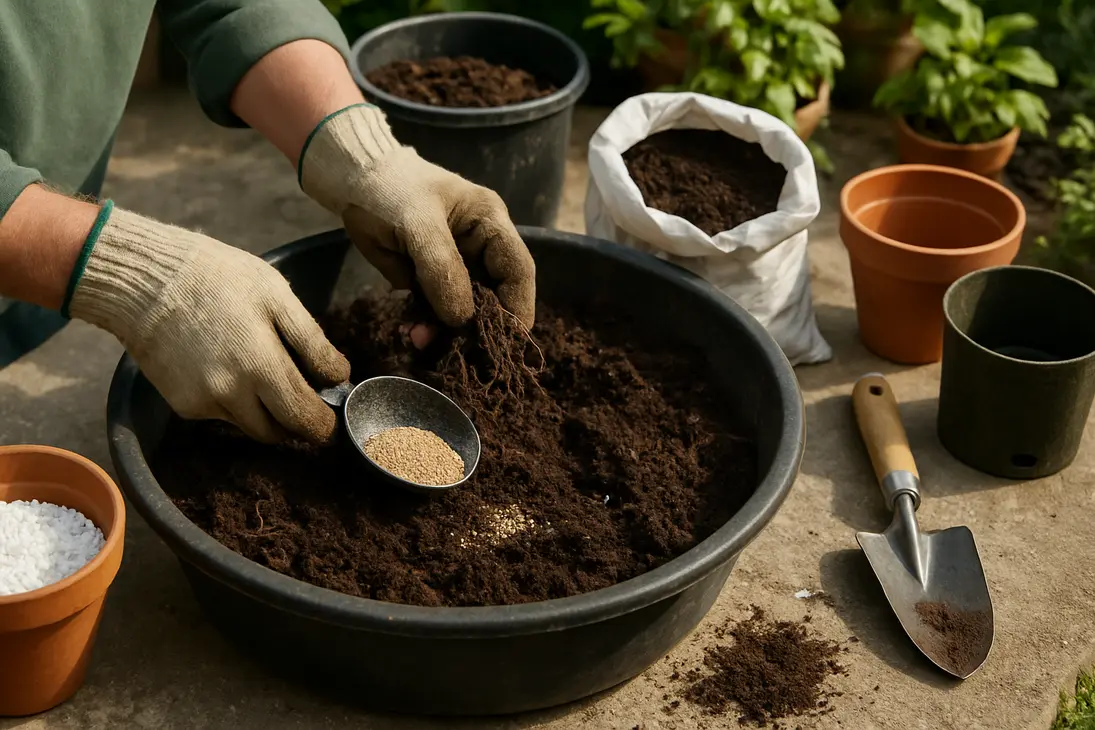
Use a sterile seed-starting mix for trays or small pots. Sterile mixes reduce the risk of weed seeds, insects, and disease organisms that can damage young seedlings.
A good jacaranda seed-starting mix should:
- Feel light and fluffy.
- Drain freely.
- Stay evenly moist, not muddy.
- Contain little or no strong fertilizer.
- Allow air around developing roots.
Avoid heavy garden soil and moisture-retentive potting mixes that stay wet for too long.
A simple Jacaranda seed mix recipe
A commercial seed-starting mix can work well if it drains freely. If it seems too fine or water-retentive, add coarse material.
Use this simple mix:
| Ingredient | Amount | Purpose |
|---|---|---|
| Seed-starting mix, coco coir, or peat-based mix | 2 parts | Holds light moisture |
| Perlite or pumice | 1 part | Adds aeration |
| Coarse horticultural sand | 1 part | Improves drainage |
If you cannot find coarse horticultural sand, use extra perlite or pumice. Do not use beach sand, which may contain salts, or fine sand that can make the mix denser.
The finished mix should become evenly moist when watered but should not collapse into paste.
Why garden soil is risky for seed trays or pots
Garden soil often performs poorly in containers. In the ground, water moves through a larger soil profile. In a tray or pot, the same soil can compact, crust over, and stay wet around roots.
Using garden soil for jacaranda seeds can cause poor oxygen, damping-off, weed competition, uneven moisture, and heavy, slow-draining pots. A sterile seed mix is much safer.
When to move seedlings into richer potting mix
Move jacaranda seedlings into a slightly richer potting mix once they have several true leaves and enough root growth to handle transplanting. Do not rush this immediately after germination.
The next-stage mix should still be open and airy. Use quality potting mix with added perlite, pumice, or coarse bark. A small amount of compost is fine if the base mix is low in nutrients, but avoid strong fertilizer or heavy organic mixes in tiny pots.
Preparing Soil Before Planting Outdoors or in a Container
As seedlings grow, the soil must support a developing young tree, not just germination. Preparation depends on whether you plant outdoors or keep the tree in a container.
Test your soil texture and drainage first
Before planting outdoors, check soil texture and drainage.
Moisten a handful of soil and squeeze it:
- Sticky ribbon: clay-heavy.
- Loose ball that crumbles: loam.
- Gritty and falls apart: sandy.
- Silky and compacting: silt-heavy.
For drainage, dig a hole about the depth of the future root ball, fill it with water, and observe how long it takes to drain. If water remains for many hours or the hole is still soggy the next day, the site may be too wet for jacaranda without correction.
Improve heavy soil with coarse material and organic matter
If soil is heavy but not constantly wet, improve a broad area before planting. Finished compost can improve structure over time, while coarse materials may help keep soil open.
Avoid adding small amounts of fine sand to clay; it can make the soil denser. If sand is used, it should be coarse horticultural sand and part of a broader improvement plan.
For outdoor planting:
- Loosen an area several times wider than the root ball.
- Mix compost lightly through the native soil.
- Keep the root flare at the correct level.
- Backfill with improved native soil, not pure potting mix.
- Water in, then let the soil begin drying before watering again.
The goal is to encourage roots to move outward, not remain in a rich, wet pocket.
Use potting mix, not garden soil, for containers
For container-grown jacaranda, use potting mix rather than garden soil. Potting mixes are designed to drain through a confined space while holding air.
A suitable container mix can include general-purpose potting mix plus perlite, pumice, or coarse bark. A little compost or slow-release nutrition may be useful, but avoid dense, manure-heavy, or very peaty mixes that remain wet.
Choose a deep pot with drainage holes for young trees
Jacaranda develops a vigorous root system, so use a deep pot with drainage holes. Gravel at the bottom does not replace drainage holes and may leave the lower mix wetter.
Choose a pot large enough for growth but not dramatically oversized. A tiny seedling in a large pot can sit in wet soil because its roots cannot use moisture quickly. Step up pot size gradually.
Empty saucers, check moisture below the surface, and refresh tired mix when repotting.
Moisture, Nutrients, and Drainage as the Tree Grows
Good soil can still fail if watering and feeding are wrong. Jacaranda seedlings need steady moisture early, then a more moderate wet-dry rhythm as they mature.
Keep seedlings evenly moist, not soaked
Freshly sown seeds and small seedlings should be kept evenly moist, like a wrung-out sponge. The seed zone should not repeatedly dry out during germination, but the mix should never be dripping or waterlogged.
Use gentle watering so seeds are not displaced. A spray bottle, fine rose watering can, or brief bottom watering can work. If bottom watering, remove the tray once the surface has moistened.
Let the soil dry slightly between waterings as plants mature
As seedlings grow, allow the upper layer of soil to dry slightly between waterings. This improves aeration and encourages roots to explore the mix.
Do not water only because the surface looks dry. Check below the surface with your finger, a wooden skewer, or by lifting the pot. The lower mix may still be moist even when the top looks dry.
Add compost lightly rather than using overly rich soil
Jacaranda does not need heavily enriched soil when young. Too much compost, manure, or fertilizer can hold excess moisture and encourage soft growth.
Use compost lightly to improve structure and gradual fertility. In containers, use it as a small part of a free-draining potting mix, not the main ingredient.
Reduce watering once established, but do not let seedlings dry out completely
Established jacarandas are often described as drought tolerant, but seedlings are not drought-proof. Young plants have limited roots and can dry out quickly, especially in pots.
A useful progression is:
- Germination: evenly moist.
- Small seedling: moist with slight surface drying.
- Potted young tree: water when the upper mix has dried somewhat.
- Outdoor young tree: water deeply but less often, depending on weather and soil.
Avoid rigid watering schedules. Respond to actual soil moisture.
Common Soil Mistakes With Jacaranda mimosifolia
Most problems come from poor drainage, compacted soil, or using outdoor soil in containers. Jacaranda is adaptable, but seed-grown plants still need a careful start.
Assuming Jacaranda can grow well in any soil
Jacaranda can tolerate different soil types, but it still needs drainage. A tree surviving in a difficult site is not the same as a seedling thriving.
Start seeds in a loose seed mix, then move young plants into free-draining soil with moderate fertility.
Starting seeds in dense or poorly drained soil
Dense soil slows germination and raises the risk of damping-off. Heavy potting soil, compact garden soil, or mixes with too much fine compost can hold water around seeds and limit oxygen.
If seeds are already in dense soil, do not keep soaking the tray. Keep it lightly moist, warm, and ventilated. If seedlings appear, transplant carefully once strong enough.
Overwatering because the surface looks dry
The surface of a pot can dry quickly while the lower mix stays wet. This is common under grow lights, near sunny windows, or outdoors in warm weather.
Check deeper before watering. Jacaranda roots prefer alternating moisture and air, not constant saturation.
Using compact garden soil in pots
Garden soil in pots often becomes heavy and airless. Even good outdoor soil can compact after repeated watering in a container.
Use potting mix with added drainage material. If you add a small amount of mineral soil for weight in a large outdoor container, keep it limited and make sure the overall mix still drains freely.
Planting in soil that stays wet after rain
A low spot that remains wet after rain is not suitable for Jacaranda mimosifolia. Occasional rain is fine; chronic saturation is the problem.
If a site stays wet, plant on a mound, improve drainage across a broad area, or choose another location.
Conclusion
The best soil for Jacaranda mimosifolia from seed is light, clean, and free draining. Start seeds in a sterile seed-starting mix amended with perlite, pumice, or coarse sand so it stays moist without becoming soggy.
As the tree grows, use a well-drained potting mix or plant outdoors in sandy loam, loam, or improved soil that drains quickly. Slightly acidic to neutral soil is ideal, but drainage matters more than perfect pH.
Jacaranda is adaptable, but it is not a bog plant. Give the roots air, moderate moisture, and room to grow.
FAQ
Can Jacaranda mimosifolia grow in clay soil?
Yes, if the clay-influenced soil drains well. Heavy compacted clay is risky because it holds water and limits oxygen around the roots.
If drainage is slow, plant on a mound, improve a broad area with compost, and avoid low spots. Do not fill a small clay hole with potting mix, as this can trap water.
What is the best potting mix for Jacaranda seedlings?
For germination, use a sterile seed-starting mix with added perlite, pumice, or coarse horticultural sand. After seedlings have several true leaves, move them into quality potting mix amended for drainage.
Avoid dense garden soil, heavy compost-based mixes, and containers without drainage holes.
Does Jacaranda mimosifolia need acidic soil?
Jacaranda prefers slightly acidic to neutral soil, around pH 6.0 to 7.0, but drainage is usually more important than exact pH.
If the plant is growing well in a free-draining mix, do not adjust pH without a soil test. Test outdoor soil if it is extremely acidic or alkaline.
Should I add compost when growing Jacaranda from seed?
Do not add much compost to the seed-starting mix. Seeds do best in a light, clean, low-fertility medium.
Once seedlings are established, a small amount of finished compost can be used in a well-drained potting mix or worked lightly into outdoor soil to improve structure.
You Might Also Like