Why Is It Important to Let Soil Dry Between Waterings?
Letting soil dry between waterings matters because roots need both water and oxygen. When soil stays constantly wet, air spaces fill with water, roots struggle to breathe, and plants become more vulnerable to root rot, fungus gnats, mold, weak growth, and nutrient problems.
That does not mean every plant should become bone-dry. A cactus, fern, tomato seedling, and pothos all need different dry-down cycles. The goal is to water when the root zone—not just the surface—has dried to the right level.
What “Drying Out” Really Means for Plant Soil
“Let the soil dry out” usually means allowing soil to move from wet to lightly moist, or from moist to partly dry, before watering again. For most plants, it does not mean waiting until the potting mix is hard, dusty, and pulling away from the pot.
The right dryness depends on the plant, pot size, pot material, soil mix, season, temperature, light, airflow, and growth stage. Succulents and Mediterranean herbs prefer a deeper dry-down. Ferns, peace lilies, seedlings, and many leafy plants prefer more consistent moisture.
Surface dryness vs. root-zone dryness
The top of the soil can dry quickly while the lower root zone stays wet, especially indoors where warm air, sun, or fans dry the surface faster than the bottom of the pot.
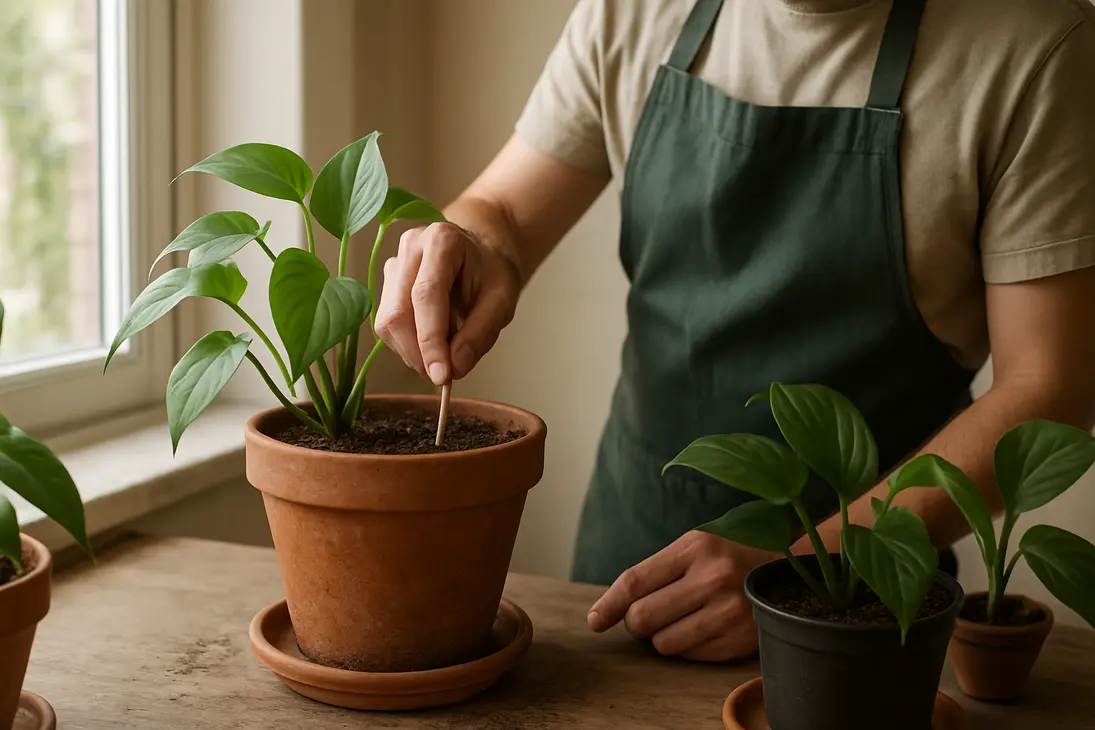
That is why looking at the surface is not enough. If you water whenever the top looks dry, the lower mix may never re-aerate. For small houseplants, check one to two inches down with your finger. For larger pots, use a wooden skewer, chopstick, or moisture meter. In outdoor beds, dig a small test hole near the roots.
Moist but aerated soil vs. soggy soil
Healthy soil is often moist but aerated: water clings to soil particles while enough pore space remains open for oxygen. Soggy soil feels heavy, compacted, muddy, or sour-smelling, and water may drain slowly or sit in the saucer.
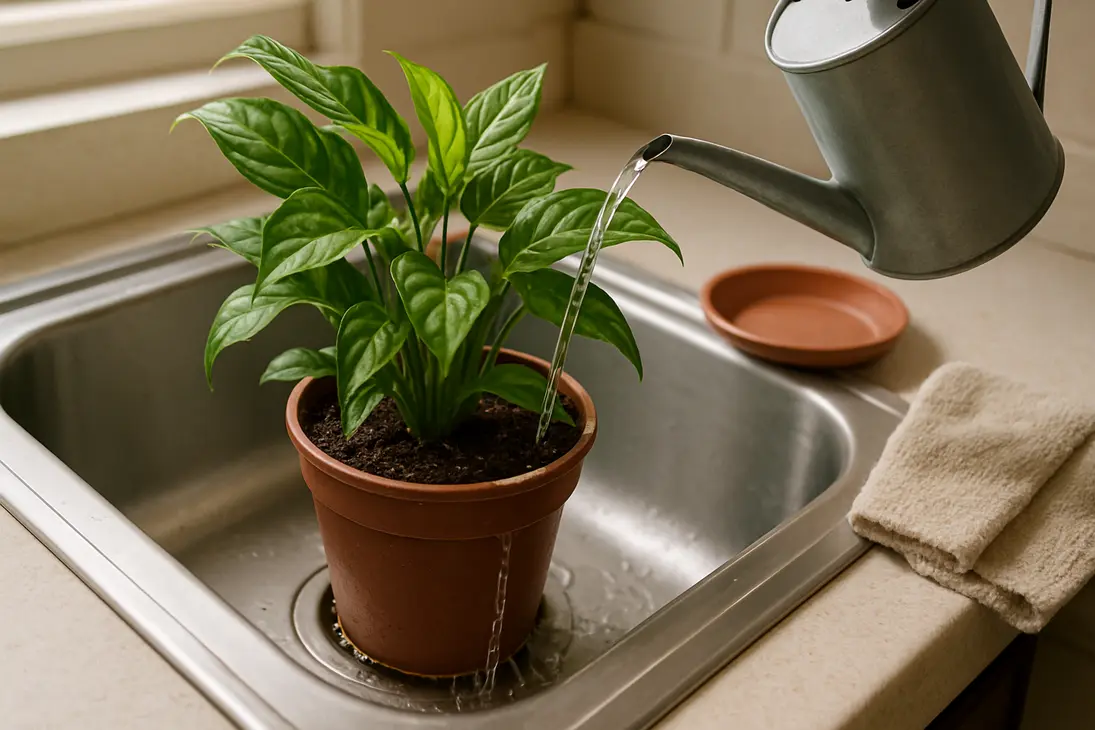
A good watering cycle is simple: water thoroughly, let excess water drain, allow the soil to dry to the right level, then water again only when the root zone is ready.
Why Plants Need Soil to Dry Between Waterings
Plants need water for photosynthesis, nutrient movement, and cell structure. But roots are living tissue, and they also need oxygen. The dry-down period between waterings lets oxygen return to the soil.
Roots need oxygen as much as water
Roots absorb oxygen from tiny air pockets in the soil. When you water, some of those pockets fill with water temporarily. That is normal if the water drains and the soil begins to re-aerate.
If you water too often, those spaces stay waterlogged. Roots under low-oxygen conditions become stressed, grow poorly, and absorb water less effectively. This is why an overwatered plant can wilt even though the soil is wet: the roots are damaged or oxygen-starved.
Constantly wet soil encourages root rot
Root rot usually develops when wet, poorly aerated conditions weaken roots and favor disease organisms. Rotting roots may turn brown or black, feel mushy, and smell unpleasant.
Above the soil, symptoms often look like general stress: yellowing leaves, limp stems, leaf drop, and stalled growth. Because these signs can resemble underwatering, many gardeners mistakenly add more water.
Prevention is easier than rescue: use a well-draining mix, choose containers with drainage holes, empty saucers, and let soil dry appropriately between waterings.
Dry-down cycles support stronger root development
A moderate dry-down can encourage roots to explore more of the pot or garden bed instead of staying shallow near the wet surface. This does not mean repeatedly wilting the plant; severe drying can damage seedlings, leafy vegetables, and moisture-loving plants.
The goal is a healthy wet-to-moist-to-slightly-dry rhythm. In containers, this helps prevent a permanently wet lower layer. In garden beds, it encourages roots to move beyond the fast-drying top inch.
Overly wet soil can interfere with nutrients
Soggy soil can reduce nutrient uptake even when fertilizer is present. Poor root function, low oxygen, and frequent watering that leaches nutrients can lead to pale leaves, yellowing, weak stems, or slow growth.
Adding fertilizer will not fix a root-zone problem. Better watering habits support healthier roots and steadier nutrient uptake.
Problems Caused by Soil That Stays Wet Too Long
Wet soil problems often develop gradually. A plant may look fine for a while, then decline despite regular care.
This is common with houseplants in decorative pots, small plants in oversized containers, dense potting mixes, compacted garden beds, and cool-season watering routines that were not adjusted after summer.
Common signs of overwatering
Overwatering often means watering too frequently, not simply using too much water at once.
| Sign | What it may indicate |
|---|---|
| Yellowing lower leaves | Root stress or low oxygen |
| Wilting while soil is wet | Damaged roots |
| Soft stems | Possible rot |
| Leaf drop | Root stress |
| Sour-smelling soil | Stagnant conditions |
| Mold or algae on soil | Constant moisture and low airflow |
| Slow growth | Poor root function |
These signs overlap with other problems, so check soil moisture before deciding what to do.
Fungus gnats, mold, and other moisture-loving problems
Fungus gnats often indicate potting soil is staying too moist. Their larvae live in damp organic matter near the surface, so letting the top layer dry between waterings makes the environment less favorable.
Surface mold also points to excess moisture, poor airflow, or decomposing organic material. Outdoors, soggy soil can contribute to algae, crusting, and root diseases, especially in slow-draining clay beds.
Why “more water” can make a struggling plant worse
When a plant wilts, watering may seem like the obvious fix. But if the soil is already wet, more water can make the problem worse.
Before watering, check:
- Is the root zone dry or only the surface?
- Does the pot feel heavy?
- Is water sitting in the saucer or cachepot?
- Are leaves soft and yellow rather than crisp?
- Does the soil smell stale or sour?
If the soil is wet, pause watering. Empty standing water, improve airflow, and let the mix dry to a safer level. If rot is likely, inspect the roots and repot into a fresher, better-draining mix.
What Affects How Fast Soil Dries
There is no universal watering schedule. The same plant may need water twice a week in summer and only every two or three weeks in winter.
Soil mix and drainage
Soil composition is one of the biggest factors. Dense, fine-textured mixes hold water longer. Chunky, porous mixes dry faster and allow more airflow.
In containers, garden soil usually compacts and drains poorly. Potting mixes are lighter, but they vary. Some hold moisture for a long time; others include bark, perlite, pumice, coarse sand, or similar materials for drainage and aeration.
Match the mix to the plant:
- Succulents and cacti: gritty, fast-draining mix
- Tropical houseplants: airy but moisture-retentive mix
- Rosemary, lavender, thyme: lean, well-drained mix
- Seedlings: fine, evenly moist seed-starting mix
- Container vegetables: moisture-retentive but not waterlogged
If soil takes a very long time to dry, it may be too dense for the plant or pot.
Pot size, pot material, and drainage holes
A small plant in a large pot is easy to overwater because unused soil stays wet longer than the roots can use it. Upsize gradually instead of moving a small plant into a much larger container.
Pot material also matters. Plastic and glazed ceramic hold moisture longer. Terracotta dries faster because it is porous. Fabric grow bags dry quickly and may need more frequent watering.
Drainage holes are essential for most container plants. Gravel at the bottom does not replace drainage holes. Also check decorative outer pots; a nursery pot can drain into a cachepot and sit in water unnoticed.
Light, temperature, humidity, and airflow
Plants use more water in bright light and warm temperatures. Soil also evaporates faster in dry or moving air.
Soil dries more slowly in cool, cloudy, humid, still, or low-light conditions. A plant that dries quickly on a sunny windowsill in July may stay damp for weeks in November.
Plant type and growth stage
Large, actively growing plants with many leaves use water quickly. New cuttings with few roots use very little. Seedlings need steady moisture because their roots are shallow, while established plants often tolerate more dry-down.
Plants with thick leaves, bulbs, rhizomes, or succulent stems often store water and prefer more drying between waterings. Thin-leaved tropical plants usually prefer more even moisture, though they still dislike soggy soil.
How to Know When It’s Time to Water Again
The best method is observation. Instead of watering every Saturday, check the soil and plant. Over time, you will learn each pot’s rhythm.
Finger test or wooden skewer test
For small to medium pots, insert your finger into the soil. If the top inch or two is dry for a plant that likes moderate moisture, it may be time to water. For drought-tolerant plants, wait until the soil is dry deeper down.
For larger pots, push a wooden skewer or chopstick into the root zone, leave it briefly, then pull it out.
- Soil stuck to it: still moist
- Cool or darkened wood: moisture remains
- Mostly clean and dry: likely ready for water
Pot weight method
A wet pot is heavier than a dry pot. Lift the pot after watering thoroughly, then again a few days later. With practice, weight becomes one of the easiest ways to judge moisture.
This works well for houseplants, hanging baskets, nursery pots, and container vegetables.
Moisture meters: useful but not perfect
Moisture meters can help with deep pots, but readings may be affected by soil composition, salts, uneven moisture, or poor contact with the probe.
Use a meter as one tool, not the final authority. If the reading seems wrong, double-check with your finger or a skewer.
Adjusting watering for different plants
Use the plant’s preference as your starting point:
| Plant type | Before watering again |
|---|---|
| Succulents and cacti | Let most or all of the mix dry |
| Snake plant, ZZ plant | Let soil dry well down into the pot |
| Pothos, philodendron, monstera | Let the top portion dry |
| Peace lily, fern | Keep lightly moist, not soggy |
| Rosemary, lavender, thyme | Allow a noticeable dry-down |
| Seedlings | Keep evenly moist, never saturated |
| Container vegetables | Water as the root zone begins to dry |
Actual timing still depends on pot, soil, weather, light, and plant size.
When Soil Should Not Fully Dry Out
Some plants and situations need more consistent moisture. Seedlings are the clearest example because their shallow roots dry quickly. Seed-starting mixes should stay evenly moist but not waterlogged.
Ferns, calatheas, peace lilies, and many bog or marginal plants may suffer if left too dry. Even so, “moisture-loving” does not usually mean sitting in stagnant water unless the plant is adapted to bog conditions.
New transplants also need steady moisture while roots establish. After establishment, watering can usually be adjusted to encourage deeper rooting.
Outdoor beds may need more frequent watering during heat waves or drought, especially for vegetables, annuals, and shallow-rooted plants. Mulch helps slow evaporation and keep moisture more even.
The key is balance: fully dry soil can stress plants, but constantly wet soil can suffocate roots.
Conclusion
Letting soil dry between waterings matters because roots need oxygen as well as water. A proper dry-down cycle helps prevent root rot, discourages fungus gnats and mold, supports stronger roots, and improves nutrient uptake.
The goal is not to make every plant bone-dry. Water according to the plant’s needs and the actual condition of the root zone. Check below the surface, learn the weight of your pots, consider the season and soil mix, and adjust as conditions change.
Good watering is not about doing more. It is about watering at the right time, then giving the soil enough time to breathe.
FAQ
Should soil be completely dry before watering?
Not always. Cacti, succulents, snake plants, and ZZ plants often prefer soil to dry thoroughly. Many tropical houseplants prefer the top portion to dry while the lower root zone stays slightly moist. Seedlings and moisture-loving plants should not fully dry out.
How long should soil take to dry after watering?
It depends on plant type, pot size, soil mix, light, temperature, humidity, airflow, and season. A small terracotta pot in bright summer light may dry in a day or two, while a large plastic pot indoors in winter may stay moist for two weeks or more.
If a container stays wet for a very long time and the plant is not moisture-loving, check for poor drainage, an oversized pot, compacted soil, or low light.
Is dry soil always better than wet soil?
No. Dry soil can stress plants, damage fine roots, slow growth, and cause wilting or leaf drop. Most plants do best when soil cycles between watered and appropriately dry, rather than staying saturated or parched.
What should I do if my soil stays wet for too long?
Stop watering until the root zone dries to a safer level. Empty saucers and decorative pots, improve airflow, and move the plant to brighter light if appropriate. Make sure the container has drainage holes.
If the soil is dense, sour-smelling, or the plant is declining, repot into a better-draining mix and a pot that fits the root ball. If roots are black, mushy, or foul-smelling, trim damaged roots with clean tools and repot carefully into fresh mix.
You Might Also Like