Can You Use Epsom Salt on Peace Lilies?
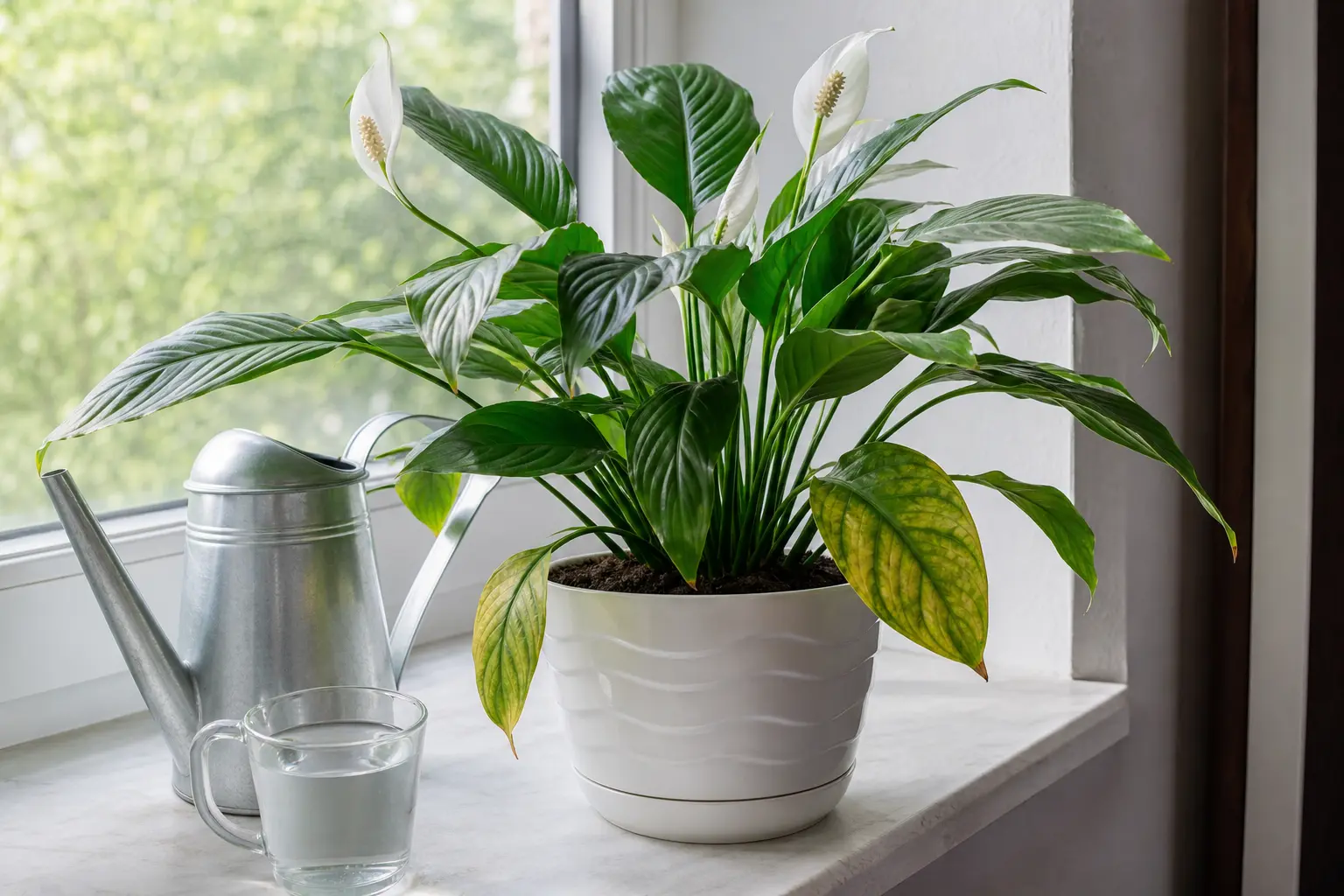
Yes, you can use Epsom salt for peace lilies, but it is rarely the answer to a struggling plant. Epsom salt is magnesium sulfate, so it supplies magnesium and sulfur—two secondary plant nutrients. It is not a balanced fertilizer, a cure for yellow leaves in general, or a routine growth booster.
A peace lily may benefit from a small, carefully timed application only when magnesium deficiency is genuinely likely. In most homes, though, yellowing, drooping, slow growth, and brown leaf tips are more often caused by watering problems, unsuitable light, root stress, or a lack of balanced nutrition.
Treat Epsom salt as a targeted supplement, not part of every watering schedule.
Is Epsom Salt Good for Peace Lilies?
Epsom salt can be useful for a peace lily that lacks magnesium, but it does not automatically make a healthy plant greener, larger, or more floriferous.
Magnesium helps a plant produce chlorophyll, the green pigment involved in photosynthesis. Sulfur also supports normal plant growth. If either nutrient is unavailable in the potting mix, a peace lily may show pale foliage or unusual yellowing.
The important word is unavailable. A pot may contain magnesium, but roots may still struggle to take it up if:
- The potting mix has become overly acidic or alkaline.
- The roots are damaged by overwatering.
- The plant is badly rootbound.
- Salt from fertilizer or softened water has accumulated in the soil.
- The plant has been kept too dark to grow well.
Adding more magnesium does not solve those conditions. In fact, it may add to the salt load in an already stressed pot.
Epsom salt is also missing the nutrients peace lilies need in larger amounts, including nitrogen, phosphorus, potassium, calcium, and micronutrients. It should never replace a regular houseplant fertilizer.
Rule Out More Common Peace Lily Problems First
Before reaching for Epsom salt, inspect the plant’s growing conditions. Peace lilies are expressive plants: their leaves often droop when thirsty, and they can yellow quickly when their roots stay wet too long. Those symptoms can look dramatic, but they are usually not evidence of a magnesium deficiency.
Signs That May Point to Magnesium Deficiency
Magnesium deficiency usually appears first on older, lower leaves, because the plant can move magnesium from old foliage to support new growth.
Look for:
- Yellowing between the leaf veins while the veins remain noticeably greener.
- A pattern that starts on older leaves rather than fresh new growth.
- General loss of green color despite otherwise reasonable watering, light, and root conditions.
- Continued symptoms after you have ruled out overwatering, poor drainage, and an exhausted potting mix.
Interveinal yellowing—yellow tissue with green veins—is the most useful visual clue. Even then, it is not a diagnosis by itself. Similar patterns can arise from root damage, pH-related nutrient lockout, or deficiencies of other nutrients.
Sulfur deficiency is much less likely in a typical container-grown peace lily. Unlike magnesium deficiency, it tends to affect newer leaves first and produces more even overall paling. Because most potting mixes and balanced fertilizers contain some sulfur, it is not the usual concern.
Common Issues Epsom Salt Will Not Fix
Epsom salt will not correct most common peace lily complaints.
| Symptom | More likely cause | What to check first |
|---|---|---|
| Entire lower leaves yellowing | Overwatering or aging leaves | Feel the soil and inspect drainage holes |
| Plant droops, then perks up after watering | Underwatering | Water thoroughly when the upper layer of mix is dry |
| Plant stays droopy in wet soil | Root stress or rot | Remove from cachepot, check for stagnant water and unhealthy roots |
| Brown tips or edges | Dry air, inconsistent watering, fertilizer salts, mineral-heavy water | Review watering habits and flush the pot if fertilizer has built up |
| Little or no growth | Low light, cool temperatures, rootbound plant, no balanced fertilizer | Move to brighter indirect light and check the roots |
| Pale new leaves | Low light, general nutrient shortage, root trouble | Assess growing conditions before adding magnesium |
| Yellow leaves with soft stems or sour soil | Excess moisture and root damage | Improve drainage and allow appropriate drying |
A single older leaf turning yellow is often normal. Peace lilies regularly shed their oldest leaves as they produce new ones. Remove the leaf once it is mostly yellow, but do not treat the plant unless the problem is spreading.
Why Soil, Watering, Light, and Root Health Matter More
Peace lilies grow best in bright, indirect light and a potting mix that holds some moisture while still allowing air around the roots. They are not desert plants, but they also should not sit in water.
Start with the basics:
- Check moisture before watering. Water when the top inch or so of potting mix feels dry, rather than watering on a fixed calendar.
- Empty saucers and decorative outer pots. A nursery pot inside a cover pot can leave roots sitting in drained water unnoticed.
- Use a pot with drainage. Without drainage holes, salts and excess water have nowhere to go.
- Give bright, filtered light. A plant in a dim corner may survive, but it will use water slowly and grow sparsely.
- Repot when necessary. If roots are densely circling the pot or the mix has collapsed into a dense, slow-draining mass, fresh potting mix is usually more valuable than Epsom salt.
- Fertilize moderately during active growth. A diluted, balanced houseplant fertilizer gives the plant a broader nutrient supply than magnesium sulfate alone.
Correcting one of these issues can improve a peace lily more reliably than any Epsom salt treatment.
How to Use Epsom Salt Only When It Is Needed
If the symptoms closely fit a magnesium deficiency and the plant’s general care is sound, use Epsom salt sparingly. Choose plain, unscented Epsom salt without bath oils, fragrances, dyes, or added ingredients.
Do not sprinkle dry crystals onto the soil. They can dissolve unevenly, concentrate around roots, and make it difficult to judge how much has been applied.
A cautious approach is to make one light treatment, then wait and observe new growth. Do not keep applying it because the existing yellow leaves fail to turn green; damaged leaf tissue usually does not fully recover. The real sign of improvement is healthier foliage produced afterward.
Soil Drench vs. Foliar Spray
A soil drench is generally the simpler option for a houseplant because it delivers dissolved magnesium through the root zone. Use it only when the potting mix is already slightly moist—not bone dry—and allow excess solution to drain freely from the pot.
A foliar spray places diluted solution directly on the leaves. Plants can absorb some nutrients through foliage, but this method has drawbacks indoors:
- Solution can leave a visible residue on glossy peace lily leaves.
- A concentrated spray may mark or stress foliage.
- Spraying in direct sun or on a hot plant increases the chance of leaf damage.
- It is easy to repeat sprays too often because the soil does not visibly show the accumulating nutrient load.
For most peace lily owners, a single, carefully diluted soil application is easier to manage than foliar spraying. If you choose a foliar treatment, use only a product whose label permits foliar application, test it on one small area first, and keep the plant out of direct sun until the leaves are dry.
Concentration and Frequency: Use Conservative, Qualified Guidance
There is no reason to use a strong or frequent Epsom salt regimen on a peace lily. Online discussions often promote weekly sprays or routine additions for many plants, but a schedule that is harmless for one outdoor crop is not automatically appropriate for a slow-growing tropical houseplant in a small pot.
The safest practical guidance is:
- Use a fully dissolved, lightly diluted solution rather than dry salt.
- Follow the directions on a horticultural magnesium sulfate product if you have one.
- Make only one trial application when magnesium deficiency is plausible.
- Wait for new growth before deciding whether the plant benefited.
- Do not add Epsom salt at the same time as repeated heavy fertilizer applications.
- Avoid using it on a plant that is wilted from dry soil, waterlogged, recently repotted, or showing root-rot symptoms.
If you cannot confidently identify a likely magnesium problem, skip the Epsom salt. A balanced fertilizer applied at a reduced indoor-plant rate is usually the more sensible choice for an underfed peace lily.
How to Monitor the Plant After Application
After a single treatment, watch the plant over the following weeks rather than expecting a next-day transformation.
Look for:
- New leaves emerging greener and more evenly colored.
- No worsening leaf-tip browning.
- No white crust forming on the soil surface or pot rim.
- Normal recovery after watering.
- Continued steady root and leaf growth.
Do not judge success by the oldest yellow leaves alone. Those leaves may remain yellow, even if the nutrient issue is corrected. Trim them off with clean scissors once they are mostly discolored.
If the plant declines after application, stop using Epsom salt. Flush the pot with plain water if the plant has good drainage: slowly run water through the mix and allow it to drain completely. Then return to normal care while the plant recovers.
Risks of Using Too Much Epsom Salt
“Natural” does not mean risk-free for potted plants. Epsom salt is still a soluble salt, and a container has limited soil volume to dilute or buffer repeated additions.
Too much can contribute to:
- Salt buildup in the potting mix.
- Brown leaf tips and margins.
- Root stress and reduced water uptake.
- A nutrient imbalance that interferes with the availability of other minerals.
- A misleading cycle in which worsening foliage prompts even more treatments.
Peace lilies are especially poor candidates for casual, repeated supplements because they are commonly grown in decorative pots indoors, where minerals can accumulate over time. If the plant has no drainage hole, avoid Epsom salt altogether.
Why Epsom Salt Is Not a Complete Fertilizer
Epsom salt provides magnesium and sulfur only. It does not provide the complete range of nutrients a peace lily uses to make leaves, roots, and flowers.
A plant receiving Epsom salt but lacking nitrogen may still develop pale leaves. A plant with compacted soil may still decline because its roots cannot function well. A plant in deep shade may still barely grow because light—not magnesium—is the limiting factor.
For regular feeding, use a balanced liquid houseplant fertilizer or another product intended for foliage plants. Apply it during the brighter growing months, and use less than a heavy-feeding outdoor plant would require. Peace lilies can be damaged by overfertilizing, so more is not better.
When to Stop Using It
Stop using Epsom salt immediately if:
- The original symptoms do not match magnesium deficiency.
- New growth does not improve after a reasonable observation period.
- Leaf tips become increasingly brown after treatment.
- A white or crusty residue appears on the soil or pot.
- The potting mix drains poorly or smells sour.
- The plant has root damage, pest issues, or low-light stress.
- You have switched to a balanced fertilizer and the plant is recovering.
There is no benefit to continuing a supplement that has not produced clearer, healthier new growth.
Better Long-Term Feeding Options for Peace Lilies
For long-term care, focus on a stable routine rather than corrective additives.
A good approach includes:
- Fresh, well-draining indoor potting mix.
- Bright indirect light.
- Thorough watering followed by partial drying.
- A pot with drainage holes.
- A balanced houseplant fertilizer used lightly during active growth.
- Occasional flushing with plain water to reduce mineral buildup, especially if you fertilize regularly or use hard water.
If yellowing continues despite good care, consider repotting, inspecting roots, and reviewing the plant’s light exposure before adding specialized nutrients. A soil or water test may be worthwhile for a collection of plants with recurring, similar symptoms.
Conclusion
Epsom salt for peace lilies is not a routine care essential. It may help only when the plant has a genuine magnesium deficiency, usually suggested by interveinal yellowing on older leaves after more common problems have been ruled out.
For most peace lilies, better light, appropriate watering, healthy roots, fresh potting mix, and occasional balanced fertilizer will do far more than Epsom salt. If you decide to try it, use a fully dissolved, lightly diluted solution once, monitor new growth, and stop if the plant shows no clear improvement.
FAQ
Can I put Epsom salt directly in a peace lily pot?
Do not scatter dry Epsom salt directly over the potting mix. Dry crystals can concentrate in one area and raise the salt level around roots. If magnesium supplementation is truly needed, dissolve plain, unscented Epsom salt completely in water first and apply it sparingly to a pot with drainage.
Should I spray Epsom salt on peace lily leaves?
You can use a foliar spray only with caution, but it is not necessary for most peace lilies. Spray residue can mark leaves, and overly strong solutions may stress the foliage. A carefully managed soil application is usually simpler. If you do spray, use a product labeled for foliar use, test a small area first, and avoid direct sunlight while leaves are wet.
Will Epsom salt fix yellow peace lily leaves?
Usually, no. Yellow leaves are more often linked to overwatering, underwatering, poor drainage, low light, aging foliage, root problems, or general nutrient shortage. Epsom salt may help only if yellowing is caused by a magnesium deficiency. Existing yellow leaves may not turn green again, so watch for healthier new growth instead.
How often can I use Epsom salt on a peace lily?
Do not use it on a routine schedule. Make one cautious application only when magnesium deficiency seems likely, then wait to assess new growth. Repeated use can cause salt buildup and nutrient imbalance. For normal feeding, use a balanced houseplant fertilizer sparingly instead.
You Might Also Like